A Question of “Excellence”

Lets talk about ‘excellence.’  After all, everyone wants to send their children to an excellent school, donors want to support excellent schools, and almost every school claims to be excellent.  But is it really possible for every school to be excellent?  Is it even possible for a Jewish Day School, while dividing its time between Jewish and general studies to ever be excellent?

Let’s talk about movies.  Let’s imagine your favorite genre is romantic comedies, and your partner’s is horror flicks.  If someone were to ask you and your partner to describe the qualities of an excellent film, chances are you would share some qualities, for example, both films would be engaging and not boring. In the same vein, all excellent schools have some things in common.  Ron Berger, in his short, mind-blowing, must-read book An Ethic of Excellence  identifies three main levers:  A culture of excellence, work of excellence and teachers of excellence.  These three elements should be present in every excellent school.

But to return to our film metaphor, when the horror film buff and rom-com lover compare notes, chances are they would have had far more to disagree about! Even though you would each be describing what made the film excellent to you, you might describe polar opposites, because in some ways, ‘excellence’ is a subjective term with no independent meaning.  Instead, excellence is excelling at being exactly what one intends to be.  

According to this definition, the most important aspect in becoming excellent is knowing who and what you want to be before you start!  Just as a film cannot be both an excellent horror flick and rom-com, so a school cannot be all things to all people.  What makes LaGuardia and Bronx Science two of the best high schools in New York City is not that they do everything well, but that they have clearly defined foci and pursue them relentlessly.

What makes JCDSRI excellent?

There are two primary foci of JCDSRI that we pursue with all our hearts.  They are Progressive Education and a Pluralistic Jewish Community.  Our relentless and ongoing pursuit of excellence in these areas set us apart from any other school in Rhode Island.

What is Progressive Education?

Progressive Education can be understood in a number of ways, but first, it is helpful to understand that progressive education came to exist in the late 19th century in opposition to “traditional” education.  Traditional education is something we are all familiar with, either from our personal experience or from the way movies portray classrooms.  In a traditional classroom, students sit at their own desks in columns and rows, quietly and carefully writing notes presented by the teacher. Traditional education believes that students are “Tabula Rasa” or a “blank slate” waiting to be filled with content by the expert teacher, so the teacher stands at the front of the class lecturing and often writing on a blackboard, whiteboard, or today, a Smart Board.  If students speak to one another or pass notes to communicate, the teacher silences them, or confiscates the note, often reading it out-loud to the class.  Students take tests, often multiple choice tests that are easy to grade, and test a students ability to memorize and recall teacher notes.  In essence– traditional classroom values obedience, accurate repetition of information, and individual completion over exuberance, creativity, and collaborative group work.

The progressive classroom operates by a different set of values, and it is evident in the way classes look and sound, the way homework is given, and the way students are assessed.  In progressive schools, children are not considered mischievous silly creatures who want to just horse around but curious, thoughtful, and compassionate people who want to be successful.  Given that radically different starting point, everything about the school looks and sounds different!

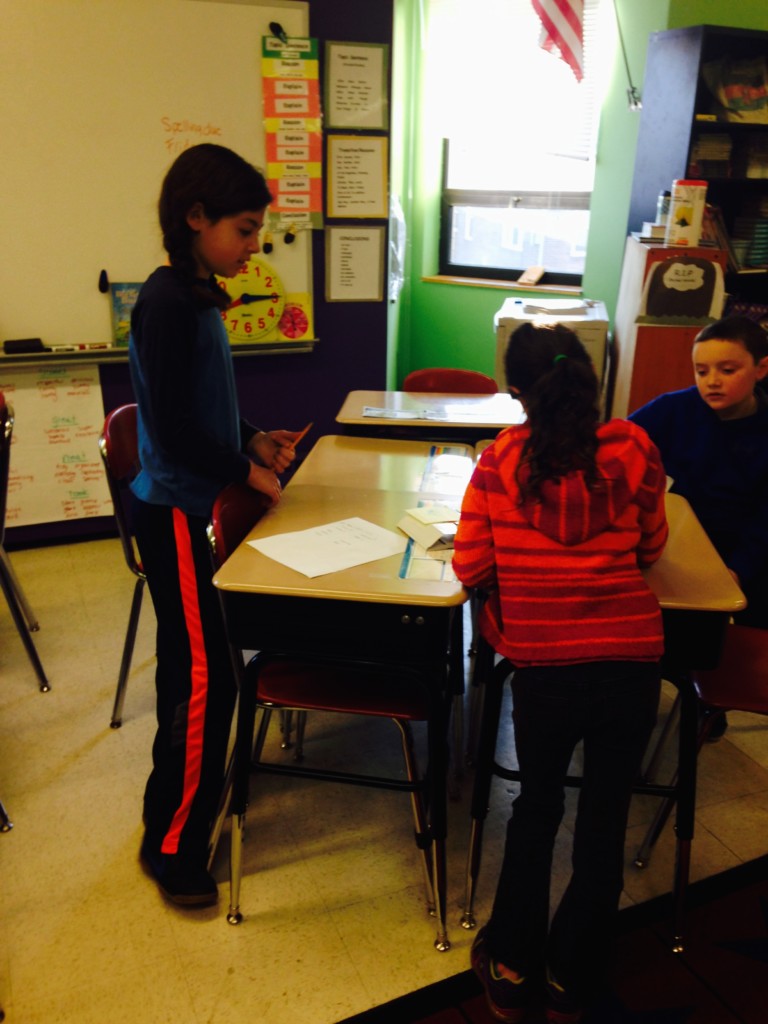
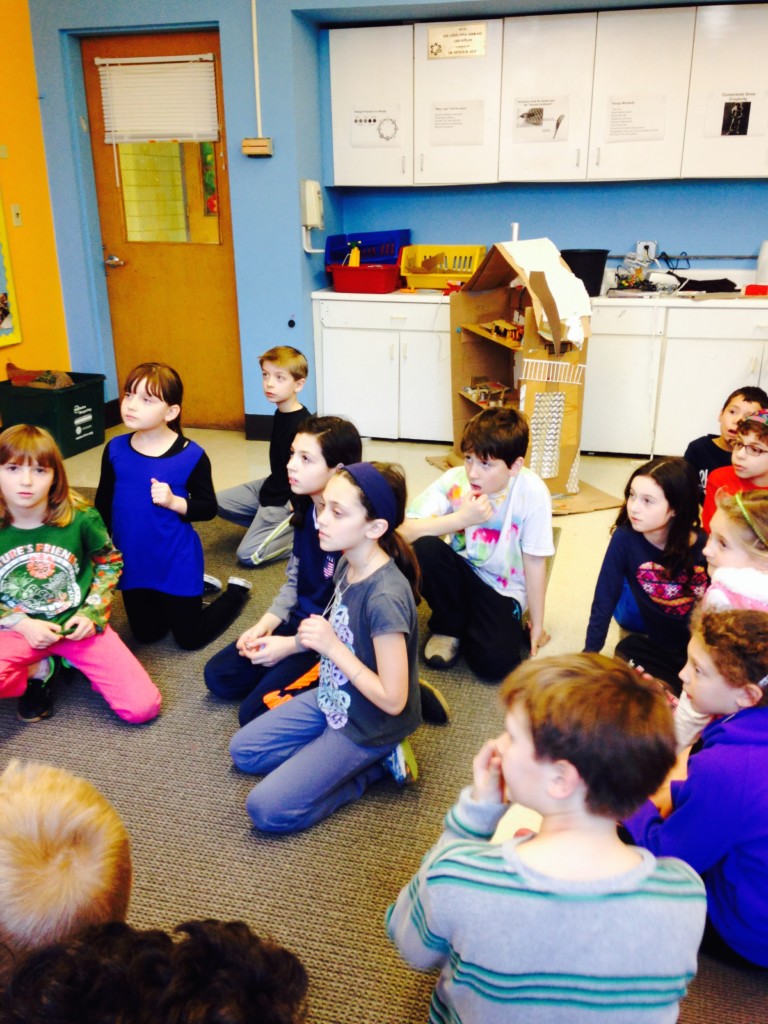
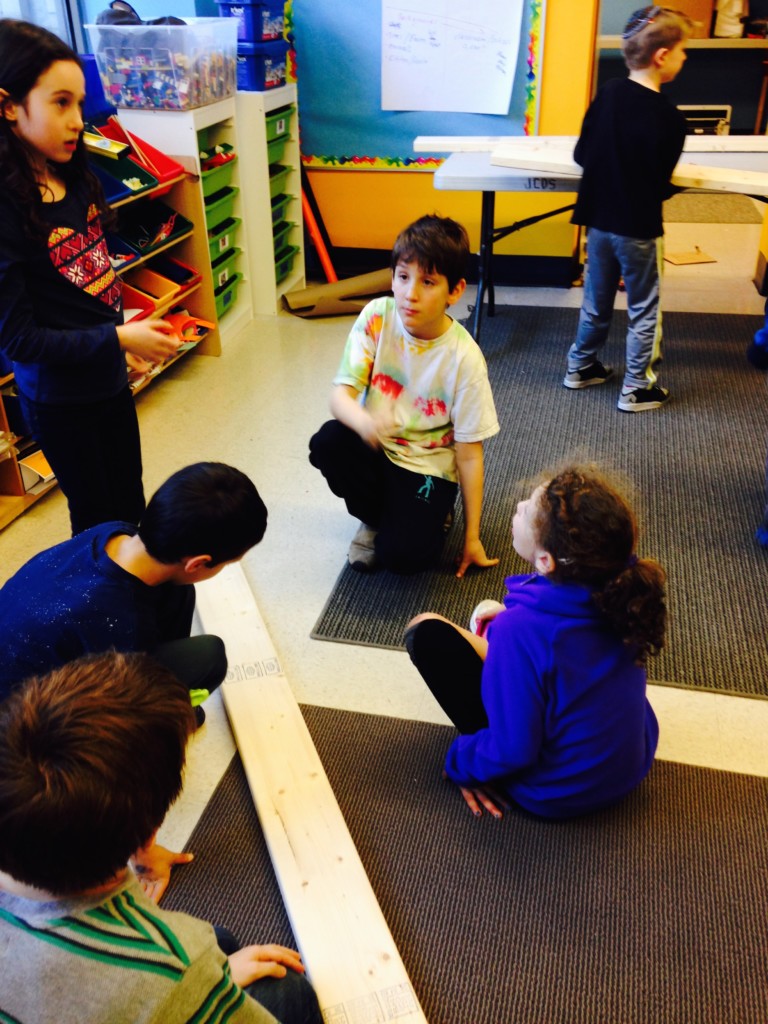
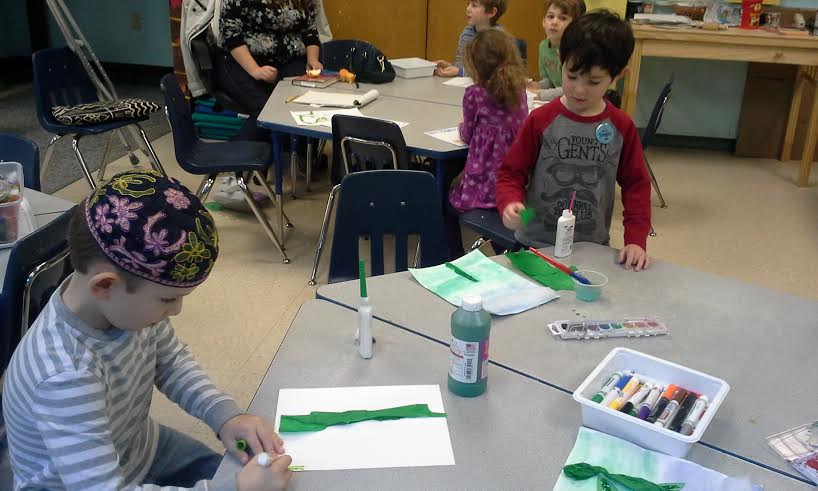
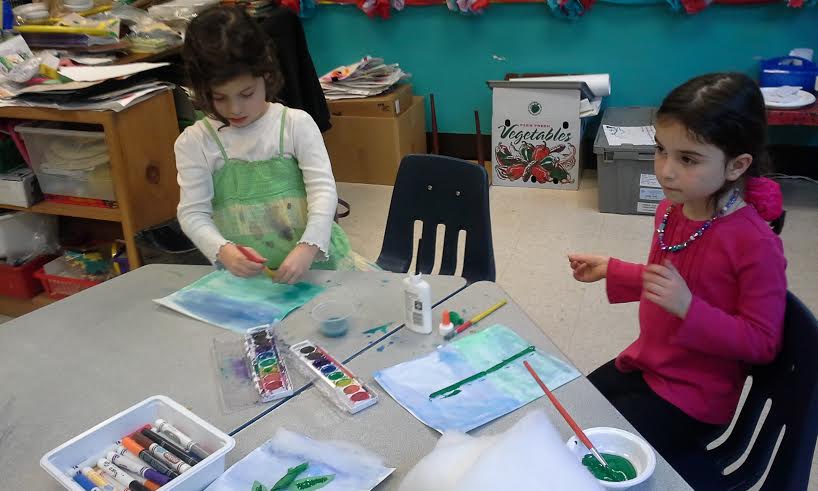
Progressive education values collaborative and cooperative group over competition and individual work so in a progressive classroom, one might find desks placed together into clusters, or simply tables where children work together rather than columns and rows of desks.  Classrooms might seem loud as students discuss, argue, plan and create together rather than passively copying notes. Progressive education values skills and active engagement over content, so in a progressive class, one might see students working on different content while they learn the same skills.  Progressive educators believe that every student is an expert in what he or she already knows and that the only way for a student to learn is to actively construct his or her own knowledge.   Thus, leveraging students’ interests is essential, while teachers who dictate content risk alienating or boring students.

In a traditional school, identical tests are given to all students so their numerical grades reflect the same standards given to all children.  In a progressive school, students are encouraged to do unique work that brings in many different skills, from independent research, to writing, to art and technology.  In a progressive class, cheating is impossible since students are expected to create something unique.

Put simply, progressive education can be summarized by the following adage: “Teachers should be the guide on the side, not the sage on the stage.”  Progressive education is also referred to as “student centered,” “Constructionist” (or Constructivist),“Democratic,” and often uses “project based learning.”

What does excellence look like at a Progressive School?

  • At an excellent traditional school, one would expect to see student mastery over a certain set content.  At an excellent progressive school, we expect to see students mastering skills that will lead them to become self confident, independent learners and critical thinkers.
  • At an excellent traditional school, one would expect to see students excel at tests and papers, especially standardized tests.  At an excellent progressive school we would expect to see students learning and being assessed through projects, especially group projects that require skills like communication, negotiation, compromise, delegation, and long term planning.
  • At an excellent traditional school, one would expect to see students to follow directions quickly and carefully, without being distracted or distracting others.  At an excellent progressive school we would expect to see students respectfully question authority, either to provide their own valuable ideas and insights, or to gain a further understanding of the ‘why’ behind their assignments.


What is Pluralism in a Jewish context?

I have heard pluralism described as a compromise- perhaps for communities too small to support separate Orthodox, Conservative, and Reform day schools.  I have heard pluralism described at “Radical Tolerance,”  which is closer to essence, but still misses the mark, since tolerance itself has the root of “tolerate” or put up within something one disagrees with.

Pluralism is the deep, heartfelt belief that being exposed to a variety of different ideas, passions, narratives and beliefs makes our lives richer. Pluralism makes us and our children more thoughtful, empathetic, and compassionate people.  More so, pluralism helps us hone our our thoughts and beliefs.  It challenges us to become deeper thinkers and learn to articulate our beliefs with clarity and passion.

Pluralism is the framework of American culture and Pluralist school help us live the American ideal– not just of a melting pot where everyone becomes the same, but where we learn to become confident, independent individuals in a diverse society.

You will see our students praying during tefillah, learning to speak modern and biblical Hebrew, and learning Humash (Bible), similar to any Jewish Day school.  But what differentiates our school is the Jewish values we emphasize.  For example, many Orthodox schools emphasize the concept that the bible is  “Torah L’moshe M’sinai” (that the Torah was literally given to Moses at Mt. Sinai).  At JCDSRI, we explain the concept but also acknowledge that many brilliant and committed Jewish people disagree!

The values we emphasize in our program are “Kol Yisrael Aravim zeh b’zeh,”  “V’ahavta L’reyecha C’mocha,” and “Ezeh hu chacham?  Ha lomed mikol echad.”  (“All the children of Israel are responsible for one another,”  “Love thy neighbor as thyslef,” and “Who is wise?  The one who learns from everyone.”

Thus, while we are engaging in authentic and serious Judaism, we are always reinforcing the values of respect, community, human dignity, and critical thinking.  Our students learn to live a joyous, vibrant Judaism that makes me more confident and compassionate when engaging ‘the other.”  Our students practice Judaism to make their lives richer and world a better place.

What does excellence look like at a Pluralistic Jewish School?


  • Teachers will use language like “many Jews believe,” or “the traditional understanding is…” instead of “We believe,” or “Judaism says.
  • Students will be asked, “given these options, which do you think is correct and why?”  rather than, “Do you understand?”
  • Students are explicitly taught how to embrace a wide variety of belief and practice.
  • Judaism is embraced as a positive, exciting, joyful enterprise without guilt, external pressure, or assumptions about what Jews “have” to do.

Where do we go from here?

JCDSRI is a school in motion.  We exemplify many of the attributes I described above, but some of the descriptors are aspirational.  We have work to do.  But I am proud that we know where we want to be.

If you are lost on a trip, the problem is that you know where you are going but not where you are.  The opposite is true in the life of a person or organization.  For a school, being lost is knowing where you are, but not where you are going.

We are clear about the kind of school we want to become and we are proud of the work we have done and continue doing to become a school of distinguished excellence.
 

Math games

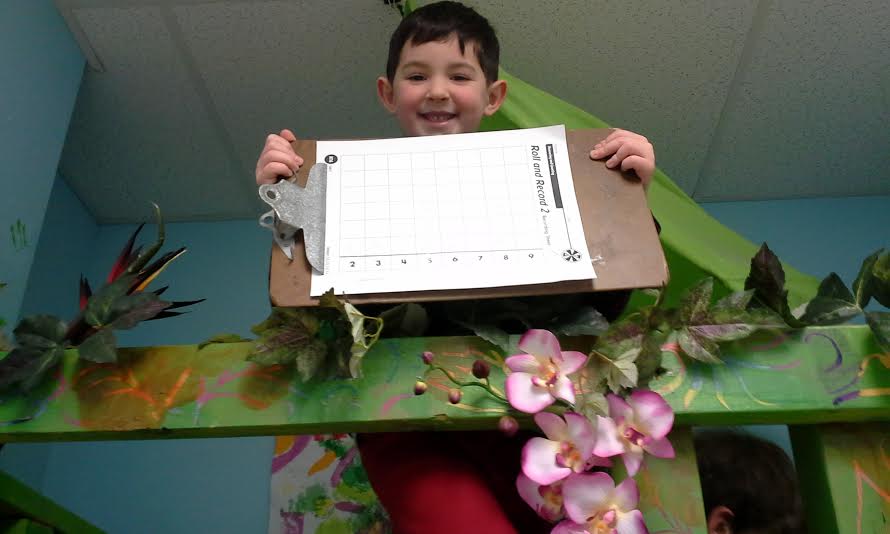
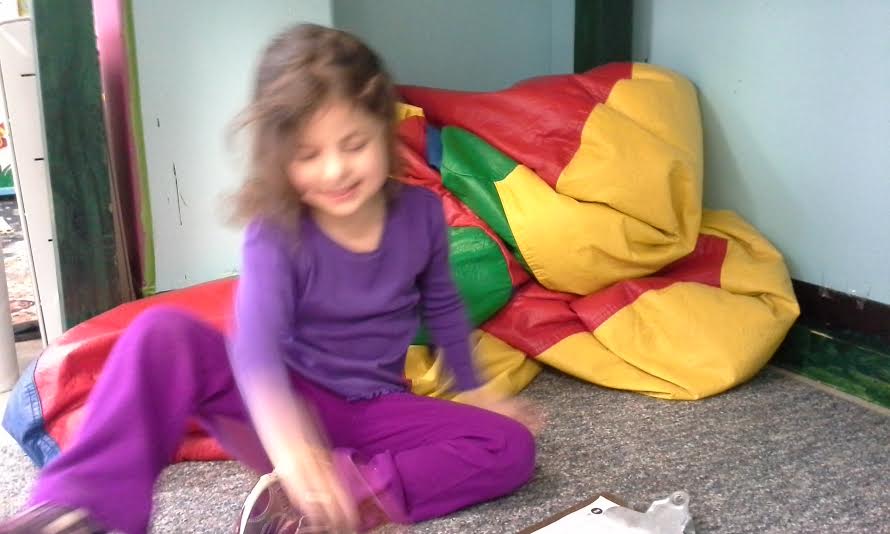
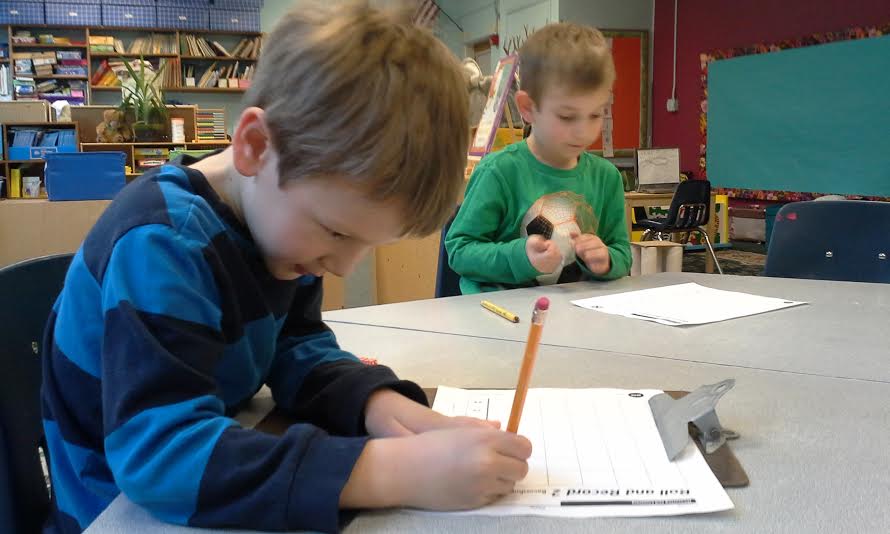
Earlier this year, we were introduced to the original Roll and Record math game. The children rolled dice cubes and recorded the numbers that they rolled on game boards. This activity allowed them to practice their number recognition and writing skills.  This week, we learned how to play Roll and Record 2. Using two dice cubes, the children added up the numbers and recorded the sums that they found on their game boards. The Kindergartners were very excited to explore this game in a new and more challenging way!

Roll and Record 2

RR2 c

RR2 b

RR2

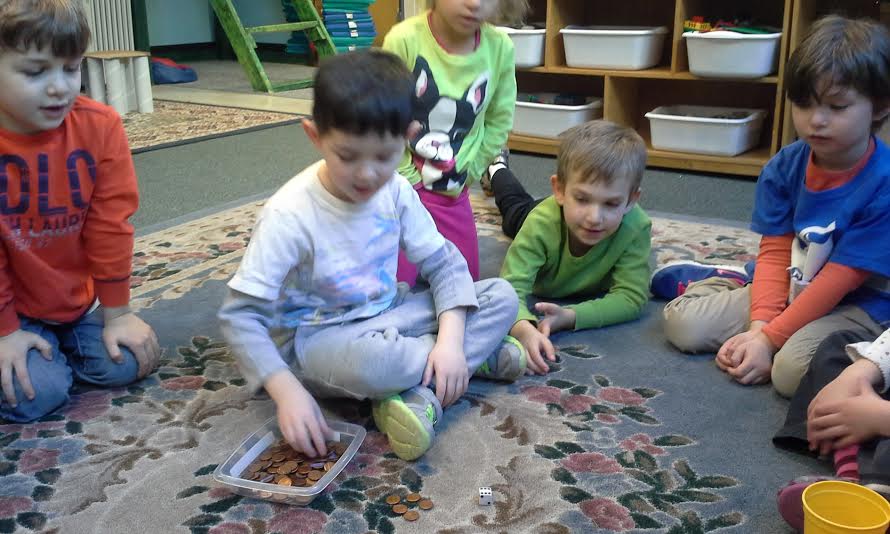
As we begin our unit on coins and their values, we were introduced to the penny. We learned that the man on the front of the penny is Abraham Lincoln, and that he was the 16th president of the United States. We discovered that the penny is worth one cent and practiced exploring its value through a new game called Make Ten. In pairs, each partner took turns rolling a dice cube and collecting the given number of pennies. The children continued rolling the cubes and collecting their pennies until they made ten cents.

make 10

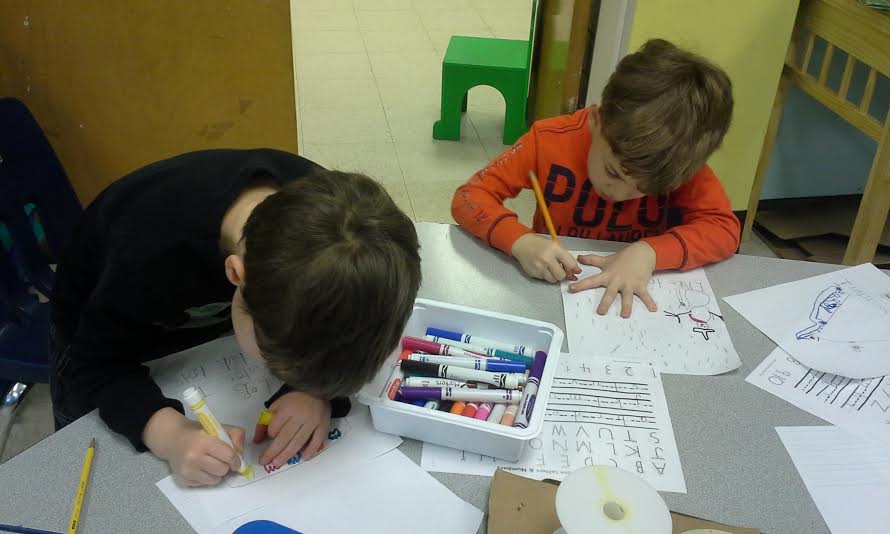
To help us practice proper number formation, we sorted through numbers 0-9 to determine which side of the paper to start writing our numbers on. Additionally, we are continuing to use our number formation rhymes:

Straight line down and then we’re done

That’s the way we make a one.

Around the track and back

choo choo!

That’s the way we make a two.

Around the tree

Around the tree

That’s the way we make a three.

Down and over

Down once more

That’s the way we make a four.

Back, down, around the hive

That’s the way we make a five.

Magic C then in you go

Now you’ve made a six you know!

Look across the park

Run down to Kevin

That’s the way we make a seven.

Make an S and then don’t wait

Go up again and make an eight.

Make a circle then a line

That’s the way you make a nine.

Straight line down then in with a grin

That’s the way you make a ten.

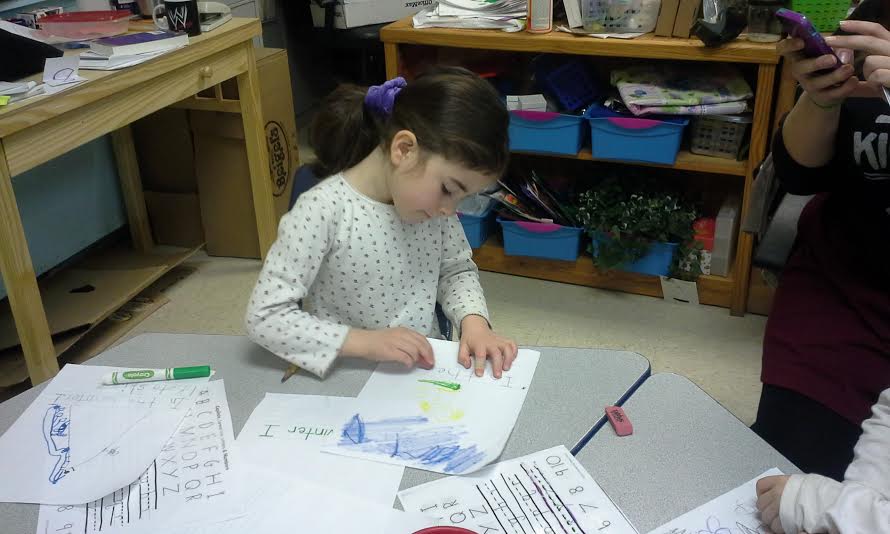
We also began our winter writing today! The children are looking forward to building snow people,  sledding, skiing, drinking hot chocolate, and more!

winter

winter 2

Wrapping up January

Hello everyone,


I have been sending out most updates through email, so I decided it was time to return to the blog. Parents, please be sure to subscribe to the new blog so that you  receive all of the fourth grade news and updates. Here are a few highlights:

  • The fourth graders practiced and recited a MLK reader’s theater for their third grade classmates
  • They continued to draft and edit their creative picture books with dialogue
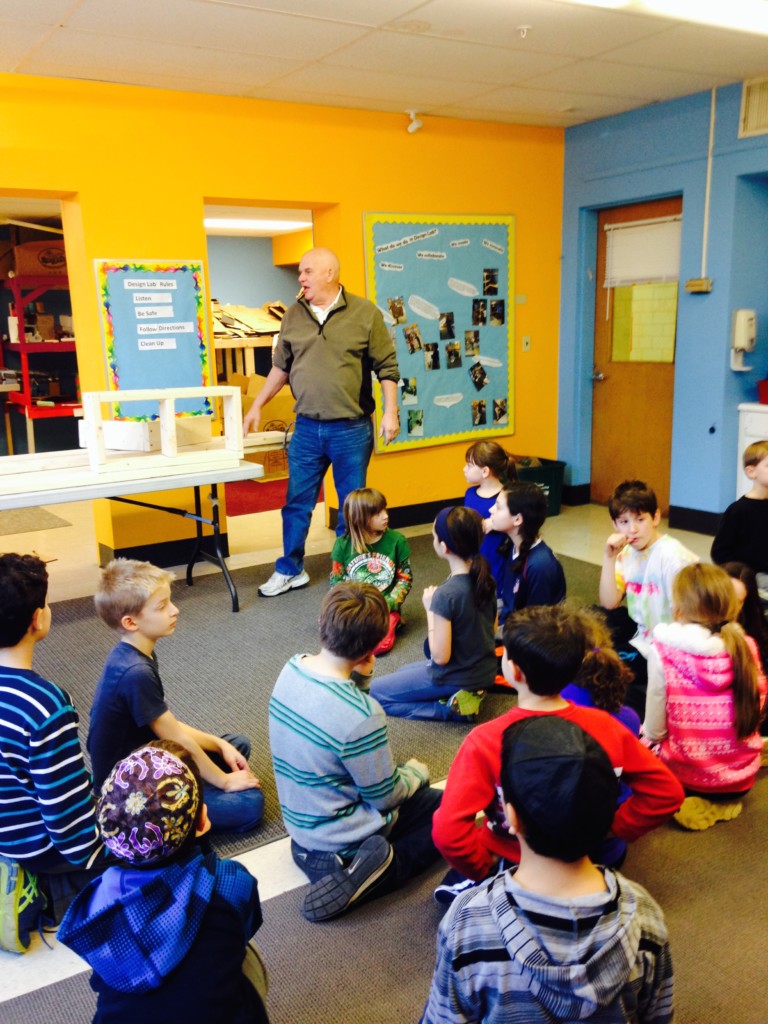
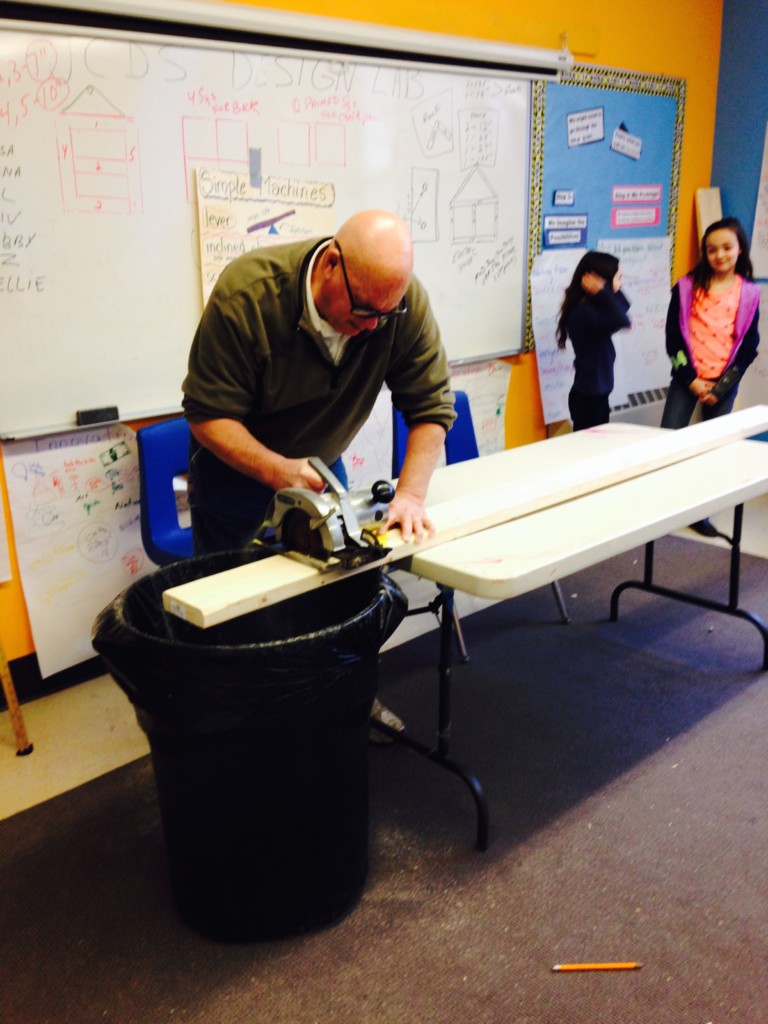
  • They  constructed wooden houses in the design lab with Peter for science. These included measuring, cutting, nailing and decorating.
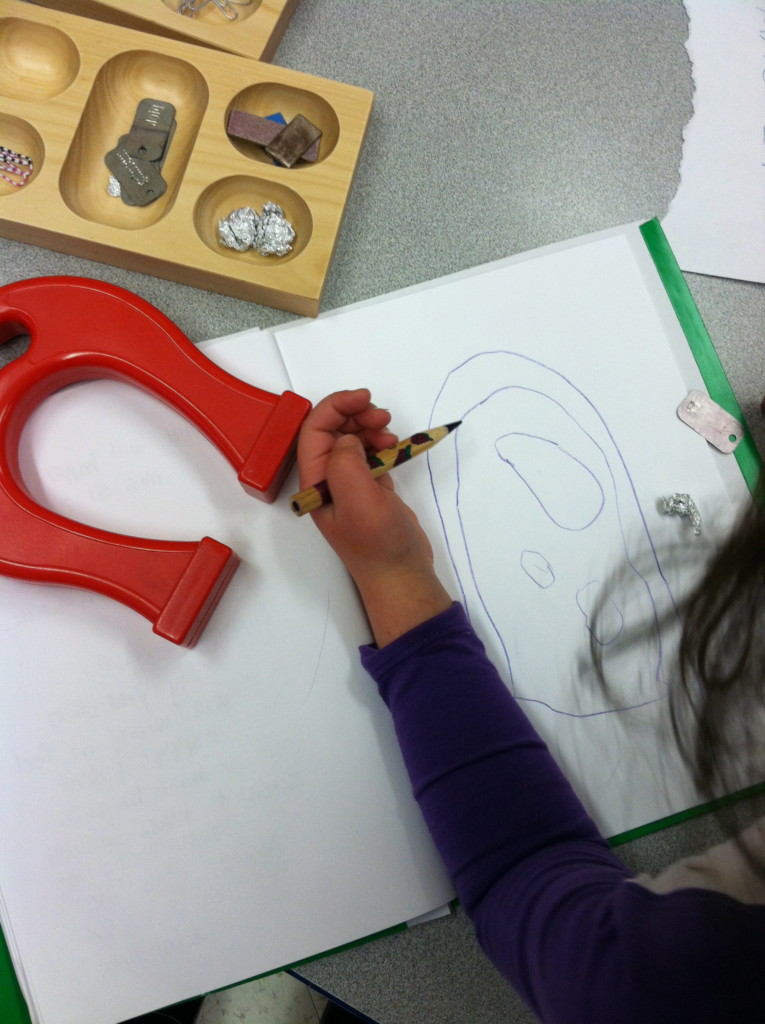
  • They decorated and wired the wooden houses using batteries, wires, bulbs and parallel and series circuits
  • They used batteries and bulbs to get mystery circuits to light during our electricity unit
  • They finished the novels City of Ember and One and Only Ivan 
  • They began a new class novel about the Holocaust titled Number The Stars
  • They worked in cooperative groups to read the fat, sugar, protein and calories in nutritional food labels
  • They created advertisement promoting a healthy lifestyle
  • They used a map to find Denmark and Germany and to read lines of latitude and longitude
  • They wrapped up a math probability unit and began to learn about simplifying fractions to simplest form
  • They chose biographies to read during library and began the research for their biography bowling pin project
  • They wrote and edited letters for literature to be entered in a national 4th grade writing contest
  • They began a design challenge about “How Might we” choose healthier foods to eat during the school year
  • They met with their buddies to collaborate on a winter snowman activity
  • They enjoyed the story Blizzard,  and completed a written retell winter assessment
  • They spent time bonding with the new class Guinea Pig!

IMG_0504 IMG_0505

IMG_0511 IMG_0512 IMG_0513 IMG_0514 IMG_0515 IMG_0516 IMG_0517 IMG_0518

Reminders

The bowling pin project is due on Wednesday, February 11th. If your child needs the February break to complete the project, just let me know that week and I can extend the due date. All reading logs are due every Friday with 4 title entries and 2 short responses. Please help your child to return these to school. Alice Goldstein, a Holocaust survivor, will be speaking to the class in February (More details to follow). I will also be starting current events every other week after the February break. Thanks so much and have a great weekend.

Dentist Office in Dramatic Play

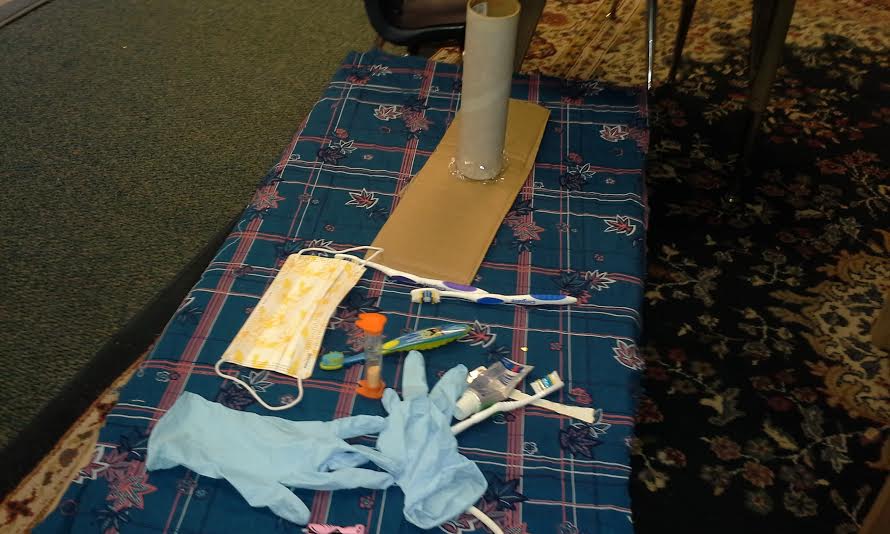
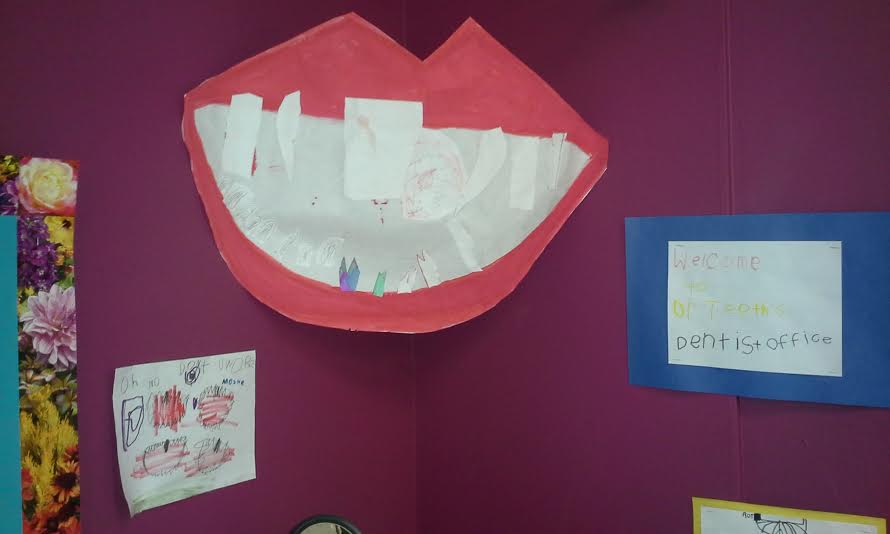
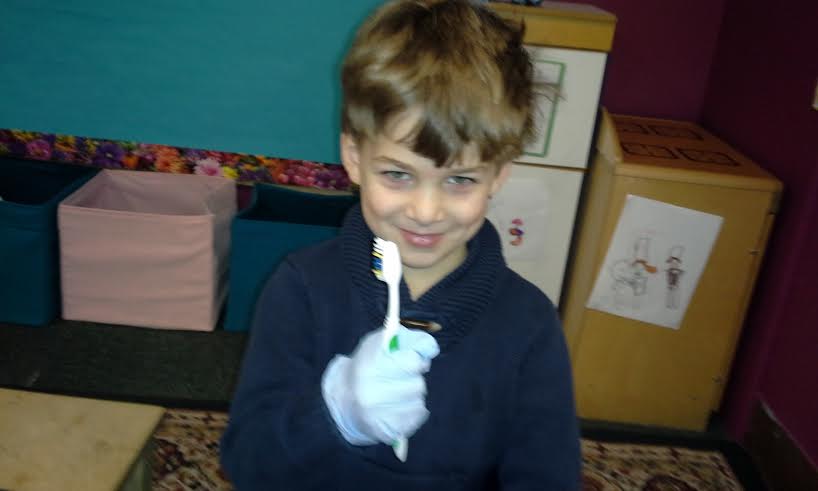
We are currently in the process of creating a dentist office for our dramatic play area.  The children built a table out of cardboard where they can lay out their “dentist tools” including tooth brushes, tooth paste, a tool to polish teeth, a tool to rinse, a face mask, gloves, timer for proper brushing, and an x-ray camera. Thank you Simon for bringing in some tools to add to our dentist office!

dentist 3

The children created many signs for the office!

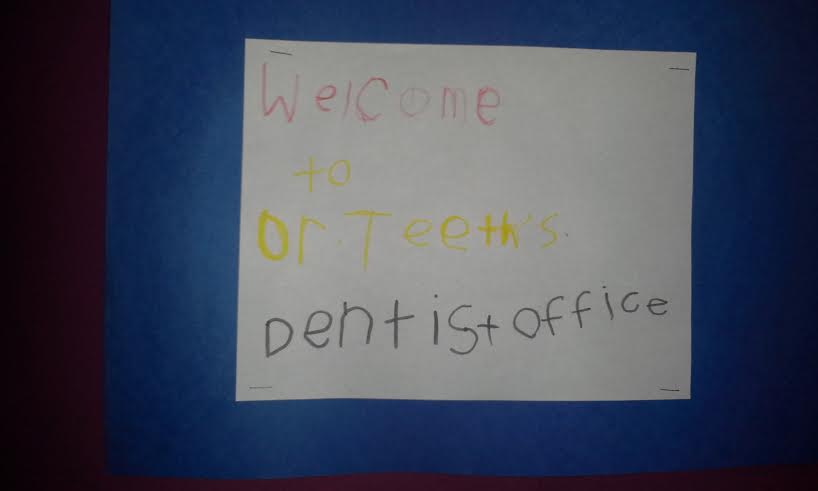
We have a welcome sign:

dentist 7


(Welcome to Dr. Teeth’s Dentist Office)

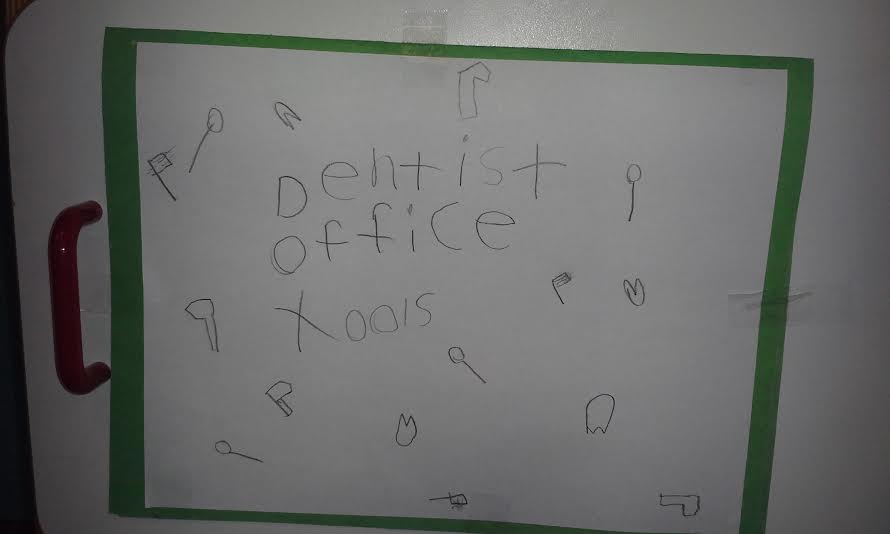
We have a sign for the tool cabinet:

Dentist 2

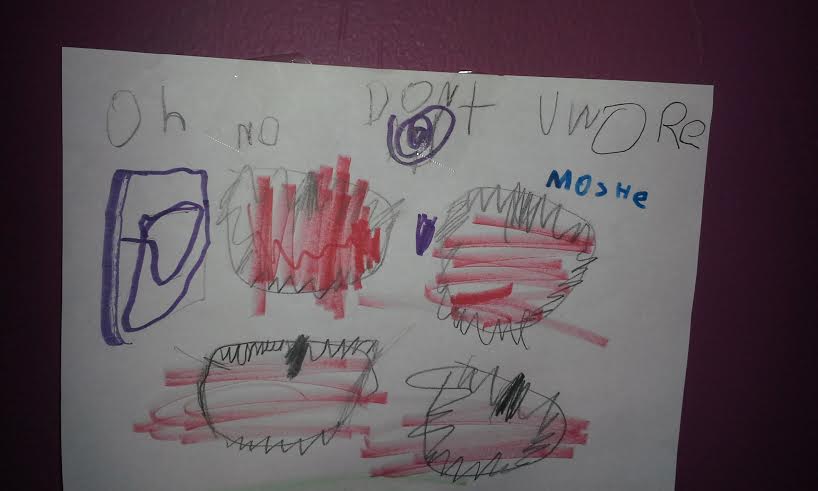
This sign helps patients who may feel afraid of the dentist:

dentist 8

(Oh no! Don’t you worry!)

We even have a special dentist comic for patients to read while waiting for their appointment:

dentist 6

(What is a toothbrush doing?)

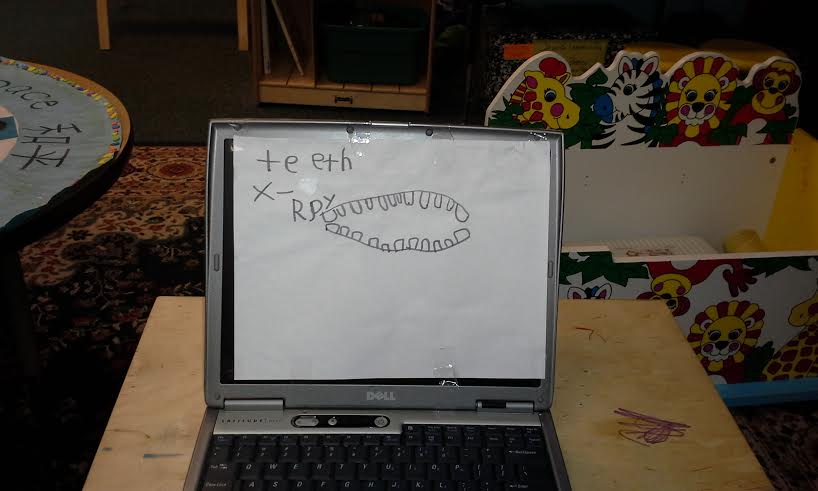
Here is our x-ray machine:

dentist 9

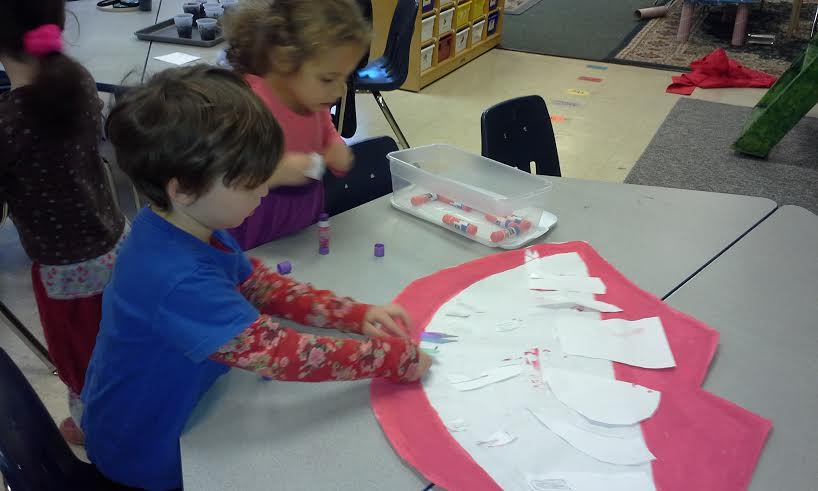
The children created a giant model of teeth:


dentist 4

Dentist 1


Our friendly dentist:

dentist 5

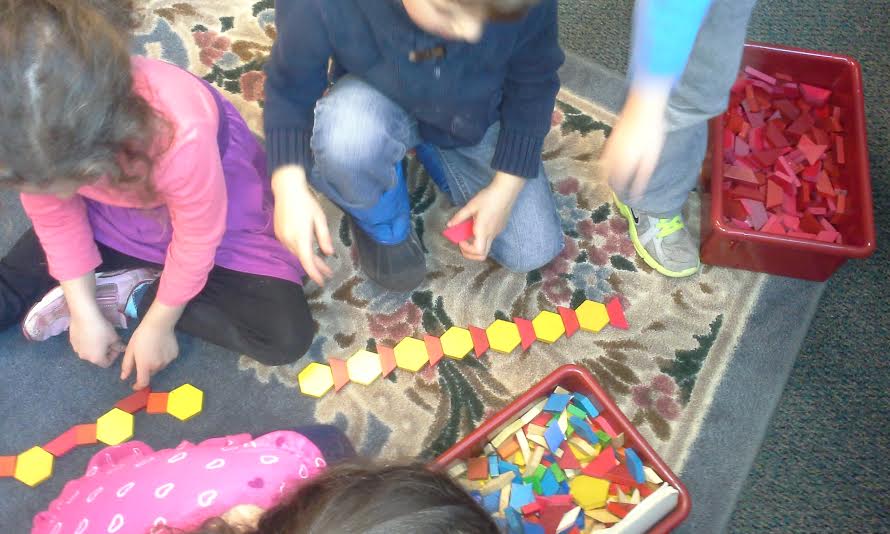
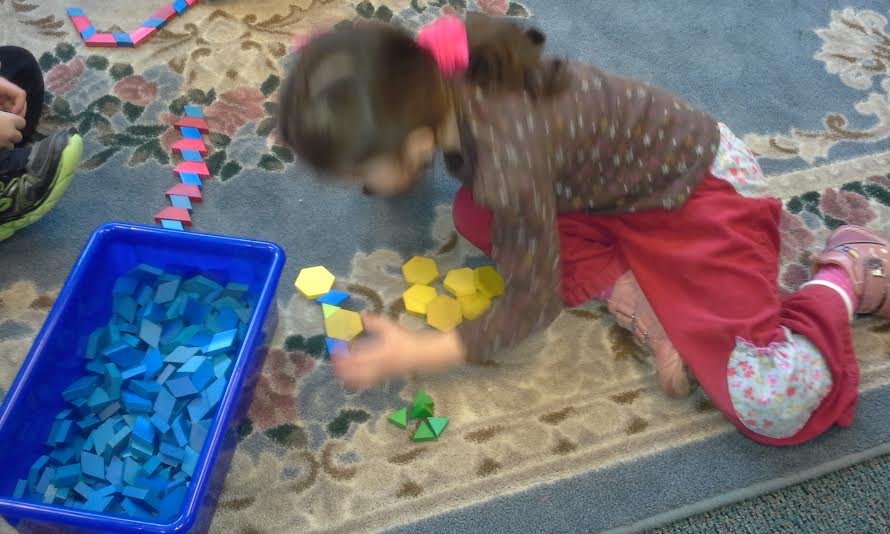
In other news, we had snakes slithering around our classroom this morning…

PATTERN SNAKES!

patterns 5

patterns 3

patterns 4

patterns 1


Discovering Magnets & Snowflakes in PreK

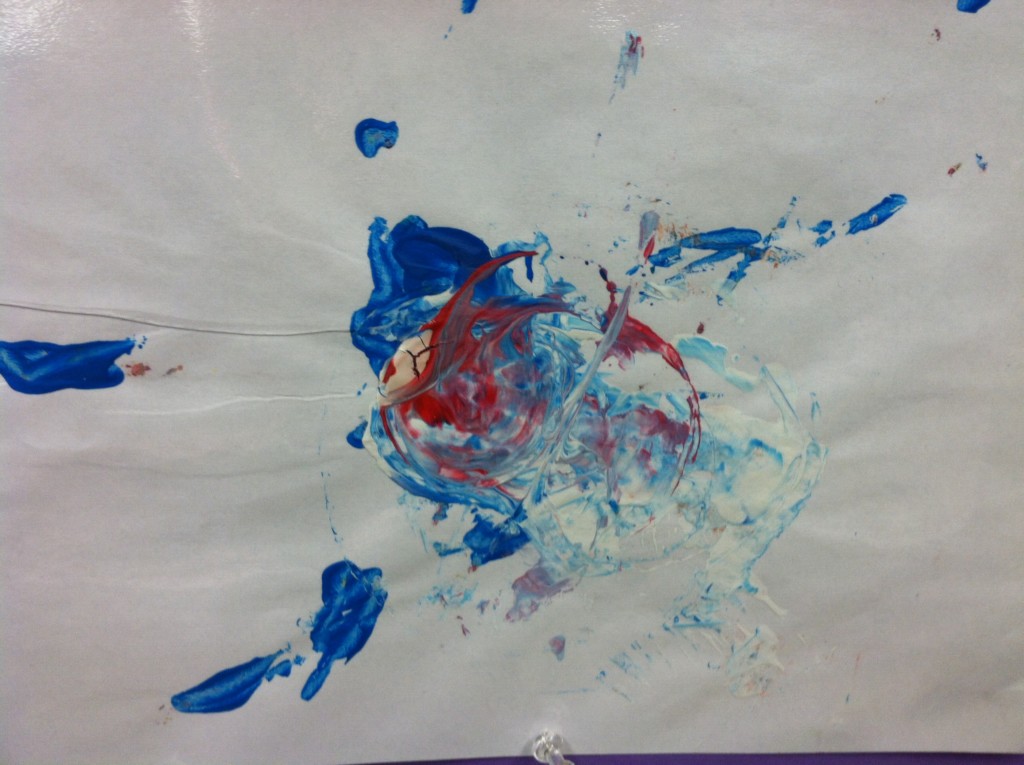
Did you ever try painting with a magnet? We have! It almost seems like magic that paint can travel over paper without the touch of a hand.

IMG_7449

How did we do it? We placed a piece of paper on a tray and dripped several drops of paint on the paper. We choose different objects to place on the paper and then slid a magnet over the bottom of the container.

IMG_7446

We were thrilled to discover what we could create!

IMG_7534

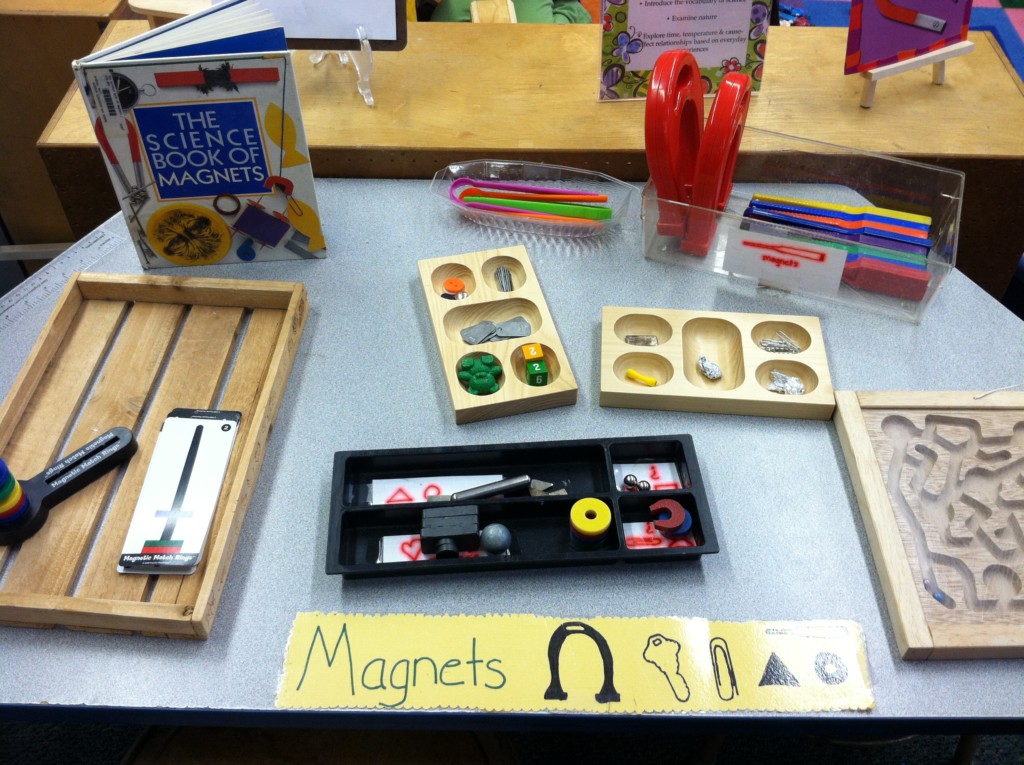
In addition, during the last few weeks our science table has been filled with magnets.

IMG_7529

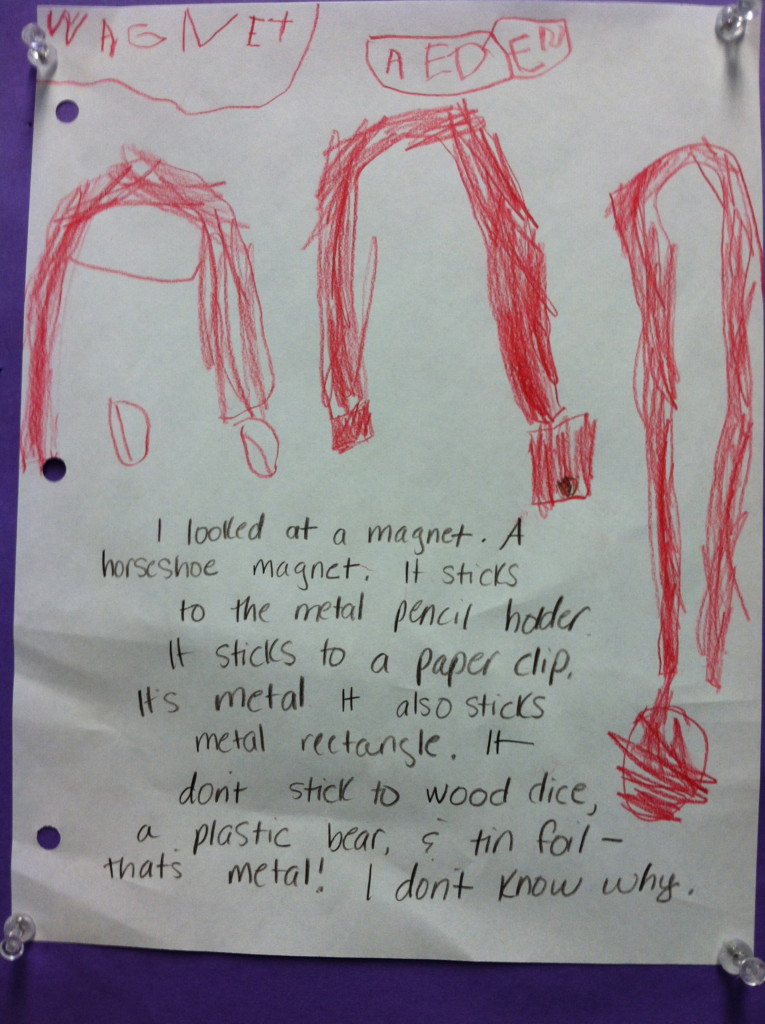
We have used our scientific skills to observe different magnets and document our discoveries.

IMG_7466

We have determined that magnets come in many different shapes, sizes and strengths!

IMG_7477

Below are some of our observations (to see all our Science Journal entries, check out the bulletin board in our classroom):

IMG_7535

IMG_7537

We are learning that magnetism is a form of energy that makes some metal objects jump, spin, or stick to other metals.

IMG_7470

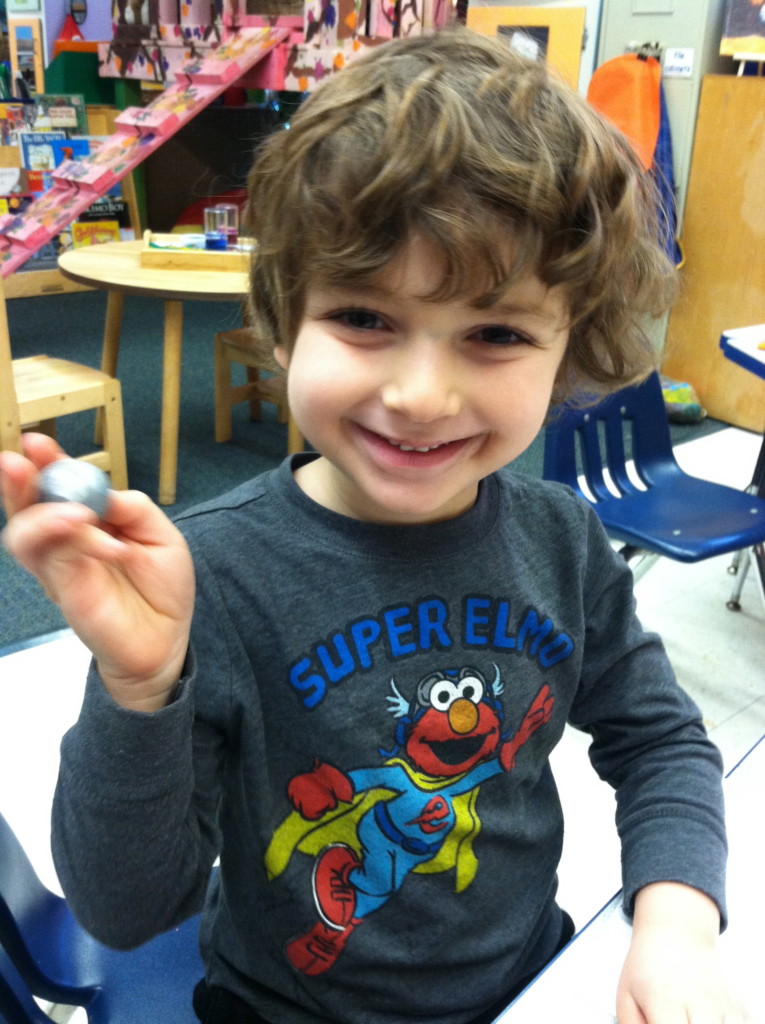
Many of us were surprised to discover that magnets do not attract all metal objects! A magnet will not pick up aluminum foil or a penny (magnets only move objects made from iron, steel, nickel, or cobalt.)

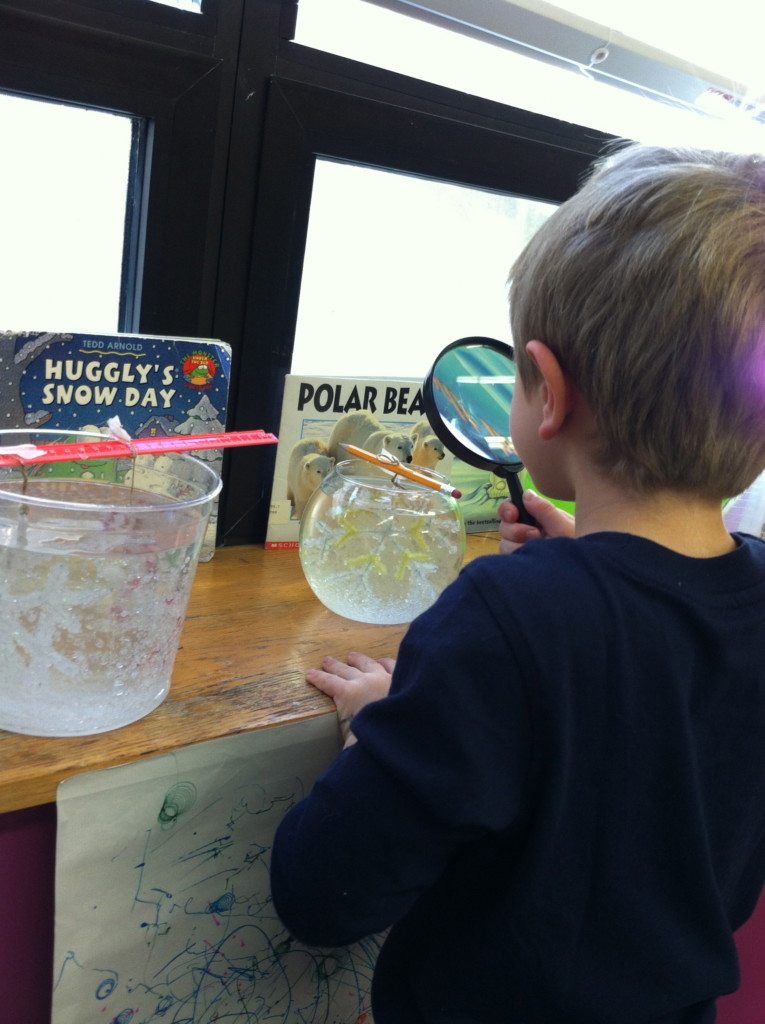
We have also been learning about snowflakes both in our classroom and in Design Lab with Ms. Guttin. We have enjoyed creating our own snowflakes (our research revealed that every snowflake has 6 sides!) out of Lego, wooden shapes, paper . . .

IMG_7526

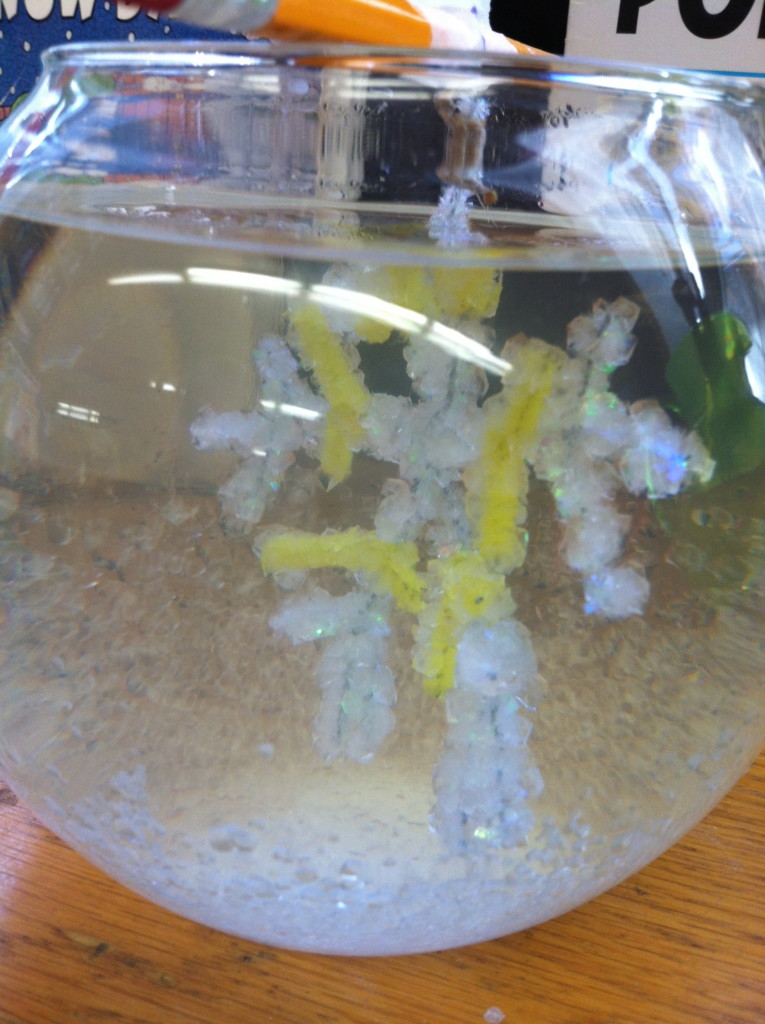
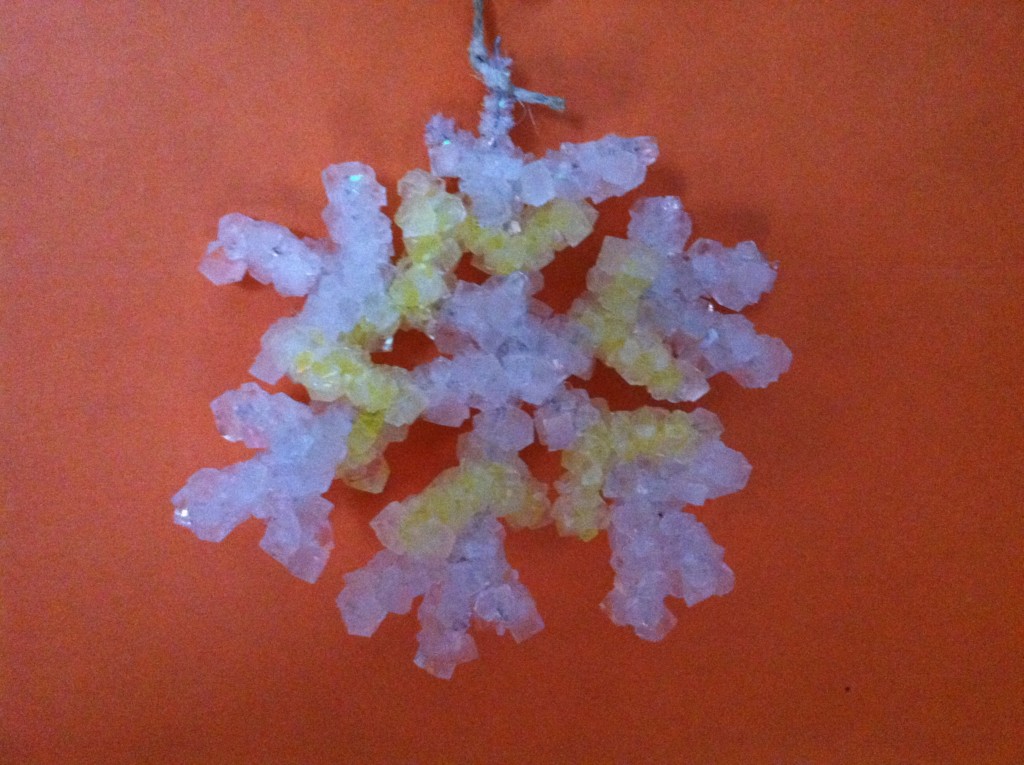
and finally pipe cleaners, water and Borax!

IMG_7542

We first created a snowflake shape by cutting pipecleaners and tying them together.

IMG_7525We then mixed hot water and Borax together in a bowl and suspended the “snowflake” from the top.

IMG_7524

Over time, we observed that the solution was attracted to the pipcleaner and began to create crystals.

IMG_7523

Our “snowflakes” are hanging on our back bulletin board; we invite you to see them!

IMG_7540

Magic Beans in Kindergarten!

As we continue to explore the fantasy genre, we read the story Jack and the Beanstalk, and discovered that there can be different versions of stories we read. In fact, many of us were already familiar with this book! We remembered that the main character, Jack, traded his cow for some magic beans. We knew that the beans would grow a magic beanstalk all the way up to the clouds, and we anxiously prepared ourselves for Jack to meet the “scary” giant. However; we were pleasantly surprised when the giant (ogre in this story) was actually not so scary! In fact, he was sad that Jack was trying to steal his hen that laid the golden eggs, his bags of gold, and his golden harp. Together, Jack and the ogre problem solved and peacefully decided that the ogre would lend Jack the golden harp, hen, and he could take half of the gold. Many of us decided that we preferred this version of the story!

Amazing Vocabulary Words

(Jack and the Beanstalk)

  • ogre
  • beanstalk
  • lad
  • naughty
  • lend
  • magic

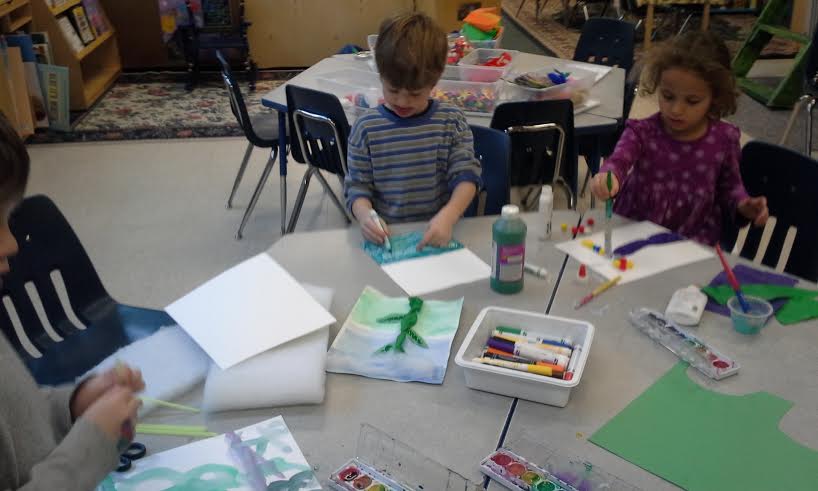
Connecting to this story, the children created pictures of beanstalks using various materials including, craft sticks, pom poms, paint, glitter, tissue paper, construction paper, straws, and more!

beanstalk art 2

beanstalk art 3

beanstalk art

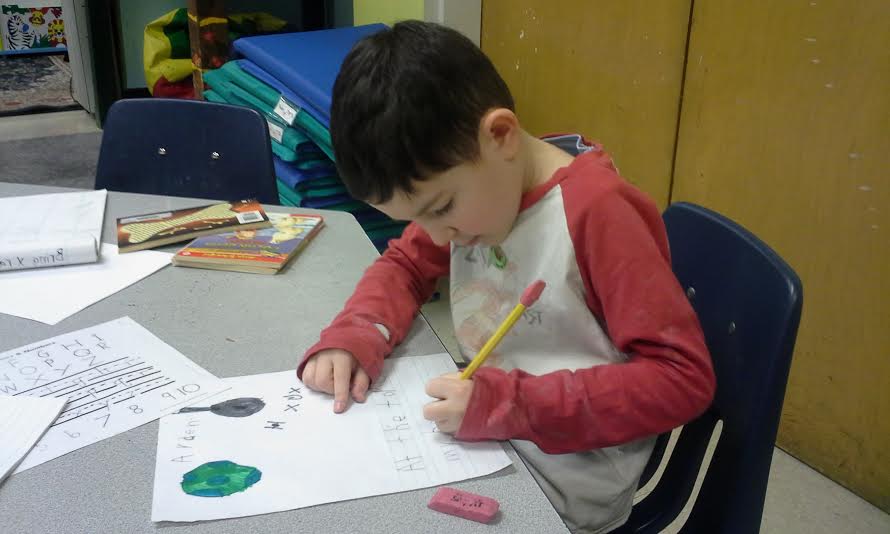
Afterwards, they wrote about what they would find at the top of their beanstalks. Here are some of their ideas:

At the top of my beanstalk there is/are…

  • A golden crocodile
  • A bunch of Legos
  • Pokemon
  • A candy house
  • A club house
  • A Snugglephant
  • Star Wars
  • Treasure
  • Sadie (my dog)

jack and the beanstalk writing

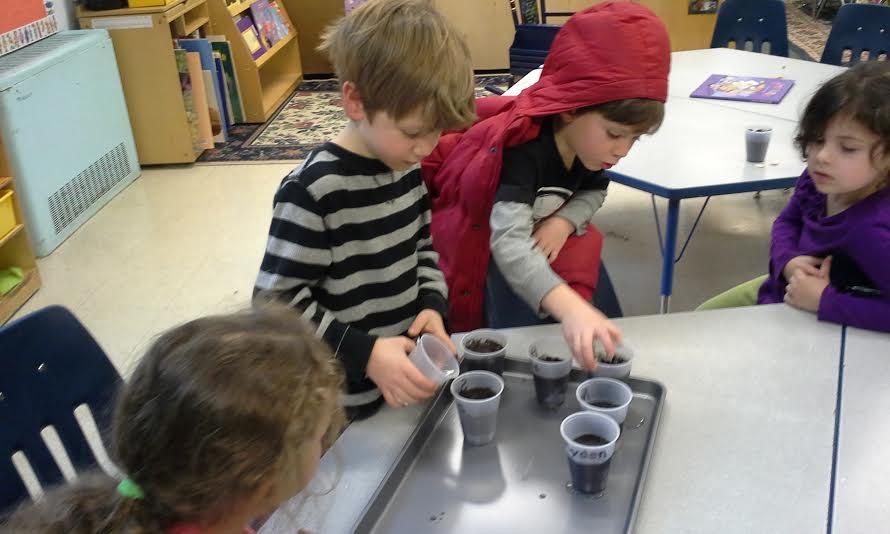
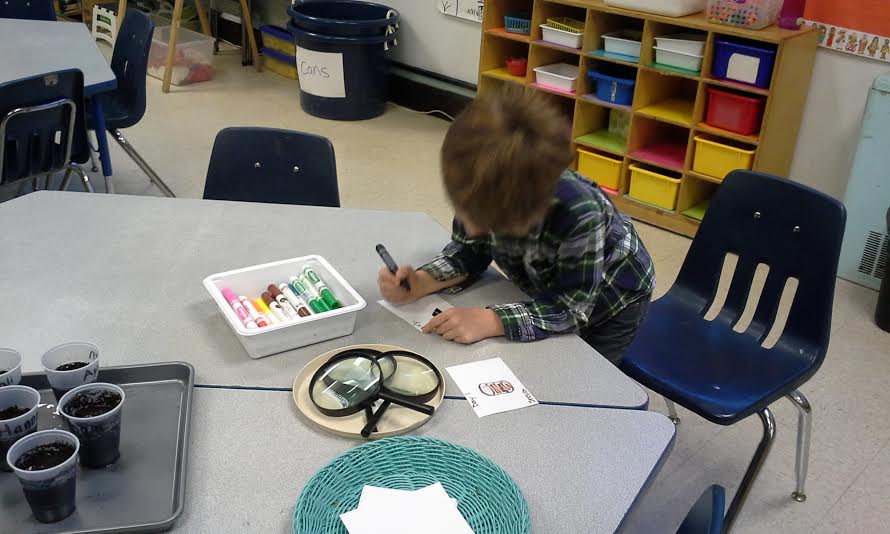
We also planted “Magic Beans” which we will observe over a period of two weeks. Each day, the children will document their observations on note cards and by the end of the two weeks, they will have a beanstalk flip book displaying the growth process.

beanstalk planting

beanstalk observations

beanstalk observation

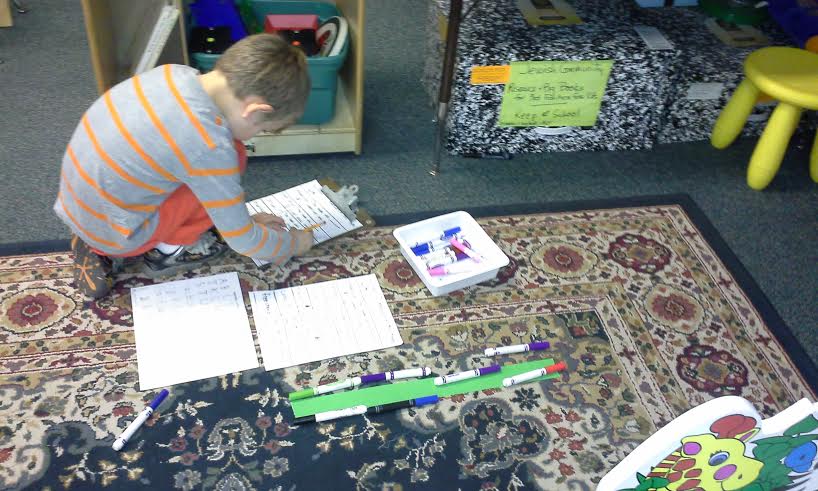
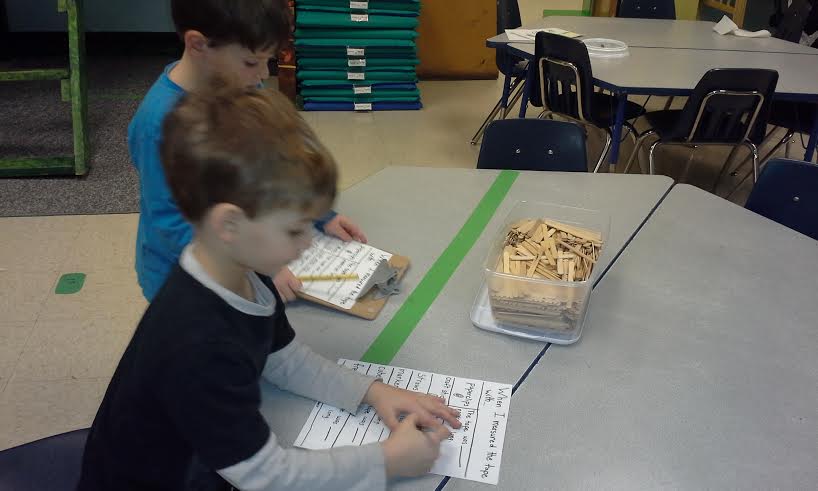
In math, we practiced using nonstandard units of measure by finding the length of various pieces of tape. The children used markers, craft sicks, paper clips, cubes etc. and discovered that they needed less of the larger objects and more of the smaller objects when determining the length.

measuring markers

measuring straws

measuring posicle sticks

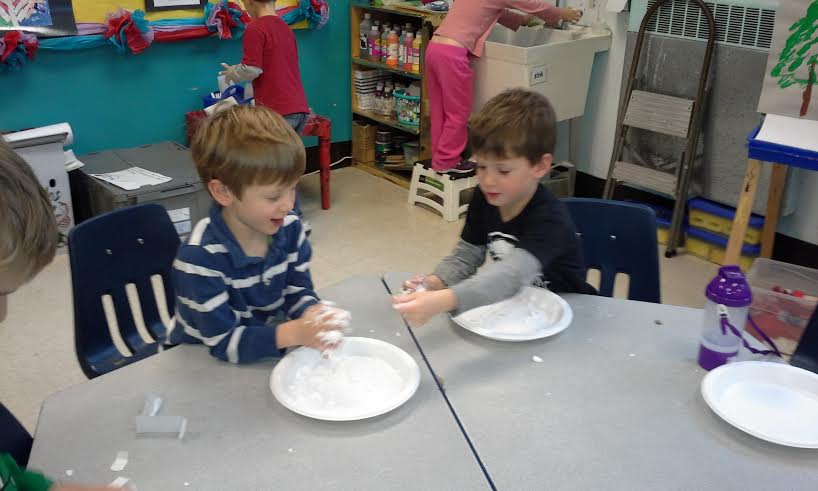
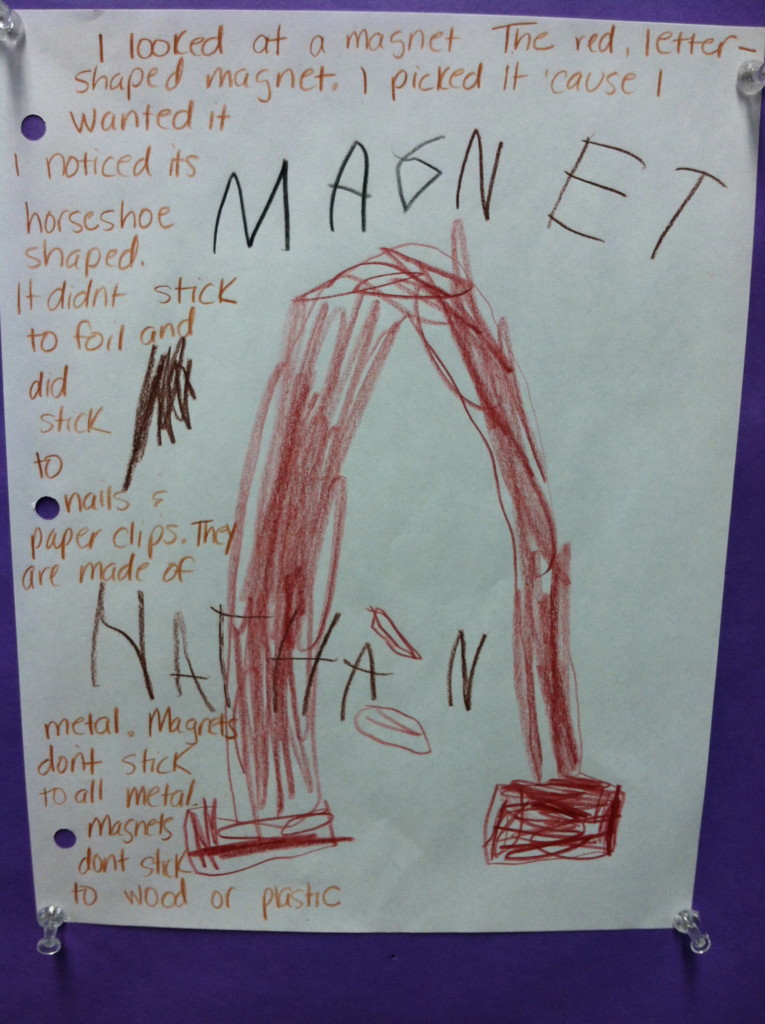
Over the next few weeks, we will be exploring temperature, snow, and ice. We will be conducting various experiments; however, to help us get into the “wintry mood,” we made our own FNOW! (fake snow)
Ingredients:

  • Baking soda
  • White hair conditioner

Mix three cups of baking soda to 1/2 cup of hair conditioner.

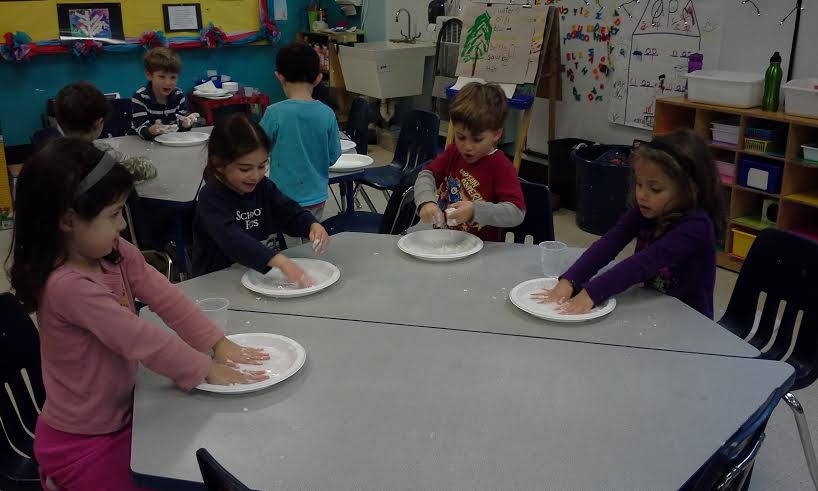
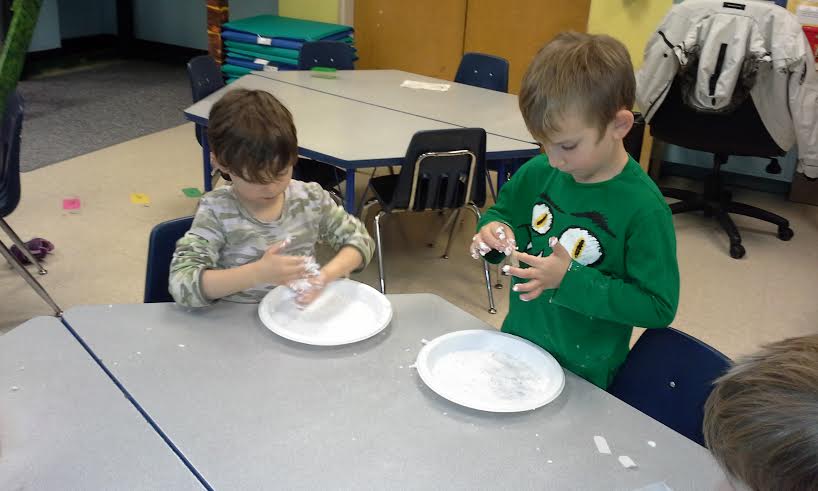
The FNOW felt cool, damp, and soft like real snow! We even made FNOWballs!

Fnow 1

fnow 2

fnow 3

Snowball Sight Word Game

Sight words:

  • I
  • am
  • the
  • little
  • a
  • is
  • to
  • have
  • we
  • my
  • like
  • for
  • he
  • she
  • with
  • me

We played another game to help us identify sight words. First, the children each wrote their name on a piece of white paper, and crumpled the paper into a “snowball.” Then we selected one of our sight words to be the “sight word snowball.” We flipped over different cards until we came to the chosen word. Once that card was flipped over, the children threw their snowballs into the middle of the circle. Afterwards, they each selected a random snowball, smoothed out the paper, read the name, and sat in the spot of that classmate for the following round.
Math Jumping

Another game that we have been enjoying is our addition and subtraction jumping game. Not only does this game allow the us to practice math skills, it is also a fantastic way to get up, move our bodies, and get our wiggles out! Each child stands in their place and listens to the directions.

“Jump 9 plus 2 times.”

“Jump 8 plus 3 times.”

“Jump 12 take away 1 times.”

We take some time to talk about what we notice:

“These are all ways to make eleven!”

At times the children like “tricky” ones:

“Jump 5 plus 5 times.”

“Jump 9 plus 1 times.”

“Jump 10 take away 10 times.”

Oftentimes, this last direction can be confusing similar to way the Simon Says can be tricky. Your body is so used to jumping, that it automatically starts moving. The key is to listen carefully to the problem. We have a great time with this activity!

Vowel/Consonant Game

We start by standing in a circle and each child says a letter in alphabetical order. When someone gets a vowel, they need to sit down. We go around and around, until we have “one consonant standing.” Everyone in the class says, “mazel tov!” to the winner, who then responds, “thank you.” Not only does this game allow the children to differentiate between consonants and vowels, it also gives them the opportunity to practice good sportsmanship.

Hebrew

While we were learning the letter chet, we used  different materials!  We had fun making  a chalon(window). The children chose to have their  chalon (window) open for different objects that begin with the letter  chet – like a chanukiyah (menorah for Chanukah),  chatool (cat), and  challah. We also baked challa with Hepzibah.

For the letter  alef   we  realized that  ani (me) begins with  aleph. With this new word I decided to introduce two verbs so that we could make actual sentences. First we drew self-portraits, and then we made pictures of ourselves loving someone. The verbs we learned were  ohev (love) and  ochel (eat).
Avraham V’ Sara
In Judaic studies we are learning about welcoming guests. The children gave their interpretation of the Avraham V’ Sara story:
Moshe: Avraham and Sarah lived in a desert in Israel.

Ella: God told them to go to the desert. God promised Avraham and Sarah that if they moved to Israel, they would have a big family…as much as all the sand and all the stars.

Naftali: So many that you can’t count them.

Hannah: It will be a kehila of the people of Israel.

Simon: They went with Lot and his children and his wife.

Hadas: Then they got to Israel.

Naftali: Then the two shepards, Abraham-Shepard and Lot-Shepard, fought.

Moshe: Then Lot moved away, because they didn’t want to fight, so he went to find new grass.

Naftali: I would share the grass.

Moshe: I would make a border to share the grass.

Noam: I would divide the grass exactly by two so both people could have the same amount.

Ella: Avraham let Lot pick what to do, and Lot said he wanted to move by the river.

Naftali: It’s called the Jordan river because it’s next to Jordan.

Hannah: Israel has arba neighbors.

Ayden: Abraham lived in a tent.

Hannah: An ohel.

Noam: There were four doors that were always open so they couple welcome people.

Moshe: They washed their hands and feet and gave them food and water.

Ayden: So they feel good.

Ella: Like chaverim!

Moshe: And taught them about HaShem.

Maya: That you can’t see him.

Naftali: They saw three people in the desert who came into the tent and Avraham and Sarah said…

All: Baruchim HaBayim!

Noam: They gave the strangers food and water.

Simon: The strangers said that they had a message.

Noam: That Sarah would have a baby!

Hadas: They laughed because Sarah was very old.

Hannah: And Avraham was almost 100 years old.

Ayden: He was named Itzchak.

Moshe: Because they all laughed when he was born!

Ella: When Itzchak was older he was very quiet and he didn’t have any friends, so they looked for a good friend for Itzchak.


Family Celebration, New Science Unit, and Reader’s Theater

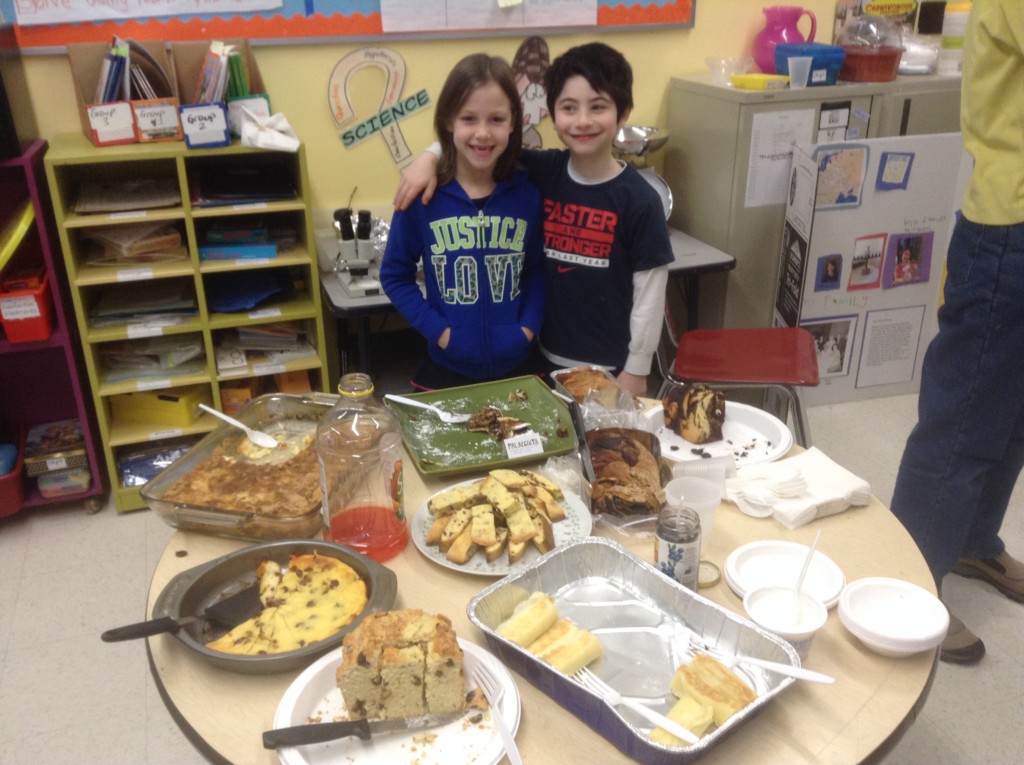
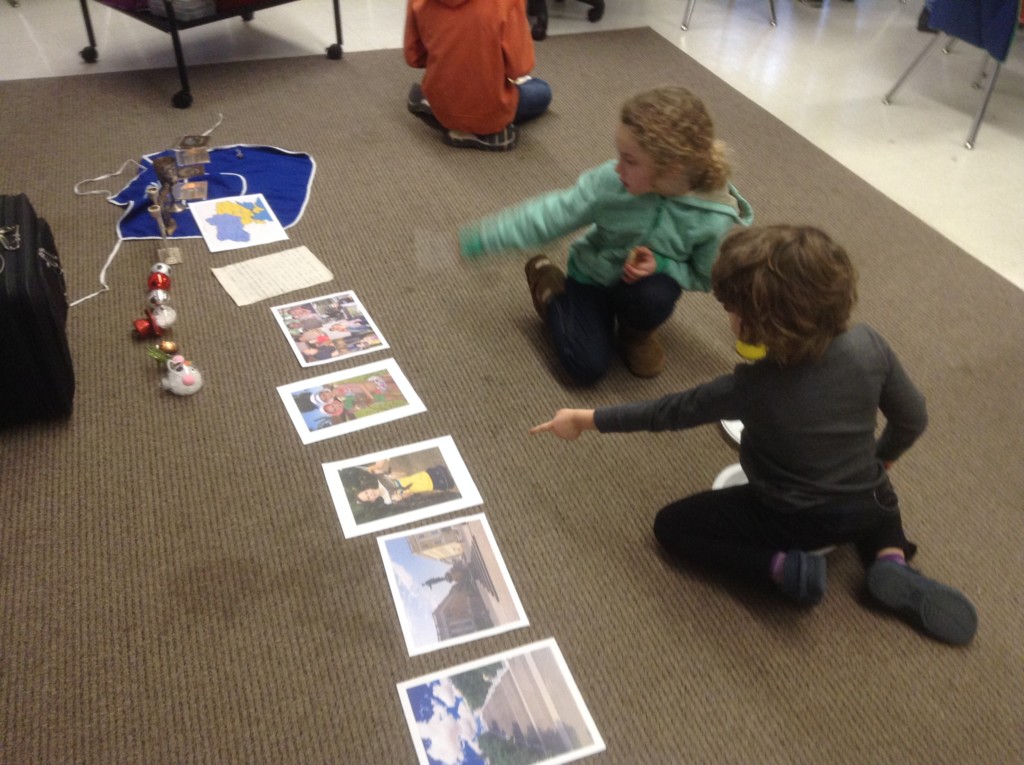
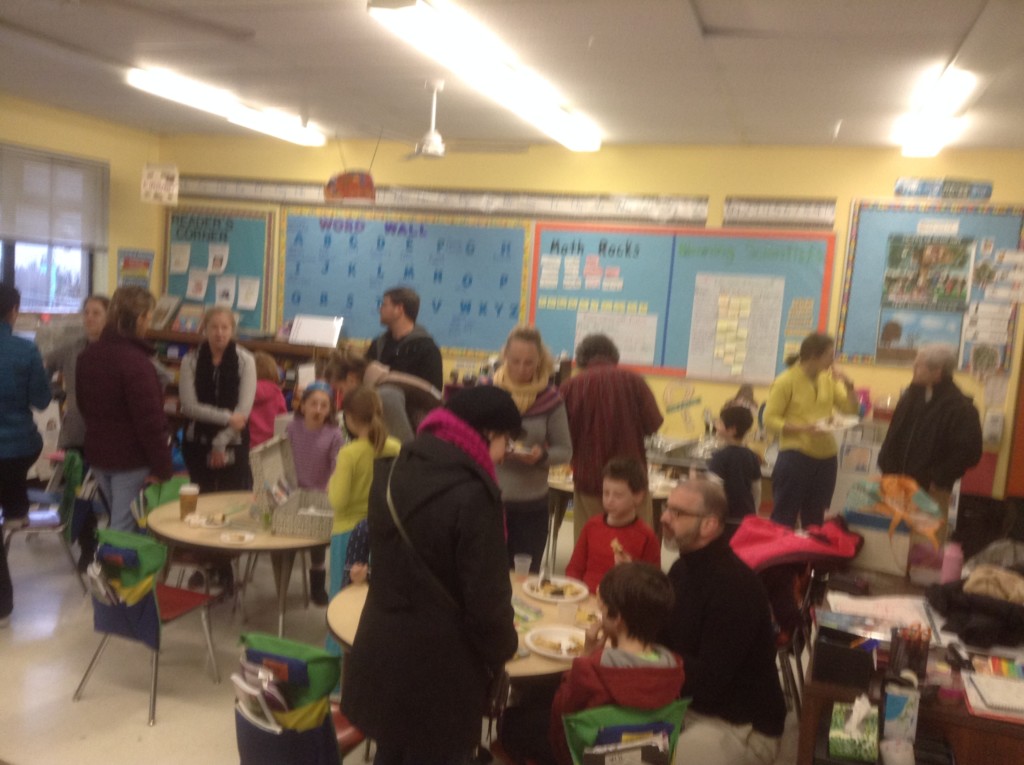
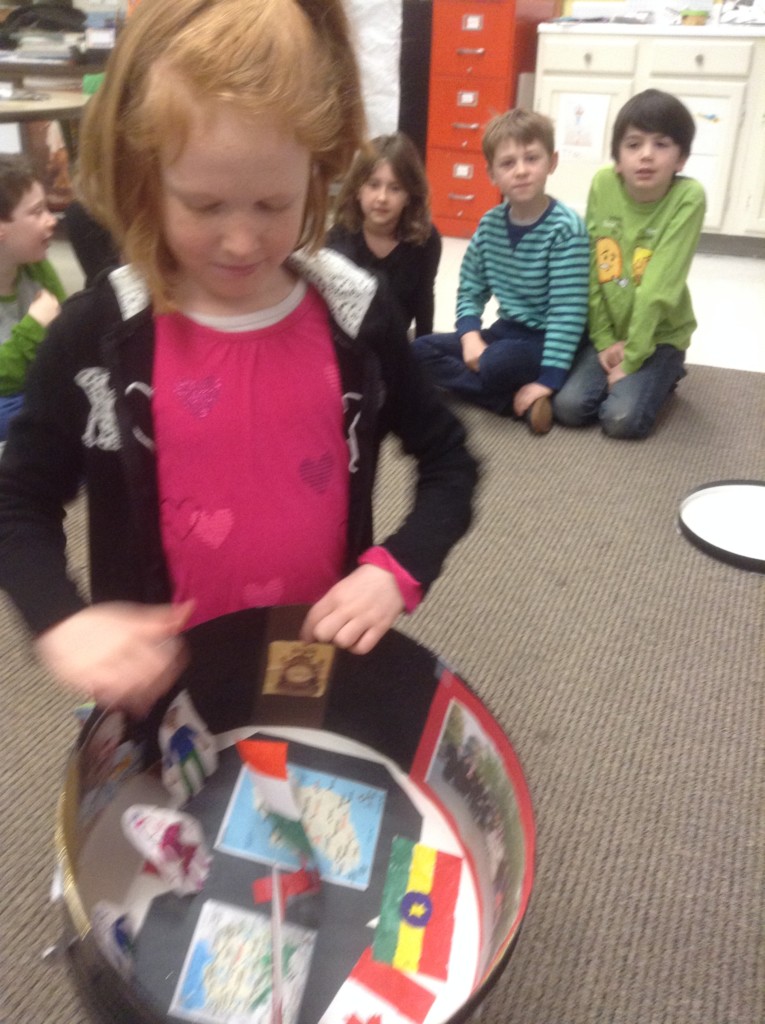
It has been a busy, exciting few weeks in second grade since we have come back from winter vacation.  We drew our immigration and family history unit to a close this past week with a joyous family history celebration.  Many parents and siblings came to learn about and celebrate our varying cultural heritage.  They enjoyed different traditional foods, looked at real family heirlooms, and observed old family pictures.  Thank you to all the parents who not only helped your children understand the richness of family history, but who were able to come and join in this celebration.  It’s important that we continue to have discussions about our heritage so that we continue to know our own history and how it connects to the diverse country that is our home.

2015-01-09 08.24.46 2015-01-09 08.25.04 2015-01-09 08.25.10 2015-01-13 08.23.45 2015-01-14 08.07.19

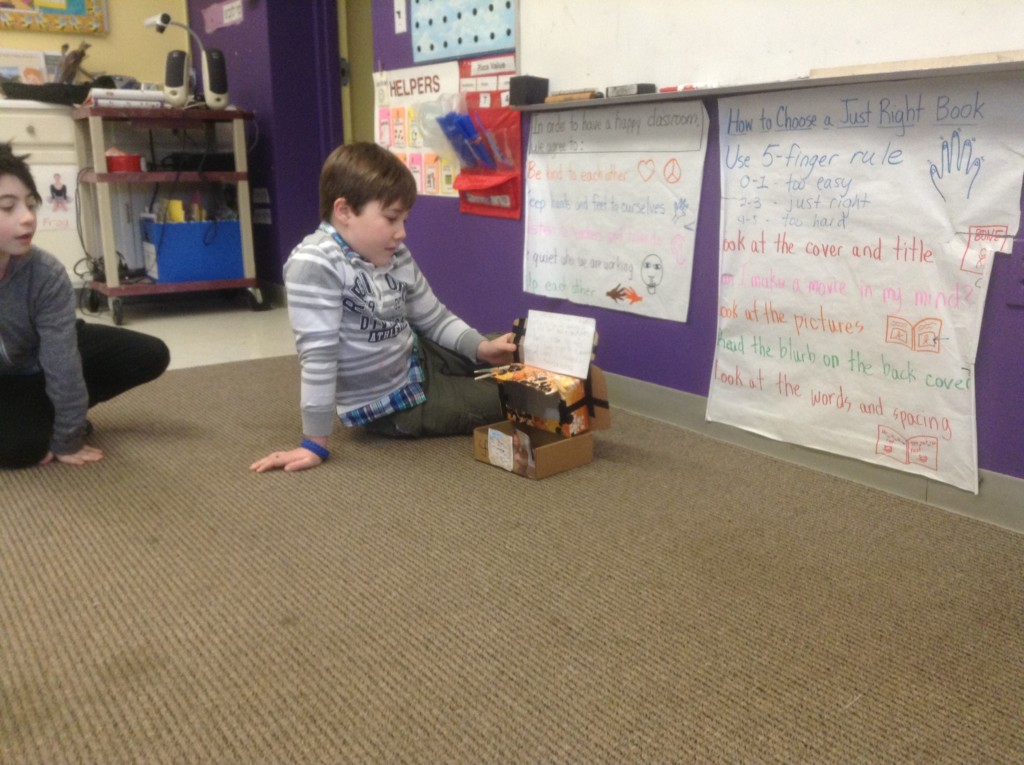
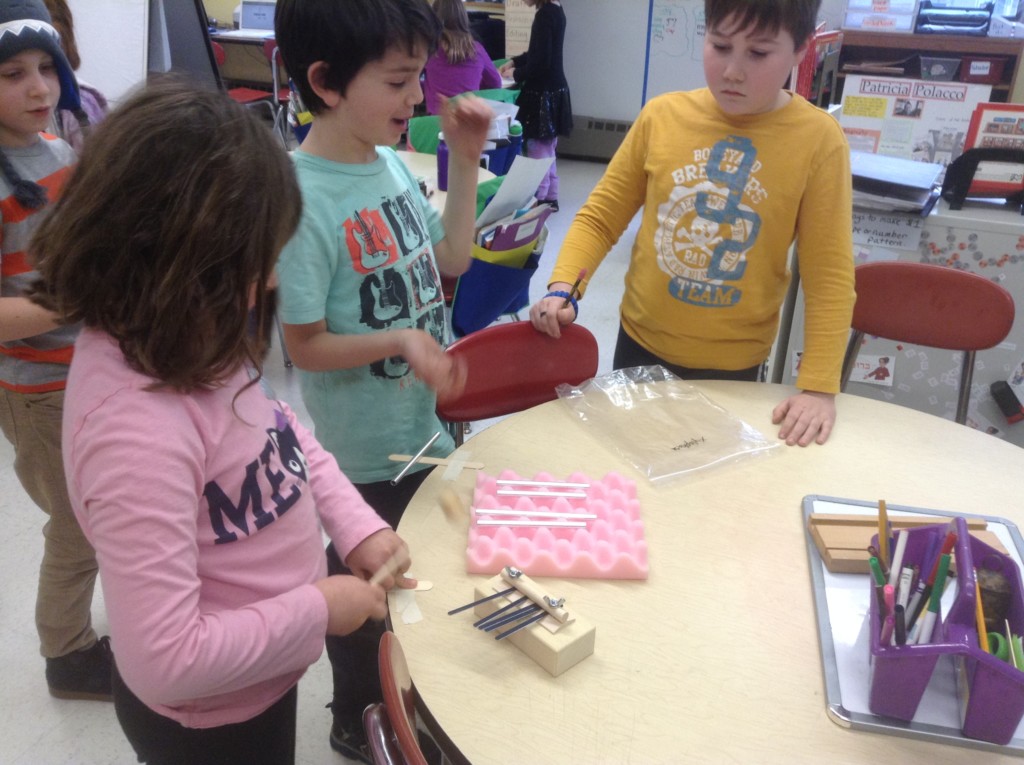
This week, we launched a new science unit all about balance and motion.  Throughout this unit, students will learn about various types of motion such as spinning, rolling, sound, and magnetic motion.  They will gain a deeper understanding of how things move around them and begin to learn the building blocks of physics!

We began our unit by test out various materials that we’ll be using in the coming weeks such as musical instruments, tops, weights, and balance shapes.

2015-01-15 13.44.14 2015-01-15 13.44.18

While some students attempted to balance the shapes on the floor or on their fingers…2015-01-15 13.44.31 2015-01-16 13.16.38


Others took a seal-like approach as they attempted to balance the shapes on their noses…

2015-01-16 13.20.54 2015-01-16 13.20.58

Another exciting thing we have been working on in school is preparing for our reader’s theater performance on February 6th at 8:15.  We’ll be performing two separate plays: Thunder Cake and Thank you Mr. Falker, both are books by our author study author, Patricia Polacco.  You are in for a real treat!  

2015-01-15 14.48.41 2015-01-15 14.48.45

5th Grade Makes Awesome Bricks

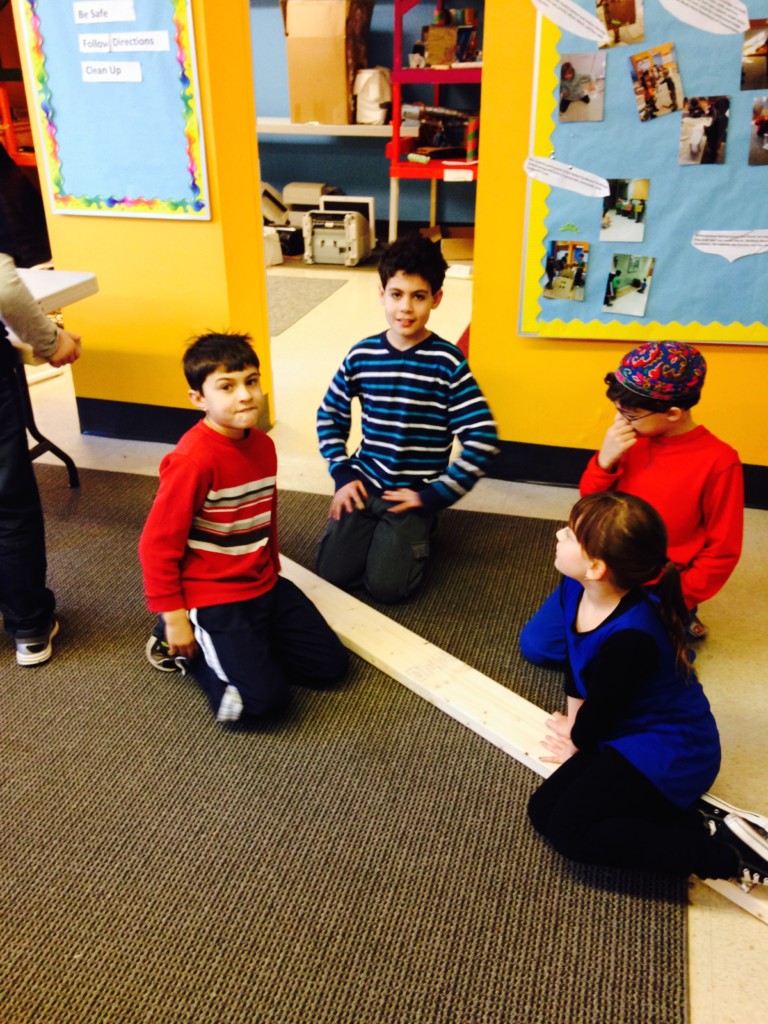
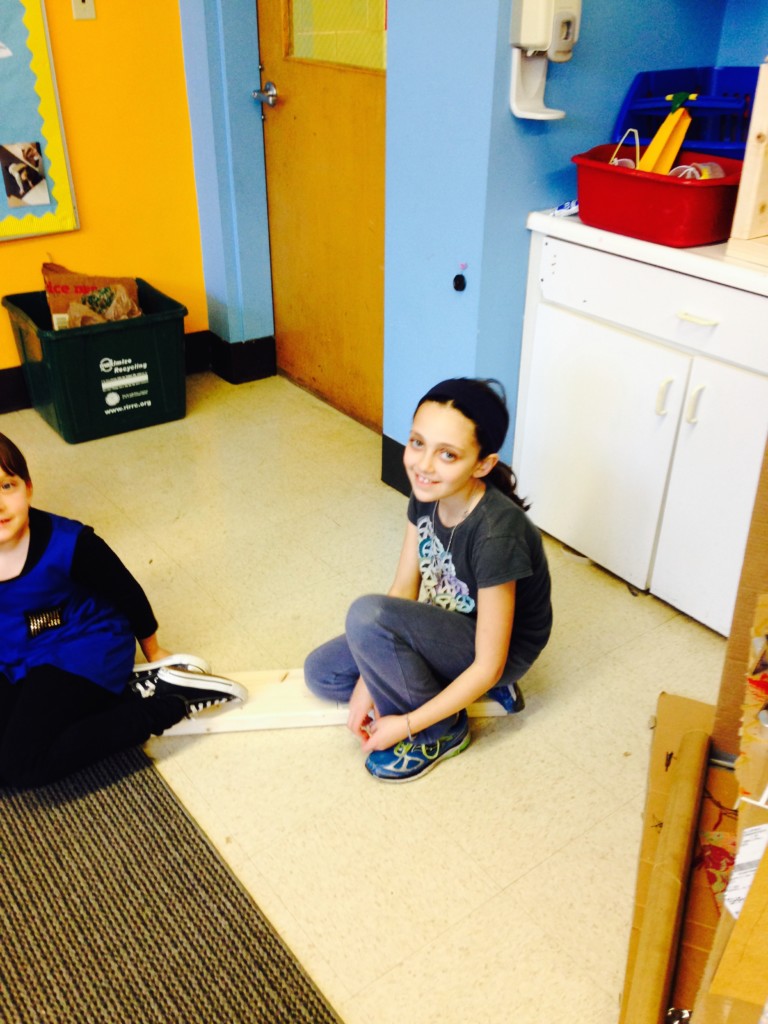
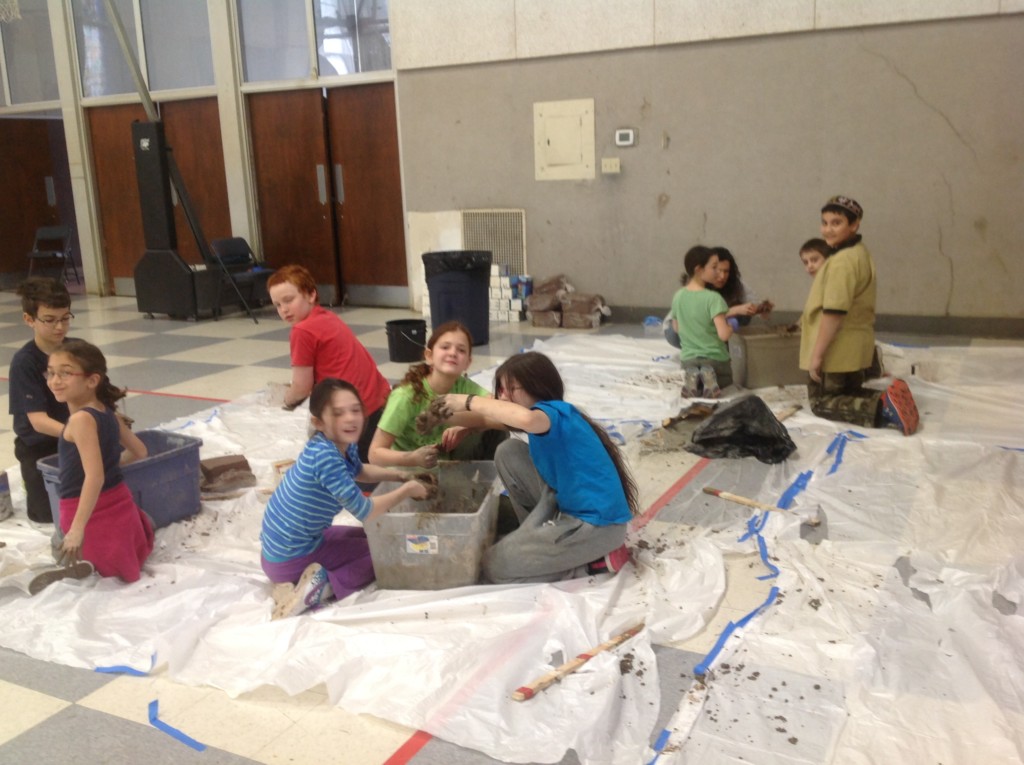
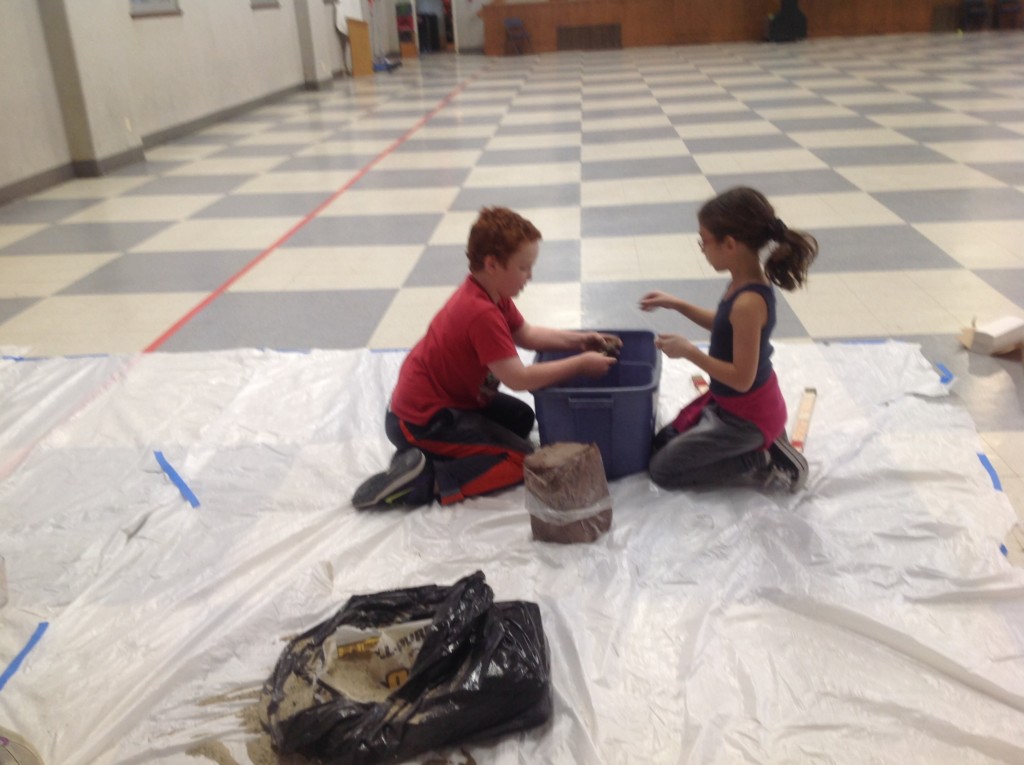
The class worked in groups of three to mix and make the bricks.
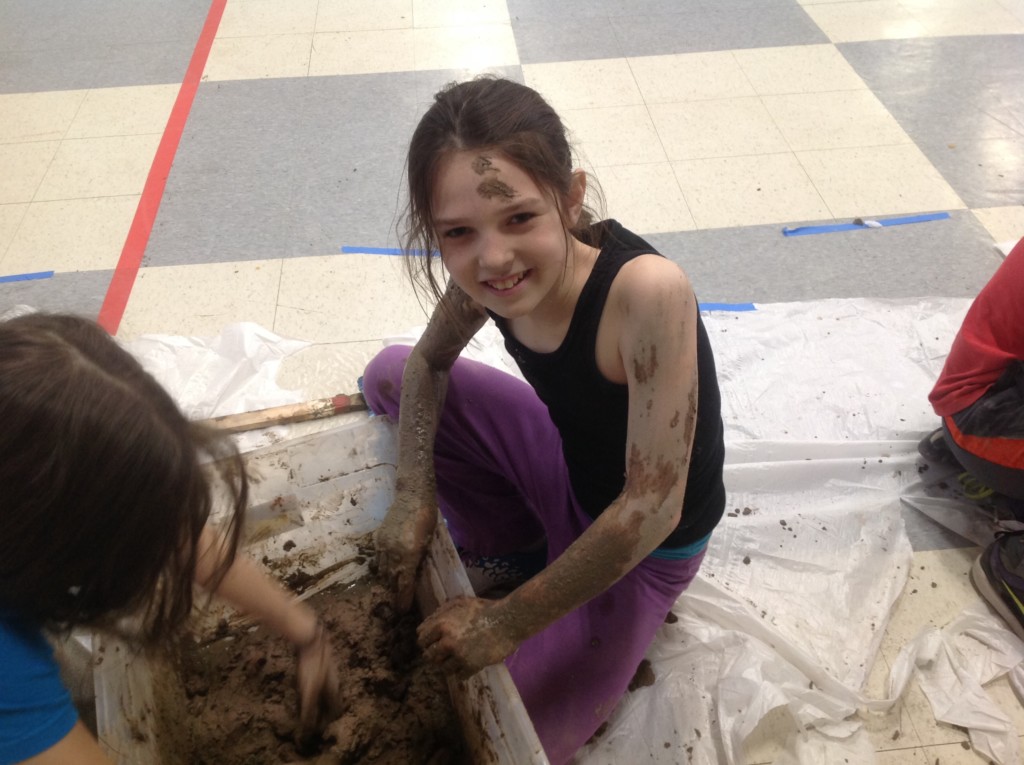
This was clearly an activity that made for dirty hands and arms.  One student commented to me that she was glad we had done this at the end of the day, so she could go home and immediatley take a shower!
This was clearly an activity that made for dirty hands and arms. One student commented to me that she was glad we had done this at the end of the day, so she could go home and immediatley take a shower!
The students approached the task with a seriousness of purpose at the same time that they clearly were enjoying the activity.

Jodd

After months of waiting and doing the research necessary to understand the process, know the porportions of materials and collecting the necessary materials like the milk cartons, the 5th graders finally had the opportunity to make the bricks.  Excitement was in the air as we set up the tarps and carried in the heavy bags of clay, cement and sand.  From that moment on, the students had a sense that this was not going to be that easy.  As part of the process, they were asked to write reflections before the activity. They all commented on how they thought it would be fun and hard at first, but that it would get easier and that it would be messy.  Afterwards, they again reflected on whether the experience surprised them and what were some of the thngs that they learned.  One student commented that it was “way, way, way harder,” while another one wrote, “This experience left me thinking about how terrible ti would be to have to do that for 8-10 hours a day, six days a week for your whole life.”  The students quickly became covered in clay but they did an amazing job of focusing on the task and then, making sure that they cleaned the area and themselves up completely before returning to the classroom.  One of the things that we learned was that, even with our planning and measuring beforehand, we did not judge the porportions correctly and so, we ran out of the cement and sand much sooner than expected.  Unfortunately, that meant that we were not able to make all the bricks that we had hoped to construct and only completed making 23 bricks.  However, Mrs. Woods and Rabbi Gouze will talk about how we might be able to reschedule another day in order to finish the rest of them.  It was clear that the students not only learned from this experience but it was definitely one from which they enjoyed and gained a lot. 


Dr. King Was an “Upstander!”

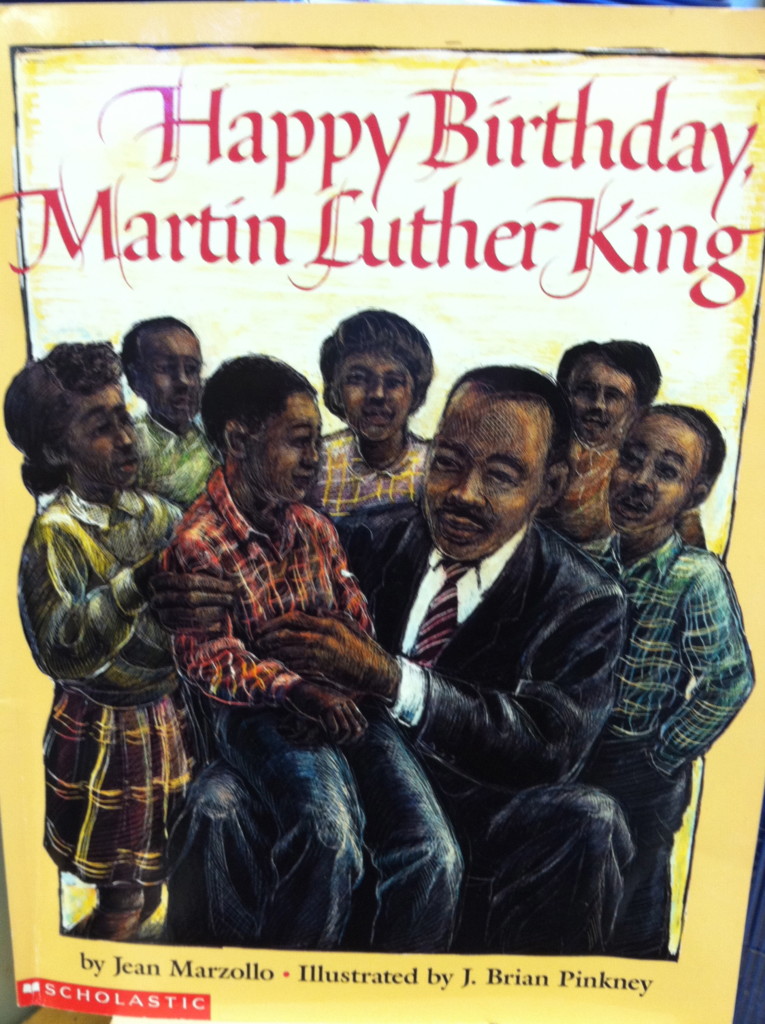
Over the last few weeks as we have been preparing to observe Martin Luther King Jr. Day, we learned about Dr. King’s legacy and reflected on our own visions for making the world a better place for all people. Anchoring our discussions and play are the beliefs that all people are made in the image of God (be’zelem Elohim) and that we are responsible for making the world a better place.

 IMG_7530

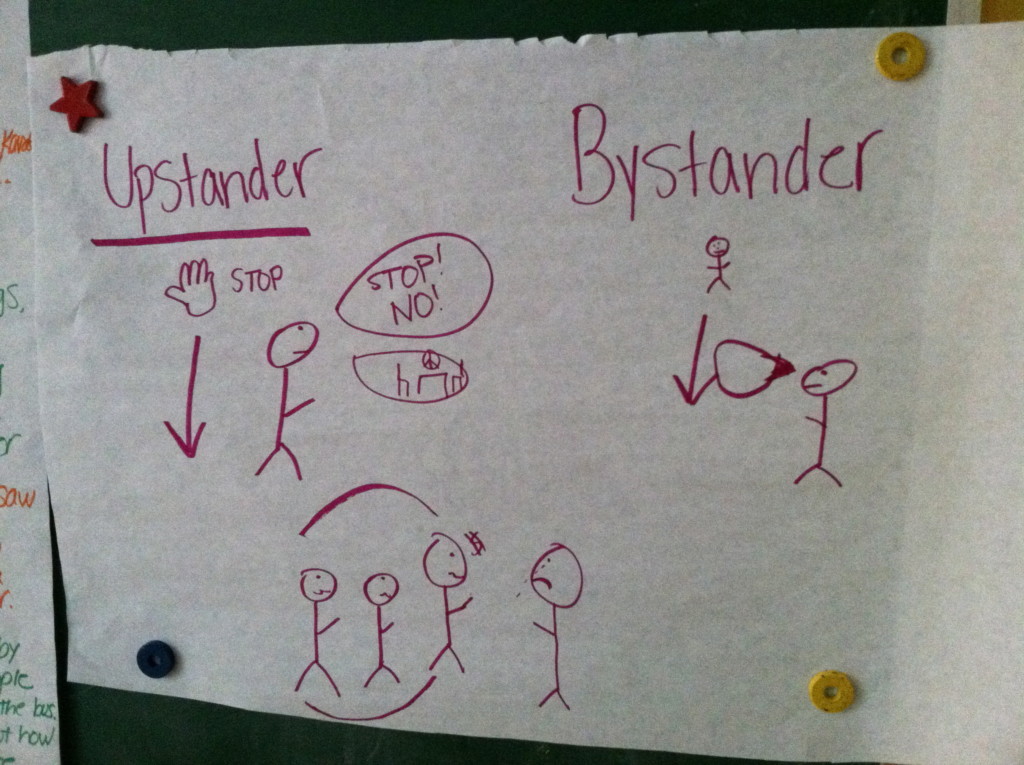
During our conversations, we talked about some of the injustices Dr. King experienced in his lifetime (our understandings about the ways in which we are alike and different helped to shape these discussions. Part of our learning is documented on the lobby bulletin board – please check it out!) We learned that Martin Luther King – and the many people who worked with him during the civil rights movement – were upstanders. An upstander is a person who knows what’s happening is wrong and then works to make it right. In comparison, a bystander is someone who witnesses injustice or inequity and doesn’t get involved. The work of civil rights participants and social justice advocates (both then and now)  help us to understand the saying (written in Pirkei Avot): “It is not incumbent upon you to finish the task. Yet, you are not free to desist from it.”

IMG_7546

Along with Rosa Parks, Rabbi Abraham Joshua Heschel and many, many thousands of men, women and children, MLK worked to change people’s beliefs and attitudes, as well as the laws of the land. During our conversations, we also acknowledged that there is still so much more work to be done and reflected on the ways in which we could build on Dr. King’s legacy of repairing our world (tikkun olom).

 IMG_7545

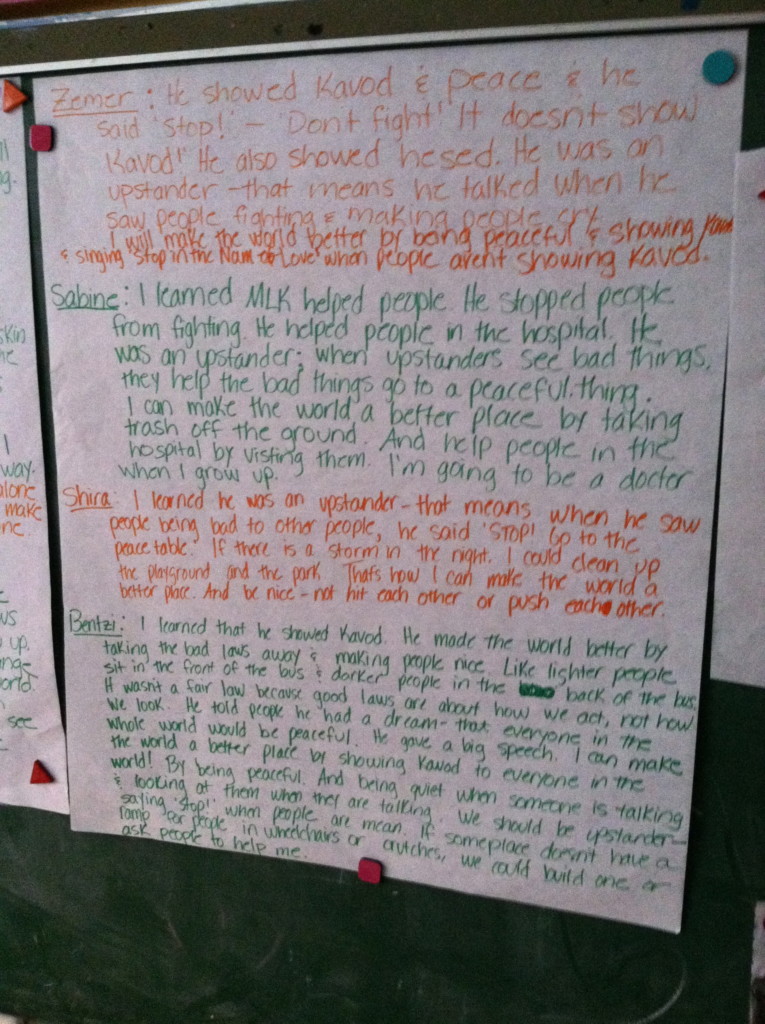
Some of us imagined a time when all people will sing “Stop in the Name of Love” when they see something bad and then use the peace table. Other children suggested that we should visit people in the hospital who are sick, pick up trash in playgrounds, and teach people to say our mantra: “I am peaceful.” Still others said they wanted to change unfair laws, build ramps in all buildings for people who use wheelchairs and “teach people to solve a problem in a peaceful way.” Our reflections are posted on our chalkboard in the back of our room; we encourage you to read them in their entirety!

*   *   *   *   *   *   *    *

We all agreed that we want, like MLK, a peaceful world in which children and grown-ups alike will remember to use “treat each other with kavod.” We will continue to build upon our discoveries as we reflect on issues of diversity, tolerance and respect throughout our year together. We affirm that our kehillah – community – is built upon the foundation of shared values, goals and concerns. At the same time, we can only continue to grow and learn when we recognize and nurture the differences and diversity among us. We are all unique individuals with differing interests, backgrounds, families, beliefs and personalities. Indeed, our kehillah works every day to reaffirm Dr. King’s words that “darkness cannot drive out darkness; only light can do that. Hate cannot drive out hate; only love can do that.”

*   *   *   *   *   *   *   *   *

Wishing you a meaningful holiday.

*   *   *   *   *   *   *   *   *

Below is more of the text from our reflections on what makes us alike and different. See our previous post and the lobby bulletin board for the more illustrations & text):

We are all alike. We like to play in PreK.

We are all different.


Some of us like to pretend to be doctors.

Some of us like to play family of doggie.

Some of us like to play in the block area.

Some of us like to color.

Some of us like to be scientists.

Some of us like to use the Peace Table.


We are all alike. We all have families.

We are all different.

Some of us live with moms.

Some of us live with dads.

Some of us live with moms and dads.

Some people live with two moms.

Some people live with grandparents.

Tamar’s Post about Bricks and a Farewell

This week the fifth grade did so many exciting things!  One of them was making bricks for the brick oven.  We mixed sand, cement, water, and clay in plastic tubs, then put the mixture into empty milk cartons, which we have been collecting since the beginning of the school year.  We did all this in groups of three. The groups were: Jonah, Jordan and Tamar; Tomer, Jodd and Eliora; and Abby, Elliana and Shira.

This week is also Shira’s last week before she leaves for Israel on Tuesday.  We have all made cards for her, and all of us have collaborated to make a PowerPoint where each of us creates a slide saying why we will miss her.  The next time she will be here will be in August.  She has been a huge part of our community, and we will all miss her.