This past Friday, we had a special visit from Bwana Iguana, thanks to the generosity of Alan Shawn Feinstein. It was an exciting and educational experience for our class. We had a lot of fun seeing, holding, and petting many different reptiles. The class favorite was the blue tongue skink who could dance when we sang, “Row, Row, Row Your Boat.” Of course, a few students were selected to show the lizard how to dance properly. We also learned a lot. I myself never knew the king snake was called that because he eats other snakes, such as rattlesnakes. Another new fact we learned was that the box turtle is one of the only turtles to completely close itself into its shell, like a box. Hence the name, box turtle! Thank you, Alan Shawn Feinstein, for a wonderful hands-on learning experience that will be remembered for a lifetime.
Class Blogs
Tu B’Shvat
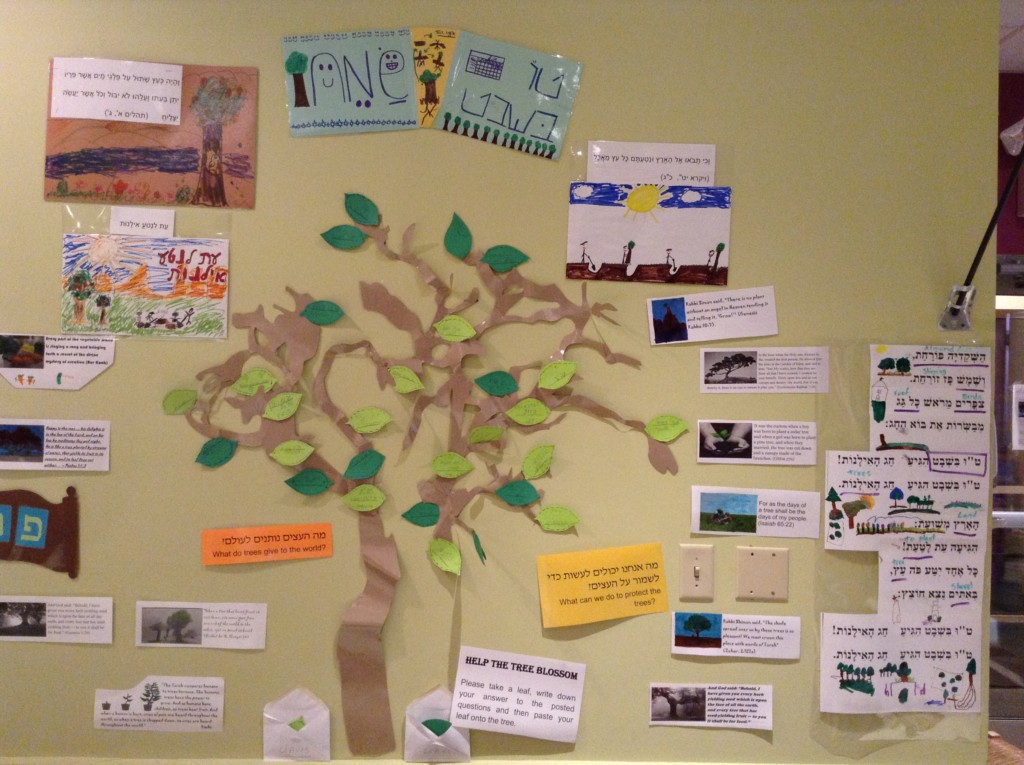
We are in the month of Shvat and we count the days till the New Year of the Trees. A beautiful and festive wall display about the holiday and trees in the school lobby is a joint effort of several teachers and classes. The fifth grade students’ contribution is of beautiful drawings of trees and people planting trees. These drawings are the students’ interpretations of citations from the bible that relate to trees, and they are also the lyrics of the song we learn for this holiday, “כי תבואו אל הארץ” Ki Tavou El HaAretz.
Invent ourselves every time
Part of my job as Lashon teacher is to teach my kids the holiday songs; it’s a good way to do something fresh and unusual, and also music is the easiest way to connect everybody. Come on, who doesn’t love music, right??
So this week we are practicing on Tu b’eshvat – but this time I wanted to do something even more fun than just sing it, soooooo I acted like a conductor in a concert – and they loved it. They even asked me if they could take their turn and be the conductors – and so they did. I have to admit it is so much fun to learn a song that way. See you for our next “concert!”
Pre-K in Music!
Lately our Pre K students have been exploring and learning about a lot of different music and instruments. Last week, we learned about the orchestra and all of the different musicians and instruments that are used in it. We watched a video of an orchestra performing and talked about how all the musicians follow the conductor, which helps them to perform as a group. Later we practiced playing as a group and following a conductor using some hand drums!
Blooming in PreK
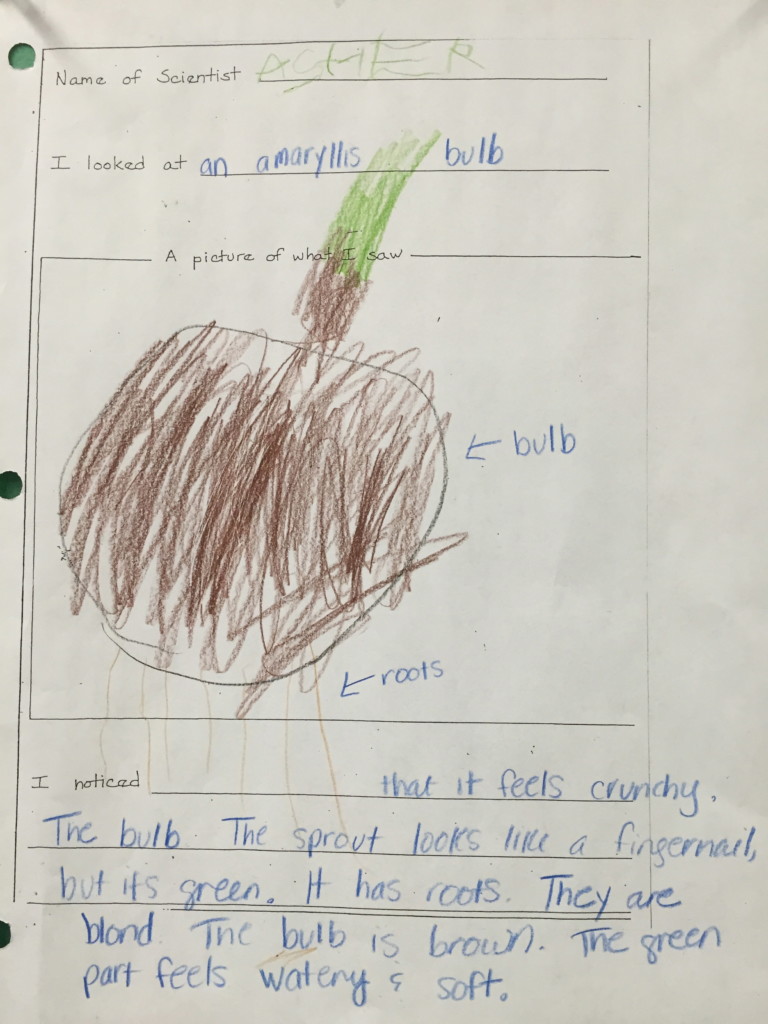
In honor of Tu’Bishvat (“the birthday of the trees”), we planted an amaryllis plant in our classroom. One of the many exciting things about an amaryllis is how fast it grows; we can actually observe the bulb’s growth from day to day. While caring for our amaryllis plant, we are practicing measuring, close observation, scientific documentation, number sense, and making predictions and comparing them to observable results.
We are having a wonderful time preparing for Tu’Bishvat in other ways, as well. While it is still winter in Providence, we know that spring is arriving in Israel and that some trees are beginning to bloom. Inspired, we are transforming our classroom into a colorful and flower-filled forest by creating beautiful and glittery flowers and trees to decorate our walls and ceiling.
Partnership & Peace with ISRI
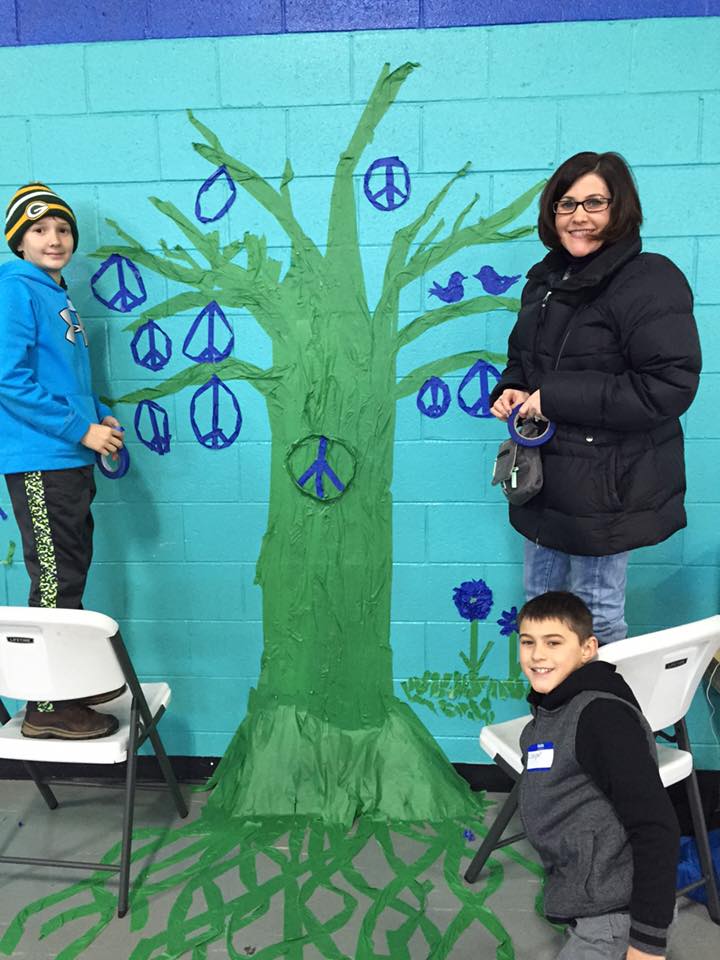
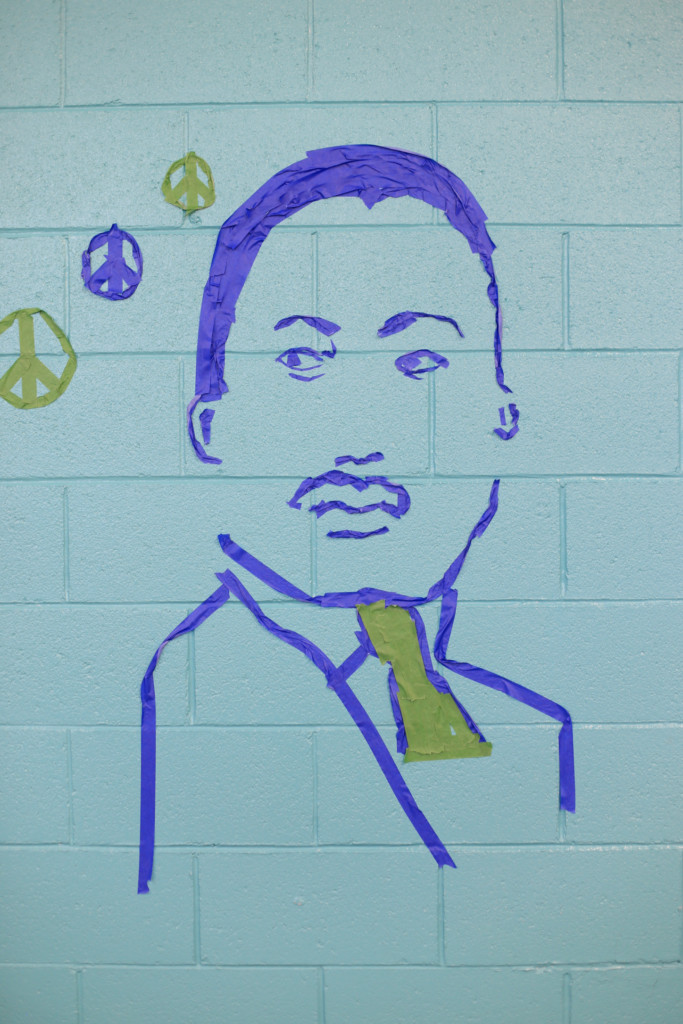 On Martin Luther King Jr.’s birthday, students and families from JCDSRI and the Islamic School of RI (ISRI) gathered together to create a tape art mural to promote peace. In addition, the students collected puzzle and activity books for children at Hasbro Children’s Hospital. For video coverage of this wonderful event, visit ABC6 or WPRI.
In February 2015, when ISRI was vandalized with hateful, anti-Islamic messages, students from JCDSRI made cards to show solidarity and support for their Muslim peers. Head of School Adam Tilove hand delivered the messages to ISRI’s Head of School Abdelnasser Hussein, and a friendship was born.
This year, with financial support from the Rhode Island Foundation, the two schools are building a partnership in the form of a 12-week theater program for their 5th graders, facilitated by the Center for Dynamic Learning. In addition, several whole school activities are planned, including the recent community building day on Martin Luther King Day organized by the two schools’ Parent Associations.
Mr. Tilove understands that, in the wake of terrorism in Israel and Paris, many people are nervous 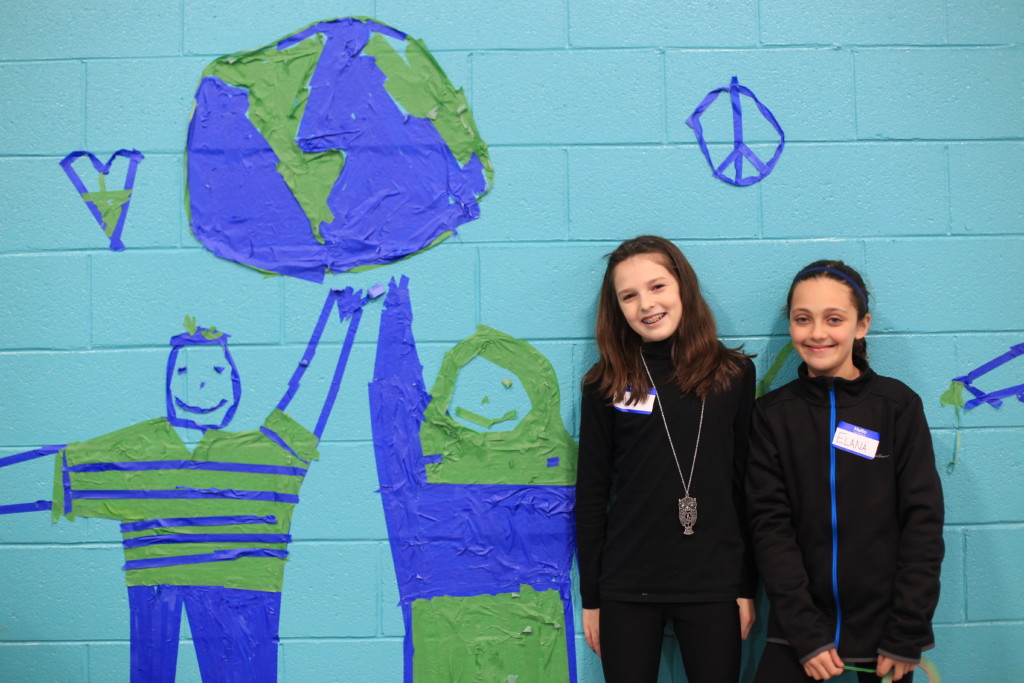 about such a partnership. He states that, among other things, “I believe in my partner Abdelnasser Hussein and the lovely people I have met from ISRI. I believe in people’s innate goodness and kindness, and I will not let evil acts poison my faith in humanity. Further, I believe that living in peace and mutual respect with one’s neighbors is not an option, but a mandate from Heaven: ‘Love your neighbor as yourself’ is a command from God, not a qualified suggestion.”
ISRI’s Mr. Hussein is confident that cooperation and understanding will combat misconceptions and hatred. He says, “I believe religion and freedom of speech are the preliminary common grounds which will lead us to unity as citizens of the United States. We can present ourselves as role models for tolerance.”
We Are All Upstanders!
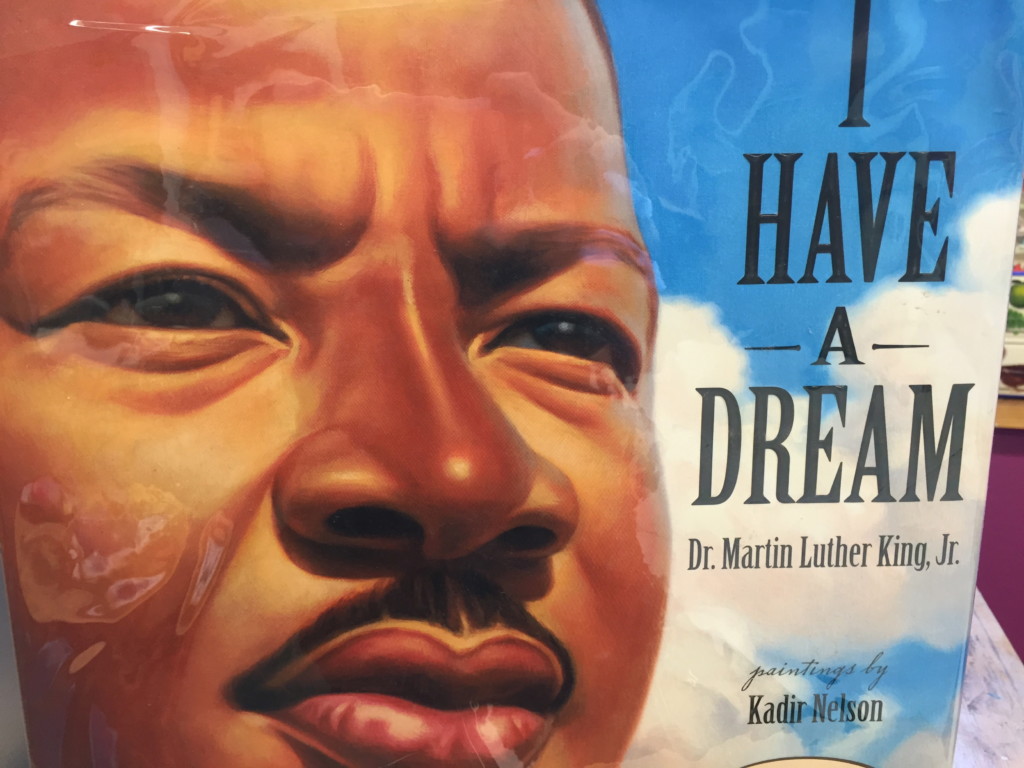
This week, as we prepared to observe Martin Luther King Jr. Day, we learned about Dr. King’s legacy and how he – and many others – worked to change people’s beliefs and attitudes, as well as the laws of the land. We acknowledged that there is still so much more work to be done and reflected on the ways in which we could build on Dr. King’s legacy of repairing our world (tikkun olom). Our reflections are hanging in the school lobby’s bulletin board.
Learning about Dr. King’s life also afforded us an opportunity to learn about upstanders and bystanders. As one child explains: “An upstander stands up and says ‘STOP’!’ They say ‘stop’ when people aren’t showing kavod or hesed.”
“A person who helps people when they are fighting is an upstander,” states another student. “If someone is fighting, a bystander doesn’t help them. We should be an upstander and help people,” she continues. “Martin Luther King Jr. was an upstander. He taught people kavod, hesed and shalom. He also changed bad laws. Like if someone like Wilma Rudolph [an Olympic Gold-medalist – one of our favorite books recounts her life story] had brown skin and the doctors didn’t treat her well, the law should be that doctors have to take care of you.”
Every day our kehillah (community) works to affirm Dr. King’s words: “Darkness cannot drive out darkness; only light can do that. Hate cannot drive out hate; only love can do that.”
Library Fun!
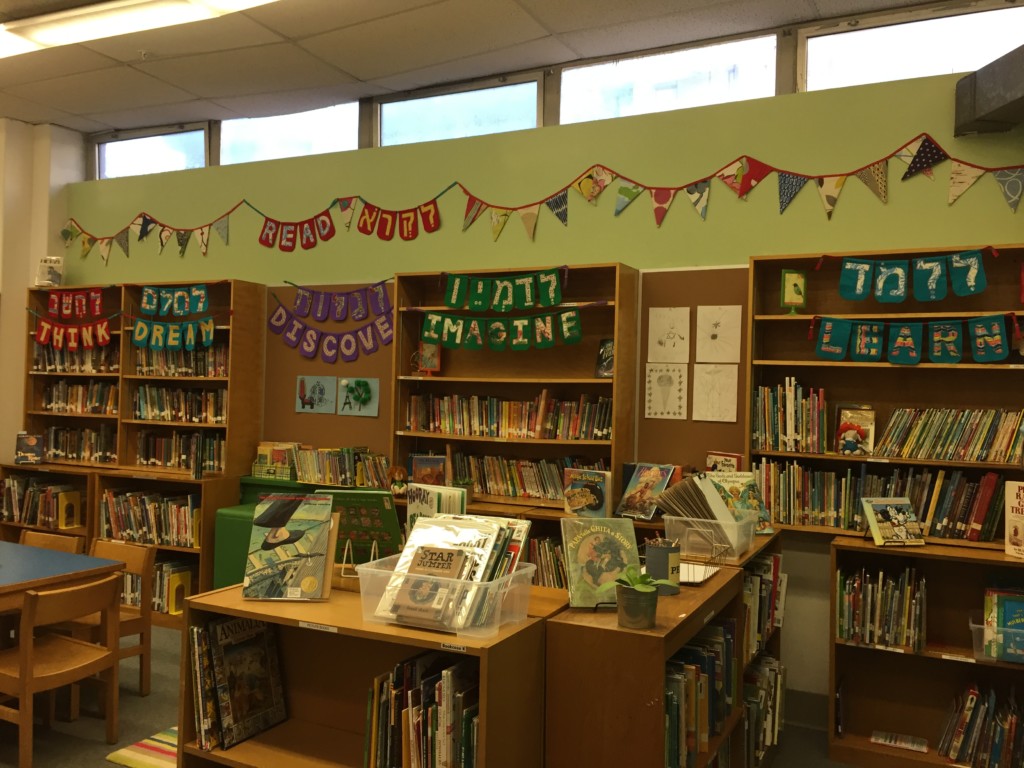
Special thanks go to parent Rachel Venditto for creating such wonderful pennants for our school library! Not only are they beautiful, but they convey, in both English and Hebrew, what I hope students experience in the library. I want them to discover, read, think, imagine, and dream here. I see the library as a portal to self-directed learning and creativity. This is why every month we study a country, a science topic, a cultural topic, and library skills. The library also provides an array of learning materials, including ipads, books, and Montessori-inspired activities that are tailored to every class. In this spirit, this week was a “country” week. We learned a bit about Cuba. For example, for grades Pre-K through 1, we read the book “The Drum Dream Girl,” by Margarita Engle. This beautifully-illustrated story is about a young girl who loves to drum, but is told by her father that “only boys” play the drums. In time, the father relents and allows her to study drumming with a teacher. Later, she is permitted to play publicly in her sisters’ band, and she is a great success. The tale is based on the true story of a Chinese-African-Cuban girl, Millo Castro Zaldarriaga. She broke Cuba’s traditional taboo against female drummers when she played in an “all-girl dance band” during the 1930s. She went on to become a world-famous musician, and later played with some of the American jazz greats of the era. The story led to some interesting discussions among the students about gender and equity. Later, the students identified Cuba on a world map, listened to some Cuban music while reading, colored pages of Cuban parrots, constructed letters of the alphabet out of colorful pipe cleaners, and solved “Pirate Math” problems. The kids, of course, also had time for browsing books to check out. It was a fun week in the library!
All we need is some sand!
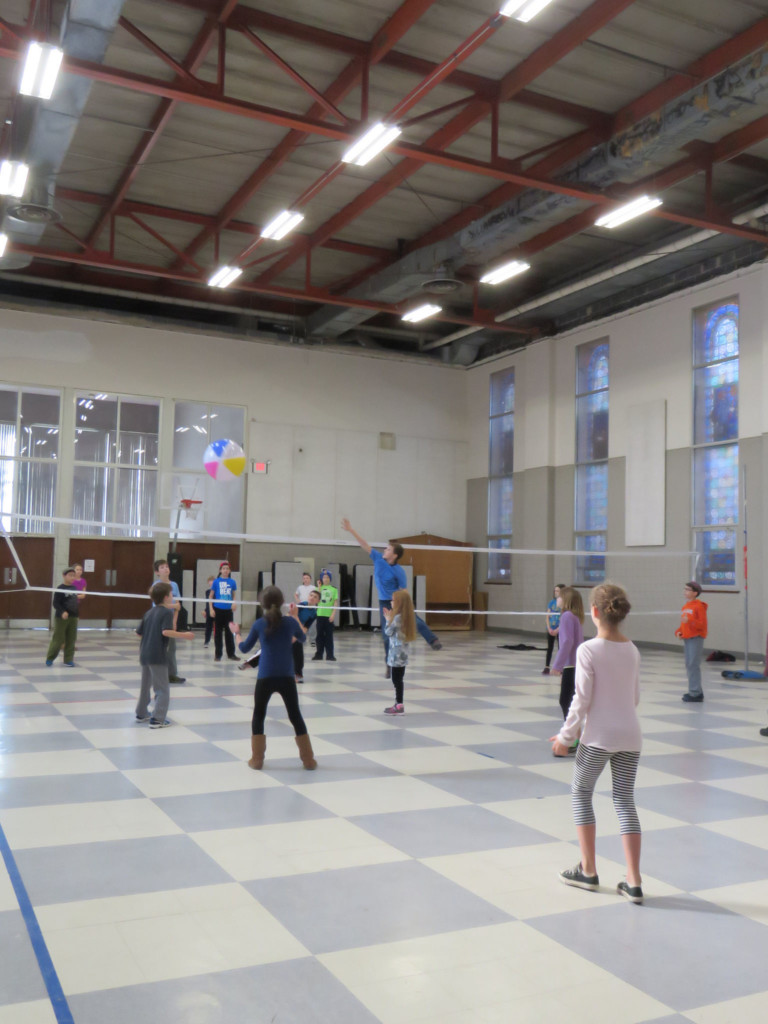
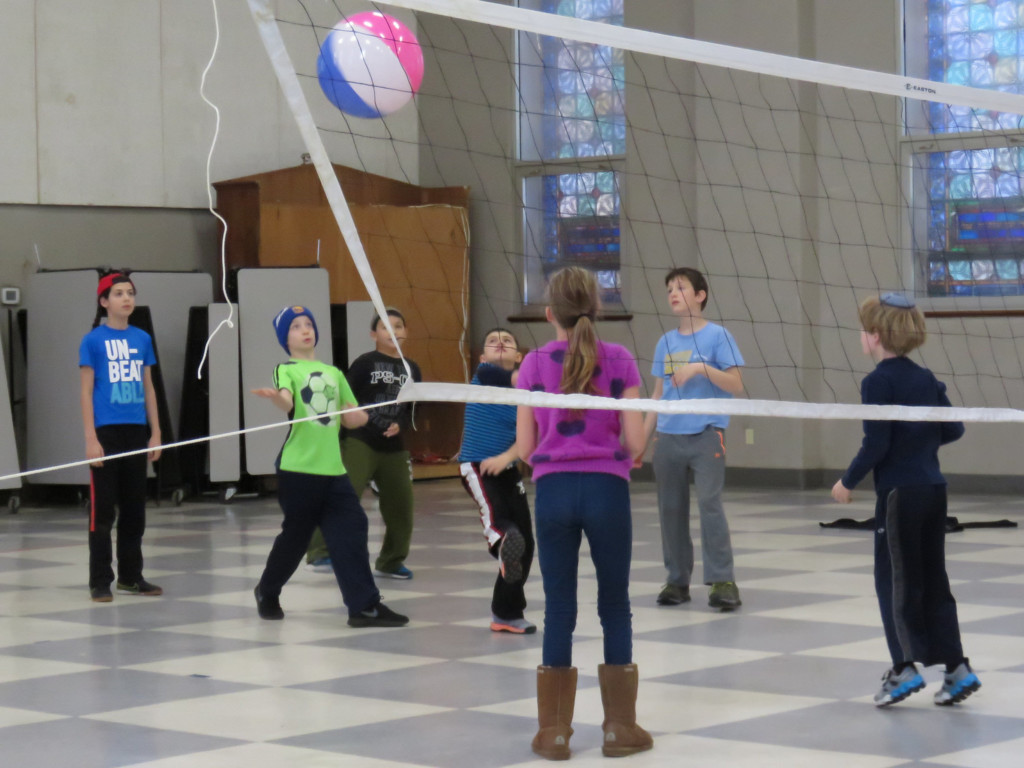 What’s it all about?
Turn toss hit…
Smack it…
Up up up…
Hit it…
Keep it alive…
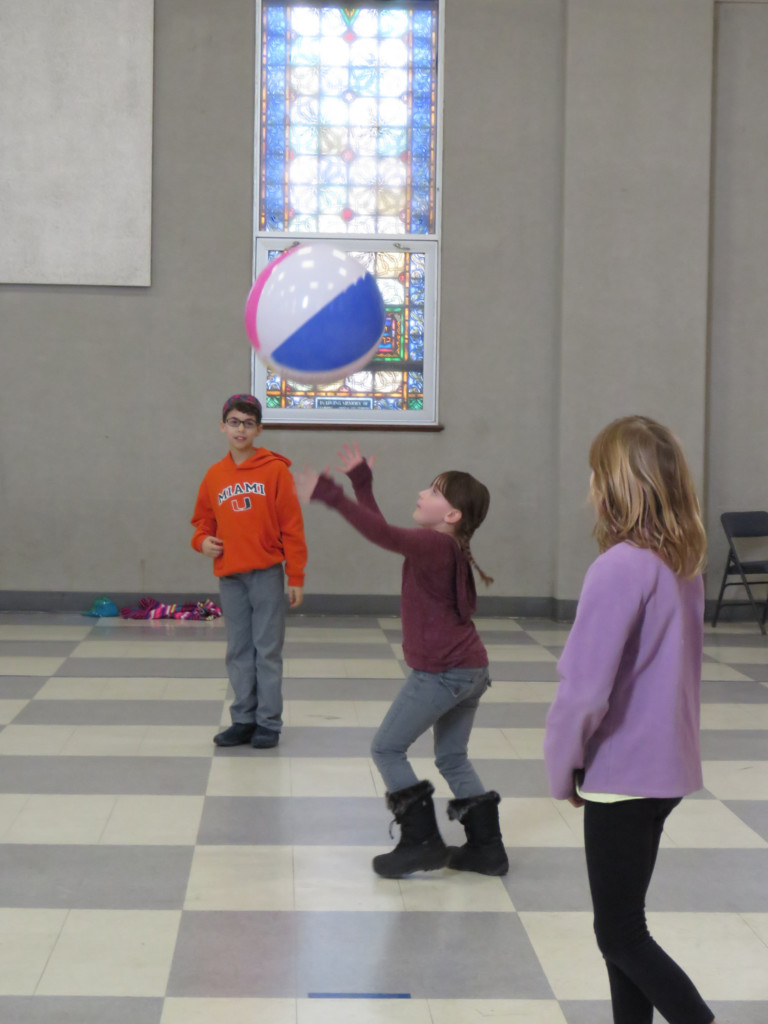 You only get a point when you serve…
Rotate…
Very few rules…Loads of fun for all,
Why of course it’s beachball volleyball!
Meet Paul the Ping Pong Ball!
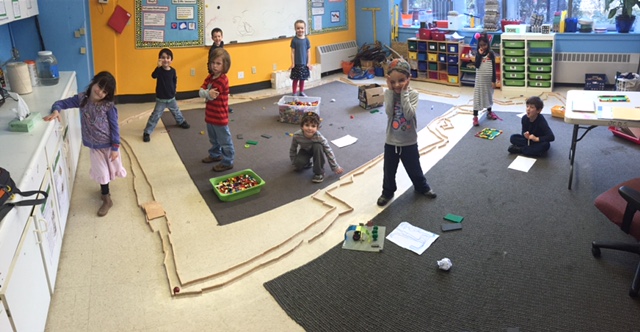
When you’re a kindergartner in the design lab, there’s something very important to keep in mind: teamwork. As young engineers, we know that by working together, we can accomplish more.
Students were introduced to my good friend, Paul the ping pong ball. There’s just one problem with Paul; he has TOO much energy! In order for Paul to release some energy, he needs to use his body and his mind at the same time. The children were challenged to create a maze for Paul to go through so that he is ready to focus on learning in school.
Using Legos, connecting Legos, and Keva blocks, students began designing their mazes… after some quick discoveries: “I made a Hebrew letter!” Malcolm exclaimed.
They also discovered that there are many different components that mazes can have. Nathan explained, “I’m putting in a trap.” Aeden noticed that his part of the maze was getting close to Malcolm’s. “How about if we connect them?” he asked.
Next came the testing phase, where they set Paul free in the maze. “Let’s test this baby out,” said Zemer, excitedly. The maze snaked through the design lab.
“We should be in the world records!” Ben said.