Fun Friday in Math

“Can I work on my Math Board Game during quiet time?”

“When can I make a Math Machine?”

“Can I make more math cards?”


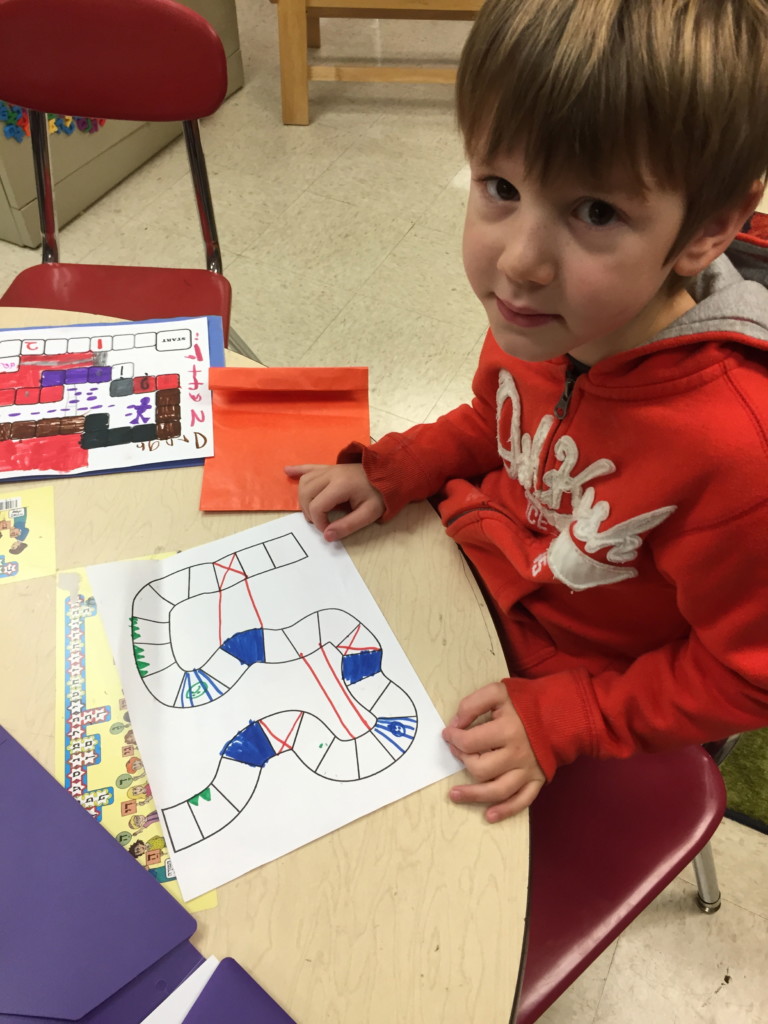
This is just a sampling of questions that are asked during the week in anticipation for Fun Friday in Math. Students work at their own pace to create a math board game or pack of cards based on math skills of the week. Each game must be given a name, and a written  set of directions. Students are discovering that writing directions is not as easy as it seems to be! Each game will be laminated so they will be sturdy enough to be played with over and over again in class and at home. Hmm…imagine a homework assignment to play the game with their parents or siblings. Now that is what I would call Homefun instead of Homework!

Our next Fun Friday project will be to create their own Math Machines out of gallon sized milk cartons brought from home. The beauty of this activity is that once made, students can add new cards based on the skills introduced each week.

What a fun way to show what each student has learned in math!Math machine
Egypt, here we come!

image

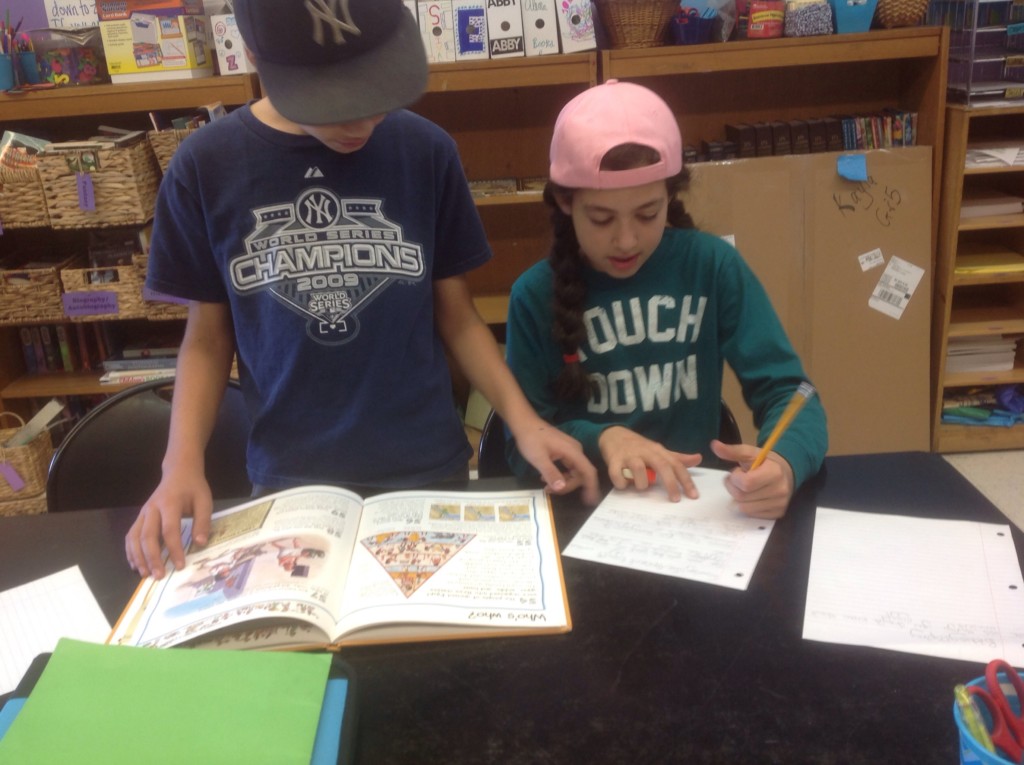
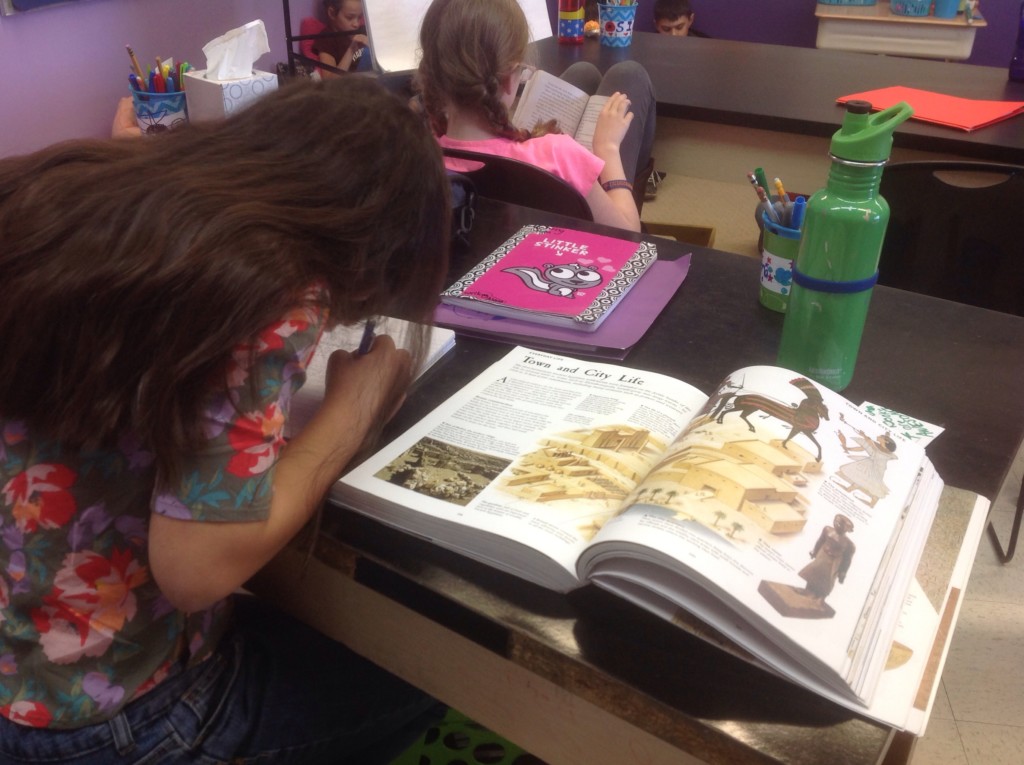
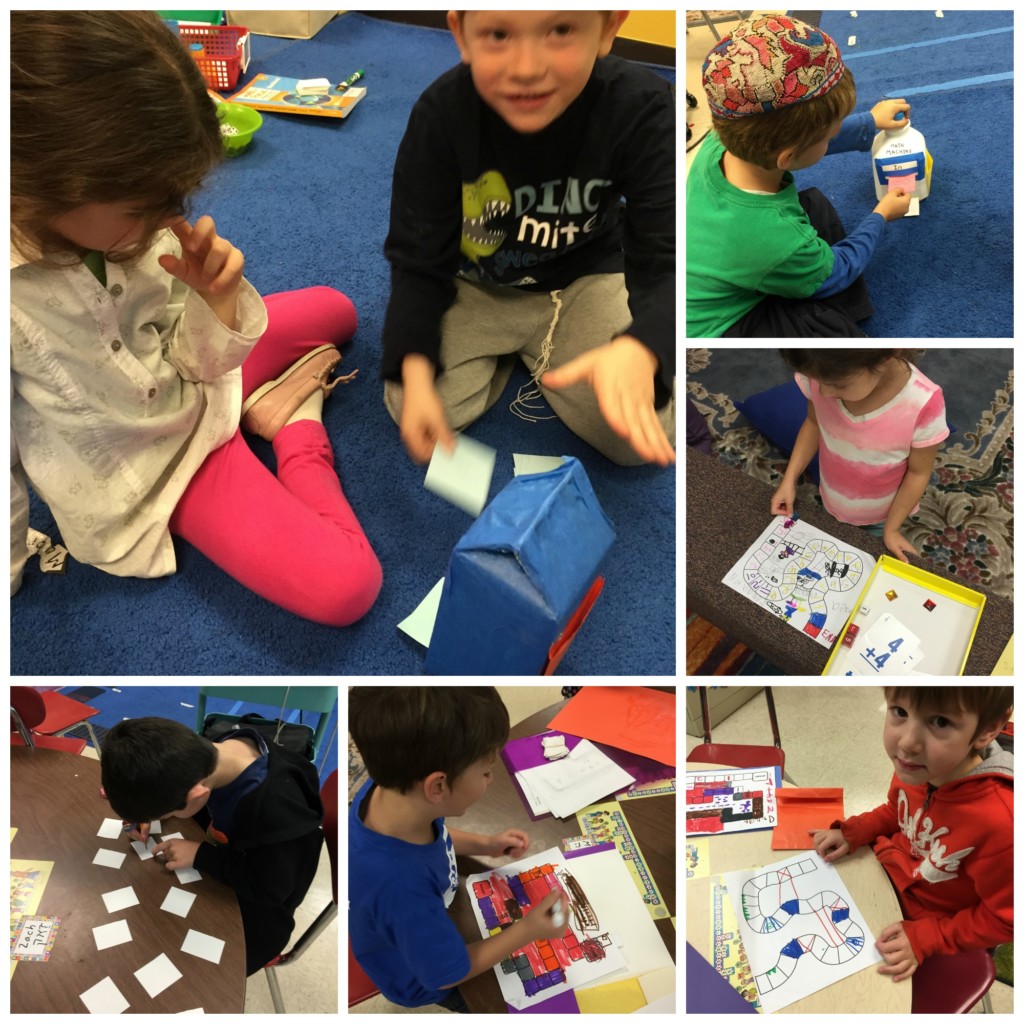
As they begin their studies into the first chapters of Exodus for the Humash (Torah) curriculum, the students will be researching different aspects of ancient Egyptian culture. In this way, they will be able to compare and contrast Israelite society with the Egyptian way of life and gain a deeper understanding as to why the Israelites did not assimilate into the larger, outside culture.  Each pair of students will researcimageh one facet and, through both a written and creative presentation, they will share the information that they have gathered with the rest of the class.  As you can see from the photos, even though the students just learned their partners today, they have already begun to research the information.  Look forward to hearing and seeing more about this in the coming weeks!
 

What’s the connection between hospitality and foot-washing?

image

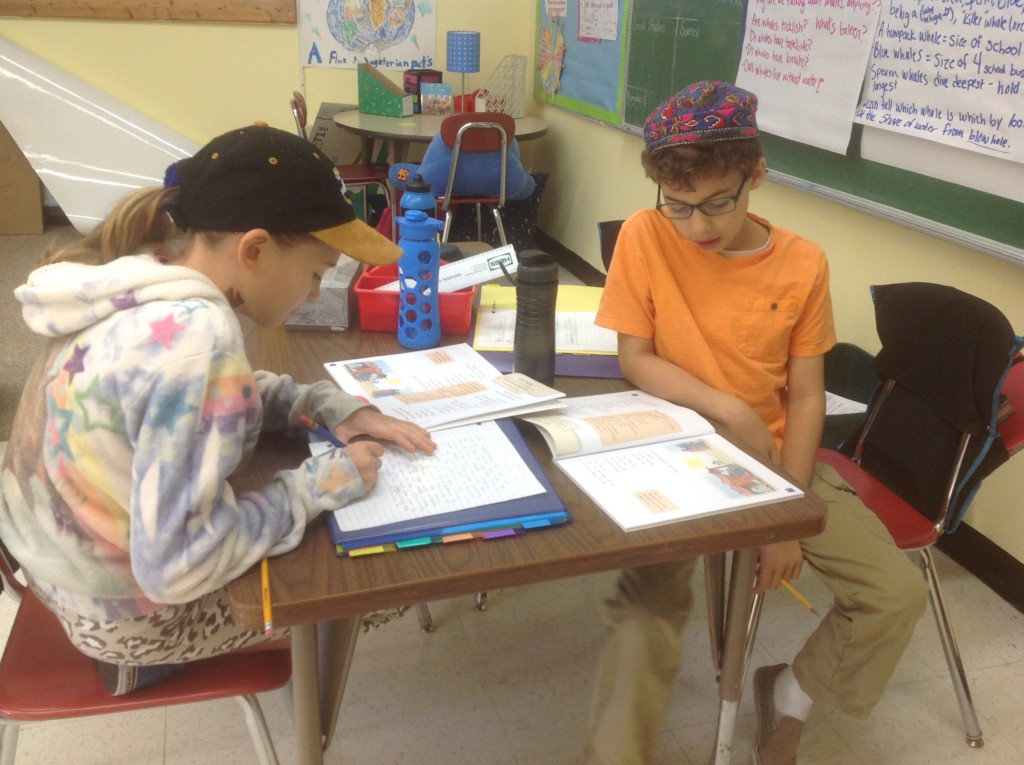
This week, the fourth graders began their exploration of Parshat Vayera (Genesis 18) as part of their Humash (Torah) curriculum.  We spent time learning how to work in hevruta (partnership pairs), within which one reads the verse, the other translates it and both write down the translation.  In the picture above, two students are working cooperatively as a hevruta.  At the end of each small section, the students then write down questions that they have about what they just read.  As part of this unit, we spent time talking about and exploring the different ways that one shows hospitality.  While it might seem strange that Abraham showed hospitality and welcomed guests by washing their feet, we connected it to how hot and tired the guests’ feet would be after walking in the desert.  Viewed from this perspective, his washing their feet was the ultimate act of welcome and of providing for his guests!


Too Jewish? Join the Conversation!

TJewish_BillBd_Mockup-page-001

“Do you like the Jewish preschool for your kids?” I asked.

“I love it!” he told me.

“Are you going to send them to Jewish Day School?” I asked again.

“No,” he told me, “too Jewish.”

His two simple words hit me like a ton of bricks. “Too Jewish.” Too Jewish to do what, exactly?

I have encountered the same sentiment over and over again. What does it mean for someone or something to be TOO Jewish? Each day, our students are learning to draw inspiration from our past to build a better future. We are working hard to shape thoughtful, successful, kind people committed to making the world a better place. We are deepening our identity while reaching out to others to appreciate what makes their cultures and religions beautiful. What is “too” about any of that?

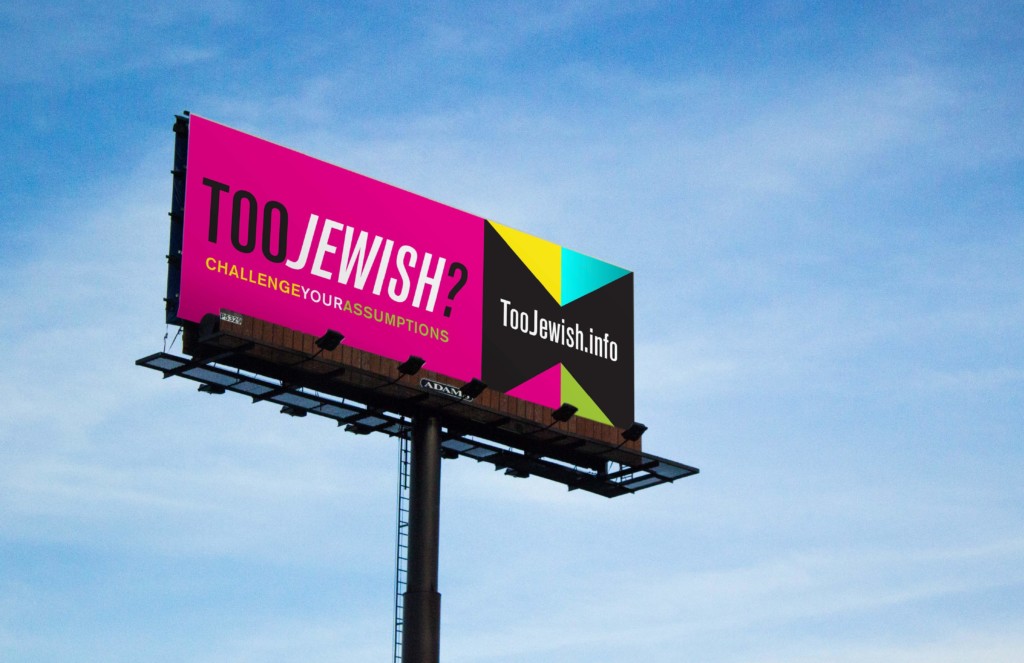
This campaign is meant to challenge all the assumptions and preconceived notions that we carry around about Jewish day school. But more than that, this campaign is meant to engage each of us individually about what it means to be Jewish today. It is a challenge to check our assumptions and see one another as complex, intelligent, real people who share something special in common.

This is an open invitation to come meet and talk to your neighbors, regardless of their age, politics, or religious affiliation. We are holding a community meeting at the Brown RISD Hillel on Thursday, November 19th, at 7:00pm. This is not a lecture or a panel discussion, but an open dialogue with space to talk about whatever is on your mind or in your heart. It is an opportunity to talk, listen, and learn from one another. We hope you will join us.

If you are unable to attend, please join the conversation in the comments below. The Jewish tradition encourages us to engage in dialogue and discussion, and we benefit from the inclusion of many voices and perspectives.

5 Senses at Foster Farm

DSCN0200

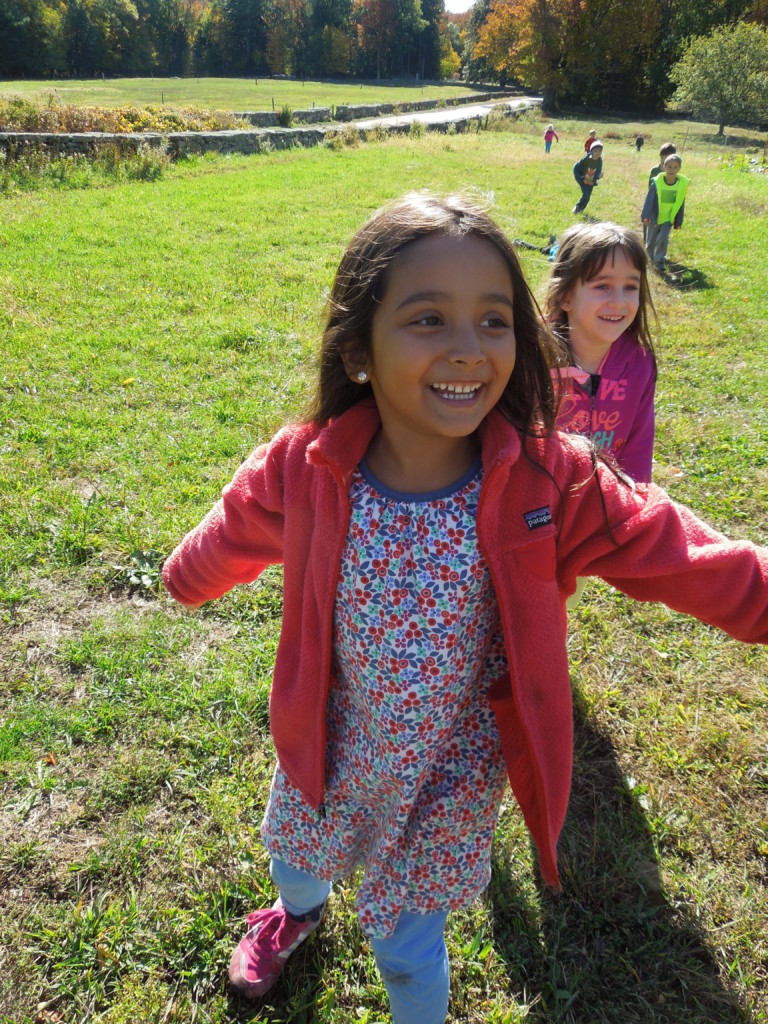
The Kindergarten class visited Paine Farm for an exploration of the five senses. We began the day by sitting on a wall, and cuddling and petting bunnies. Next, everyone got to ride a pony named “Mr. Ed.” Then, we were off to make apple cider. Each child dropped 4-5 apples into a press, watching the fruit separate into juice and mush. Later, everyone tasted the fresh cider. Last, we visited some Japanese chestnut trees that were garnished with large-green-spiny–burr-protected chestnuts. Compared to the velvety fur of the rabbits, the interlocking masses of thatched spines that covered each nut-bearing burr were untouchable. The children used tongs to collect the burr-covered chestnuts, while the smooth and sturdy chestnuts already open and on the ground were collected by hand. What better place than a fall farm in Foster to exercise one’s senses and to feel free?

DSCN0179   DSCN0033


Farmers for a Day!

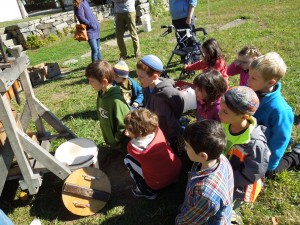
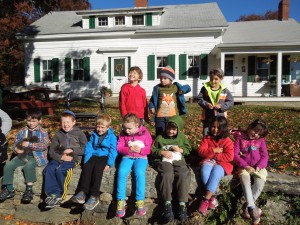
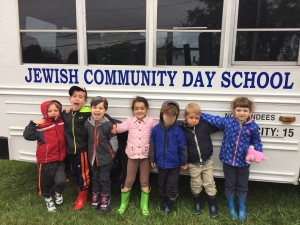
IMG_0843We have learned that the holiday of Sukkot is a harvest festival – and what better way to celebrate than to take a field trip to a local, organic, family-run farm? So last week, we all loaded on  “Pete Bus” and made our way to Casey Farm in Sauderstown, RI.
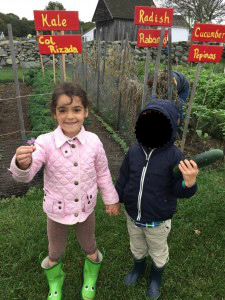
When we arrived at the farm, we met Farmer Adam and Beth, an educator at the farm and long-time friend. While we toured the farm and learned a bit about the PrekFarmdifferent vegetables grown there, Beth encouraged us to harvest herbs, cucumbers, eggplant, tomatoes, beans and carrots (a great way to celebrate the harvest festival of Sukkot).

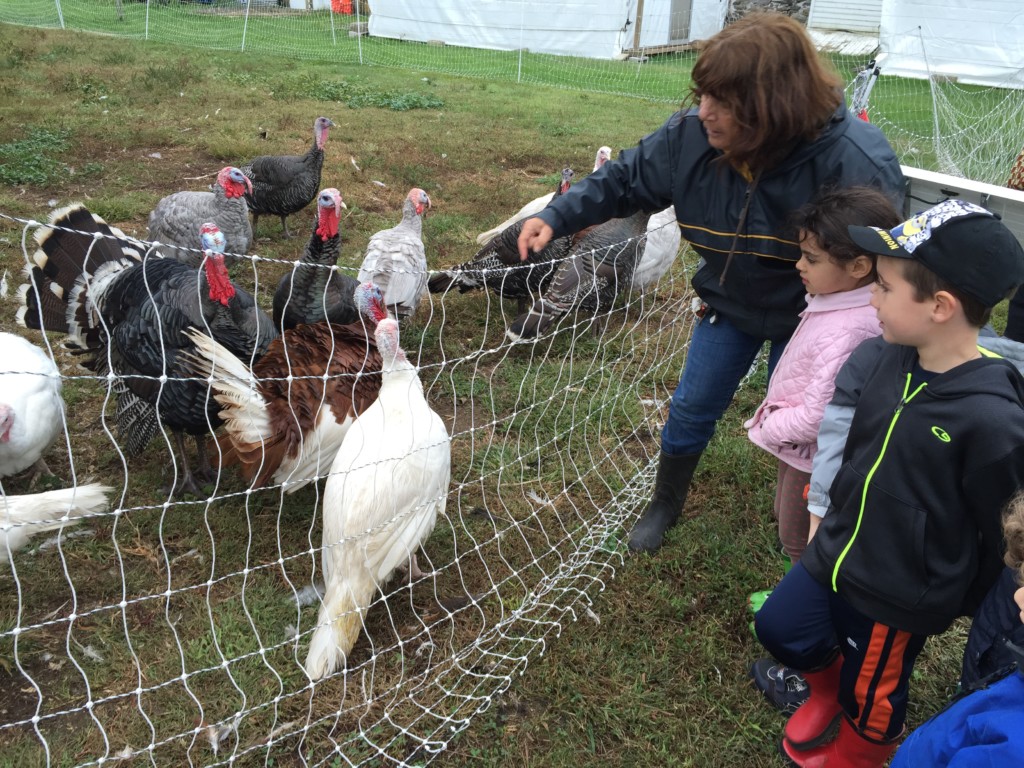
We also met the farm’s pigs, petted a gosling, gobbled at some turkeys, brushed a rabbit (named Licorice) and ground corn to feed to the chickens. We will be returning to Casey Farm in the spring, affording us an opportunity to observe the changes of the seasons (and visit our animal friends again!).

IMG_0944

My Class is the Four Species of Sukkot

I mean this as an expression of how meaningful and beautiful they are to me.

Before every lesson I think to myself: what will I find today? As every teacher, I hope that they will: be well behaved all the time, give 100% participation all day from everyone, understand the curriculum the first time, and of course always be focused on the lesson’s theme only, with zero distractions during 45 minutes. Wake Up! NOT gonna happen!! The reason is because each one of my students is unique, like the four plants of Sukkot, and together they make our classroom interesting and lively. That’s the beauty in diversity. So every day I aim for the best, but I also try not to forget to enjoy the journey with them.      – Sivan Amon

Sending our Love over the Sea

In the spirit of Rosh Hashanah, the time to wish our beloveds a good and a better year than the last one, I have asked my kids (in my class) to make wishing cards . Only this year we will add something new: this time not only are we going to write wishing cards for our families and friends, but also to kids in Israel. The moment I mentioned Israel and the fact that those cards will be read by Israeli kids, my class couldn’t stop asking me questions – they were super excited about it, but also very interested in the whole process. It has really warmed my heart to see such a great love and strong sense of bonding toward Israel – kids have endless love to give and we can all learn from them.     – Sivan Amon

Dem Bones Dem Bones…………

The best part about teaching both Judaic Studies and General Studies is that I can connect two of my favorite units into one: Sukkot and the human skeleton. There are many ways to teach about the  Lulav and the Etrog. The most popular school of thought is by waving the Lulav and Etrog in all directions, we are reminded that God is everywhere. Another interpretation is through relating each part of the Lulav and Etrog to different parts of our bodies. The Hadas (myrtle) leaves are shaped like an eye. The Arava (willow) leaves are shaped like lips. The Etrog reminds us of our heart. Finally, the Lulav reminds us of our spine (we stand straight and tall, proud to be Jews.) There’s the connection to the human skeleton!

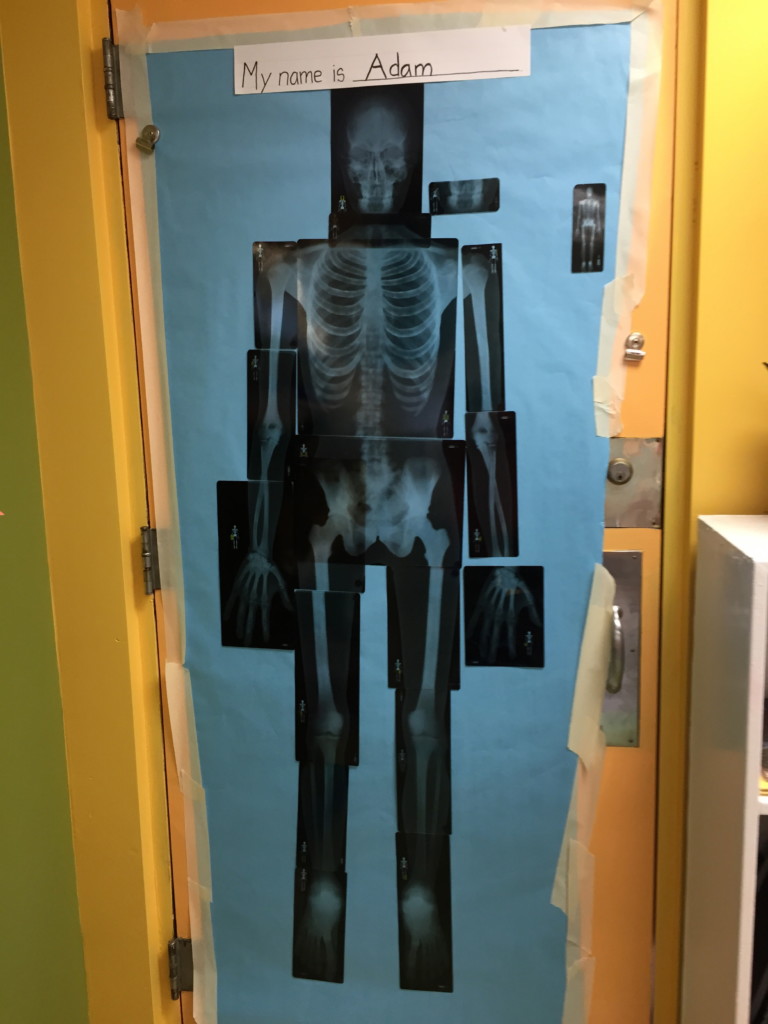
In Science,we examined X-rays of the skeleton, and put the X-rays together to form a complete skeleton (we named it Adam). We wondered what was opaque or translucent, then watched a little video of a song about how our bones fit together.IMG_6609

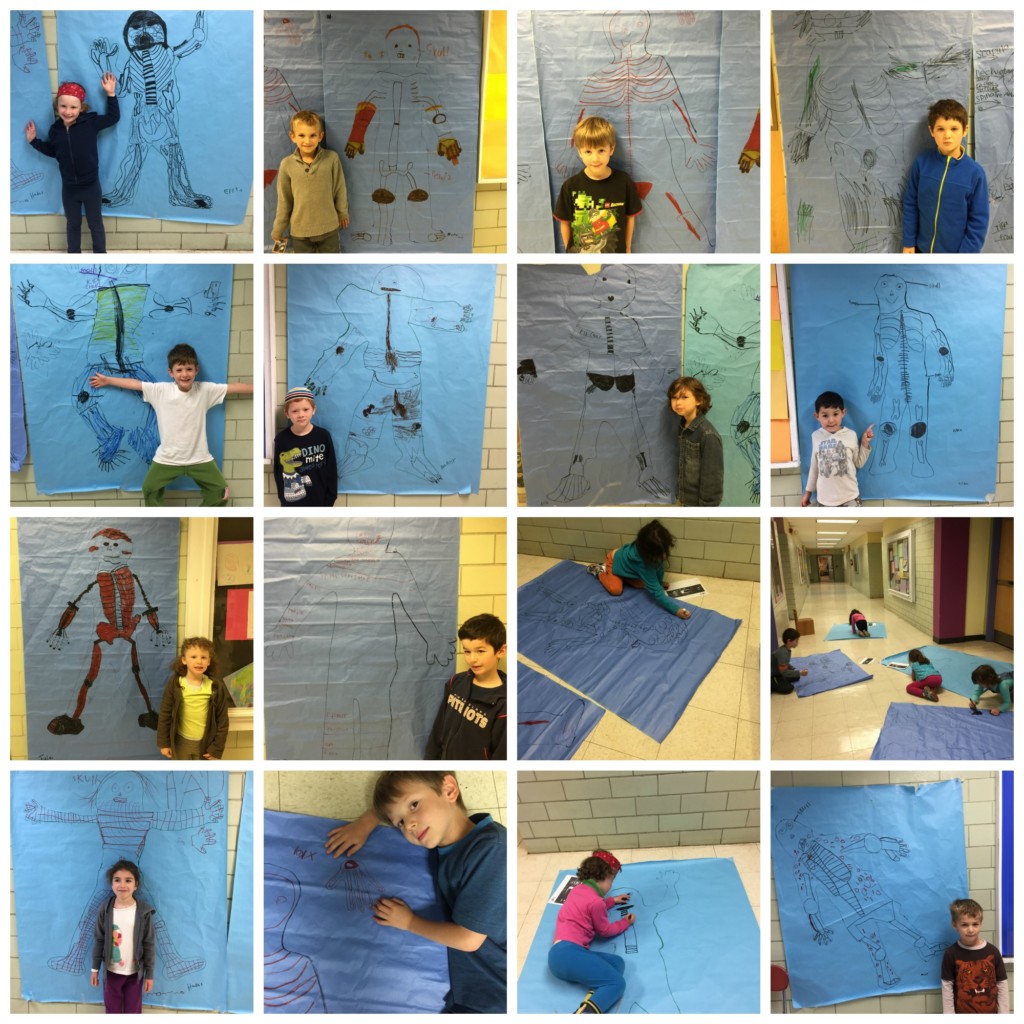
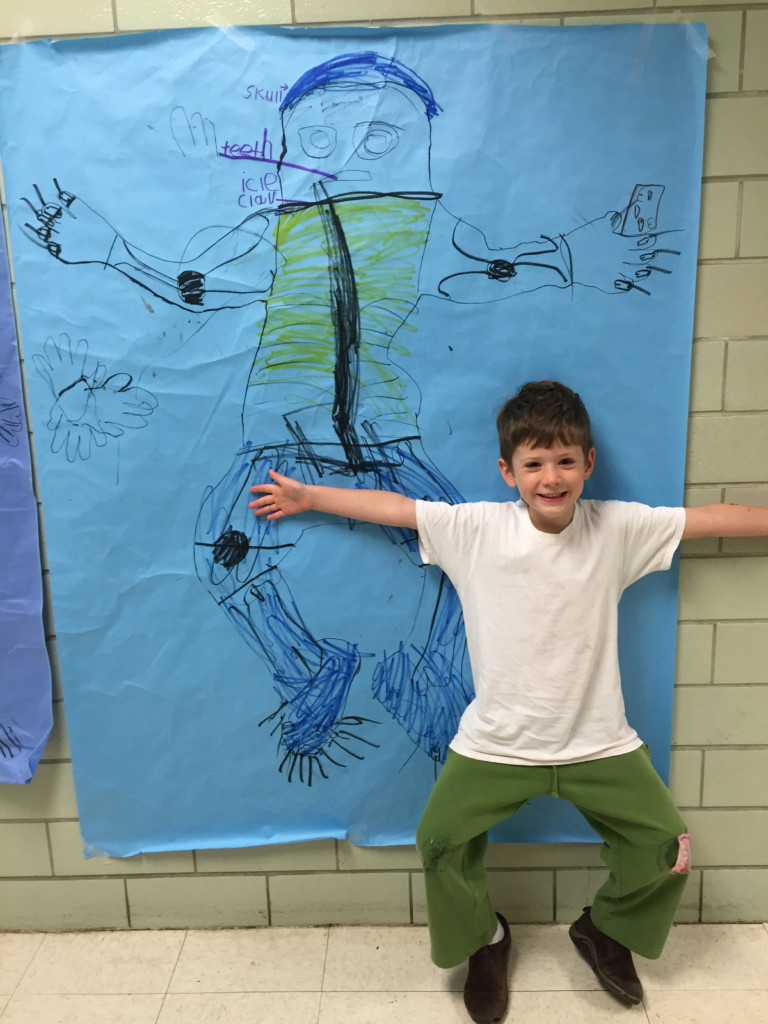
Then we traced the outlines of our bodies on huge pieces of paper. Armed with a magic marker and a black and white copy of a labeled skeleton, students took over the first grade hallway and drew themselves as skeletons. One student asked if his phalanges (fingers) could hold his favorite baseball card!

skeleton pics

Sukkoth in 1st grade

Sukkot play

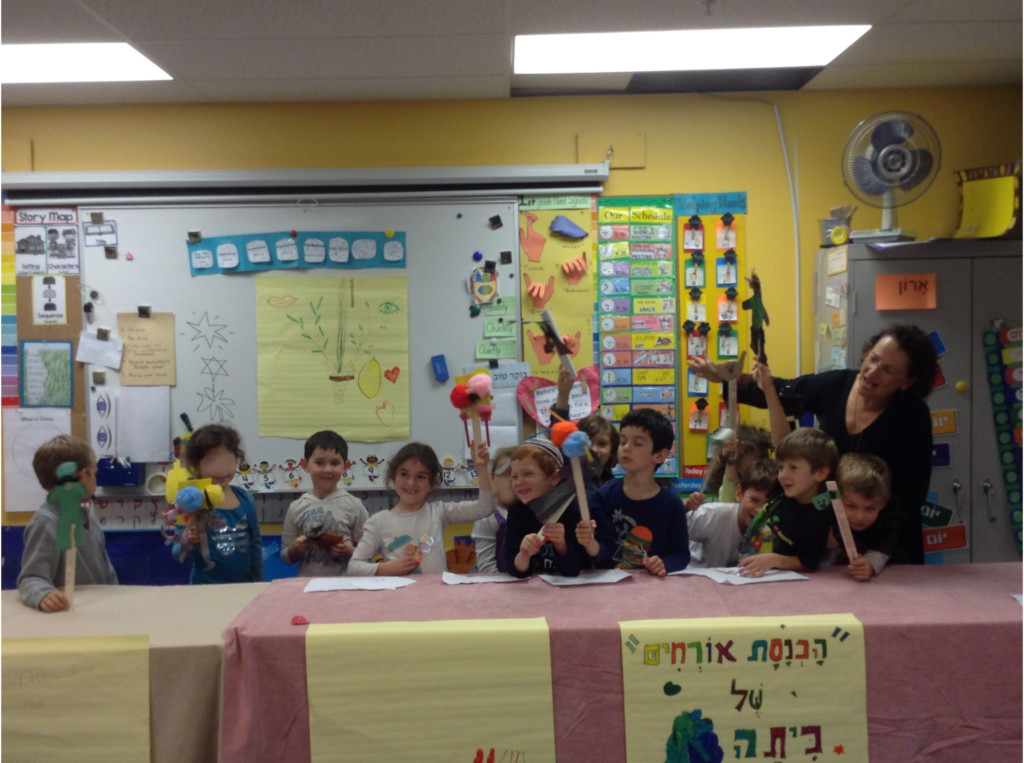
Reader’s Theatre puppet shows are taken very seriously in First Grade. It is a wonderful way to assess many skills such as reading, writing, communication and most importantly, how students work together as a group! In the beginning of the year, it is important to scaffold the plays according to the abilities of the class.  Our first puppet show was based loosely on a book called Bubbe Isabella And The Sukkot Cake written by Kelly Terwilliger. First, students listened to the story, then, as a group, re-told the story collaboratively in their own words. Then, they re-told the story again but changed it by adding their own animal characters.  This is a wonderful story because it is based on repetitive phrases which build upon each other. The format lent itself beautifully to create script which accommodated 14 first grader parts perfectly!

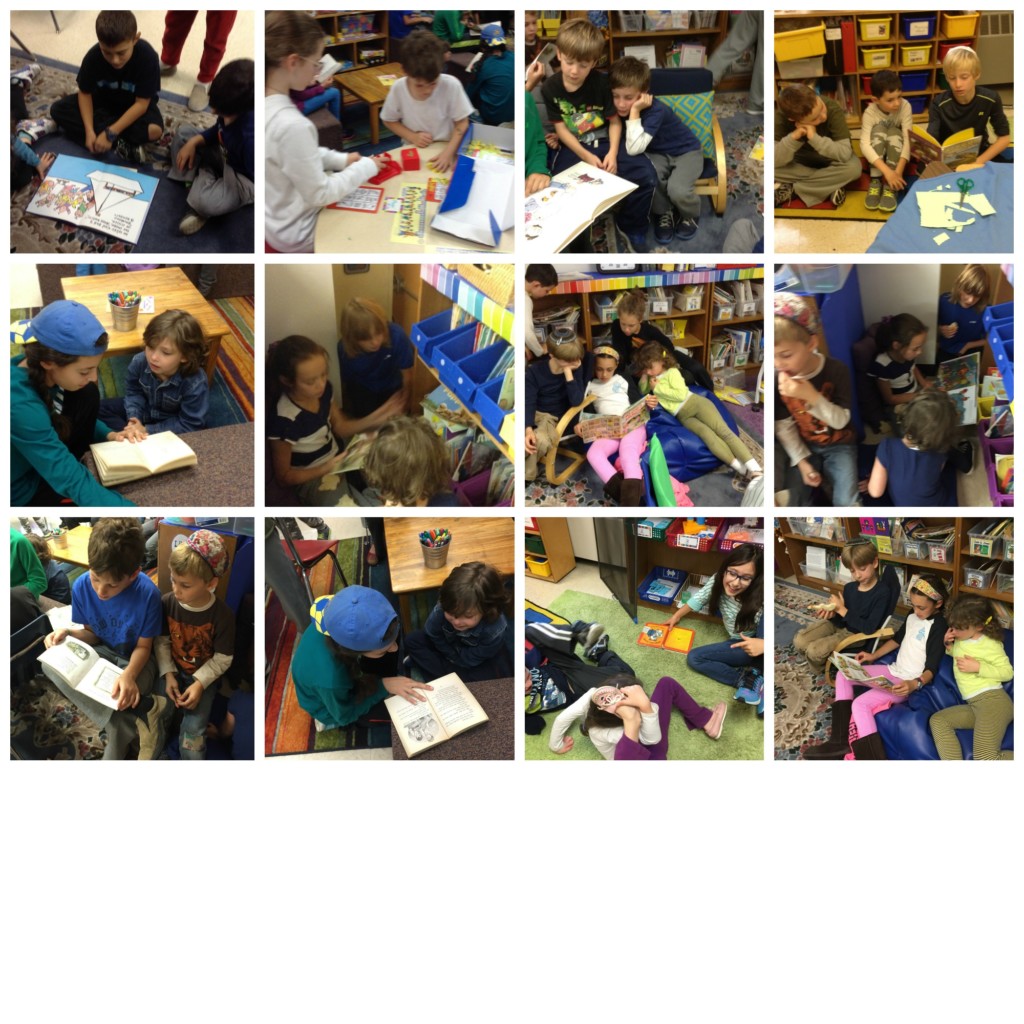
We invited our Fifth Grade buddies and the Fourth grade to be our first audience ( First grade have so many siblings in Fourth Grade!). After the performance, we celebrated Kabbalat Shabbat, ate Challah and drank grape juice. The kids sat together and read from our extensive library. The atmosphere in the room was magical. There is nothing better than observing our older students totally engrossed in reading to our younger students.

As the year progresses, the students will take on more complicated speaking parts and write their own scripts. The culmination of our work on Reader’s Theatre puppet shows will be based on Caps For Sale by Esphyr Slobodkina in Hebrew. It will be a collaborative production with our wonderful Art teacher, Jennifer Antes.

Buddies