First Grade Shofar Blowers

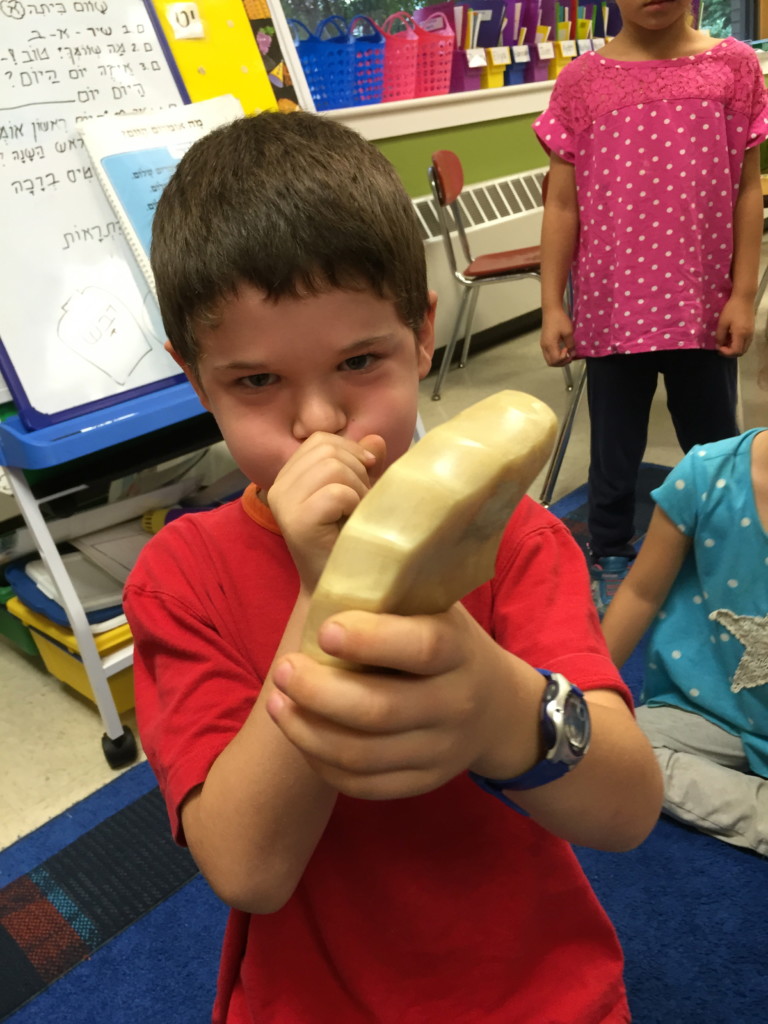
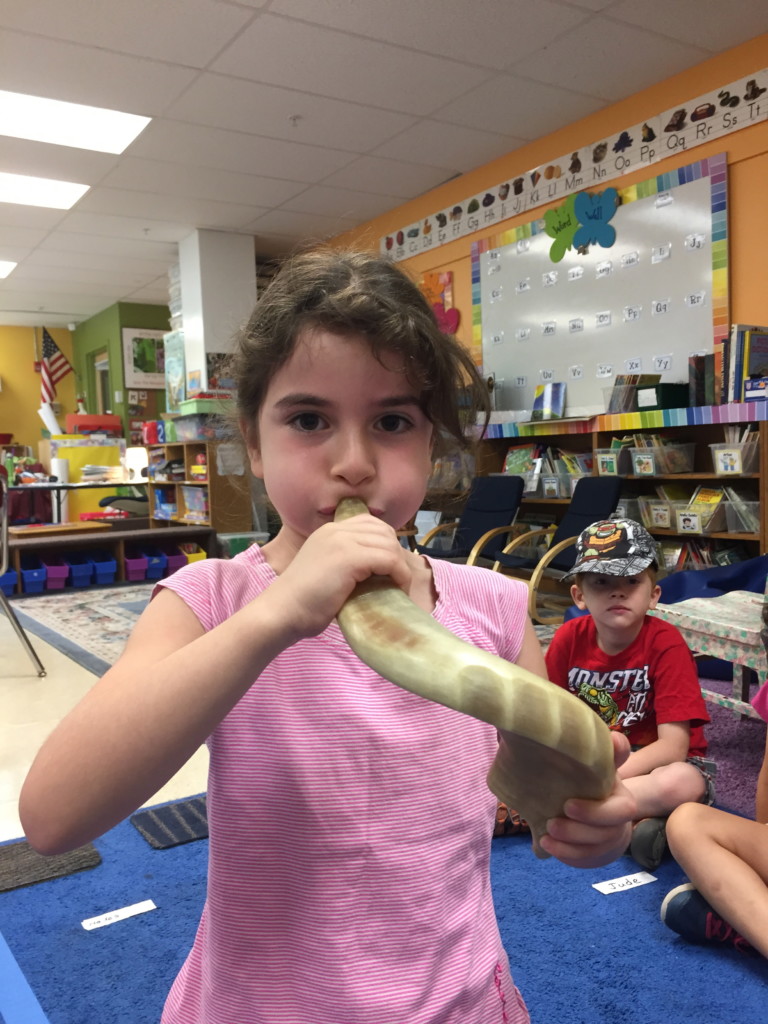
We rang in the New Year to the blast of a Shofar. For some of our students, it was their first time!

We counted pomegranate seeds! The final amount was 703 exactly. (I say exactly because we even counted the stray seeds that found their way to the floor.)

Each student was given a segment of the pomegranate to count, then had to record the data. It was hard work to add up all the data, but it was worth it.   The pomegranate symbolically represents the 613 Mitzvot (good deeds) that we are expected to fulfill. There is actually research that supports this theory. 

 http://parsha.blogspot.com/2007/09/613-seeds-in-pomegranate.html

IMG_6567


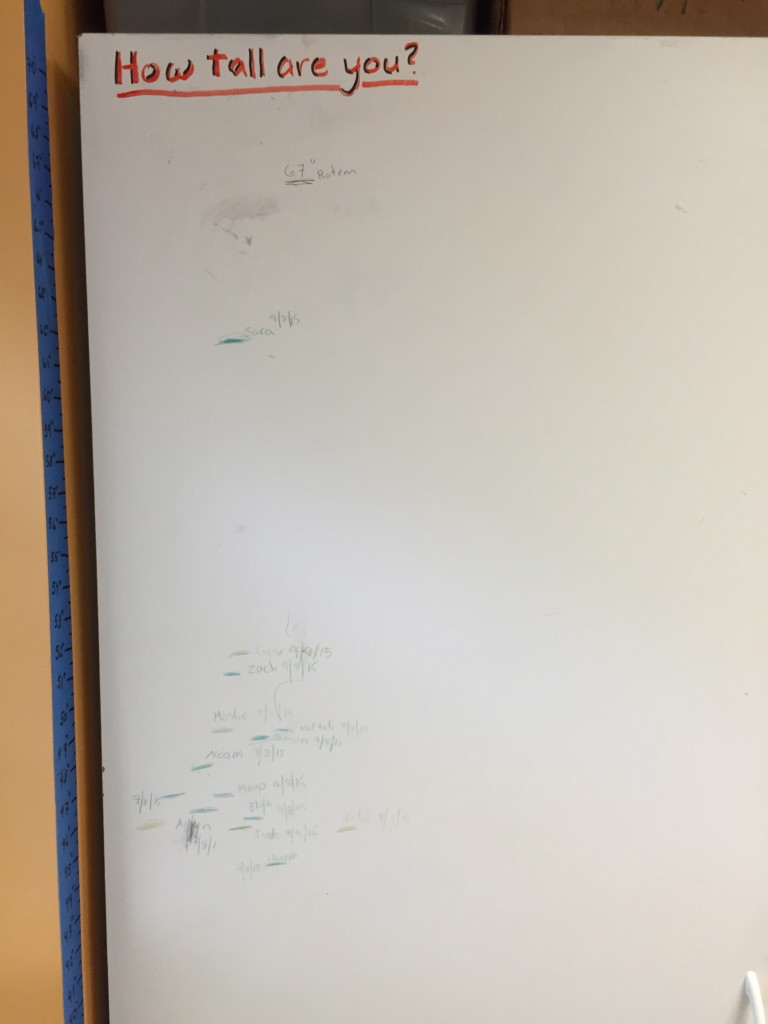
We measured ourselves. It will be interesting to see how tall they will be at the end of the year.

IMG_6622


We are learning our first song for the Zimriyah which happens to be about wishing our loved ones Shana Tova! (Happy New Year!)

What a wonderful way to begin the New year!

News from the Gym… and Mrs. Sugerman

We are off to a fabulous start to our new school year,

Below are some exciting highlights, in case you didn’t hear.


Pre K loves playing with whatever equipment we put out,

But shooting baskets is their favorite… we have no doubt.

Fruit basket, switch and soccer bowling are just some of the games played by Kindergarten and Grade 1,

They are learning to play cooperatively while having so much fun.

For Grades 2-5 it’s been mostly about games played with bases,

Plus a game of crab soccer and a class of relay races.

Be sure to check in with your child(ren) if you want to learn more,

About all their action-packed experiences from the gym floor.


Jonah Is Really A First Grader

The story of Jonah and the whale is traditionally read during the afternoon service  of  Yom Kippur. The choices Jonah made remind me of many age-developmental traits of a first grader. What a wonderful story full of imagery and important messages!

Our story begins with Jonah running in the opposite direction when God asked him to deliver a message of dire consequences to the people of Nineveh. Jonah buys a ticket to sail away, far from his responsibilities. Perhaps Jonah felt that the task was too hard for him? Sometimes, it is hard to follow directions, especially when you are not sure that you will be successful.

Then, God sends an enormous storm to rage against the boat. The captain finds Jonah asleep and shakes him awake. Ever try to wake an exhausted first grader? – not an easy task! Jonah tells the sailors to throw him overboard because he is the cause of the storm. The sailors are appalled but do as he says.

The sea instantly becomes calm again. God sends a whale to swallow our friend Jonah. Jonah is in the whale for 3 days. Jonah understands the error of his ways, prays and promises to do his job. Jonah is spit out onto the shore near the town of Nineveh.

God reminds Jonah of his responsibilities and this time, Jonah chooses to do as he is told. In the town, he delivers his message and is shocked and annoyed that, since the king and the townspeople are truly sorry for their behavior, God forgives them. Jonah walks away furious and sits on a bench outside of the city. Perhaps Jonah is thinking, “It is not fair! Why did I get punished for 3 days, and they didn’t get punished at all!”

God grows a vine which provides shade for Jonah. His rage slowly disappears, as he is happy to be out of the hot sun. The next day, God sends a worm to eat the vine. Jonah is miserably hot again. He is on full sensory overload.

God points out that Jonah seems to be more upset about the loss of his shade than the destruction of an entire town of people. God reminds Jonah that the people of Nineveh “didn’t know their right from their left” and were truly sorry by showing their repentance through their actions.

We call this T’shuvah in Judaism. Teshuvah is what we do to “fix our mistakes.” Yom Kippur is about second chances, asking for forgiveness and meaning it. Everyone makes mistakes, just like Jonah and the people of Nineveh. God gave them another chance to try again to make good choices. Being a first grader can sometimes be hard, but these social and emotional developments are part of the whole wonderful package that are our six and seven year old children.

Here’s to second chances, beginning the New Year with a clean slate and joy in our hearts.

גמר חתימה טובה

(May you be inscribed (in the Book of Life) for Good)

The Joy of PreK!

“The problem is I thought yesterday was the best day ever . . . but now today is!” exclaimed one member of our kehillah (community) when reflecting upon his day at school during our closing Circle Time.

And indeed, our time together these first weeks of school has been wonderful. We really feel like we are creating a sense of belonging and community in our classroom – and we are experiencing so much joy!

Most of our mornings begin with free play; during this time, we’ve observed children thoughtfully drawing in their Feelings Journals, giggling at our sand table, making “cupcakes” with home-made blue (sparkly!) play-dough, observing their daily findings at our Discovery Tray, and working collaboratively to create complex structures in our block area. And in just a short time, we’ve learned each other’s names during Circle Time (by singing “Thumbkin”), created some meaningful classroom rules, and practiced bringing peace and kindness to our classroom through the use of prayer, yoga, and meditation.

This sense of discovery and wonder continues throughout the day and we are grateful to be accompanying our students as they begin their learning journey here at JCDSRI.

In peace,

Andrea and Ilana

The First Six Weeks of School

What an exciting time of year it is, especially for first graders!
This is the year students will learn how to read and write. An unbelievable milestone for students which marks the first step to mastering the important skill of  independent learning. To become an independent learner, the first six weeks of school are a crucial time to set a solid foundation of a safe, warm and welcoming  environment.  We have begun to work together to establish classroom procedures and to collaborate as a classroom community and in small learning groups.
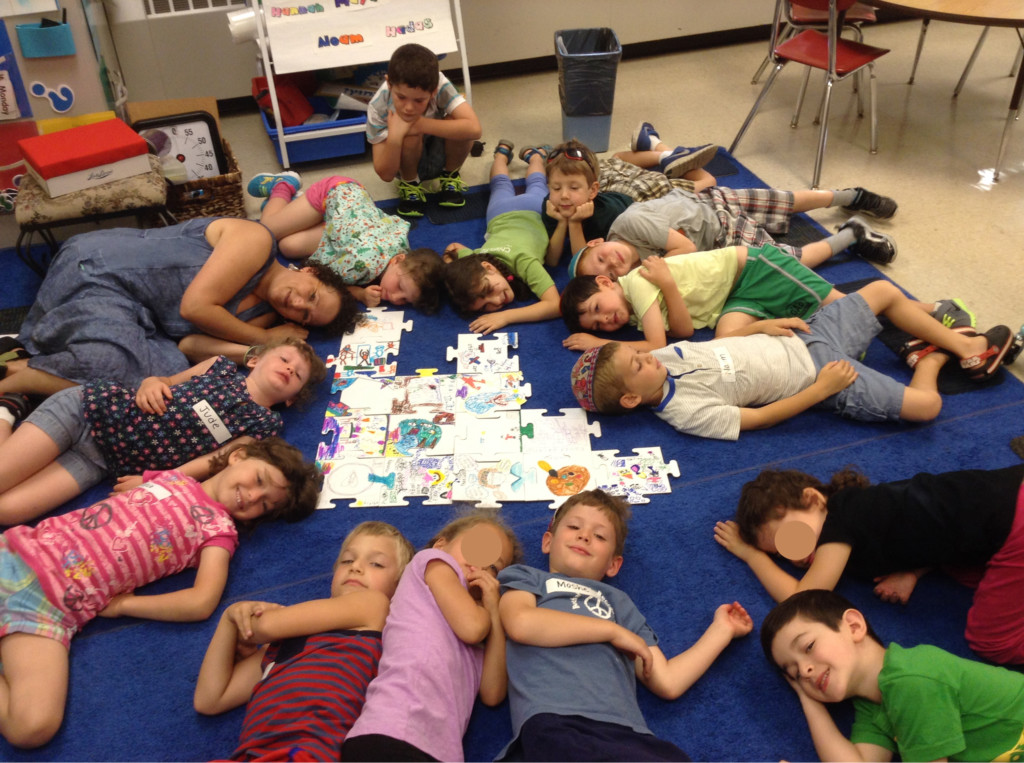
Each student had the opportunity to  present his or her personalized puzzle pieces to the group. It was wonderful to hear of everyone’s favorite summer activities. We are blessed with four new students this year, so it was especially exciting to learn about their interests and begin to get to know each other.
 bluring photos
While our main focus over the next month and half is on classroom procedures, academics are slowly incorporated into our day’s routine. For example, I am a firm believer in kinetic learning. What better way to review counting to one hundred by 1’s, 2’s, 5’s and 10’s while exercising our bodies and our minds? We had so much fun taking a movement break while doing math!

Shana Tova! Happy New Year!

The students are super excited to reconnect with former classmates and to make new friends from Israel. We are pen pals with kids in Israel. Each student wrote a greeting card for a sweet and a happy new year in Hebrew. These cards by now are on their way to Israel….

Also, we are learning our first Zimriyah song, BaShana Haba’a (In the Upcoming Year.) A student asked me: “Can’t we just learn how to sing the songs without understanding the meaning of the words? I thought that the whole purpose of the Zimriyah is to entertain our parents and grandparents.”

My answer was that we use Zimriyah songs to teach Hebrew, to understand it, to use these words in speaking and writing, and to learn about the culture of Israel. The students’ interpretations for the first verse decorate the class walls.

Lehitraot,

Rotem


Let’s Design!

In order to create a useful product, designers need to understand how a user(s) feels about an object, system, or space. Therefore, our classes all started with empathy.

In third grade, we learned about empathy by taking part in a “leading the blind” activity. While one student was blindfolded, his or her partner led him or her across the room (without touching or redirecting!) to perform a very specific task. While blindfolded, each student needed to pick up a cylinder from across the room, turn around, go through a set of doors, and place the cylinder on a small table. Then, students switched roles. To conclude the activity, we talked about how it felt to be the person who was blindfolded, and how it felt to be the person who was leading. Thus, we learned that empathy is understanding how someone else feels.

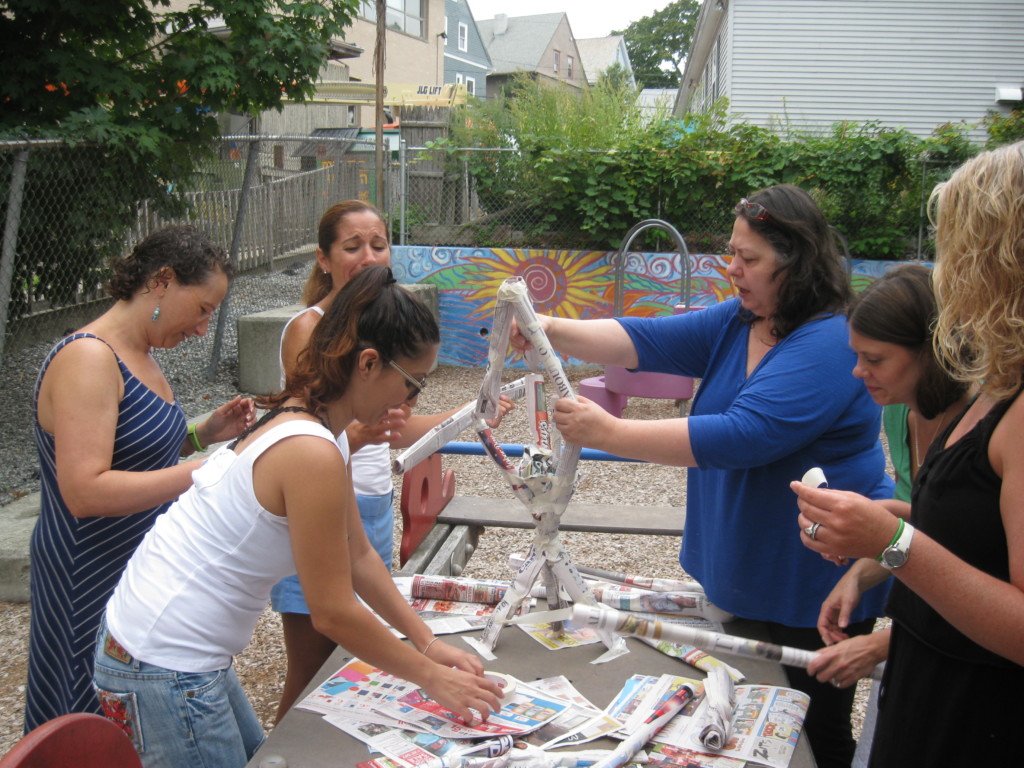
The design thinking process also involves creativity! First, we explored what creativity is. In first grade, we used straws, sticky tabs, and paper clips to create anything that we wanted. We quickly realized that we had to utilize our creative juices to make many different things from the limited resources.

Work in progress:
PreK and Kindergarten students are learning about how everyone is creative, especially the bunny in Not A Box by Antoinette Portis!

We’re thinking about the question: How might second graders create time capsules so that they can feel surprised, happy, proud, and different when they open it a year later?

And finally: How might the fourth and fifth grade students improve the fourth grade meeting spot so that it is comfortable, inviting, spacious yet cozy, and promotes conversation?

First Week of Gardening

Yes, it is one of the hottest days of the year. Yes, air conditioning is our best friend. But the students are begging to do gardening. Today was our first day in the garden. Due to the weather, we only were able to go out for 10 minutes at the most. Those ten minutes were amazing, though! The students in second and fourth grades went right to work in the early morning, weeding and watering. We identified edible plants, found baby peppers growing, noticed some spiders, and ate some new vegetables. The wax beans were a hit! The fourth graders were eager and excited to try the new vegetable. Everyone who tried it enjoyed it and wanted to eat more. The fourth graders brainstormed ideas for the garden this year, like utilizing every space in the garden for more plants. It has inspired me to research hanging gardens for the fence. Lastly, first grade learned about gardens from a picture book featuring the famous Winnie the Pooh and his friend Rabbit. They learned that gardening takes patience and hard work. Gardening is obviously a special activity that the students love, and I am proud and excited to lead them in their gardening adventures this year.

First Week of School

(null)We did it! We had a fabulous first week of school! We started the year off with building routines. This helps us set a foundation for learning. And, boy did we have fun exploring the classroom and getting to know each other. We built cool creations with blocks, playdough, squigz, and Magnatiles. And, we even had time to start learning a Rosh Hashana song. This is a special group of Kindergarteners. I’m excited for what the year will bring.


Open Letter to my Staff Before the Most Profoundly Awesome Year Ever

Why do people hate their jobs?  Is it because their bosses are idiots and never listen to the employees?  Is it that their work is meaningless and gives them a feeling of emptiness and a wasted life? Is it that they have no power or autonomy to change whatever isn’t working in their place of work? Is it that the work is never-ending, causing pressure without any real reward or relief? One thing is clear – many people aren’t happy at work.

A 2014 Gallup poll showed that only 20% of workers feel engaged at work!  Only 18% of white collar employees said they had time for creative or strategic thinking at work.  

Unfortunately, schools are often no better than other white collar workplaces. Sure, we have the joy of working with children, but there are often relentless external pressures on teachers.  There may be fear of being creative, of taking initiative, of trusting one’s gut.  The educational system is not looking for whole human beings to teach students; it is looking for people to deliver content to students.  Blended learning and the flipped classroom, while brilliant and well intentioned, can diminish the role of the teacher and put more pressure on her to deliver the content as efficiently as the machine. It’s the story of John Henry versus the steam drill.

The common core, also the work of many intelligent and well intended people, is essentially meant to be a fail-safe so that every child, no matter how inept or ineffectual the teacher, will receive the bare minimum of everythinIMG_4433g they need to know.  Instead of honoring teachers, the Common Core often feels to teachers like it is robbing teaching of creativity, joy, and expertise, transforming teaching from an honored profession into a nearly robotic delivery system for curriculum developed in an ivory tower in Washington, DC.
While we are hyperfocusing on the standards, benchmarks and achievement of children we never really talk about the lives and careers of teachers! This is a shocking mismatch between what we know to be true and what we want to be true. Studies show that teachers have more impact on student learning than any other factor, including special services, facilities, curriculum or leadership. Our society is trying to circumvent the need for happy, talented, experienced teachers in the classroom.

How much do we know or care about teachers? Are they fulfilled? Are they listened to? Are they completely empowered and encouraged to make change? Do they have the time, resources, and trust to be creative and adventurous as they teach?  Are they valued as whole, complex people who are respected and admired for the difficulty and complexity of their work?  

I have a dream that JCDSRI will be a kind of utopian workplace. While competing financially with the big independent schools is impossible for a school our size, compensation does not have to be the most important factor in job satisfaction. What if all of our teachers knew they were respected and they were trusted and empowered to make changes to the school as they saw fit? What if teachers felt safe enough to admit their weaknesses and received high quality professional development to help them develop their craft? What if they were able to bring their own passions and interests to school? What if our school created a shared common vision of excellence that created the kind of unity and teamwork usually found on professional sports teams and in elite military units? What if staff meetings were so efficient we could end them early and with a feeling of accomplishment and success? What if teachers trusted and respected each other to the point that there were never feelings of competition and politicking?

How is such a thing possible?

I have a 3 part plan to begin creating this utopian workplace this year.

  1. Protocols for staff meetings

This year, we will be experimenting with various protocols at staff meetings to ensure they run smoothly, all voices are heard, and that all staff members feel responsible and have the authority to make changes to the school when they see the need.  We will begin by using the protocols and language of Holacracy. This will be a change in the way we operate, but I believe will help us hear each other better, make decisions faster, and get more done.

  1. Transparency of roles and projects

Every team in the school operates in its own ‘circle.’  For example, the Board, the PA, Marketing and Admissions, the general studies team, the Jewish studies team, the lower grades team, and the upper grades team each represent their own working group that is responsible for its own set of projects and goals.  We will be using an online platform to track what projects are open in which circle, and who is responsible for each aspect of a project.  Getting work done faster, with clarity, and clear goals and responsibilities is critical to having a resentment-free workplace.  

  1. Culture of Awesome

This is the most important element of our ability to change. We will be making many changes to the way we operate next year. One can approach this with dread and resentment – or with tenacity and optimism. Bringing this tenacity and optimism is not just a suggestion to make you feel better – it is a job requirement!  For our school to become a groundbreaking, teacher-centered, utopian workplace, we need everyone on board. This means being willing to have a growth mindset and embrace change.  It means having tolerance for some mess, confusion, and rapid experimentation.  And it means obliterating “Devil’s Advocate” from your vocabulary. We will become a school where each employee offers solutions rather than pointing out problems.

Each one of these points need further explanation, training, and experimentation, all of which will take place during teacher week.  Much like taking a trip, we have a destination in mind, but we will have to steer as we go. I hope that this vision of creating a teacher centered, positive, energetic, collaborative and holistic workplace feels as exciting to you as it does to me. Together we will make our school happier, healthier, profoundly innovative and awesome!