fbpx

Dentist Office in Dramatic Play

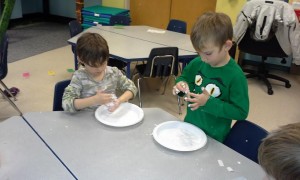
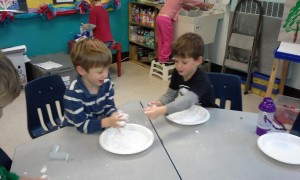
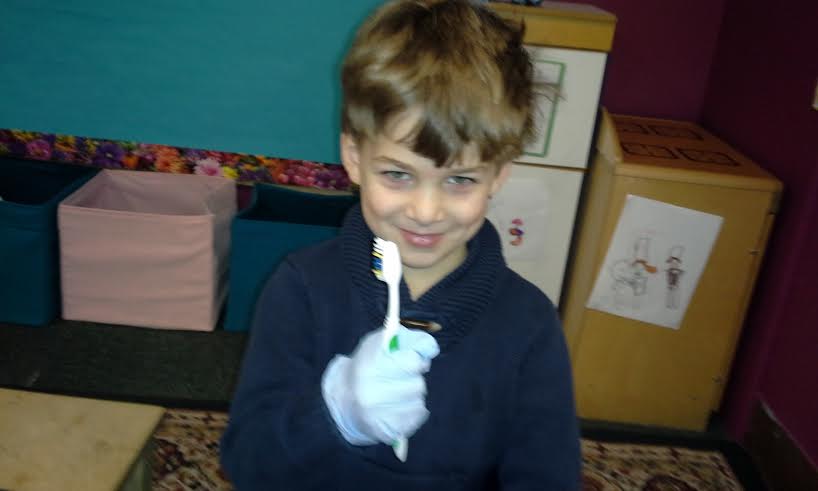
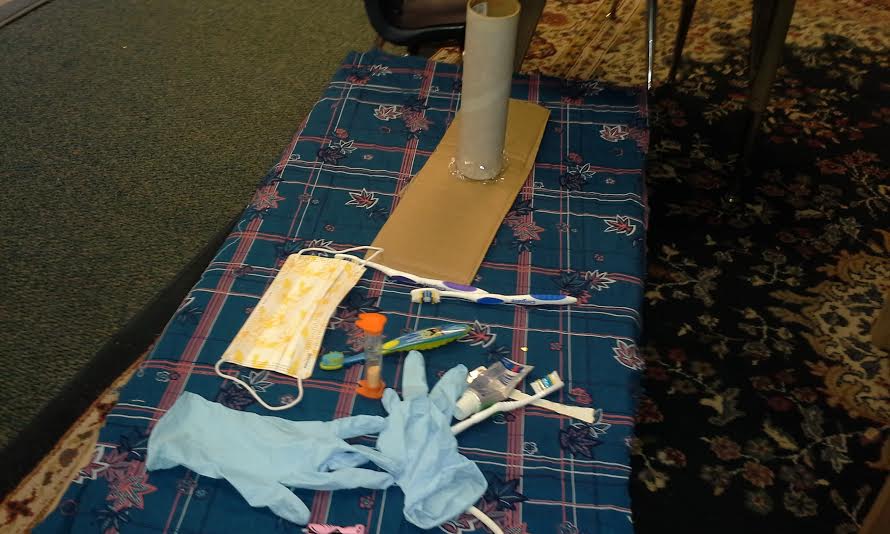
We are currently in the process of creating a dentist office for our dramatic play area.  The children built a table out of cardboard where they can lay out their “dentist tools” including tooth brushes, tooth paste, a tool to polish teeth, a tool to rinse, a face mask, gloves, timer for proper brushing, and an x-ray camera. Thank you Simon for bringing in some tools to add to our dentist office!

dentist 3

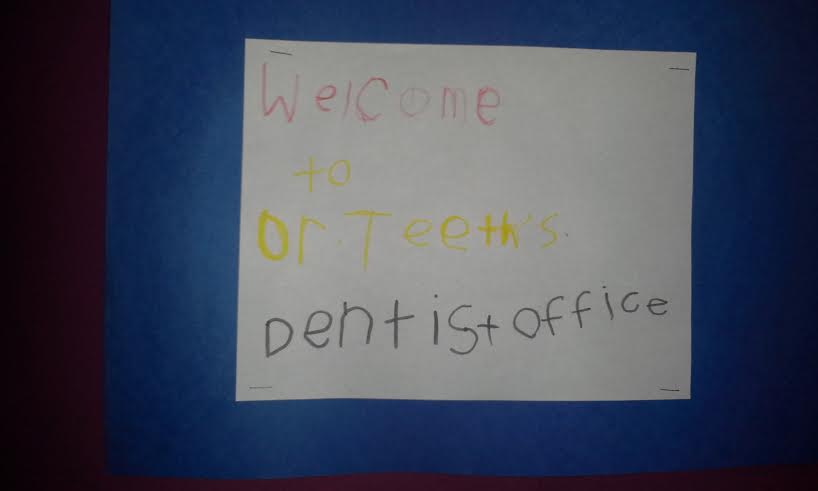
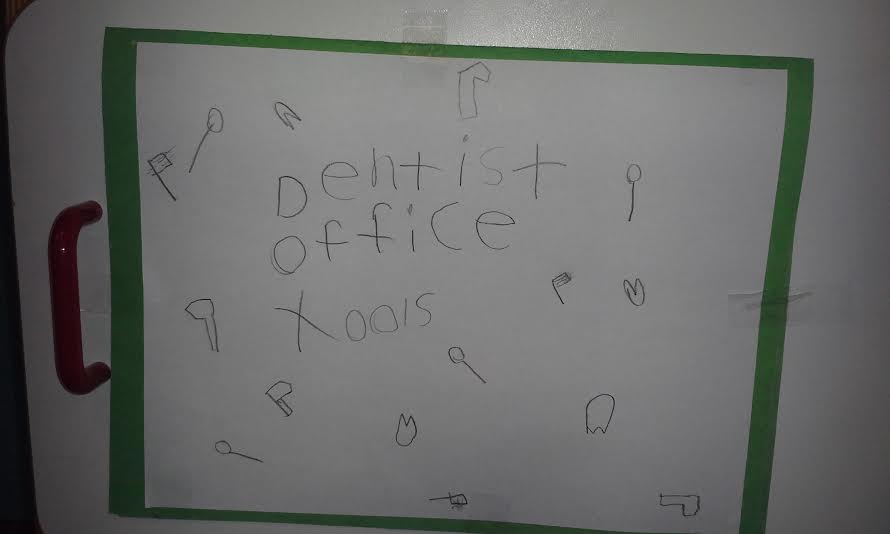
The children created many signs for the office!

We have a welcome sign:

dentist 7


(Welcome to Dr. Teeth’s Dentist Office)

We have a sign for the tool cabinet:

Dentist 2

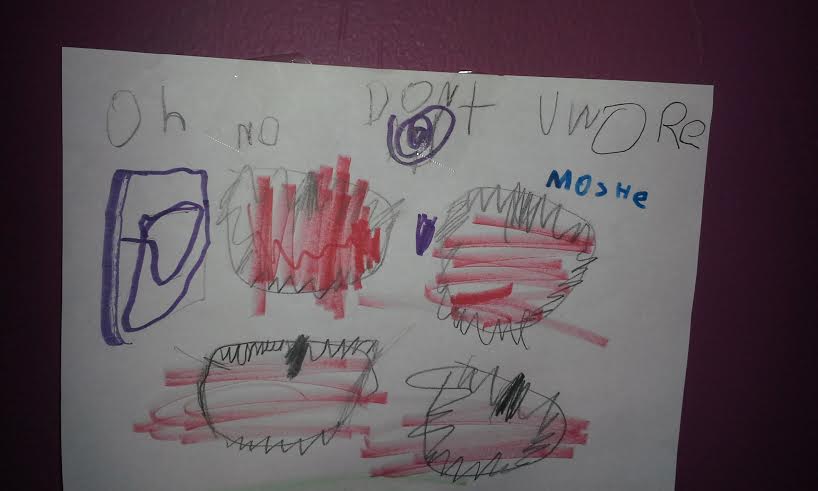
This sign helps patients who may feel afraid of the dentist:

dentist 8

(Oh no! Don’t you worry!)

We even have a special dentist comic for patients to read while waiting for their appointment:

dentist 6

(What is a toothbrush doing?)

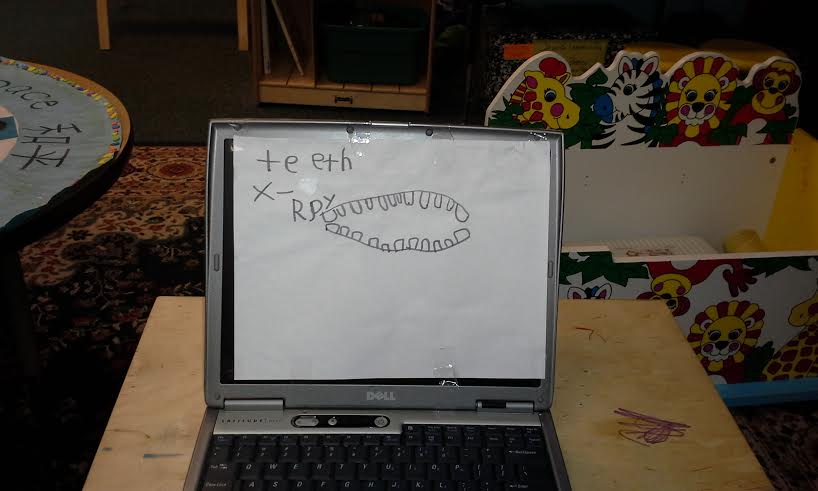
Here is our x-ray machine:

dentist 9

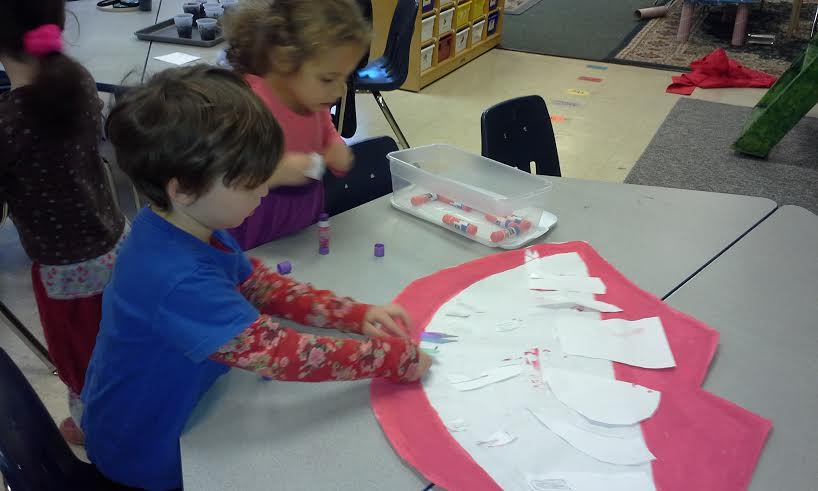
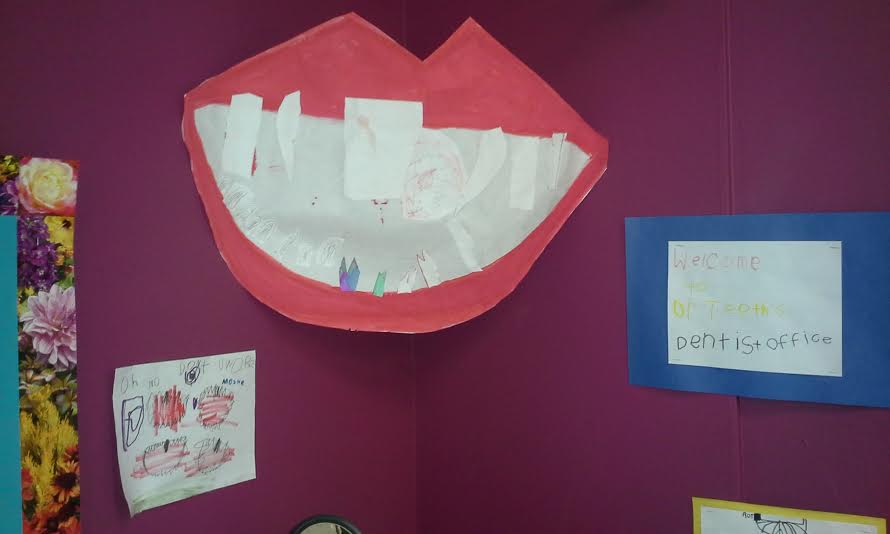
The children created a giant model of teeth:


dentist 4

Dentist 1


Our friendly dentist:

dentist 5

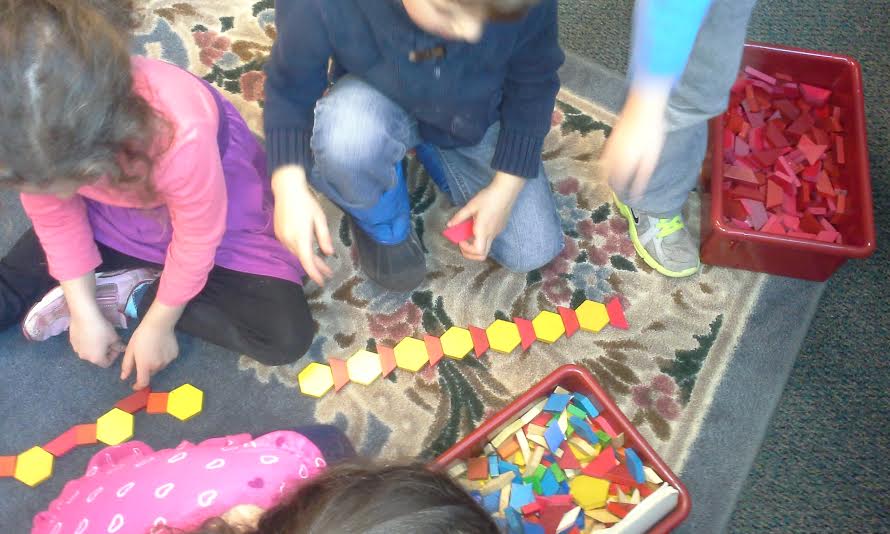
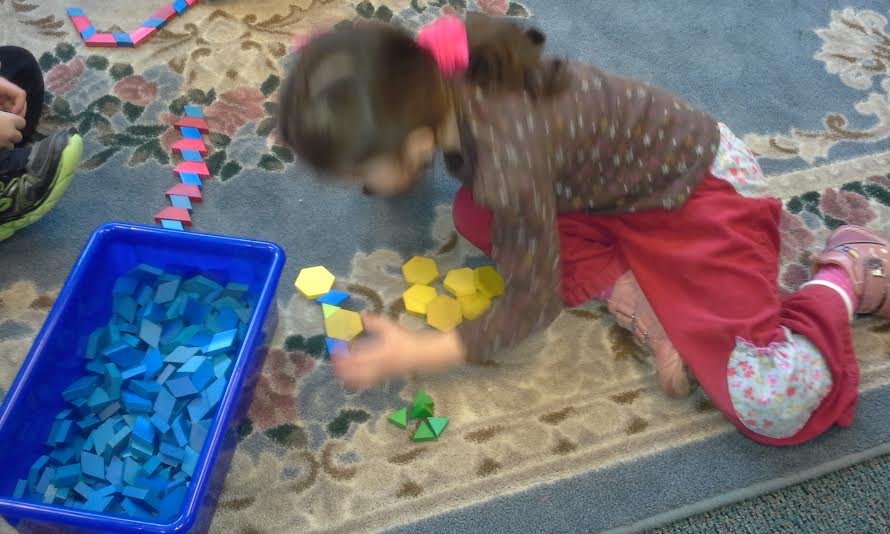
In other news, we had snakes slithering around our classroom this morning…

PATTERN SNAKES!

patterns 5

patterns 3

patterns 4

patterns 1


Magic Beans in Kindergarten!

As we continue to explore the fantasy genre, we read the story Jack and the Beanstalk, and discovered that there can be different versions of stories we read. In fact, many of us were already familiar with this book! We remembered that the main character, Jack, traded his cow for some magic beans. We knew that the beans would grow a magic beanstalk all the way up to the clouds, and we anxiously prepared ourselves for Jack to meet the “scary” giant. However; we were pleasantly surprised when the giant (ogre in this story) was actually not so scary! In fact, he was sad that Jack was trying to steal his hen that laid the golden eggs, his bags of gold, and his golden harp. Together, Jack and the ogre problem solved and peacefully decided that the ogre would lend Jack the golden harp, hen, and he could take half of the gold. Many of us decided that we preferred this version of the story!

Amazing Vocabulary Words

(Jack and the Beanstalk)

  • ogre
  • beanstalk
  • lad
  • naughty
  • lend
  • magic

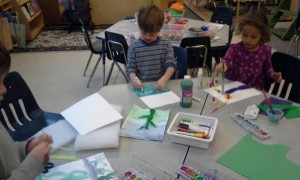
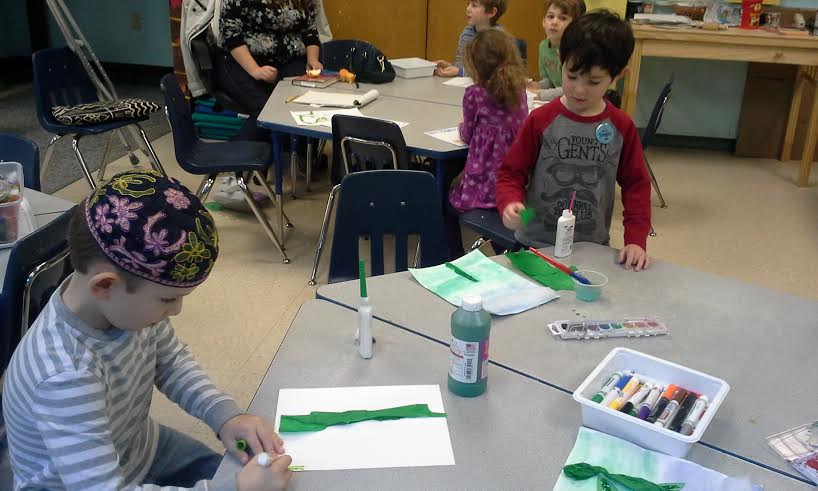
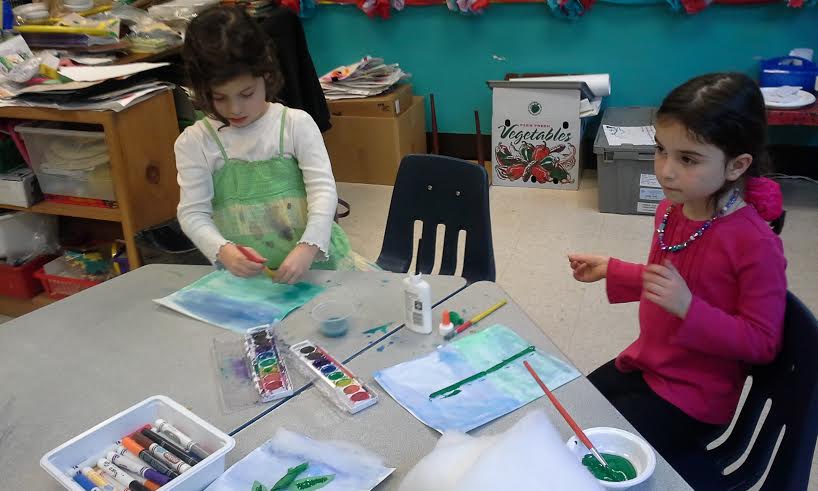
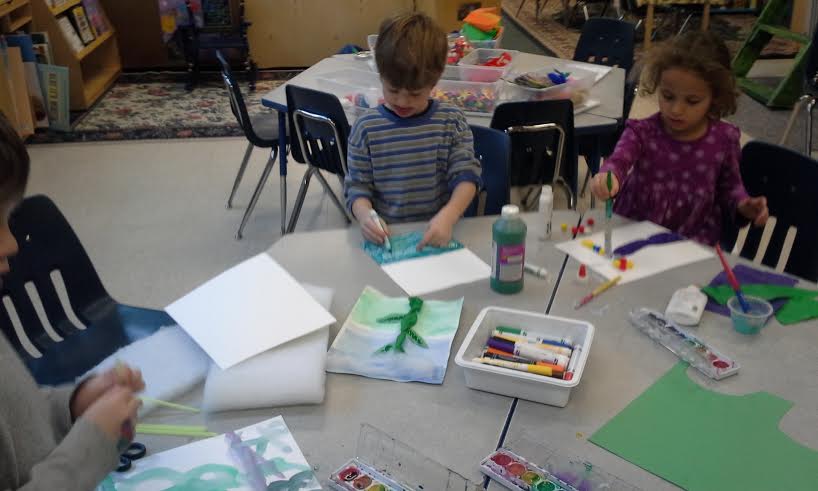
Connecting to this story, the children created pictures of beanstalks using various materials including, craft sticks, pom poms, paint, glitter, tissue paper, construction paper, straws, and more!
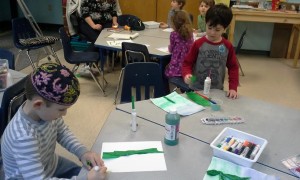
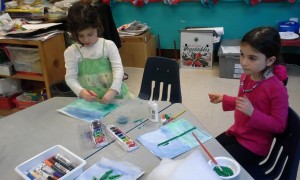
beanstalk art 2

beanstalk art 3

beanstalk art

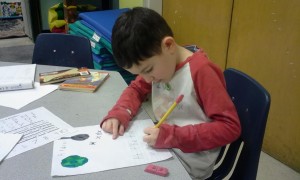
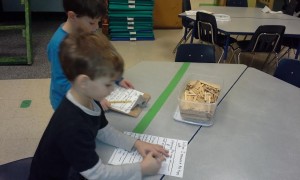
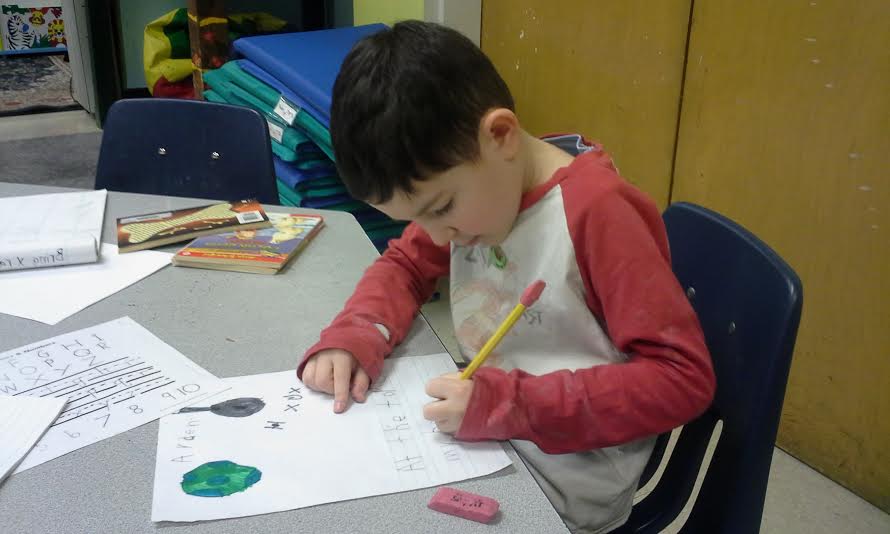
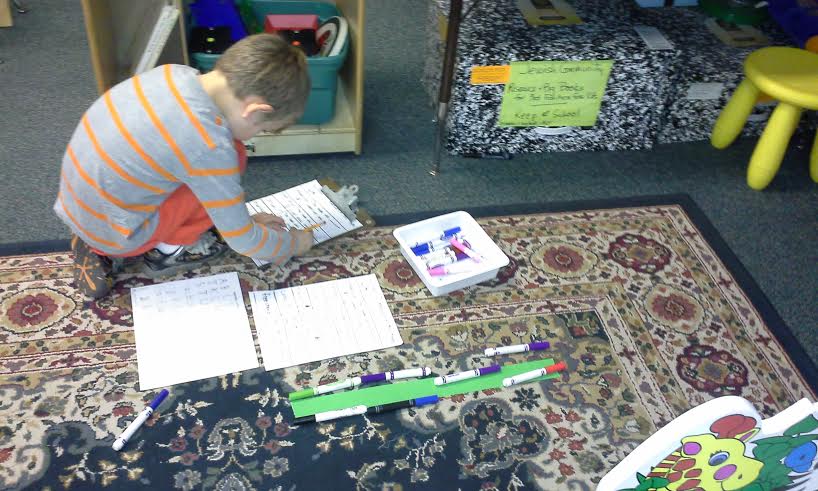
Afterwards, they wrote about what they would find at the top of their beanstalks. Here are some of their ideas:

At the top of my beanstalk there is/are…

  • A golden crocodile
  • A bunch of Legos
  • Pokemon
  • A candy house
  • A club house
  • A Snugglephant
  • Star Wars
  • Treasure
  • Sadie (my dog)

jack and the beanstalk writing

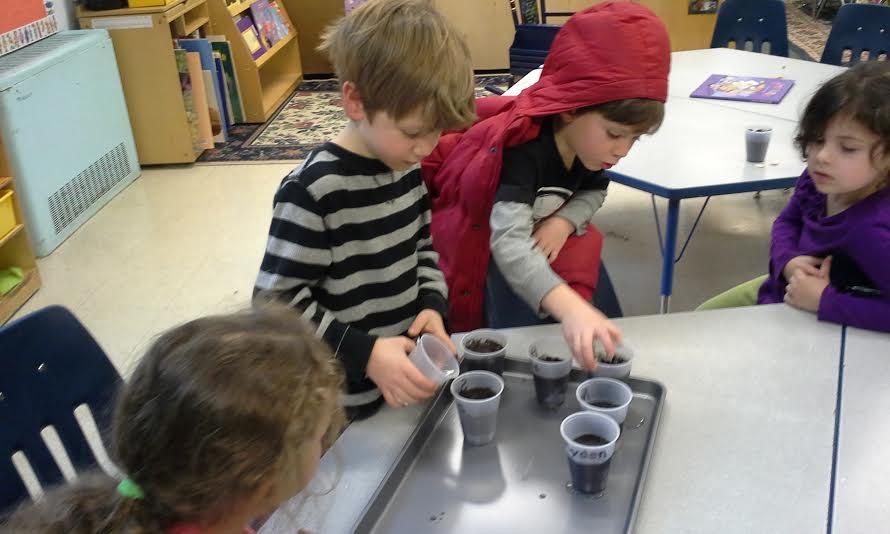
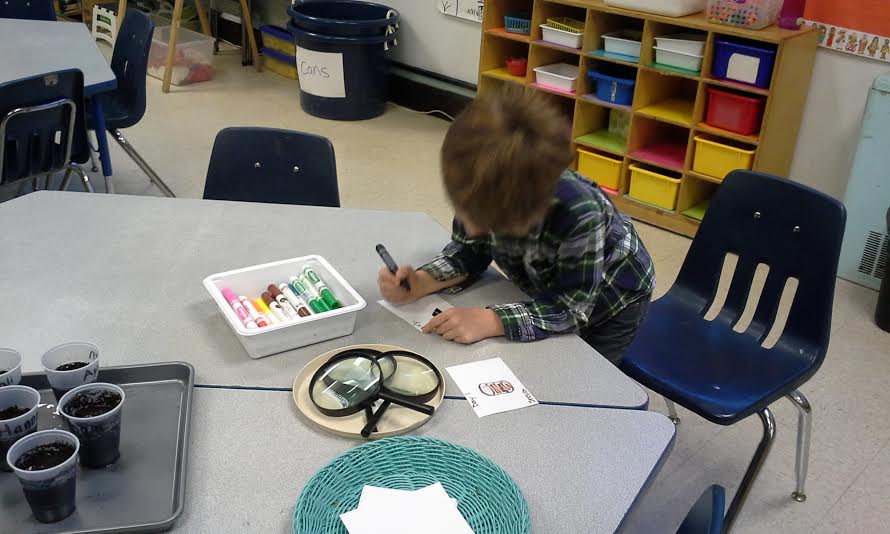
We also planted “Magic Beans” which we will observe over a period of two weeks. Each day, the children will document their observations on note cards and by the end of the two weeks, they will have a beanstalk flip book displaying the growth process.
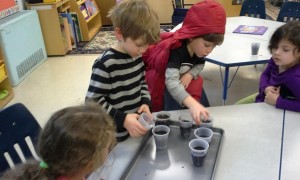
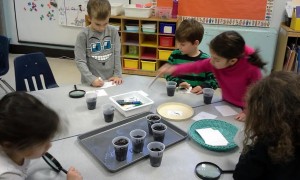
beanstalk planting

beanstalk observations

beanstalk observation

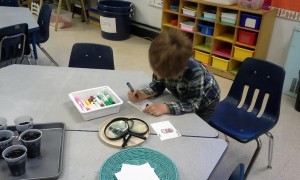
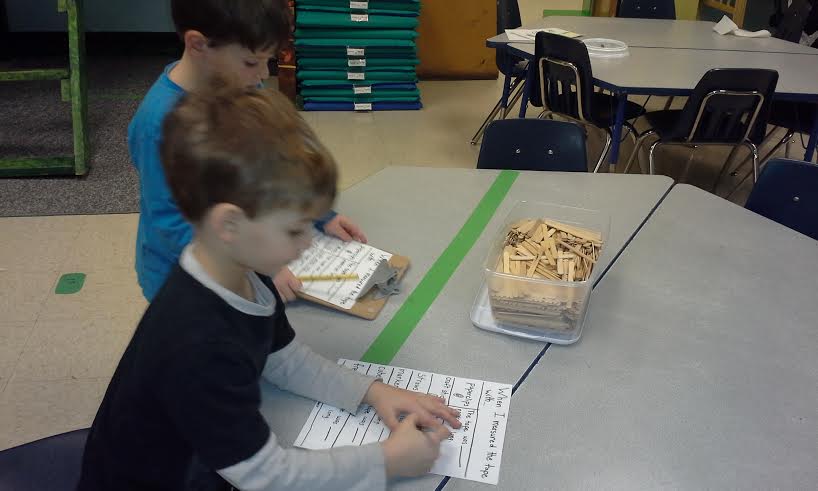
In math, we practiced using nonstandard units of measure by finding the length of various pieces of tape. The children used markers, craft sicks, paper clips, cubes etc. and discovered that they needed less of the larger objects and more of the smaller objects when determining the length.
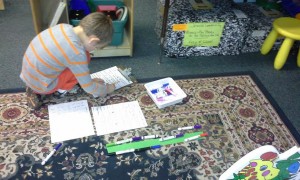
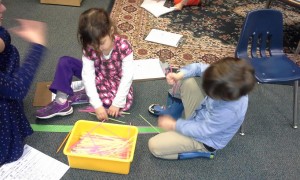
measuring markers

measuring straws

measuring posicle sticks

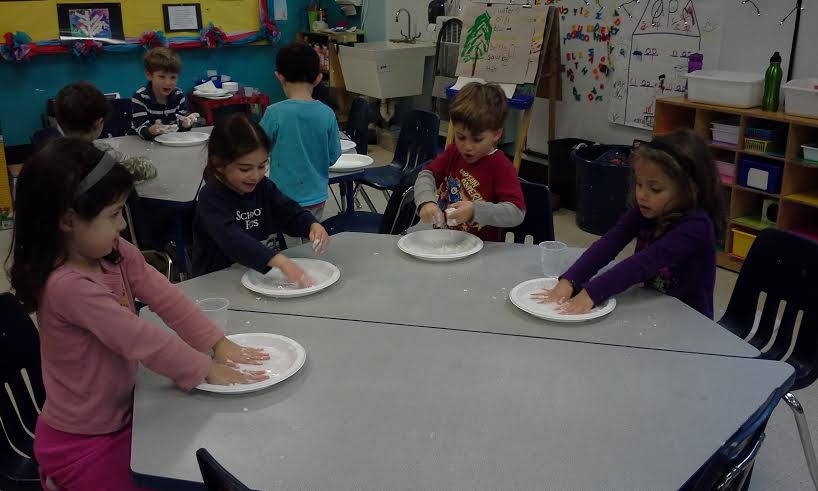
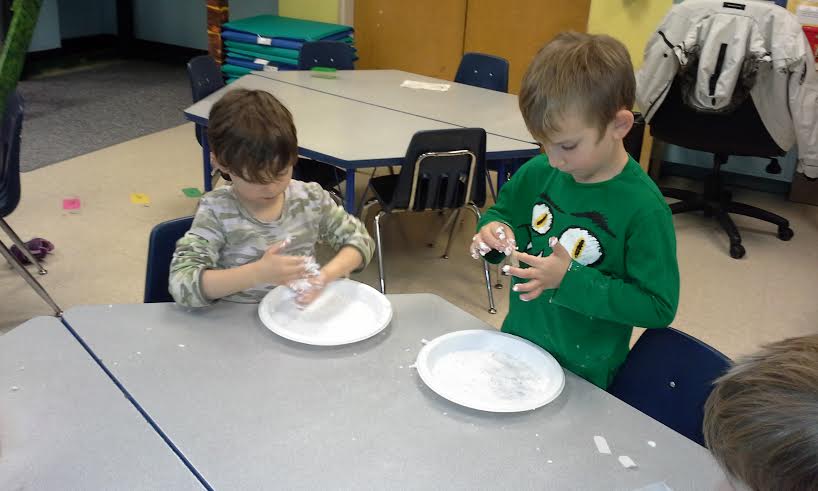
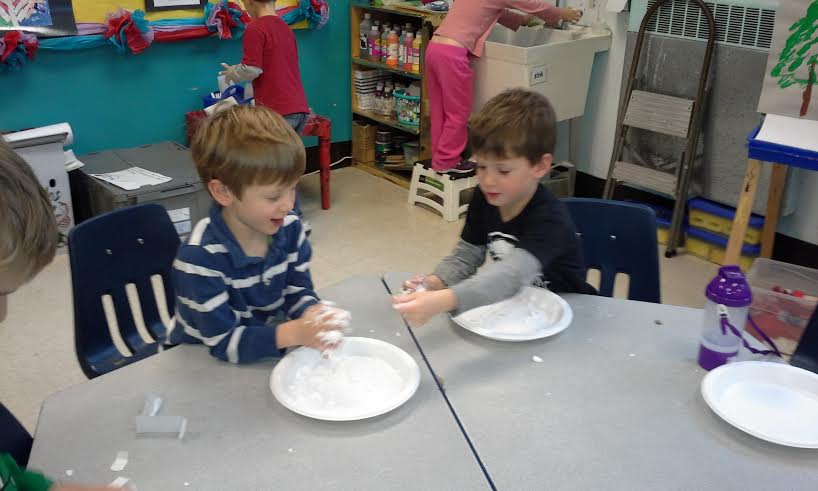
Over the next few weeks, we will be exploring temperature, snow, and ice. We will be conducting various experiments; however, to help us get into the “wintry mood,” we made our own FNOW! (fake snow)

Ingredients:

  • Baking soda
  • White hair conditioner

Mix three cups of baking soda to 1/2 cup of hair conditioner.

The FNOW felt cool, damp, and soft like real snow! We even made FNOWballs!
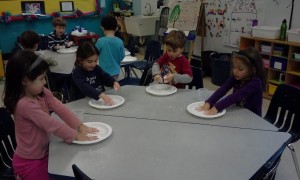
Fnow 1

fnow 2

fnow 3

Snowball Sight Word Game

Sight words:

  • I
  • am
  • the
  • little
  • a
  • is
  • to
  • have
  • we
  • my
  • like
  • for
  • he
  • she
  • with
  • me

We played another game to help us identify sight words. First, the children each wrote their name on a piece of white paper, and crumpled the paper into a “snowball.” Then we selected one of our sight words to be the “sight word snowball.” We flipped over different cards until we came to the chosen word. Once that card was flipped over, the children threw their snowballs into the middle of the circle. Afterwards, they each selected a random snowball, smoothed out the paper, read the name, and sat in the spot of that classmate for the following round.

Math Jumping

Another game that we have been enjoying is our addition and subtraction jumping game. Not only does this game allow the us to practice math skills, it is also a fantastic way to get up, move our bodies, and get our wiggles out! Each child stands in their place and listens to the directions.

“Jump 9 plus 2 times.”

“Jump 8 plus 3 times.”

“Jump 12 take away 1 times.”

We take some time to talk about what we notice:

“These are all ways to make eleven!”

At times the children like “tricky” ones:

“Jump 5 plus 5 times.”

“Jump 9 plus 1 times.”

“Jump 10 take away 10 times.”

Oftentimes, this last direction can be confusing similar to way the Simon Says can be tricky. Your body is so used to jumping, that it automatically starts moving. The key is to listen carefully to the problem. We have a great time with this activity!

Vowel/Consonant Game

We start by standing in a circle and each child says a letter in alphabetical order. When someone gets a vowel, they need to sit down. We go around and around, until we have “one consonant standing.” Everyone in the class says, “mazel tov!” to the winner, who then responds, “thank you.” Not only does this game allow the children to differentiate between consonants and vowels, it also gives them the opportunity to practice good sportsmanship.

Hebrew

While we were learning the letter chet, we used  different materials!  We had fun making  a chalon(window). The children chose to have their  chalon (window) open for different objects that begin with the letter  chet – like a chanukiyah (menorah for Chanukah),  chatool (cat), and  challah. We also baked challa with Hepzibah.

For the letter  alef   we  realized that  ani (me) begins with  aleph. With this new word I decided to introduce two verbs so that we could make actual sentences. First we drew self-portraits, and then we made pictures of ourselves loving someone. The verbs we learned were  ohev (love) and  ochel (eat).
Avraham V’ Sara
In Judaic studies we are learning about welcoming guests. The children gave their interpretation of the Avraham V’ Sara story:
Moshe: Avraham and Sarah lived in a desert in Israel.

Ella: God told them to go to the desert. God promised Avraham and Sarah that if they moved to Israel, they would have a big family…as much as all the sand and all the stars.

Naftali: So many that you can’t count them.

Hannah: It will be a kehila of the people of Israel.

Simon: They went with Lot and his children and his wife.

Hadas: Then they got to Israel.

Naftali: Then the two shepards, Abraham-Shepard and Lot-Shepard, fought.

Moshe: Then Lot moved away, because they didn’t want to fight, so he went to find new grass.

Naftali: I would share the grass.

Moshe: I would make a border to share the grass.

Noam: I would divide the grass exactly by two so both people could have the same amount.

Ella: Avraham let Lot pick what to do, and Lot said he wanted to move by the river.

Naftali: It’s called the Jordan river because it’s next to Jordan.

Hannah: Israel has arba neighbors.

Ayden: Abraham lived in a tent.

Hannah: An ohel.

Noam: There were four doors that were always open so they couple welcome people.

Moshe: They washed their hands and feet and gave them food and water.

Ayden: So they feel good.

Ella: Like chaverim!

Moshe: And taught them about HaShem.

Maya: That you can’t see him.

Naftali: They saw three people in the desert who came into the tent and Avraham and Sarah said…

All: Baruchim HaBayim!

Noam: They gave the strangers food and water.

Simon: The strangers said that they had a message.

Noam: That Sarah would have a baby!

Hadas: They laughed because Sarah was very old.

Hannah: And Avraham was almost 100 years old.

Ayden: He was named Itzchak.

Moshe: Because they all laughed when he was born!

Ella: When Itzchak was older he was very quiet and he didn’t have any friends, so they looked for a good friend for Itzchak.



Family Celebration, New Science Unit, and Reader’s Theater

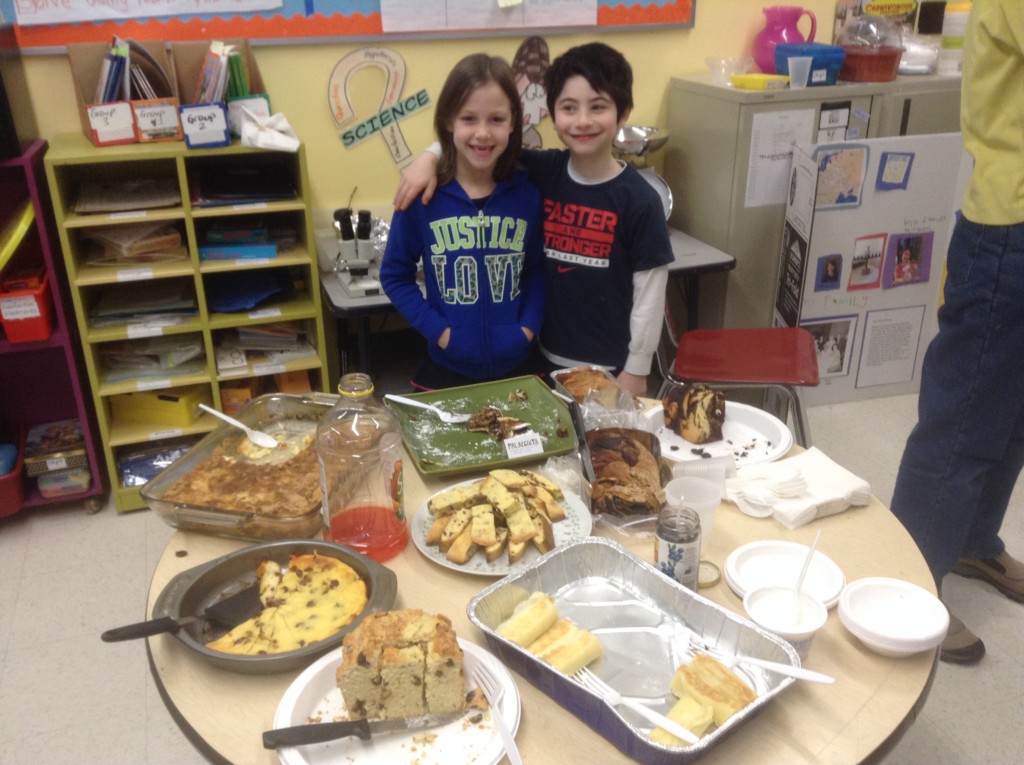
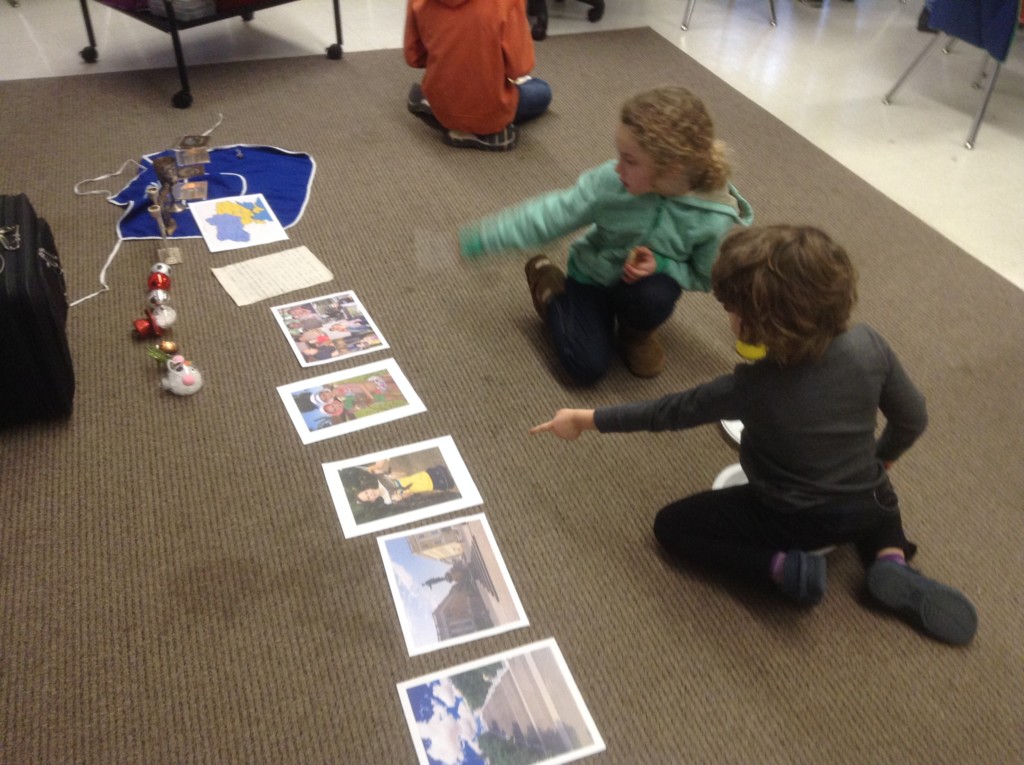
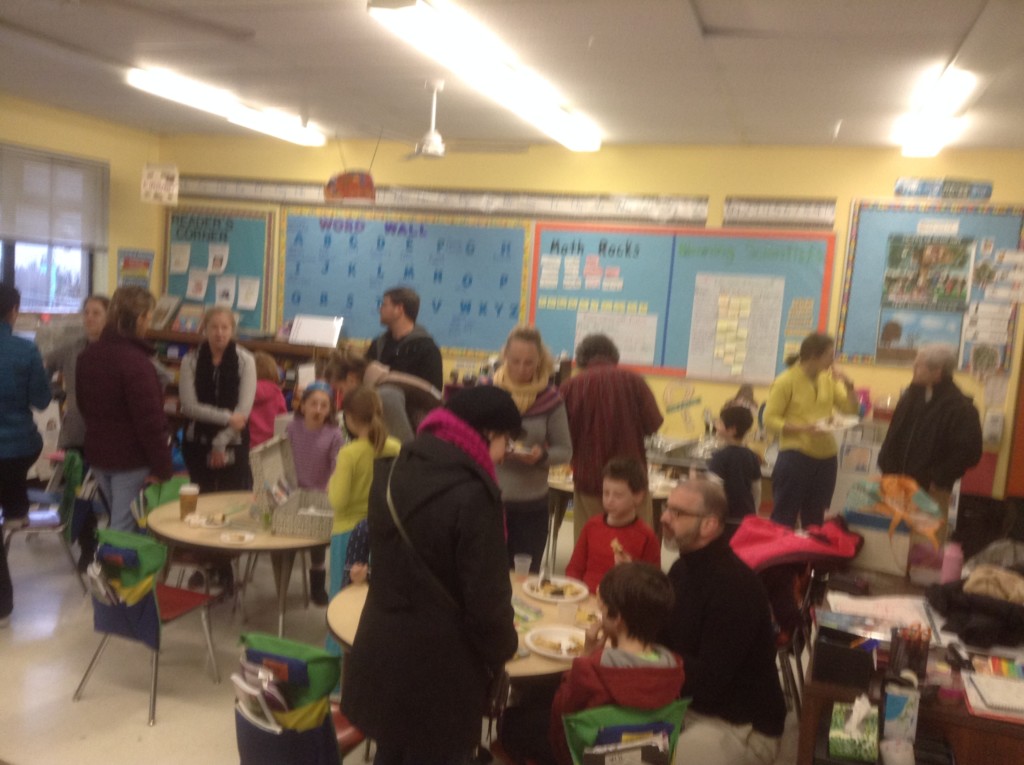
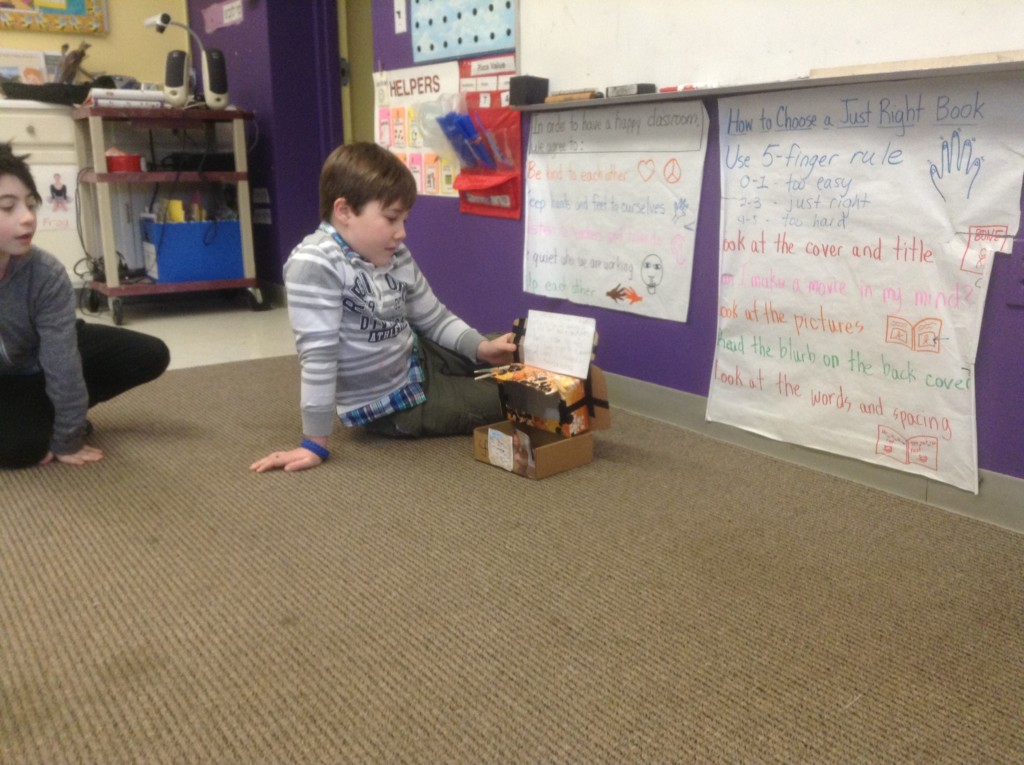
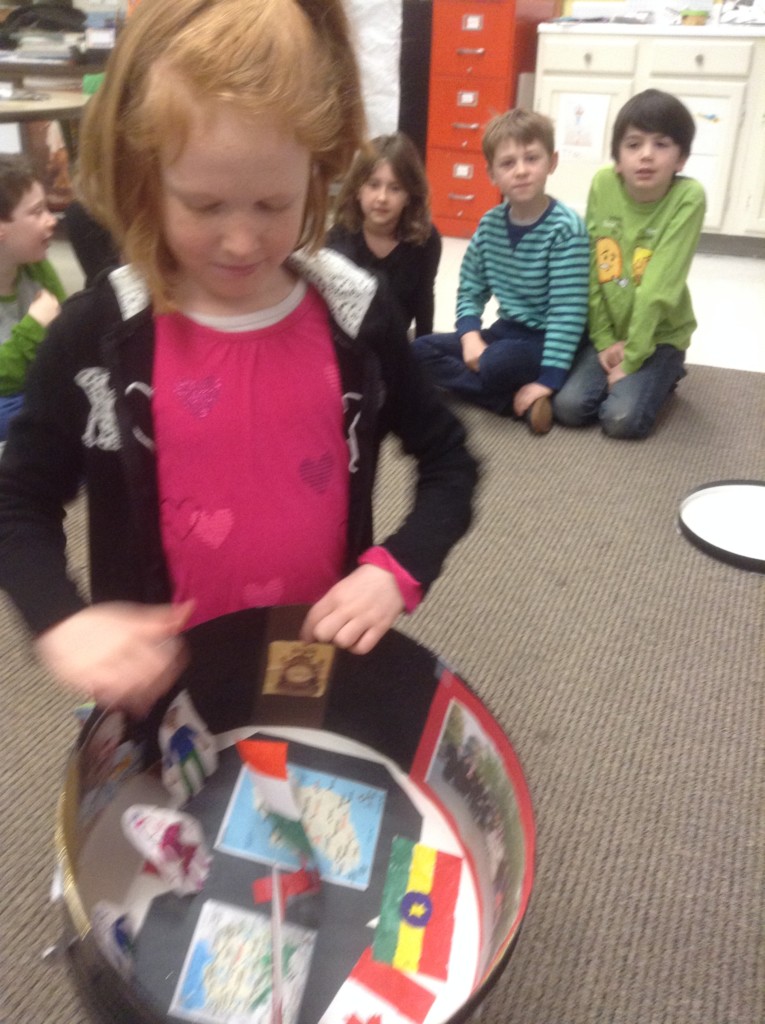
It has been a busy, exciting few weeks in second grade since we have come back from winter vacation.  We drew our immigration and family history unit to a close this past week with a joyous family history celebration.  Many parents and siblings came to learn about and celebrate our varying cultural heritage.  They enjoyed different traditional foods, looked at real family heirlooms, and observed old family pictures.  Thank you to all the parents who not only helped your children understand the richness of family history, but who were able to come and join in this celebration.  It’s important that we continue to have discussions about our heritage so that we continue to know our own history and how it connects to the diverse country that is our home.
2015-01-09 08.24.46 2015-01-09 08.25.04 2015-01-09 08.25.10 2015-01-13 08.23.45 2015-01-14 08.07.19

This week, we launched a new science unit all about balance and motion.  Throughout this unit, students will learn about various types of motion such as spinning, rolling, sound, and magnetic motion.  They will gain a deeper understanding of how things move around them and begin to learn the building blocks of physics!

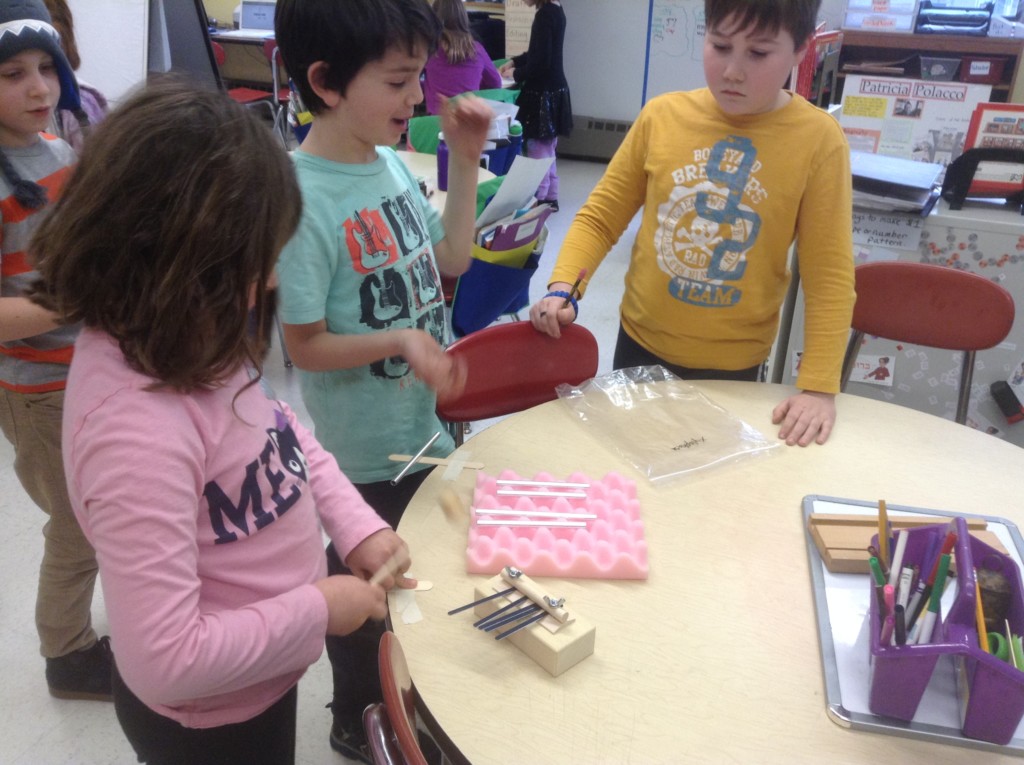
We began our unit by test out various materials that we’ll be using in the coming weeks such as musical instruments, tops, weights, and balance shapes.

2015-01-15 13.44.14 2015-01-15 13.44.18

While some students attempted to balance the shapes on the floor or on their fingers…2015-01-15 13.44.31 2015-01-16 13.16.38


Others took a seal-like approach as they attempted to balance the shapes on their noses…

2015-01-16 13.20.54 2015-01-16 13.20.58

Another exciting thing we have been working on in school is preparing for our reader’s theater performance on February 6th at 8:15.  We’ll be performing two separate plays: Thunder Cake and Thank you Mr. Falker, both are books by our author study author, Patricia Polacco.  You are in for a real treat!  

2015-01-15 14.48.41 2015-01-15 14.48.45

5th Grade Makes Awesome Bricks

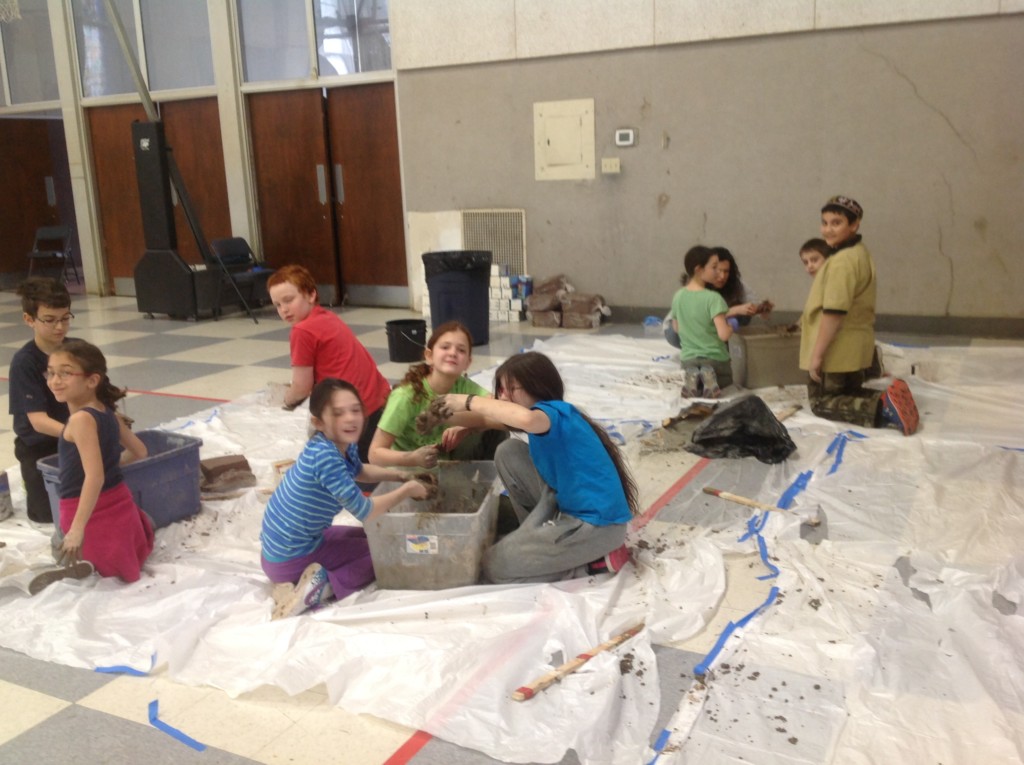
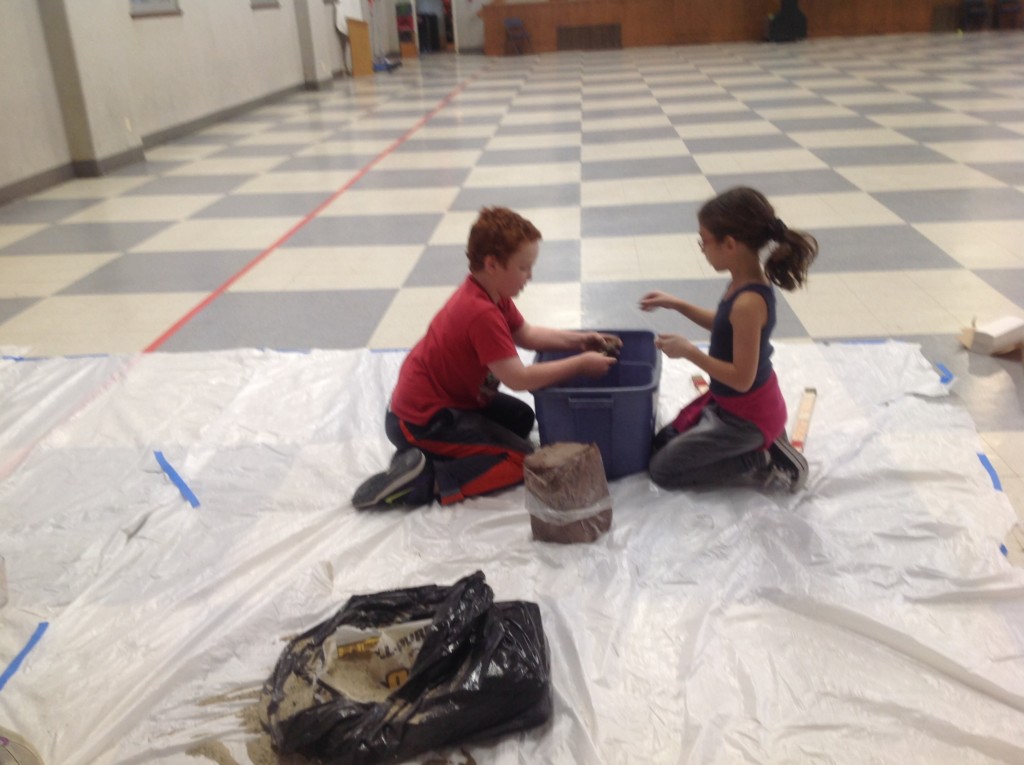
The class worked in groups of three to mix and make the bricks.
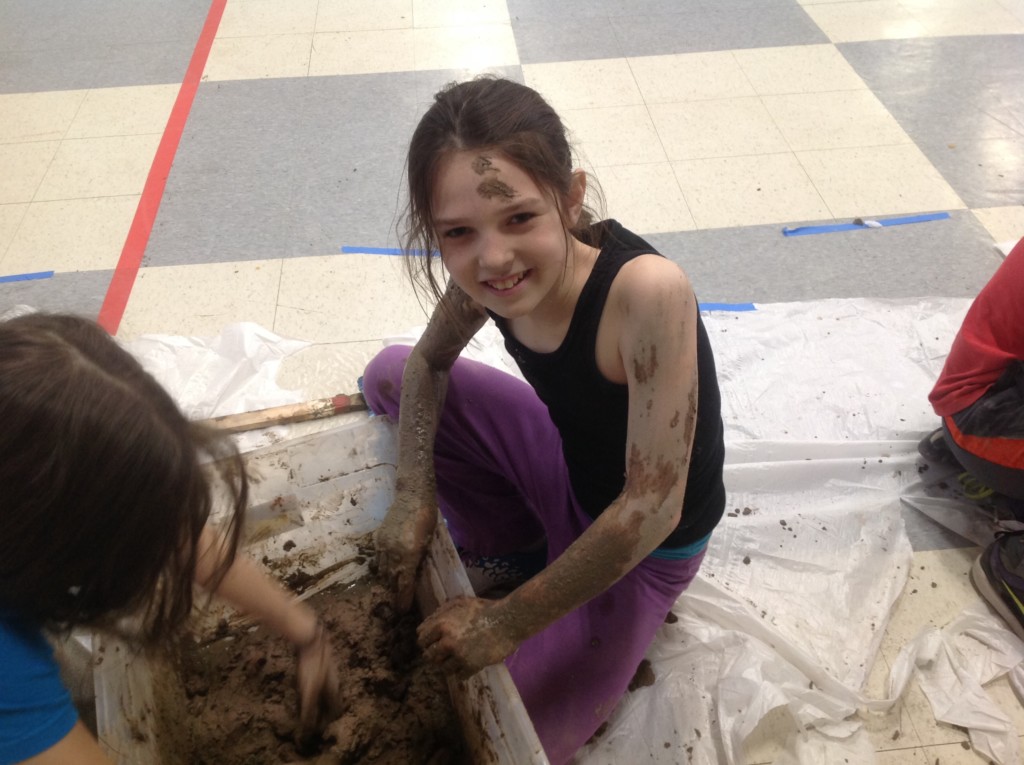
This was clearly an activity that made for dirty hands and arms.  One student commented to me that she was glad we had done this at the end of the day, so she could go home and immediatley take a shower!
This was clearly an activity that made for dirty hands and arms. One student commented to me that she was glad we had done this at the end of the day, so she could go home and immediatley take a shower!
The students approached the task with a seriousness of purpose at the same time that they clearly were enjoying the activity.

Jodd

After months of waiting and doing the research necessary to understand the process, know the porportions of materials and collecting the necessary materials like the milk cartons, the 5th graders finally had the opportunity to make the bricks.  Excitement was in the air as we set up the tarps and carried in the heavy bags of clay, cement and sand.  From that moment on, the students had a sense that this was not going to be that easy.  As part of the process, they were asked to write reflections before the activity. They all commented on how they thought it would be fun and hard at first, but that it would get easier and that it would be messy.  Afterwards, they again reflected on whether the experience surprised them and what were some of the thngs that they learned.  One student commented that it was “way, way, way harder,” while another one wrote, “This experience left me thinking about how terrible ti would be to have to do that for 8-10 hours a day, six days a week for your whole life.”  The students quickly became covered in clay but they did an amazing job of focusing on the task and then, making sure that they cleaned the area and themselves up completely before returning to the classroom.  One of the things that we learned was that, even with our planning and measuring beforehand, we did not judge the porportions correctly and so, we ran out of the cement and sand much sooner than expected.  Unfortunately, that meant that we were not able to make all the bricks that we had hoped to construct and only completed making 23 bricks.  However, Mrs. Woods and Rabbi Gouze will talk about how we might be able to reschedule another day in order to finish the rest of them.  It was clear that the students not only learned from this experience but it was definitely one from which they enjoyed and gained a lot. 


Tamar’s Post about Bricks and a Farewell

This week the fifth grade did so many exciting things!  One of them was making bricks for the brick oven.  We mixed sand, cement, water, and clay in plastic tubs, then put the mixture into empty milk cartons, which we have been collecting since the beginning of the school year.  We did all this in groups of three. The groups were: Jonah, Jordan and Tamar; Tomer, Jodd and Eliora; and Abby, Elliana and Shira.

This week is also Shira’s last week before she leaves for Israel on Tuesday.  We have all made cards for her, and all of us have collaborated to make a PowerPoint where each of us creates a slide saying why we will miss her.  The next time she will be here will be in August.  She has been a huge part of our community, and we will all miss her.

Inspired by our Visit with a Master Artist

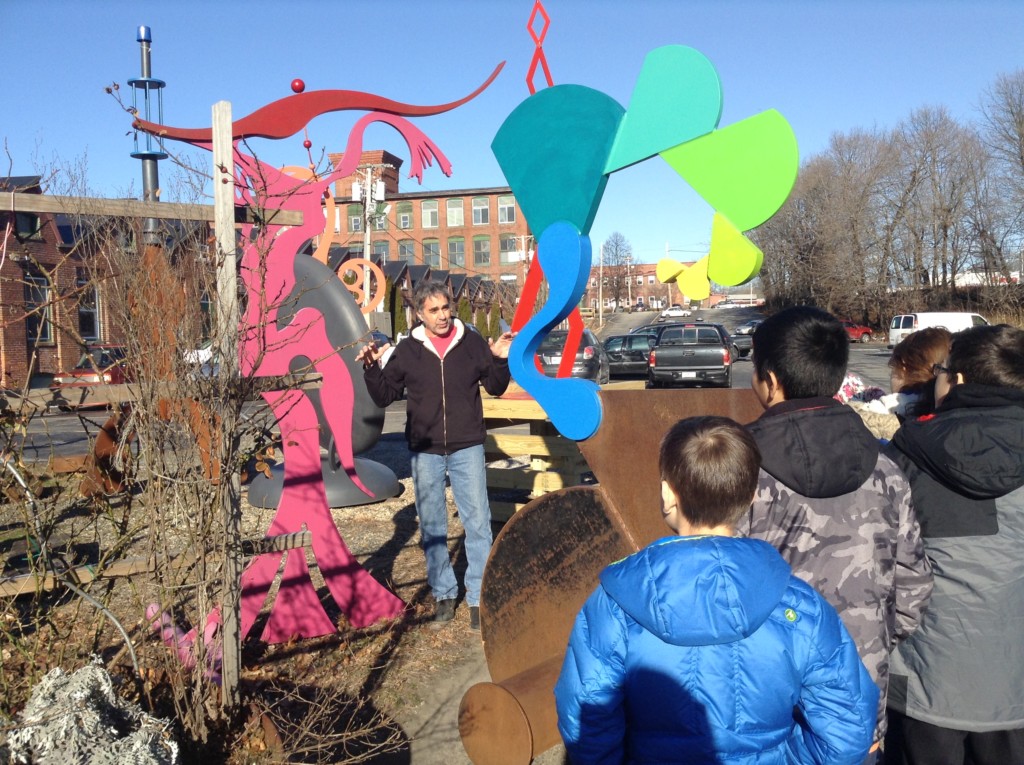
Last Tuesday we had quite a unique learning experience off-campus.  We were fortunate to visit the studio of acclaimed artist Donald Gerola. Here’s a link to his webite, for those curious: http://www.donaldgerola.com/

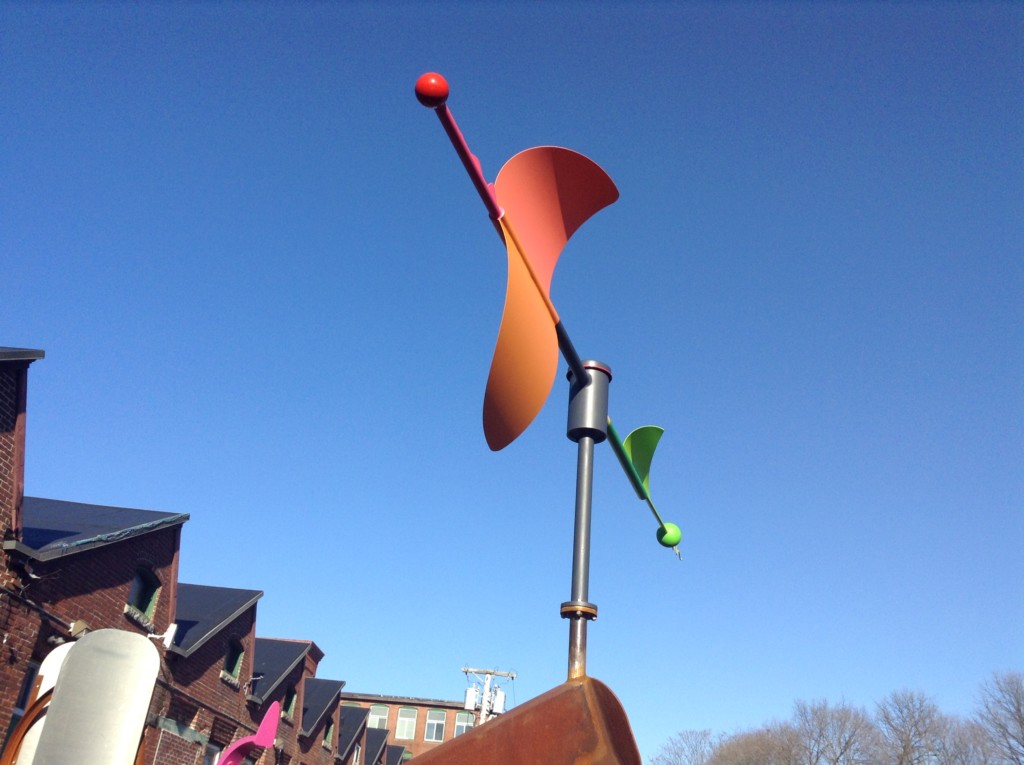
Providence locals have certainly seen his sculptures around town.

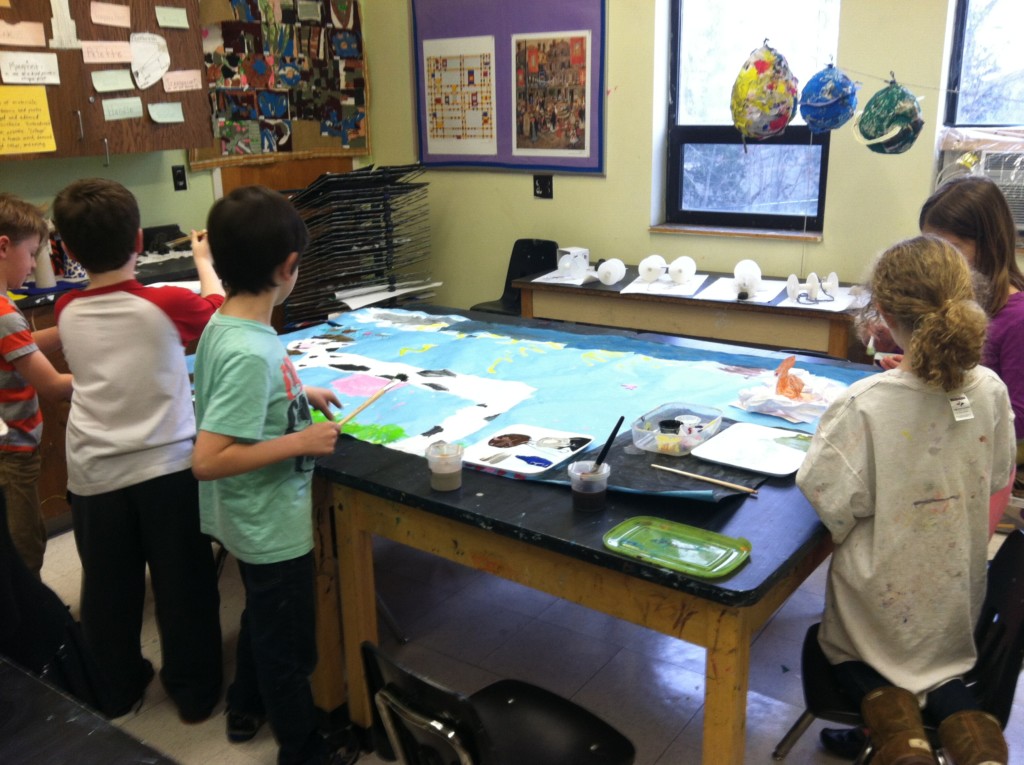
It was our interdisciplinary Teva project that led us here.  As the students worked on planning how to create an aesthetically pleasing structure to reuse rainwater in our garden, the class had to plan out what they think they will need to know and how they might learn it.  Learning from a sculptor was on their list!  Our Head of School, Adam Tilove, had recently met Gerola and helped us make contact.

As a classroom teacher, I can honestly say this was one of the most incredible field trips I have been on.  Meeting a master artist, hearing his story, and walking through a studio filled with hundreds of creative masterpieces left me speechless.  His response to my thank you email was simply beautiful.  He wrote me that this was the only group of children to touch his soul and that we left magic behind in his studio.  He also welcomed us to return in the spring.

As a result of our visit, students have new inspirations and ideas for moving forward with their project.  They look forward to updating Gerola of their progress.

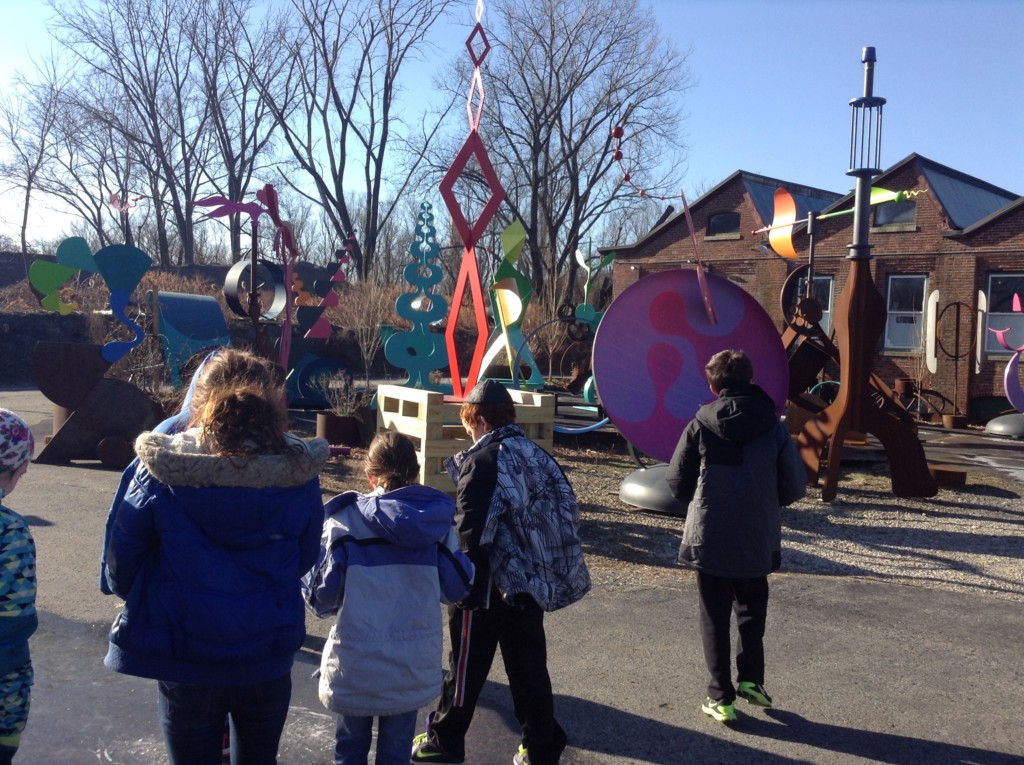
From the moment we disembarked the bus, we were in awe of the art.
From the moment we disembarked the bus,                          we were in awe of the artistic sculptures.
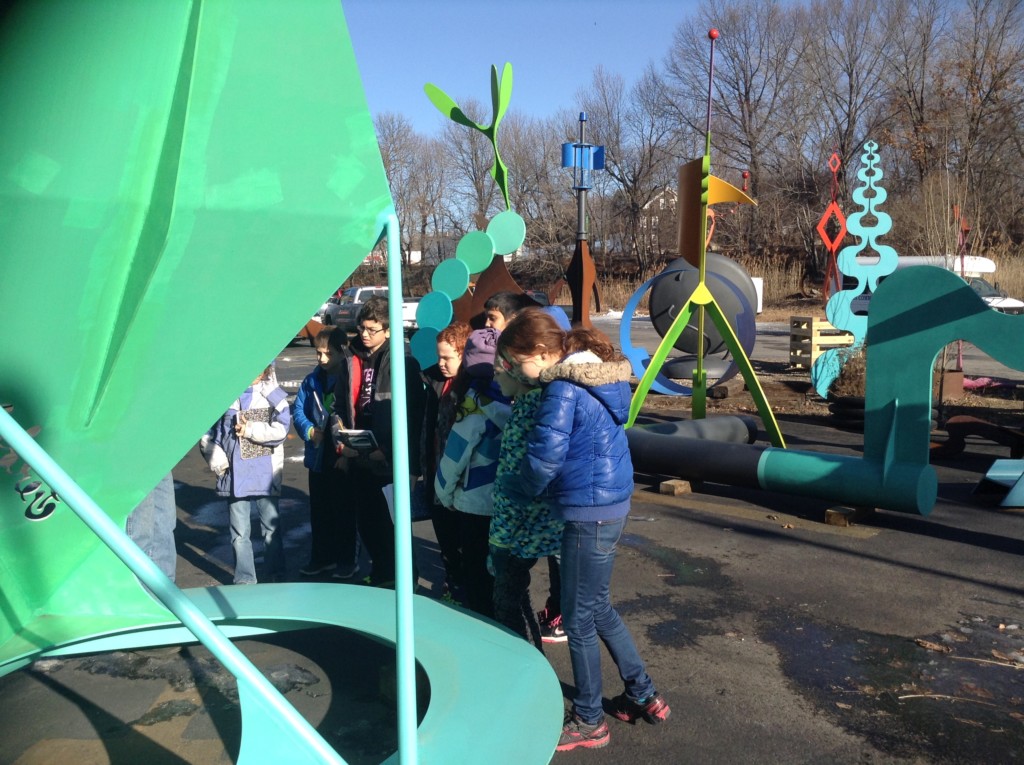
Wandering around, mesmerized by the unique shapes and colors, students forgot how cold it was outside.
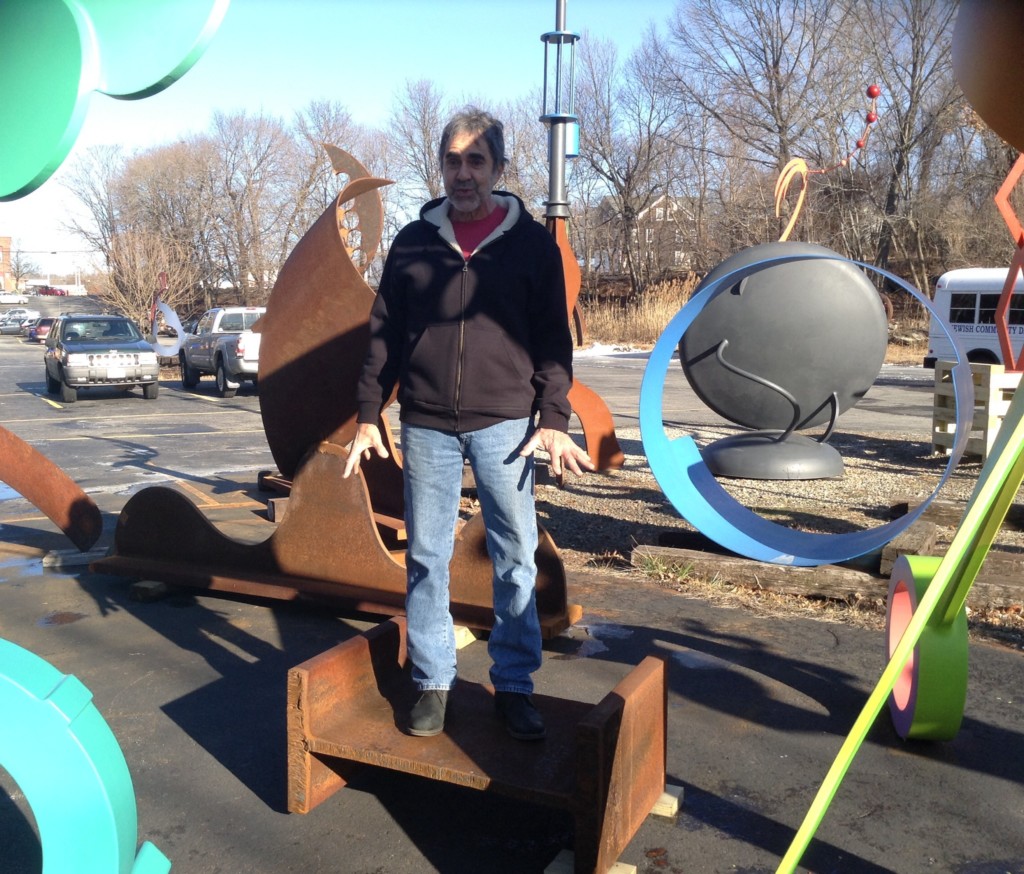
The artist explained the sculpture he was standing on weighs 1,600 pounds!  We tried to figure out if it weighed more than all of us.  (It does.)
The artist explained the sculpture he was standing on weighs 1,600 pounds! We tried to figure out if it weighed more than all of us. (In fact, it does.)
It was fascinating to hear the artist reflect on his vision and process.
It was fascinating to hear the artist reflect on his artistic vision and process.
Art that meets the sky.


Gerola demonstrates his unique method.

Avian Architecture Workshop by RISD STEAMmates

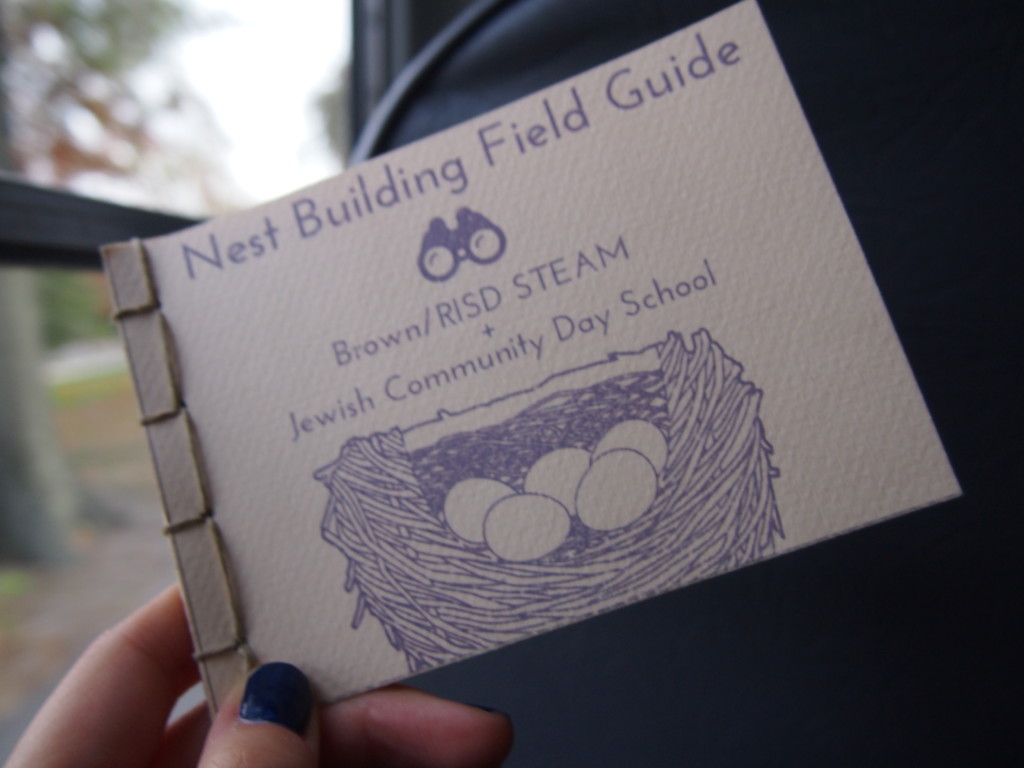
This past fall, students from the Brown/RISD STEAM club came to JCDSRI to give interdisciplinary lessons to tie together what the students were learning in different classes. Anthony Peer (RISD Industrial Design ’16) and assistant Soo Hyun Shin (RISD MFA Graphic Design ’15) led Avian Architecture, a workshop that gave the 3rd and 4th grade students a hands-on look into the construction of a bird’s nest. Below are some thoughts from Anthony.

 Gathering Materials at Blackstone Park

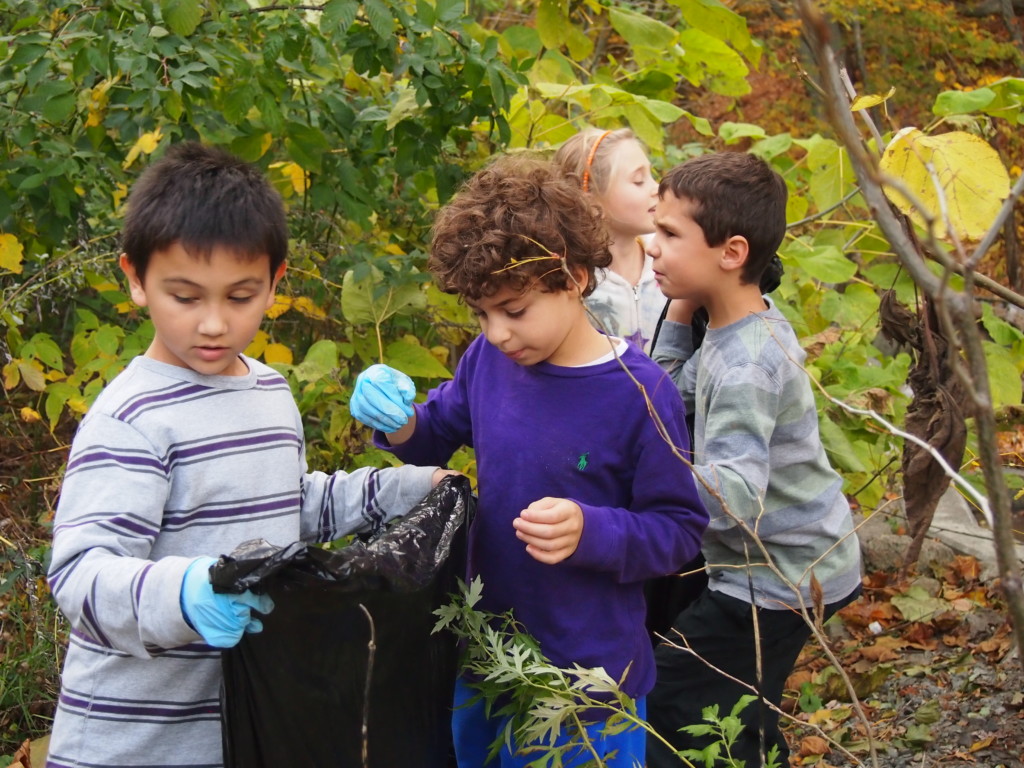
A very important aspect of the lesson was to allow the students to get outside and experience what it is like to collect nesting materials. For this we took our first day of the workshop and went to Blackstone Park in Providence to collect some nesting materials and receive their field guide notebooks as guidelines for collection. To emphasize the difference between reading about the materials used and actually knowing what the proper size, flexibility, and type of twig necessary to make the structure of a nest we looked at good and bad examples I collected. Being able to pick up a twig and recognize whether or not the twig they are picking up has the proper qualities for the making of a nest was vital to understanding the selection process that a bird goes through.

The students in the class were able to have a learning experience, which was centered on creating something for the purpose of learning more about a topic in science rather then making for a standard arts and crafts based lessons. A biologist or an archaeologist wouldn’t be able to learn about a topic from sitting in the library of a university their whole career, so in many cases they go out into the field to experience the subject they are trying to learn more about up close and personal. Being able to learn in the field rather then a classroom was vital to showing the students the complexity in the development of a nest, as well as view the effects that our waste has on the environment through material collection.

 P1011882 P1011925 P1011904

Making Their Bird’s Nest

Each of the students was given the materials that they had collected on our outing to Blackstone Park and were asked to make a nest using these materials. Before we began the making portion of the workshop we went over some of the materials we gathered, and using real birds nests borrowed from the RISD Nature Lab observed the individual construction process of multiple bird species.

Interestingly enough the children that decided to not use the wireframe structures provided for them made very convincing looking nests using the techniques shown in cup and woven nests. Students that had a little bit more difficulty in the development of their nests that choose to utilize the wireframe were then able to quickly put together a nest in the same amount of time as those who did not use a wireframe. Being able to cater the learning experience to all of the students involved allowed for a pleasant and constructive time of making. Ultimately each student had an interesting approach to the making of their individual nests, and although not perfect representations of how a bird makes its’ nest, they were very intuitive responses to what they learned about nest construction.

DSC_0559 DSC_0554 DSC_0577

What the Students Learned

In completion of the workshop the students were able to evaluate their own nests in relation to the actual nests that were shown prior to the making portion of the lesson. Having time for reflecting on the lesson and observing the work that they did during the workshop allowed the students to see how difficult it was to replicate a nest, as well as have a more in depth look into the different materials they used in making their nests. The students were asked to do a simple sketch of their nest as well as answer some questions as to the setting in which their nest could be found, and to describe the type of bird that lives in it. Being able to sketch the nest and observe it from a different viewpoint allowed them to see the materials used differently. Many of the students had pieces of trash and plastic in their nest, which they hadn’t noticed prior to the completion of the nest. Enabling the students to take a step back from what they had made and sketch the product of the work they had done during the workshop allows for a more broad understanding of the lesson as a whole.

In asking the students what was the most difficult part of the making their birds nest many responded with not being able to keep the nest together or not being able to start their nest because they didn’t know where the starting point was. In closing the lesson I wanted to try and get this across to the students that our inability to replicate these pieces of avian architecture gives us that much more of a responsibility to protect the environment in which they are created. Besides trying to replicate a bird’s nest the students hopefully went home with greater appreciation for the environment and their ability to make positive change for the protection of the wonderful structures that nature displays.

How can this be used in other facets of teaching? 

Developing a learning experience that involves being able to have hands-on interaction with the materials used in nature is vital to a more practical understanding of structures found in nature. Being able to fully understand the process by which structures in nature are constructed there needs to be an experiential aspect to the study of those structures. The ability to not only observe what is in nature from a far, but to put the student in a position to have a tactile relationship with the materials that are used encourages a broader understanding of the subject. Encouraging learning through making should be a necessary component to any teaching structure and this nest-building workshop is but one way to get students out into the field to experience the wonders of our natural world.

Immigration and Family History

As you know, we have been learning a lot about the story of immigration.  Specifically we have looked at why Jews left many places in Europe, we have discussed the different reasons people immigrate, and we have learned about the statue of liberty and Ellis Island.  Also, students have been learning all about their own family histories.  I can’t wait to see their projects after vacation!

This past week, students created skits to tell the story of how the statue of liberty came to America.  I did have video feed, but youtube seems to be unhappy with me right now.  I’ll post later.

Also, we were lucky to have Yasha’s mom come and talk to us about her immigration experience.

2014-12-19 08.09.56

If you are looking for an enrichment activity to do with your kids at home, take a virtual tour of Ellis Island, meet modern immigrants and look at some immigration data at scholastic website at http://teacher.scholastic.com/activities/immigration/ .

We also had a super exciting Friday.  We had a visit from our first grandparent guest reader!

 2014-12-19 12.39.04

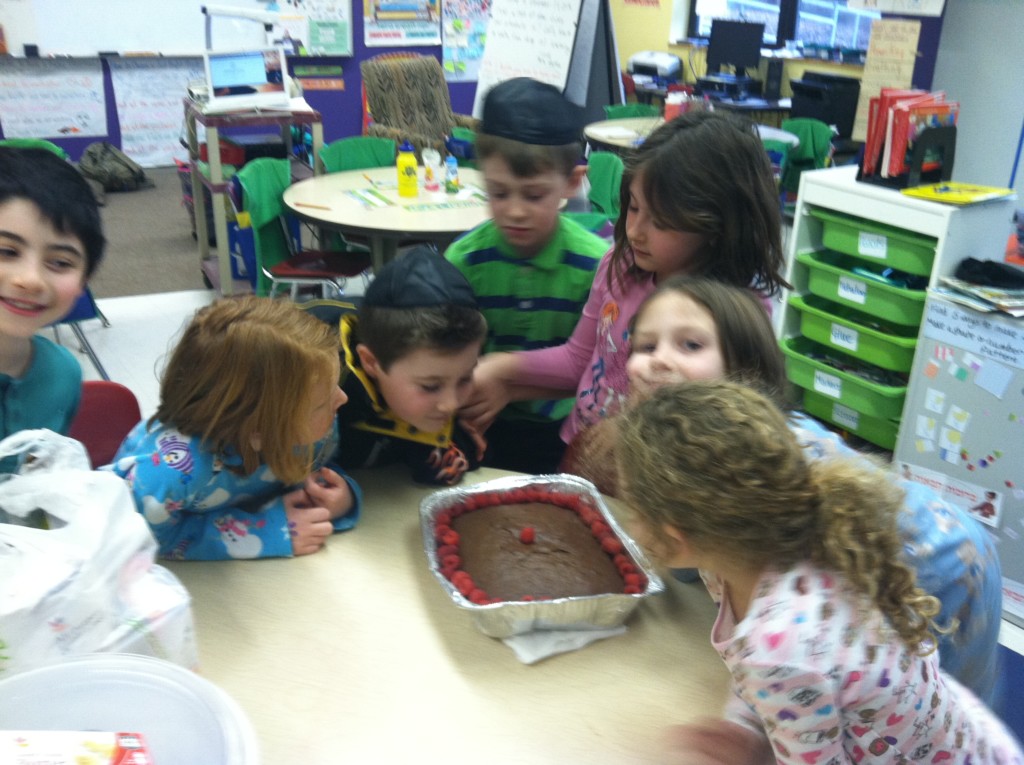
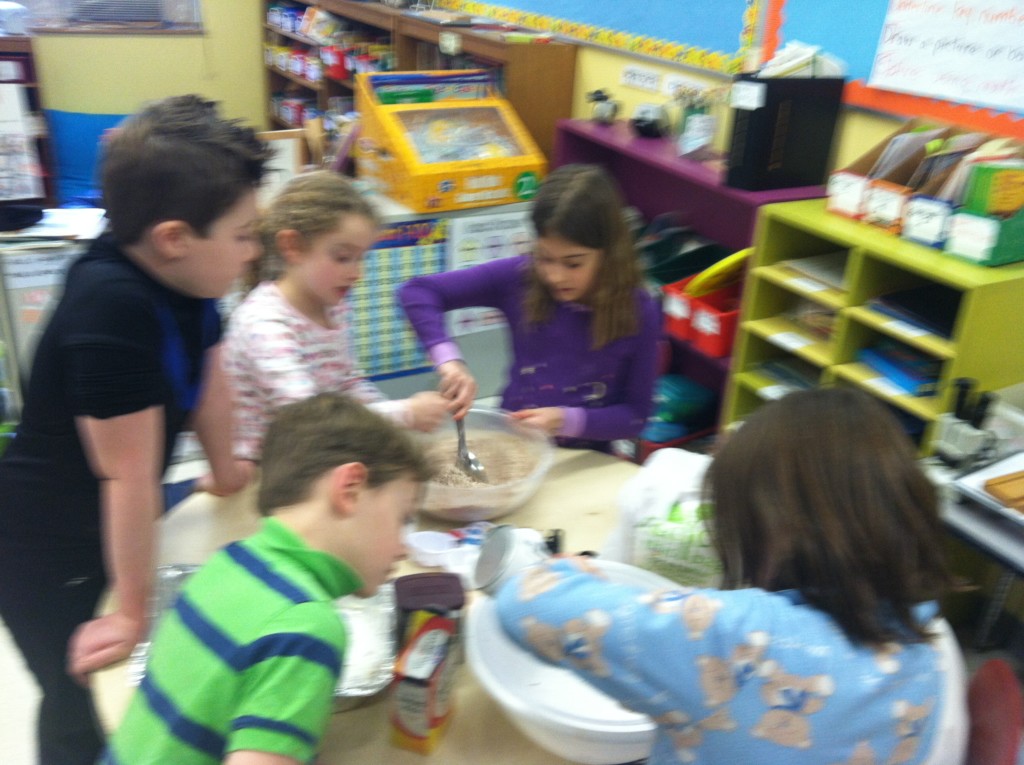
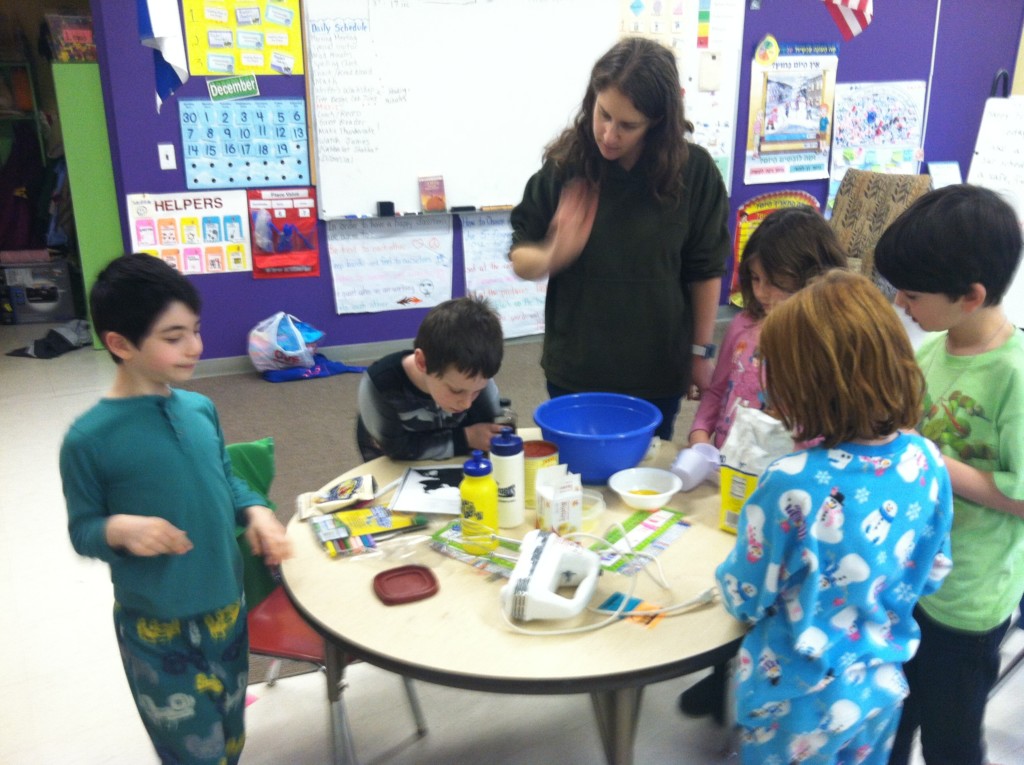
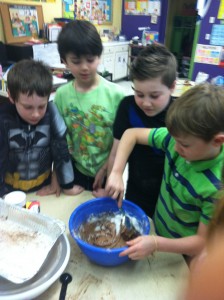
Then we made thunder cake, a recipe from Patricia Polacco’s book “Thundercake”.  We think it turned our pretty great.  Thanks to Val for helping with the baking!

2014-12-19 13.13.27 2014-12-19 13.13.32  2014-12-19 14.24.24

2014-12-19 13.24.43

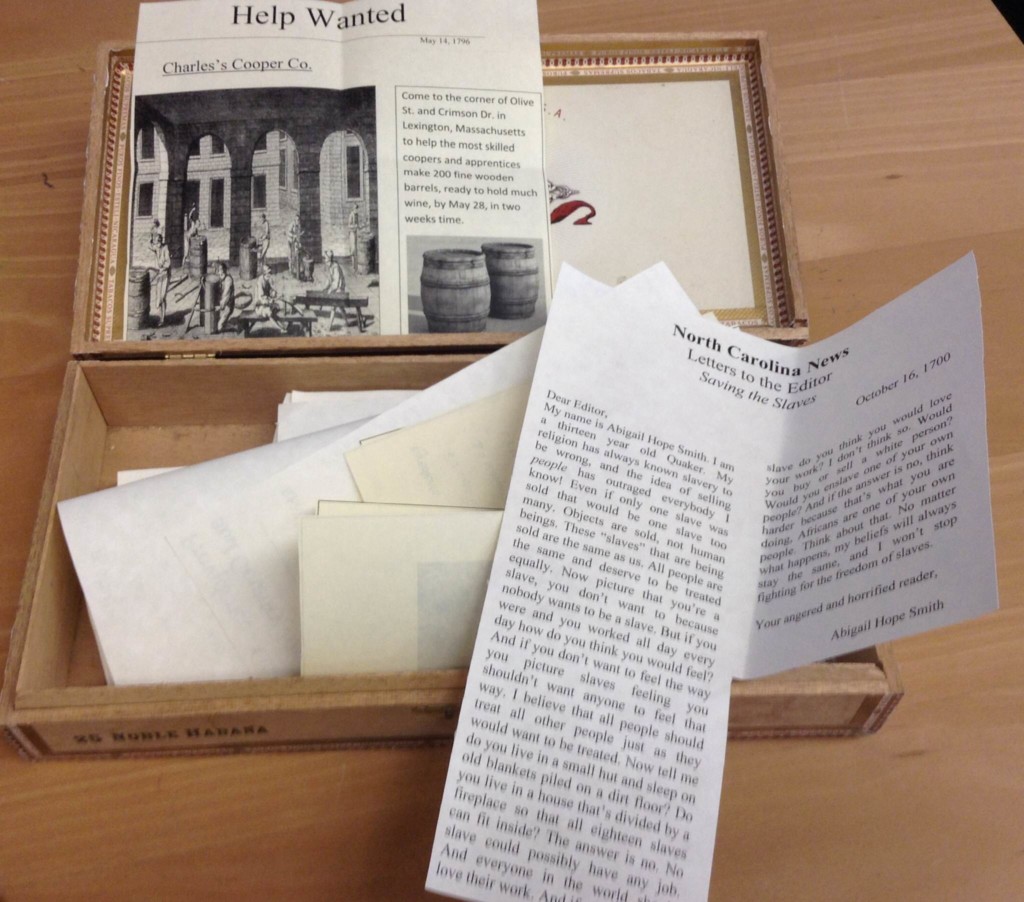
Jordan’s Post about the Colonial America Newspaper Clippings Project

After many months of Social Studies learning, we started and finished our fifth grade Colonial Newspaper Clippings Project.  The fifth grade has split up into two groups, and each person wrote a News Article, a Letter to the Editor, and as a group we made a few Choice Articles.  We typed up our own News Articles, and Letters, using what we have learned from the past few months.  For two weeks the fifth grade worked hard in school and at home to complete this project. I think it was an interesting project, especially that we got to use something we learned.IMG_2236 (2)