fbpx

Perspective

img_0138img_0142

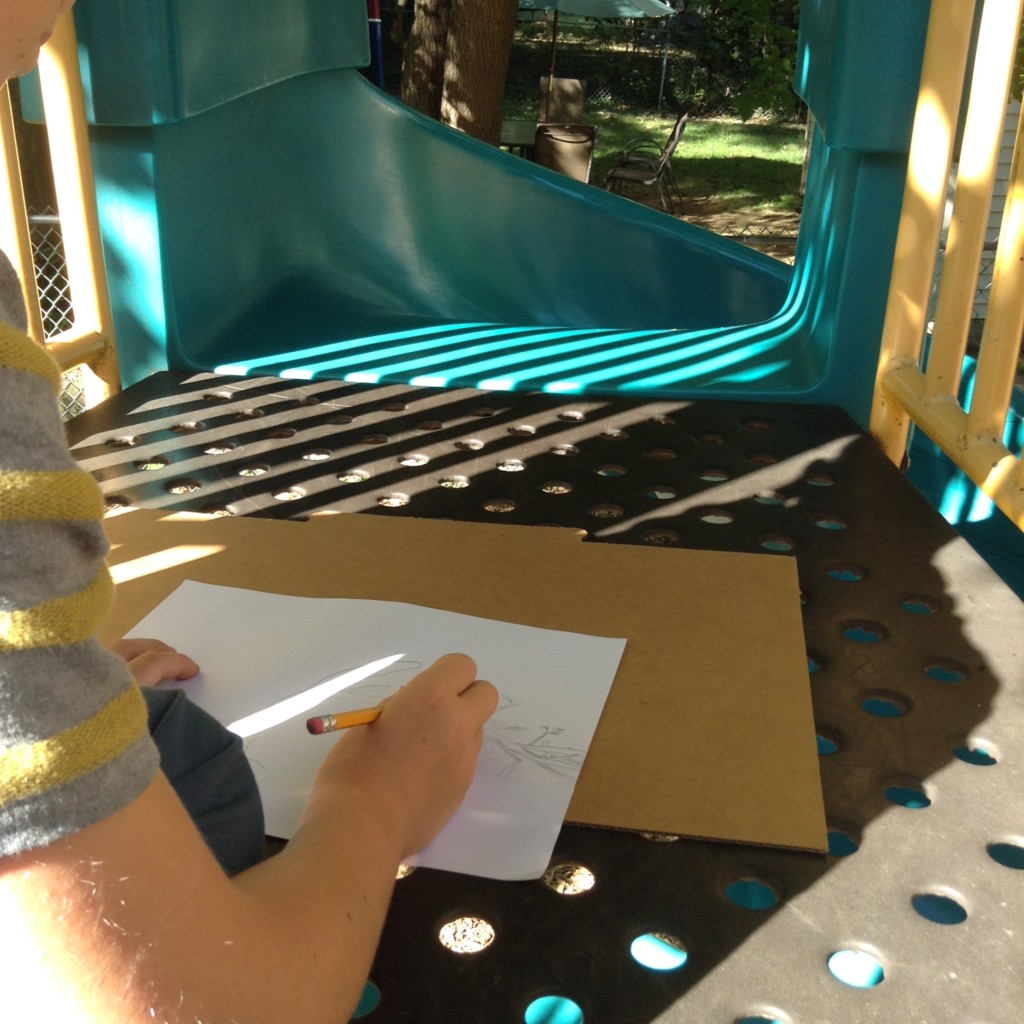
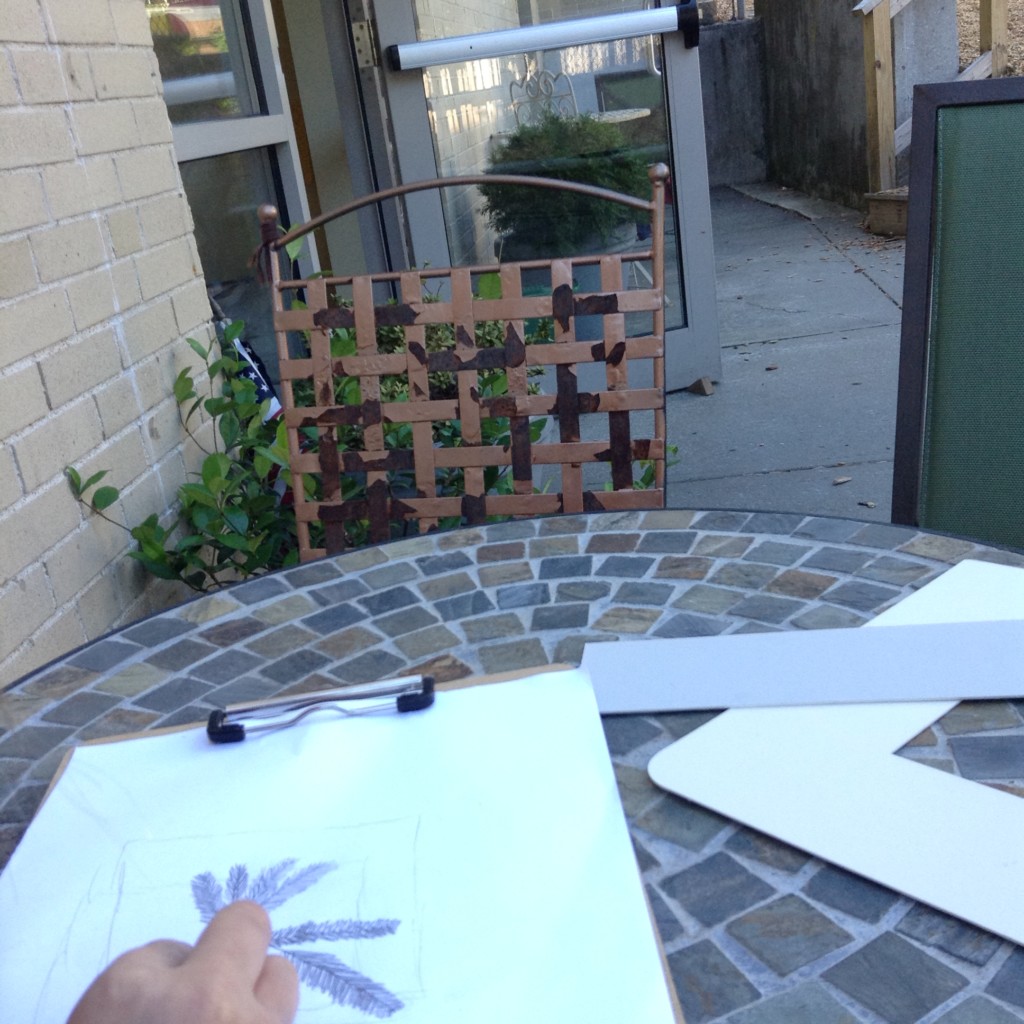
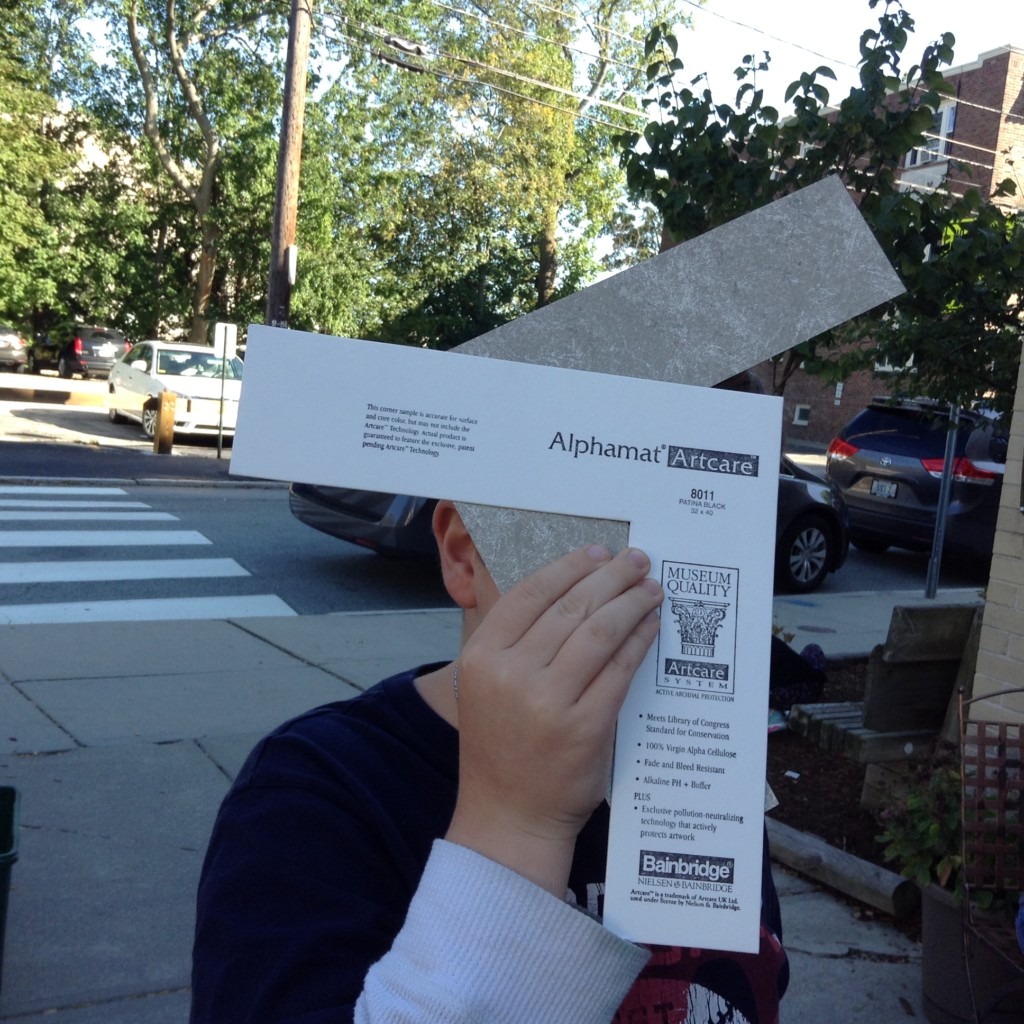
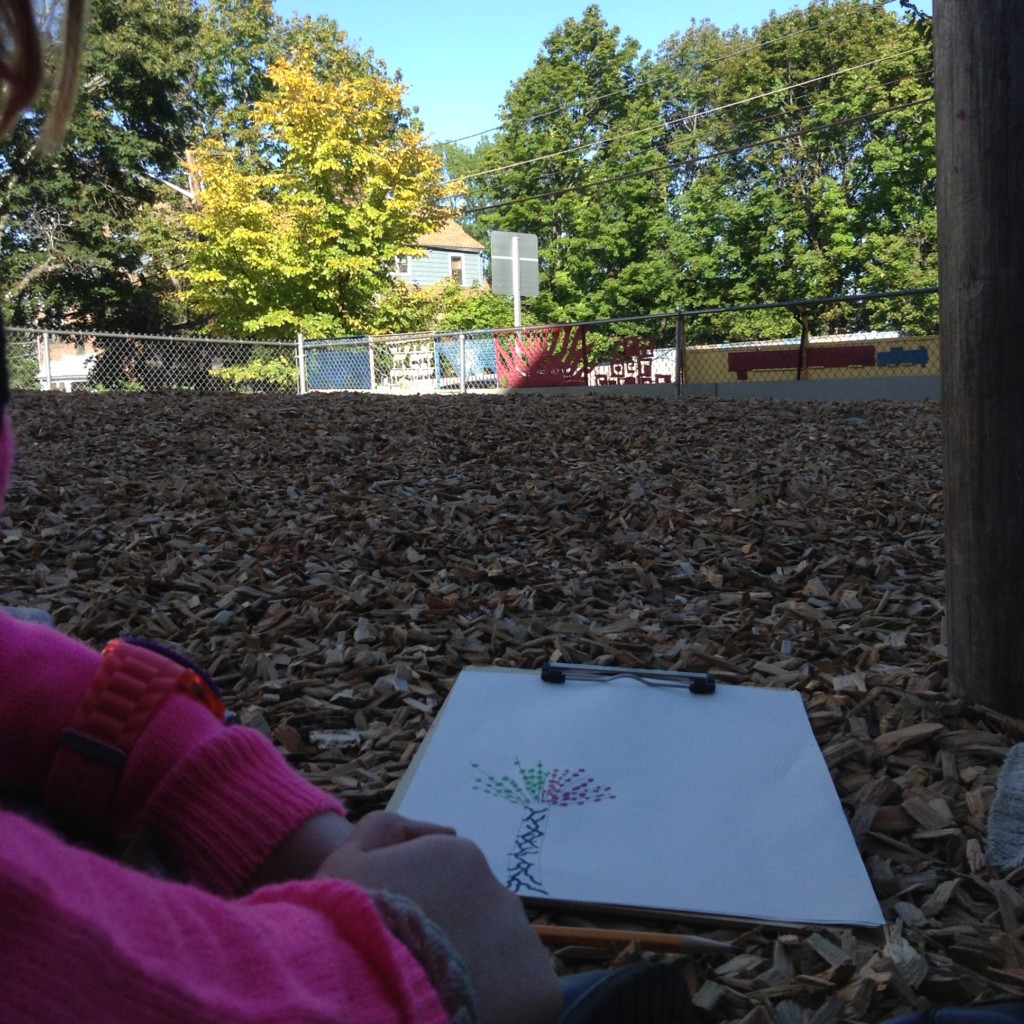
One unseasonably warm day in early October I started our fourth grade art class with a vote.  They had been learning about the election and consensus, and I told them we could go outside, but only if everyone agreed.  After some impassioned speeches, we got everyone on board. I talked to the kids briefly about framing and how beauty can be found anywhere if you get the right frame of reference.

img_0140img_0135

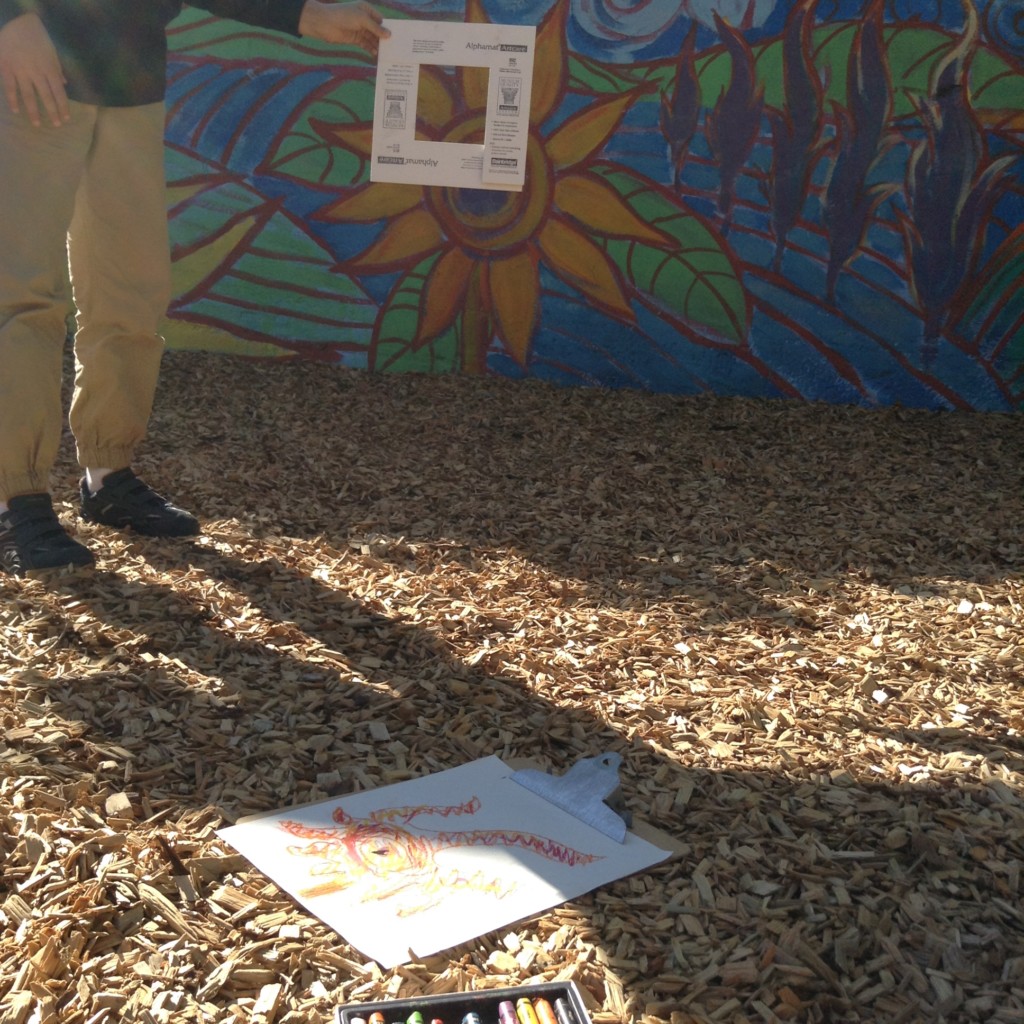
We brought out actual empty frames so students could work on their composition.  I encouraged them to zoom in and out to find the best image.

img_0139img_0143

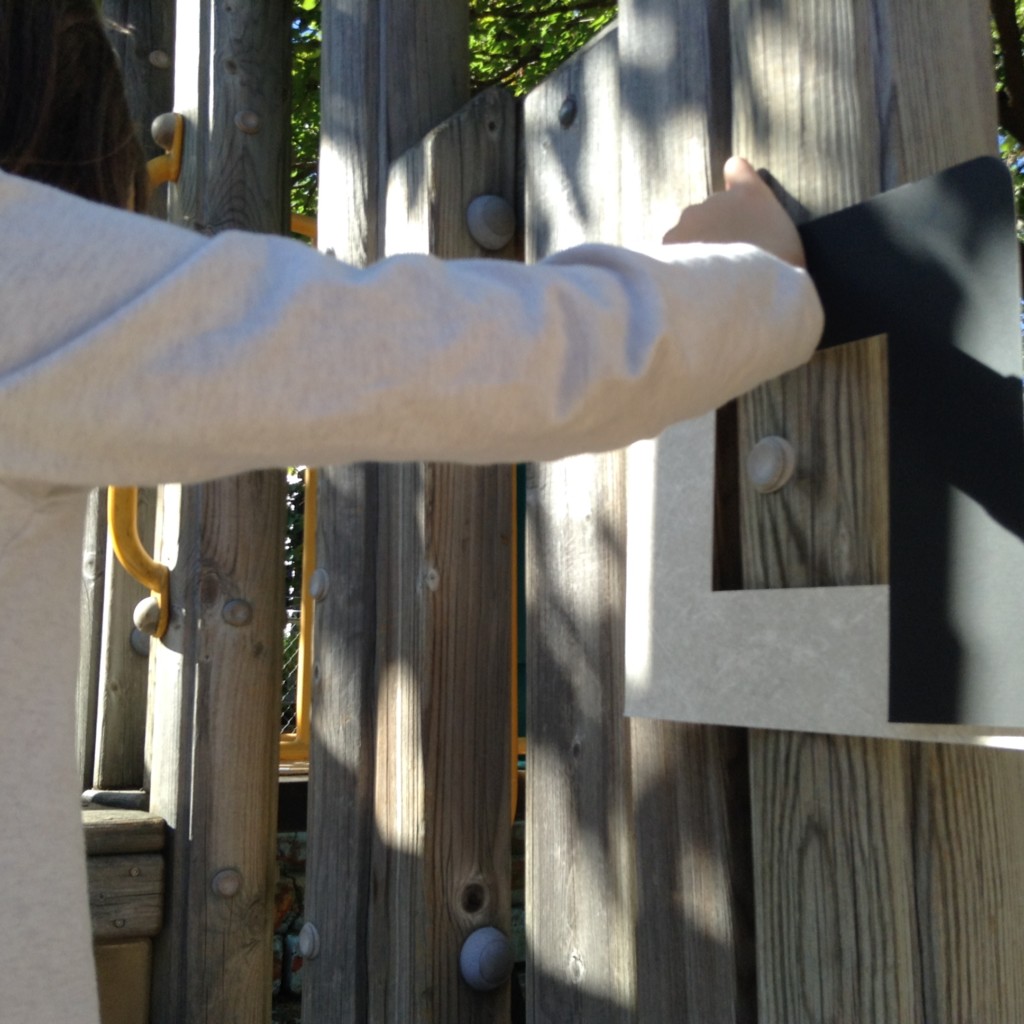
Some kids found more creative uses for their picture frame.  With the addition of a simple binder clip, a lesson on composition morphed into an installation art workshop.

img_0134img_0137

Everyone is a teacher at the RISD Nature Lab

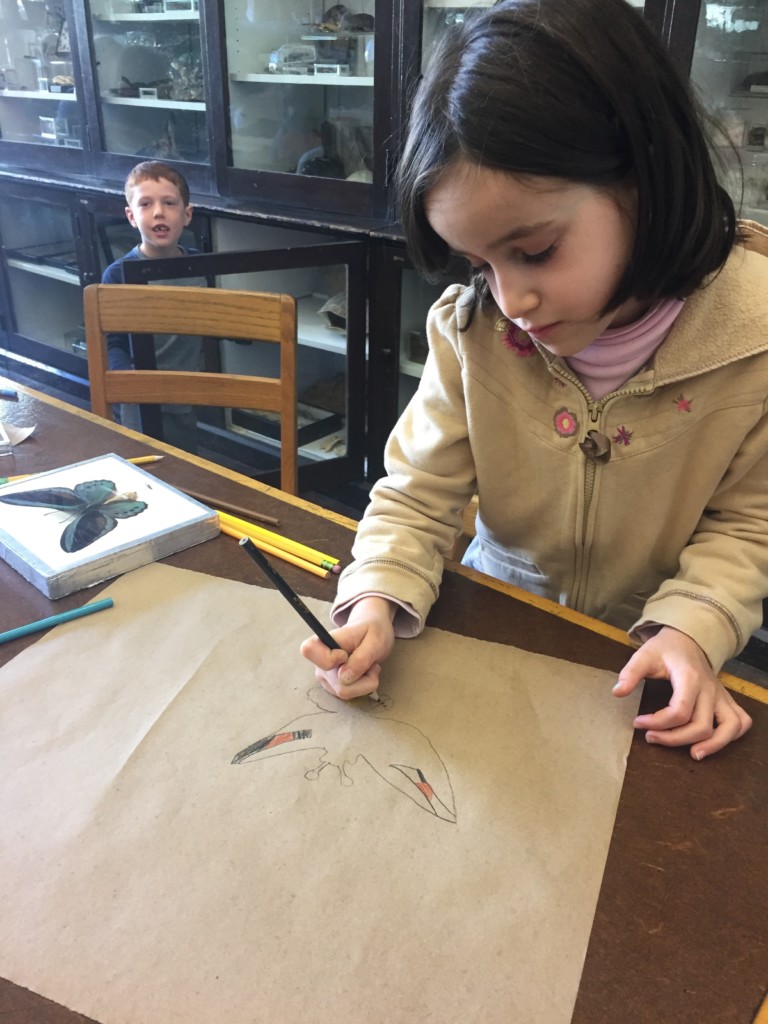
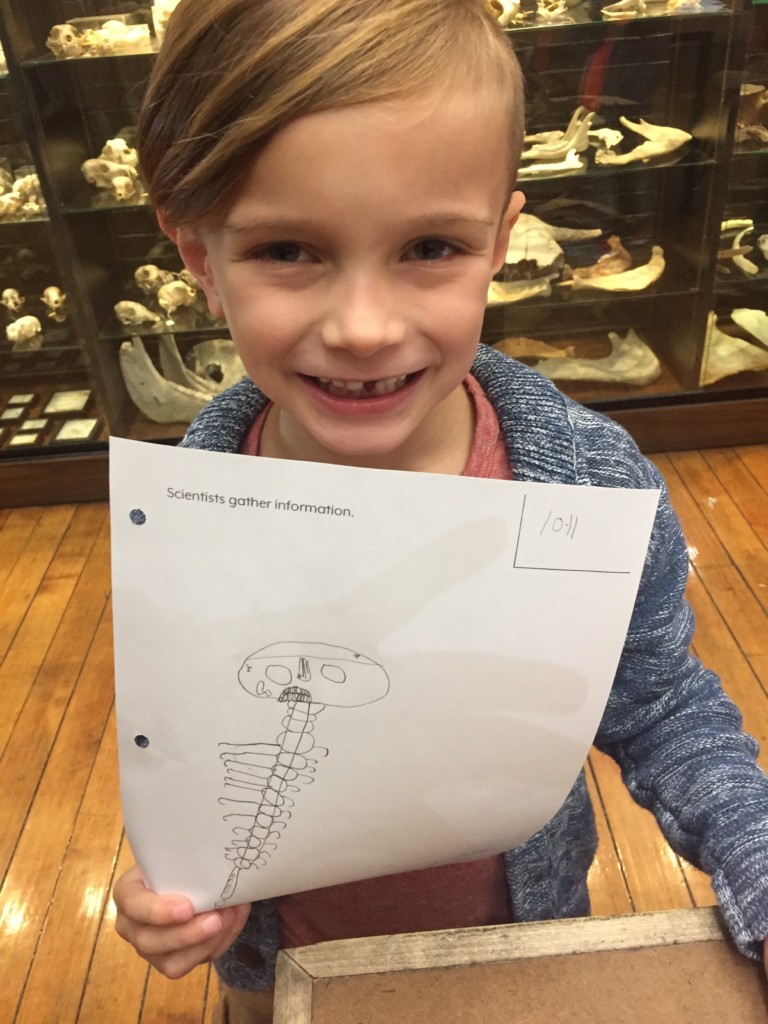
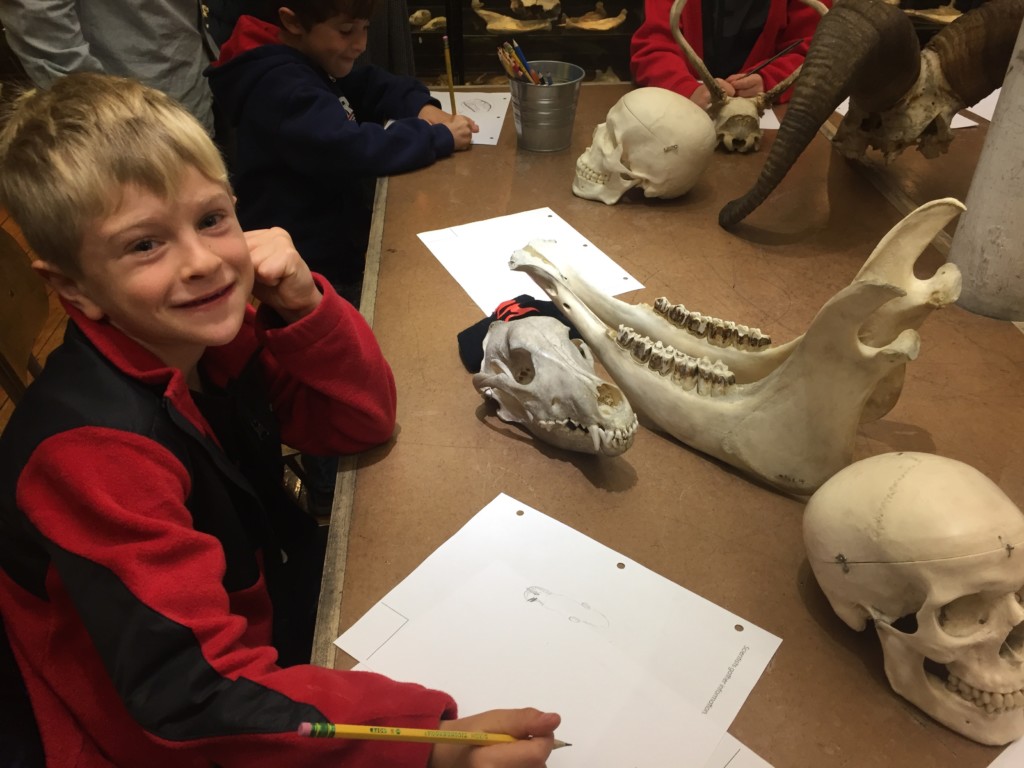
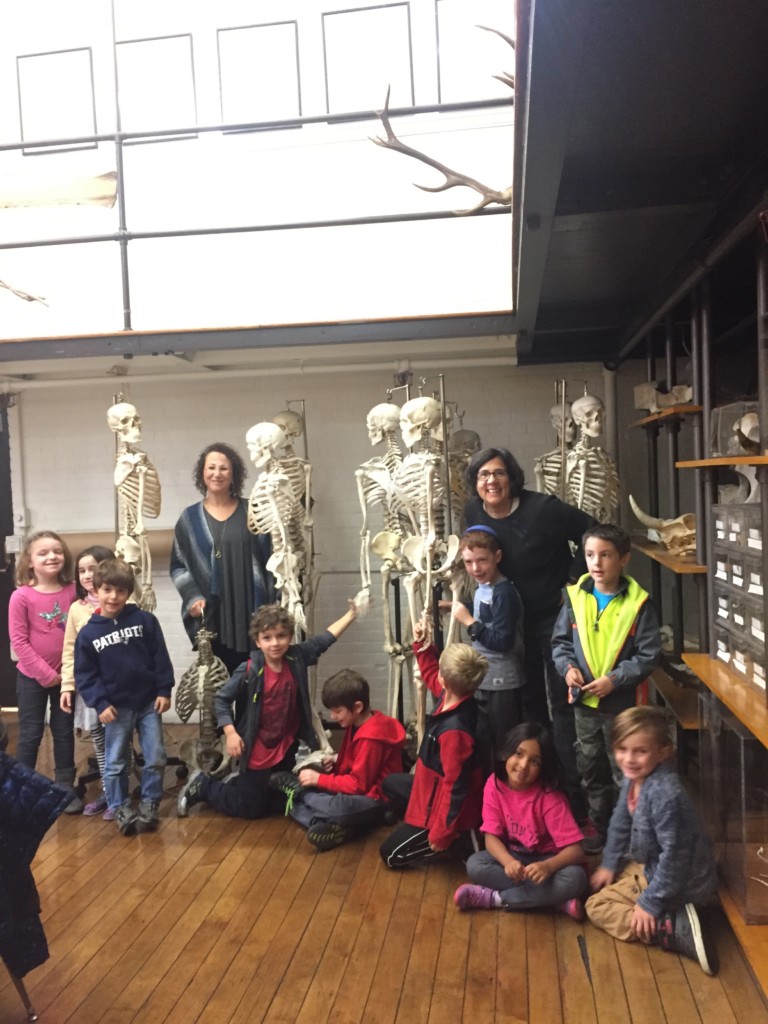
img_5749As part of “learning by doing,” first-grade scientists kicked off the unit on bones with a visit to the RISD Nature Lab. At the Lab, surrounded by skeletons, skins, seeds and shells, the students first observed specimens and then drew them. This visit and activity allowed us to actively study not only bones but also many other items, ranging from butterflies to minerals, and then to sketch them through “observational drawing.” On our visit, we touched many natural objects, such as spiders and snakes, and then organized and reflected on our obsimg_5716ervations and experiences through our illustrations. Co-exploring the Lab was “the best field trip ever,” said several students.

img_5735img_5709

What Can I Do Better Next Year

After  learning about the story of Jonah and the big fish, we had a discussion about Jonah’s experience and the importance of trying to do the right thing and the beauty of forgiveness when we make mistakes.

How do you show chesed (kindness) to your friends/family?

Asher: I’ll try new things. I’ll help my mom wash the dishes.

Eli: On Shabbat my mom always tries to make everything neat. Sometimes guests come. This shabbat I will help her clean up the mess.

Joseph: I’ll help my mom clean the table after supper.

Jake: I’ll feed the cats, even though it’s a little bit hard. I have to put the cat’s food in the basement.


What do we want to do better next year?

Maya: I will not pinch my daddy when I think he is not looking at me. I’ll use my words.

Sidney: I’m not going to be mean to my sister.

Sasha: Sometimes I don’t let Yasha play with my toys. I’ll fix my mistake and I’ll tell him that he can play with my toys.

Ruben: I’m not going to bang things hard like I broke the cash register in our classroom.

Sophie: Sometimes I’m not listening to Jonah. I’ll try to listen to him more.

Jake: I will not overflow the bathtub.

Joseph: Sometimes when my mom tells me to take a shower I do not listen. I’ll listen more to my mom.

Eli: When I’m in the bath, I keep forgetting not to splash the water on my brother. I know he hates it. I am not going to do that anymore. I’ll remember to stop. I will also not run in the hallway or slam the door when I go to the bathroom during the night.

Asher: I will not trick Ronan with the magic cards.

September Updates

Throughout the school year, 5th graders will take on the responsibility of updating the class blog with information they want to share with the wider world. The students are responsible for deciding what to share, creating the text, and capturing images that help tell the story of our classroom. The 5th grade is also working on taking and using feedback, and would love to read your comments and suggestions for our next post. Please enjoy the post below–the first post written by 5th graders this year!
Thank you!
Ms. D and the 5th grade
_-_-_-_-_-_-_-_-_-_-_-_-_-_-_-_-_-_-_-_-_-_-_-_-_-_-_-_-_-_-_-_-

Welcome to the fifth grade blog!
Every week Rabbi Gouze tells us a riddle. This week the one she gave us was:

I am at the beginning of every end
The end of every place
I am the beginning of eternity
The end of time and space
What am I?

Check next time for the answer and a new riddle!!! Leave a comment if you think you know the answer!

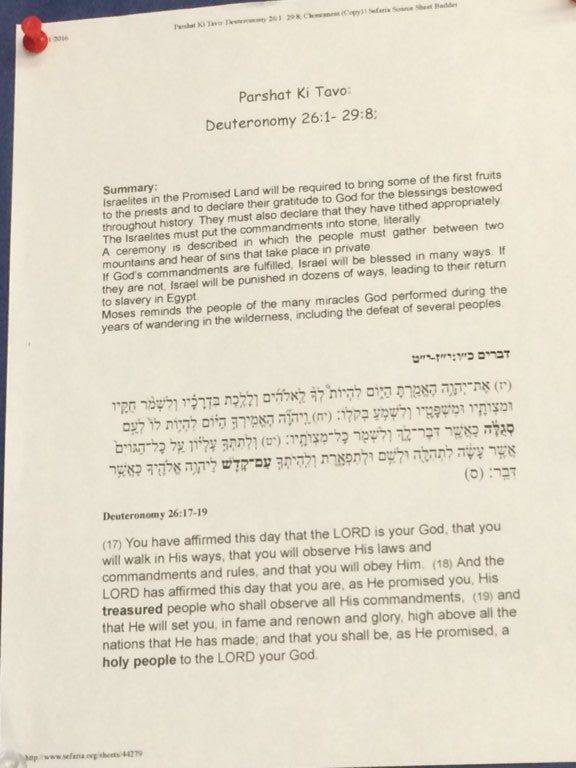
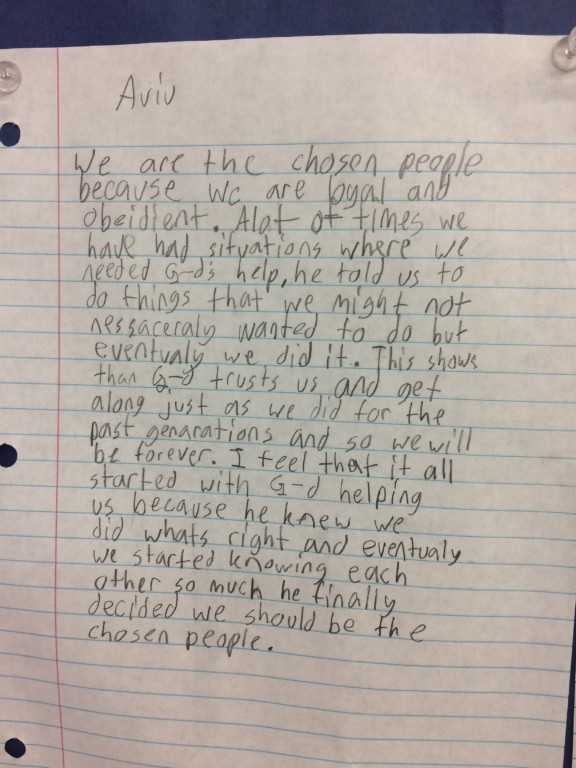
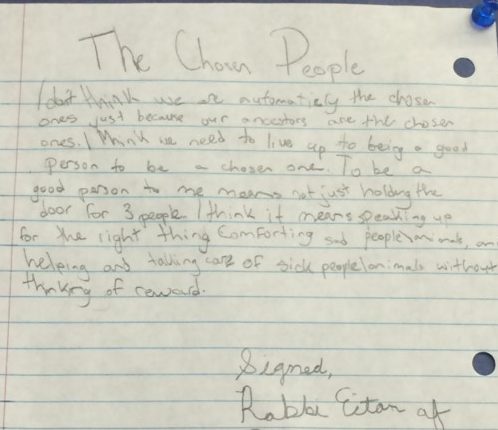
Another thing we do every week with Rabbi Gouze is Parshat Hashavua, which means weekly Torah portion. Rabbi Gouze combines the weekly Torah portion in English and Hebrew with a short summary, and puts it on a piece of paper, which she gives to fifth grade. Then we write about our opinions and interpretations of the Parshah and hang our writing in the classroom. Then we read each other’s opinions and decide if we agree or disagree. Earlier in September, the Parshah was about B’nai Yisrael and how we are The Chosen Ones. We had to give our opinions about whether we think we are the chosen ones or not. We learned our ancestors were promised that they and their seed would be chosen forever, and we learned that we are the seeds. Take a look at some of our ideas!

5th-grade-parshah-fixed 5th-grade-chosen2img_4879

In Design Lab, we have been working on a kippah project. We have been working on this because we noticed that many people are forgetting, losing, or choosing not to wear their kippot because it makes them uncomfortable. One group is making a kippah wheel to help people make better choices about their kippot. The other group is writing jingles to share over the intercom system to remind people when and why they should wear kippot. Here is one of our ideas:

“Wear your kippah on through and through.
That’s what G-d wants us to do!
Put your kippah on your head
for lunch and prayers, but not in bed!”

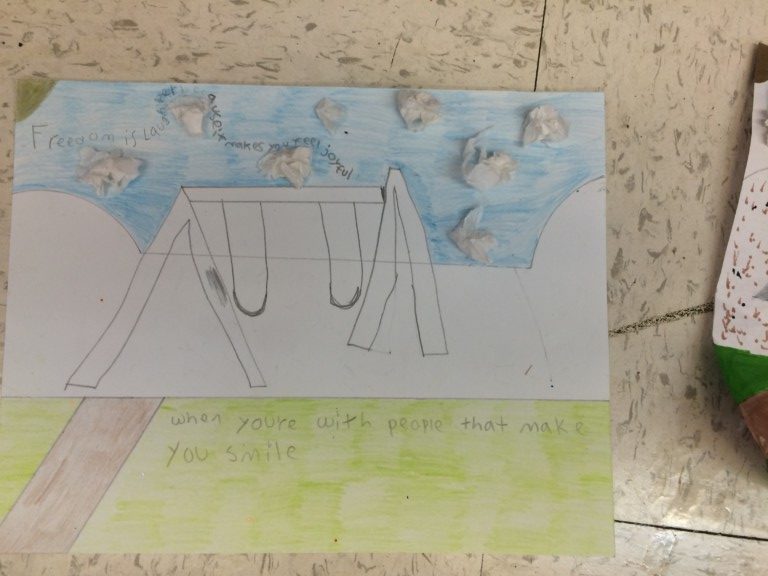
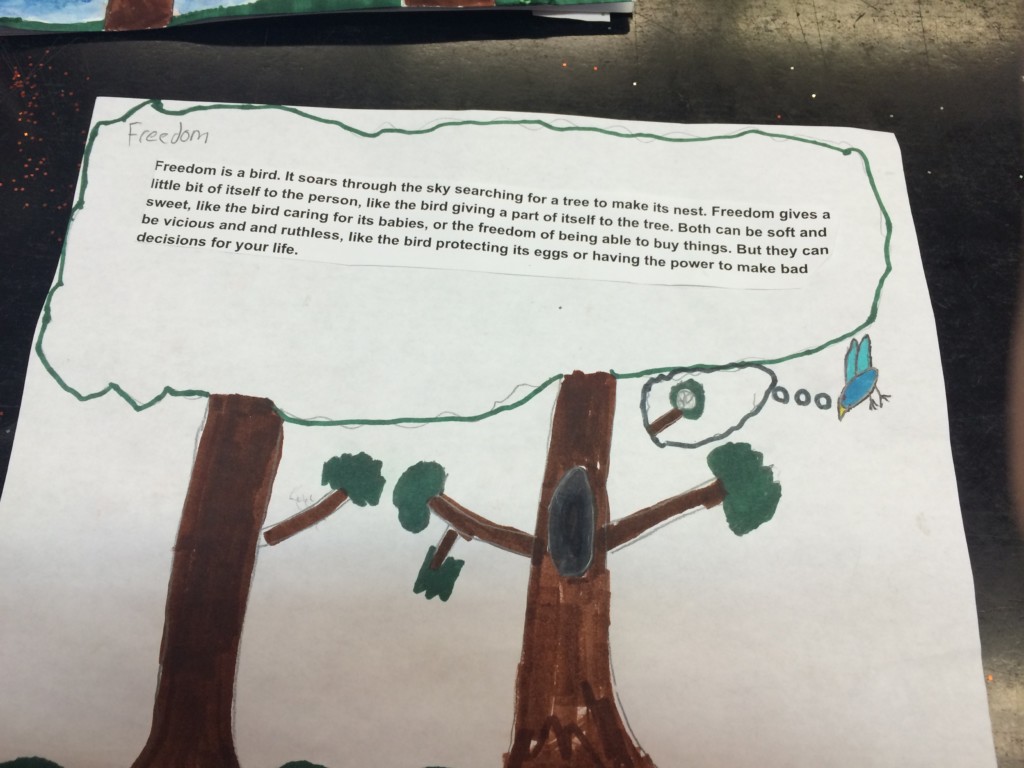
Another thing we did this month was work on making analogies for Freedom. We learned that analogies are when you combine two things that are different in lots of ways, but are similar in a couple of important ways. We wrote and created pictures that explain our analogies, and we got feedback from our classmates to help us make lots of drafts that got better each time. We also wrote reflections about the project. Here are a couple examples of rough drafts! Our finished projects are posted at school.

img_4892 img_4888

New Year’s Food Customs Around the World

Food is a universal language. Communities around the world of all traditions and religions eat special symbolic foods at their New Year’s celebrations.

Do you need ideas for Rosh Hashanah? Here are few to share with your family:

We in Kindergarten had a very special Rosh Hashanah Seder.

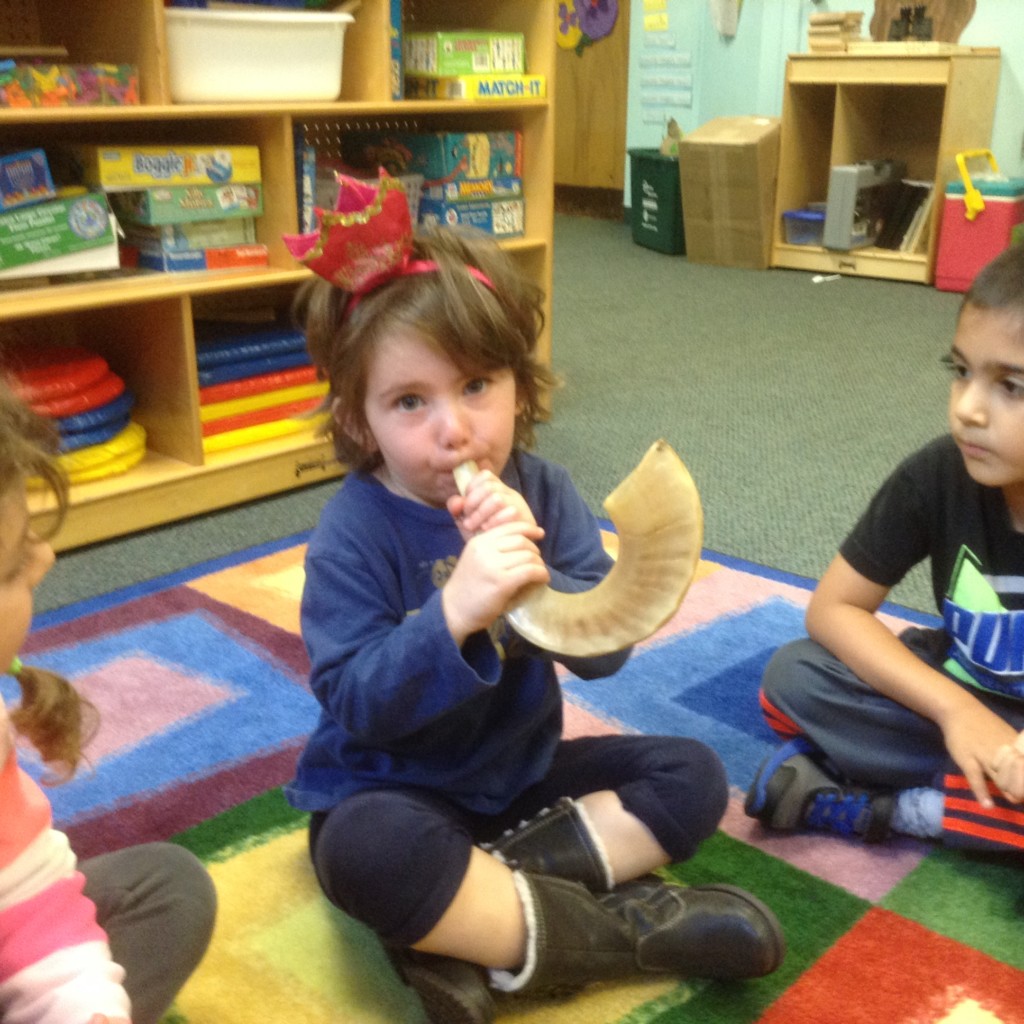
We blew the shofar to remind us that the New Year is coming.

img_2430


img_2422

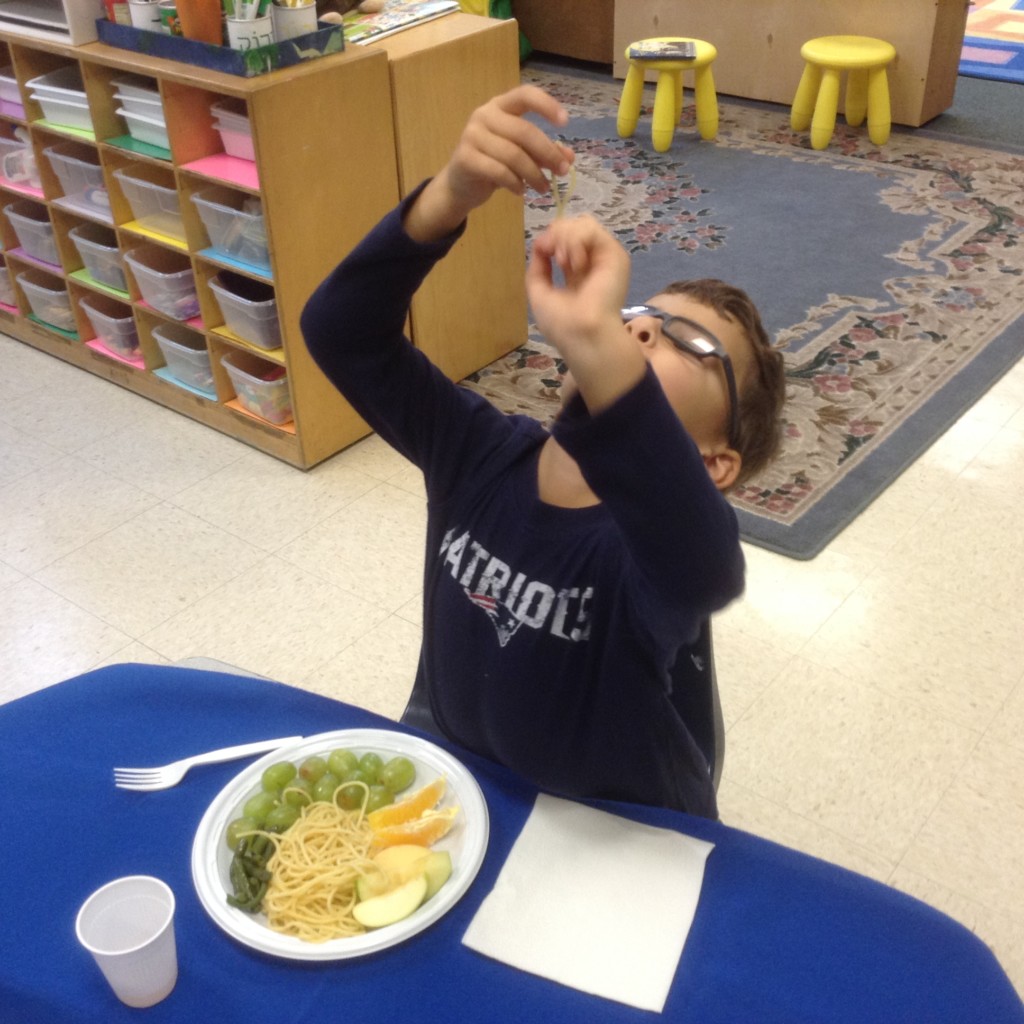
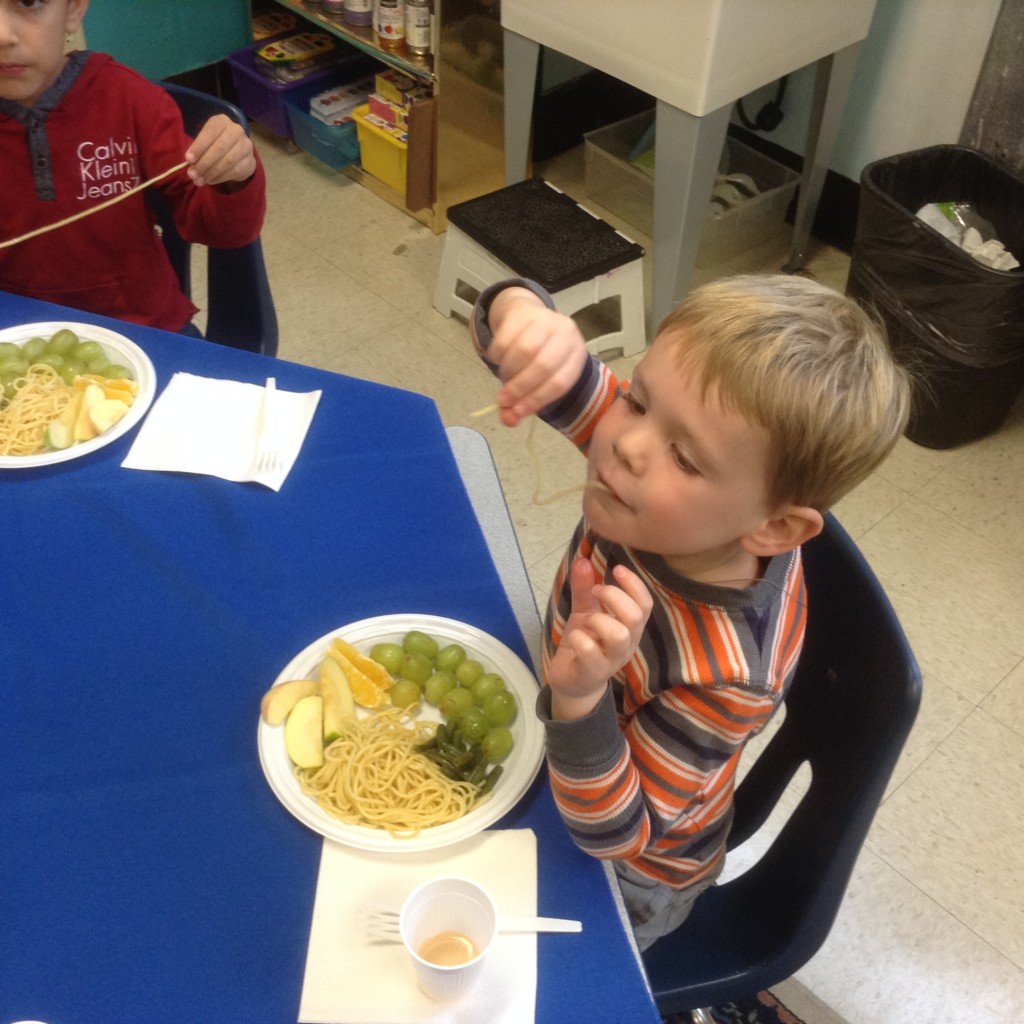
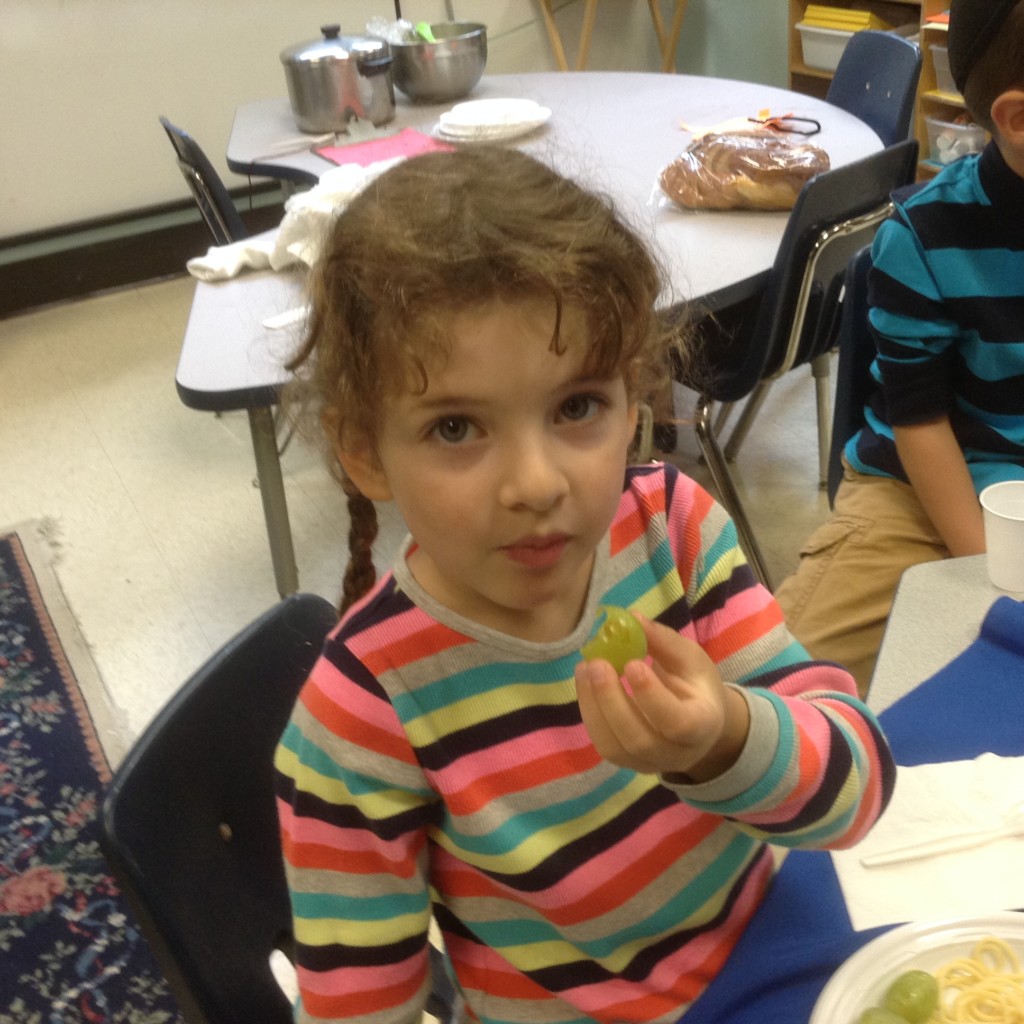
The Japanese eat buckwheat noodles that symbolize long life. We tried to swallow at least one noodle whole for good luck.

img_2456


img_2460

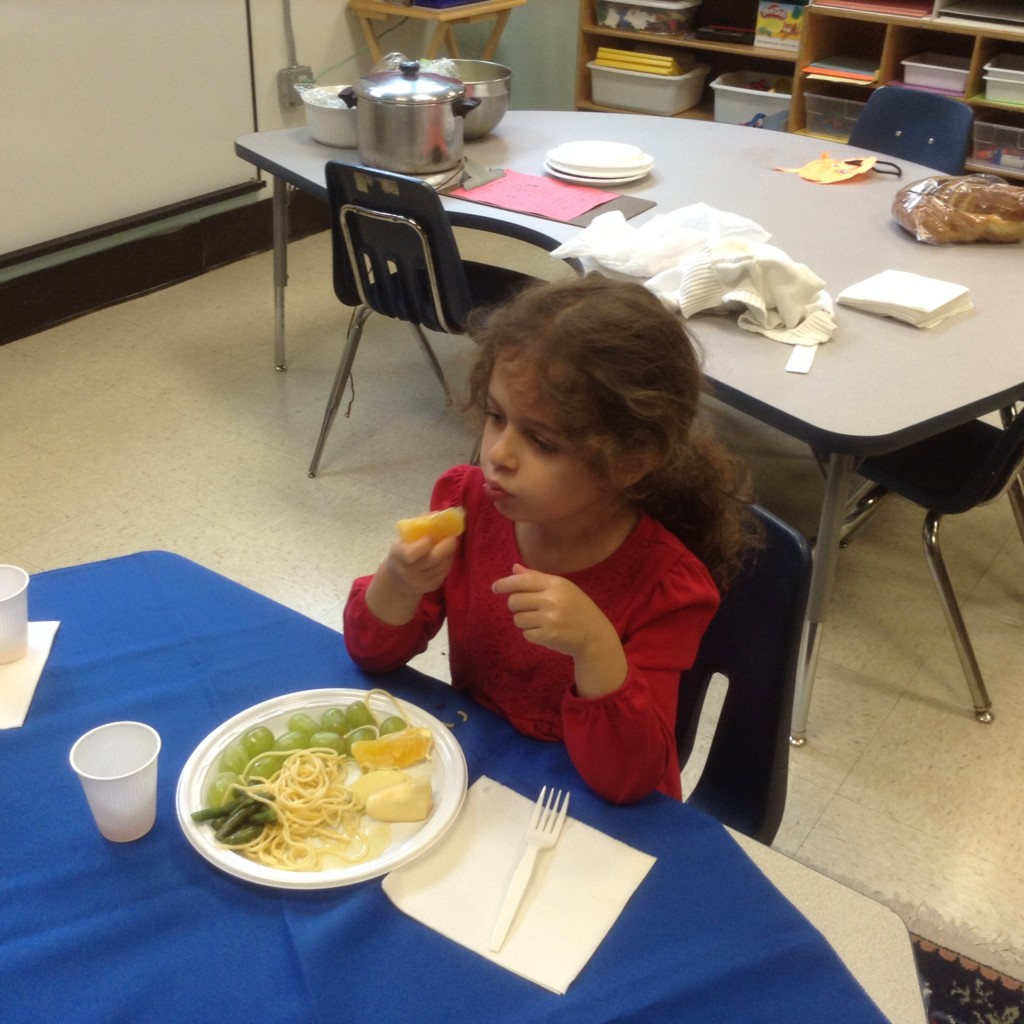
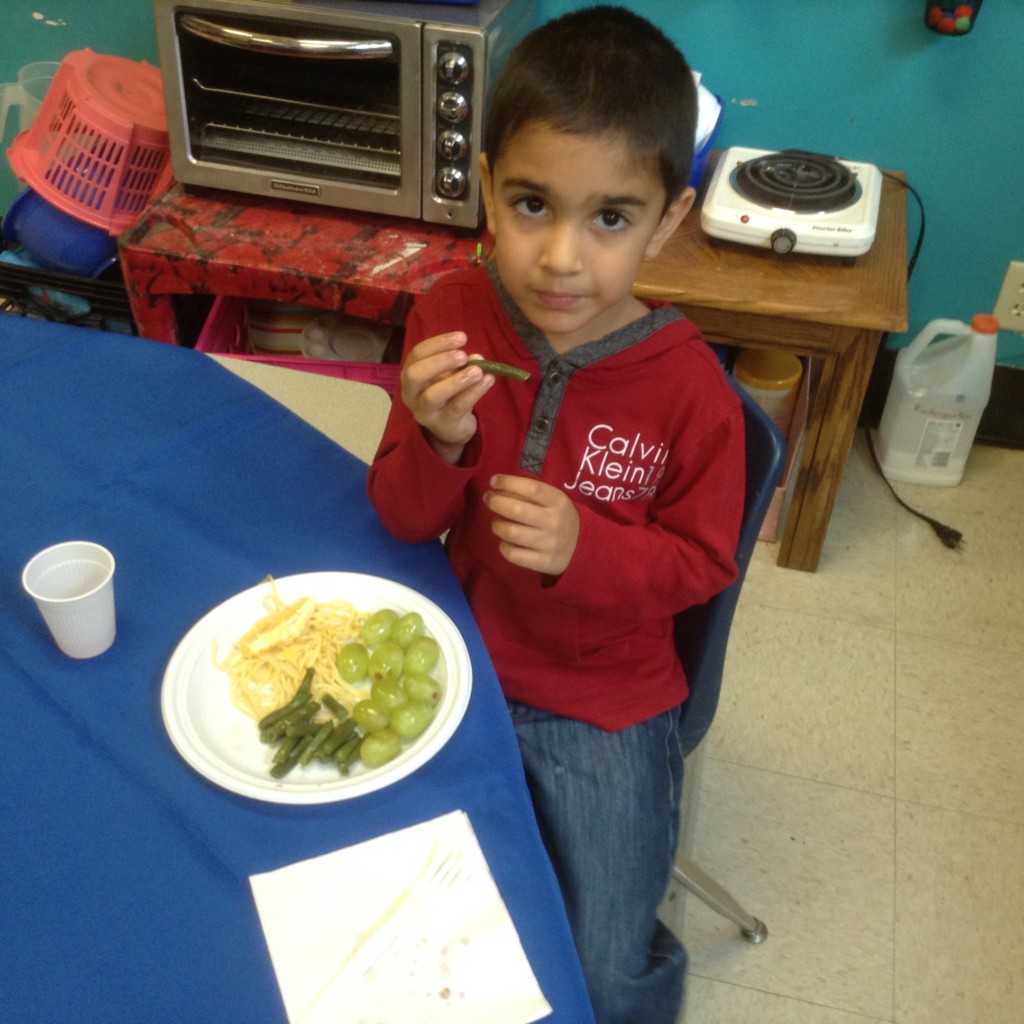
For a lucky, fruitful year, Latin Americans eat twelve grapes at midnight on New Year’s Eve.  We counted and ate them this morning.

img_2472

The Chinese enjoy oranges that symbolize sweetness and good fortune. Yes, we ate oranges too.

img_2469

Green is the color of money, so we ate green beans for prosperity.

img_2480

Here’s where Jews from all over the world meet. We all dip apples in honey for a sweet year.

img_2474

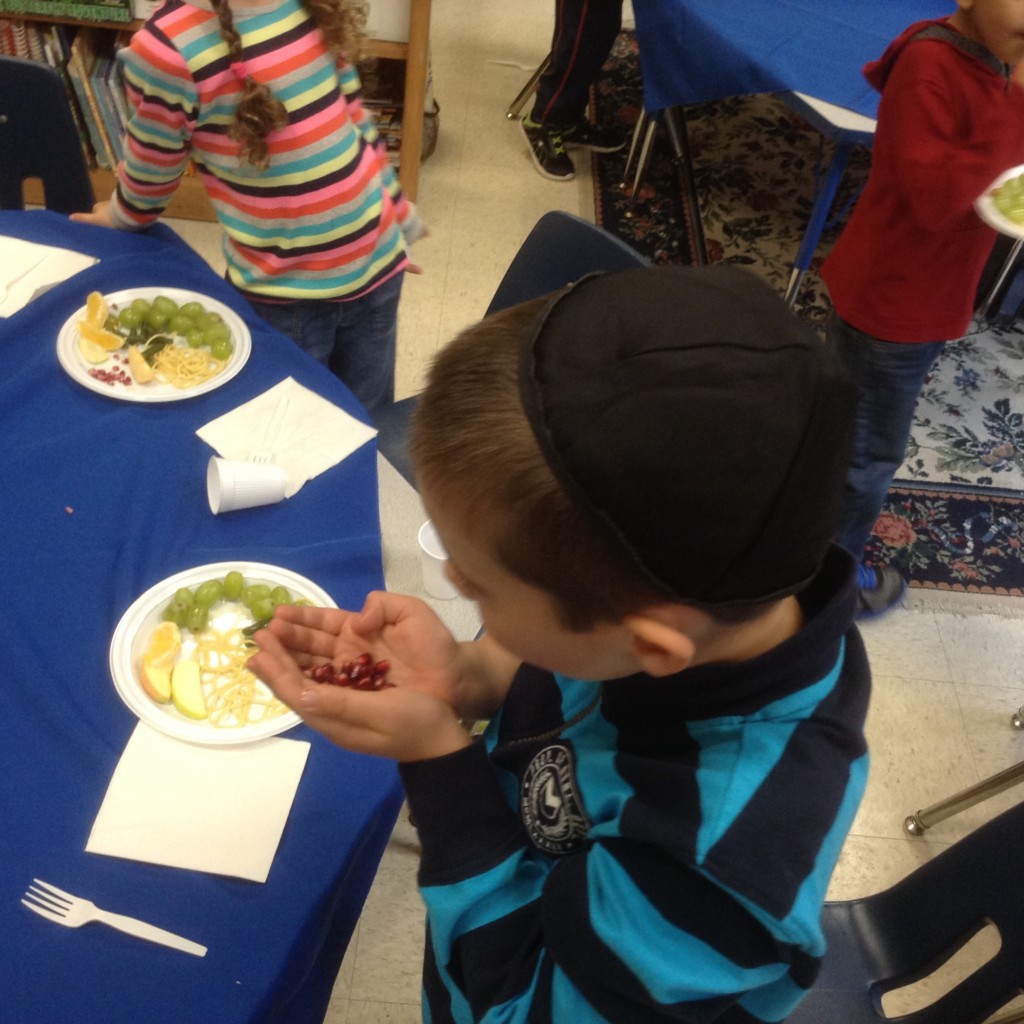
Pomegranate is one of the seven species of Israel. It symbolizes beauty and fertility in the Bible, literature and art. It’s delicious too!

img_2477

We all celebrate the New Year in different ways and at different times, but we all wish each other “A Happy New Year.”

SHANA TOVA UMETUKA TO YOU ALL!

Tekkiyah!

screen-shot-2016-10-09-at-8-30-43-am

We kicked off our Family Workshop series last week.

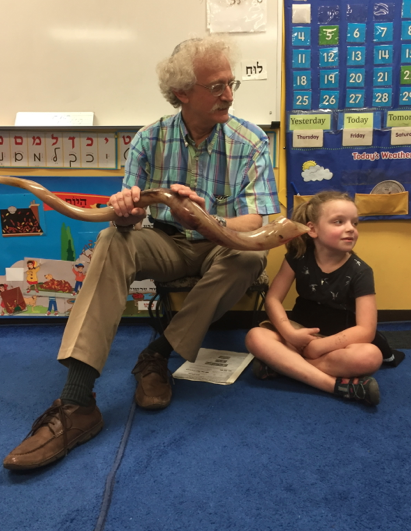
Saba (Grandpa) Sam blew his shofar with gusto for First Grade then explained how he learned how to blow the shofar and how they are made. We watched a video which shows a Shofar Factory in Israel. Did you know that a Shofar needs to be heated emphasize the natural curves of the ram’s horn?

jonah-and-pom

We read the story of Jonah and the Big Fish, which is traditionally read in Synagogue on Yom Kippur. It is a story about how hard it is to accept the consequences of our actions by apologizing but even more importantly, to find ways to “make our sorry stick“.  One First Grader shared “The next time I play Legos with my brother, I will remember to let him use the action figures.” We call this T’shuvah in Judaism. Teshuvah is what we do to “fix our mistakes.” Yom Kippur is about second chances, asking for forgiveness and meaning it. Everyone makes mistakes – just like Jonah and the people of Nineveh. God gave them another chance to make good choices. Being a first grader can sometimes be hard, but these social and emotional developments are part of the whole wonderful package that are our six and seven year old children.

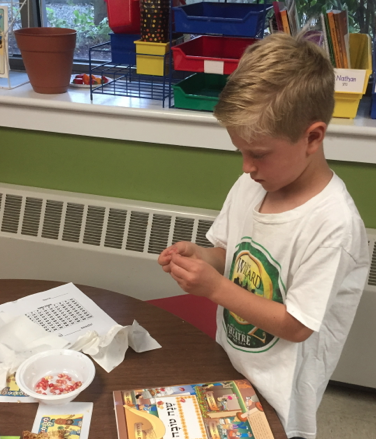
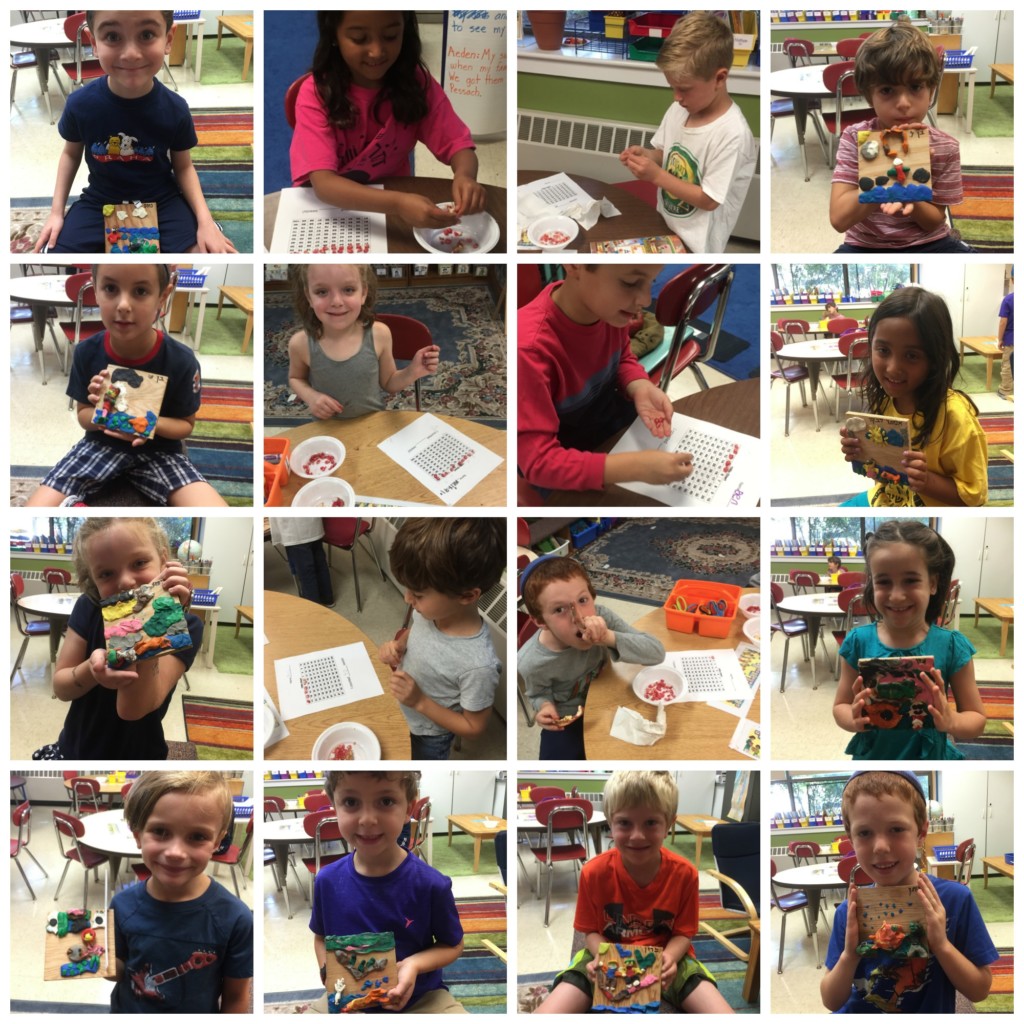
We have an annual tradition in First Grade to challenge the idea that there are 613 seeds in a pomegranate, which is also the same number of Mitzvot (commandments) a Jew should strive to accomplish. This year the final count was 626 which is the closest number we have ever counted in three years!

May we all begin the New Year with a clean slate and joy in our hearts.

גמר חתימה טובה

(May you be inscribed (in the Book of Life) for Good)

4th grade uses puppets to teach Jewish Values

ואהבת לרעך כמך

V’ahavta Lereacha Kamoacha -Love your neighbor as yourself

At JCDS, each class is responsible for teaching this value to the rest of the school. In order for 4th grade to teach it, it was important to break down the meaning of V’ahavta Lereacha Kamoacha.

How do we work together?

How can we bring this Value to life?

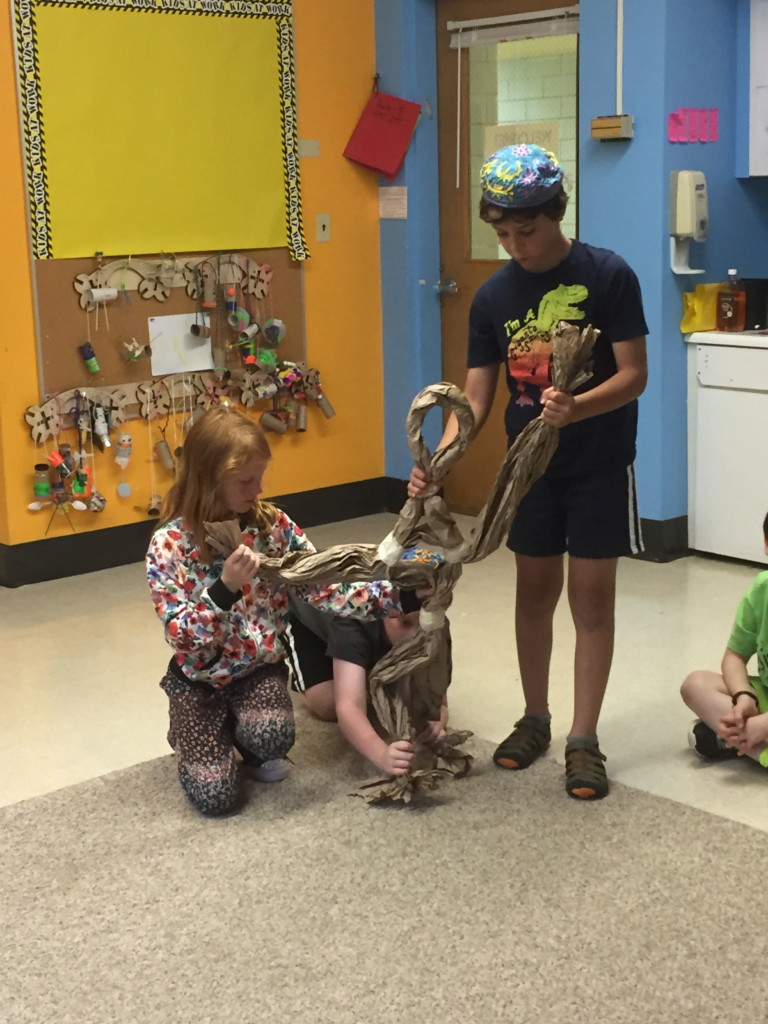
These two questions guided us in our journey to truly understand what it means to love your neighbor as yourself. “Treat others as you want to be treated” was a common answer during our discussions. It became clear that showing what this meant would be key in teaching it to others. This is a very special group of students who delight in performing in front of others. With this in mind, our 4th graders were introduced to Brown Paper Puppets. (click on link to see Master puppeteers teach how to bring these puppets to life)

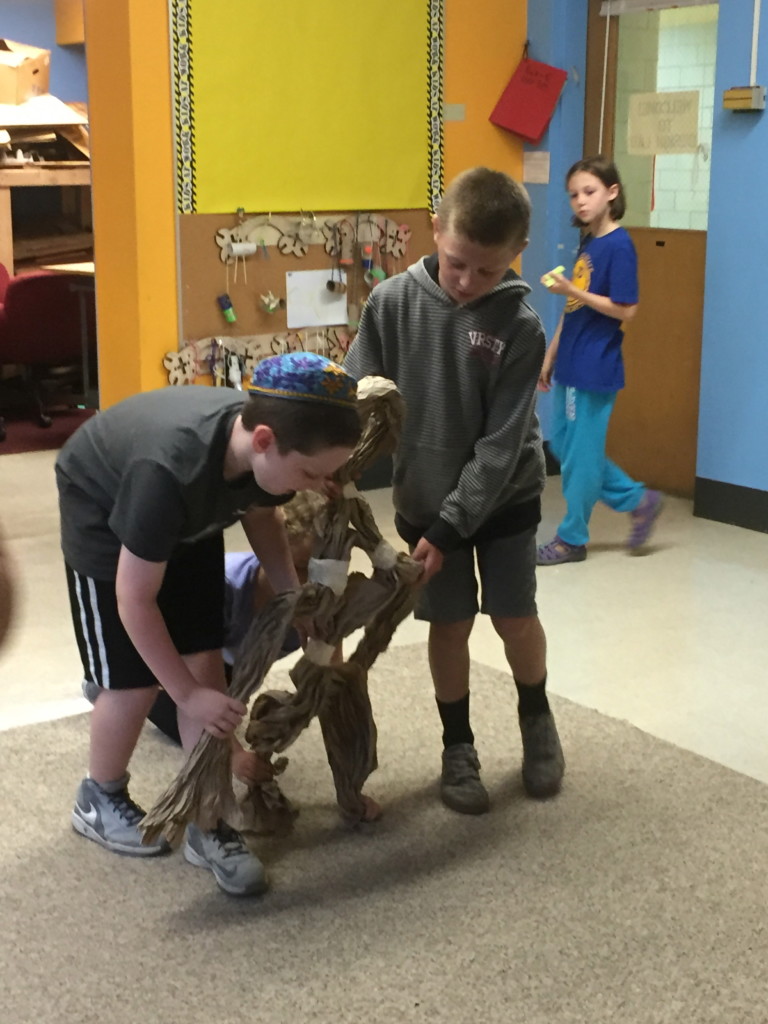
The puppet requires three puppeteers to bring it to life. Three people must work as a team and maintain 100% focus on the puppet throughout their performance. This forces the audience to only focus on the puppet and not the puppeteers.

With the introduction of this technique, students began the long and hard process of learning how to create the puppets together then negotiate how the puppet and it’s puppeteers will move together in order to make the puppet come to life.

Using a text from Pirkei Avot 5:10 (Rabbinic writings from the Mishna titled Ethics of the Fathers), students wrote a script which portrays in Hebrew and in English, some of the character traits of human beings: a righteous person, a selfish person, an average person and an evil person.

Throughout this process, students were asked to write their reflections on each step of the project. After their performance, students wrote a final reflection which is on display in the lobby of our school.

By writing a script together then working in small groups to bring the puppet to life, students answered our essential questions. “We had to listen to each other.” “If we worked together, the puppet would stand up straight and look alive.” 4th grade successfully made this value come alive and taught the rest of the school what it means to love your neighbor as you love yourself.

img_8462 img_8465


The following video is the Wednesday morning performance debut of the paper bag puppets:

Welcome To Art

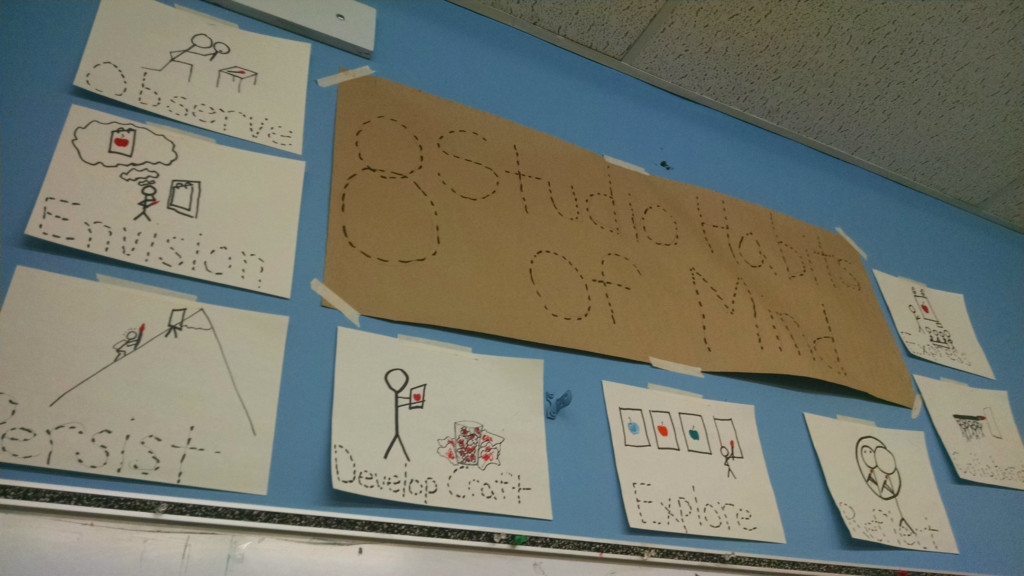
Welcome to the Art blog!  I’m so happy to share the amazing work that children have been doing this year as they grow into budding young artists.  The art curriculum I am following will hopefully lead to both quality work and informative processes that are the hallmarks of effective art education.  To begin, let me introduce you to the 8 Studio Habits of Mind.  img_20160930_154715465
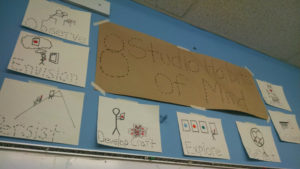
A team of Harvard University researchers and educators set out to analyze and synthesize a list of habits that successful artists develop.  The result was the 8 Studio Habits of Mind.  In no particular order, they found that successful artists: Observe, Envision, Persist, Develop Craft, Explore, Reflect, Collaborate and Present.  Over the year, instead of having units developed around famous artists, or art work, or materials and techniques, students will be asked to exemplify these traits of real artists throughout the year.  This provides some structure and unity to choice-based art.

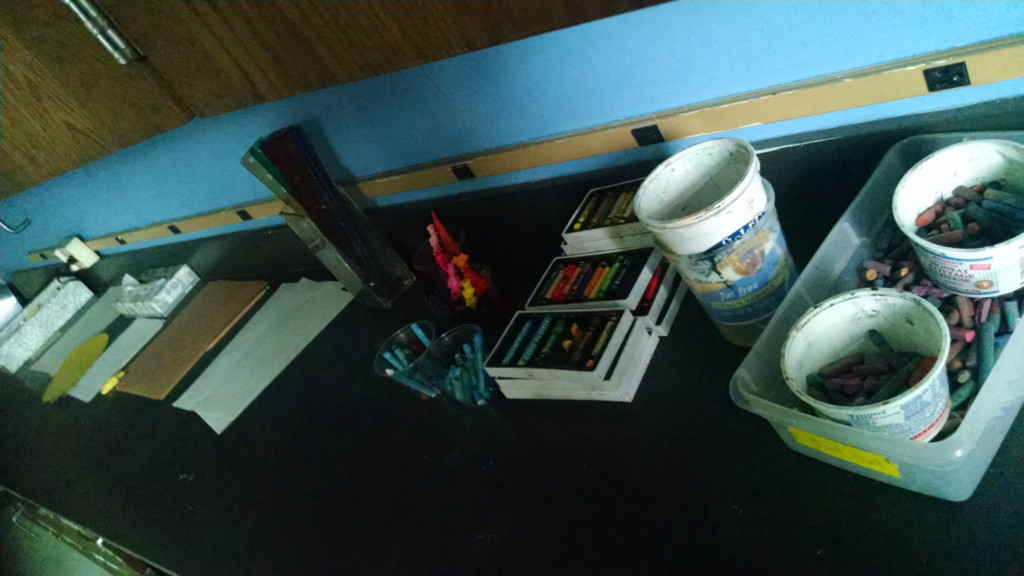
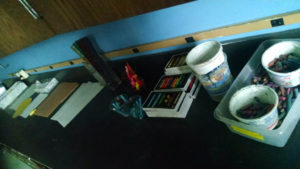
But what is choice-based art?  It looks like this:
img_20160930_154649499

Instead of being handed a template and having all students work on the same project, students are given free reign to explore the available materials that they feel best suited to accomplish their goals.  Although I rarely give whole-class instruction in art, there is a still a role for the teacher in choice-based art.  Every day, in addition to children’s free choice, there is a teacher-led option where students can join me in a small scaffolded group project.

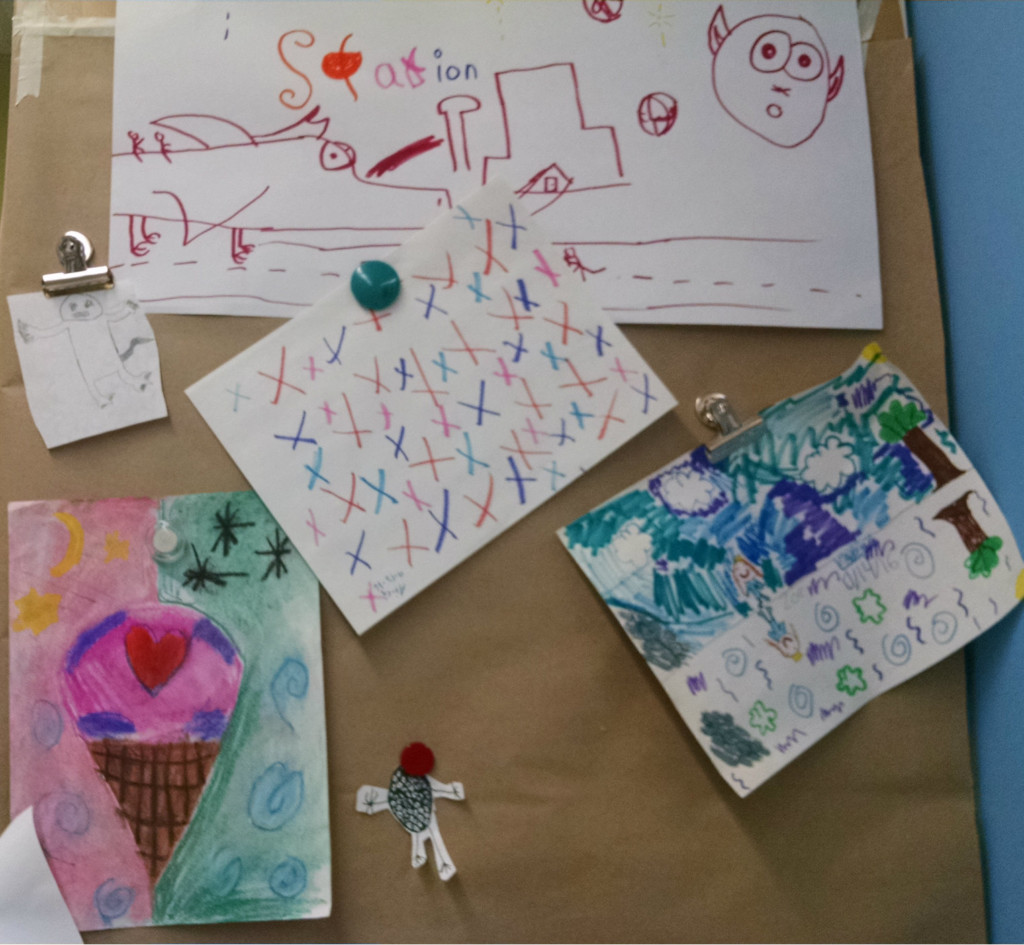
A big feature of choice-based art is empowering children to take ownership over both the process and the space.  Everything written in dotted lines, from signage to labels, is an invitation for children to “connect the dots” (i.e. take down my boring, adult sign and make your own.)  There are two large spaces dedicated to showing students work.  One is an “Inspiration Station:”img_20160930_154737418img_20160930_154743349
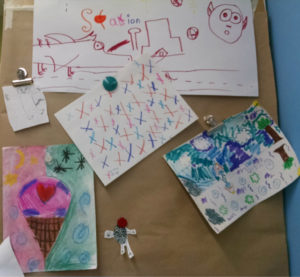
This is an informal, student-curated space where children are free to put up or take down anything they make (as long as there is a free magnet).  Students can only use this space for a month and work will be regularly cycled through.  This is right above a small library of books on artists, techniques, and beautifully illustrated children’s books.  The aim is to allow students who are overwhelmed with a choice-based curriculum to find inspiration on their own without being spoon fed.
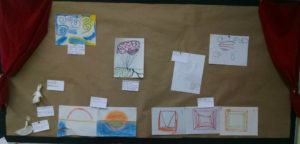
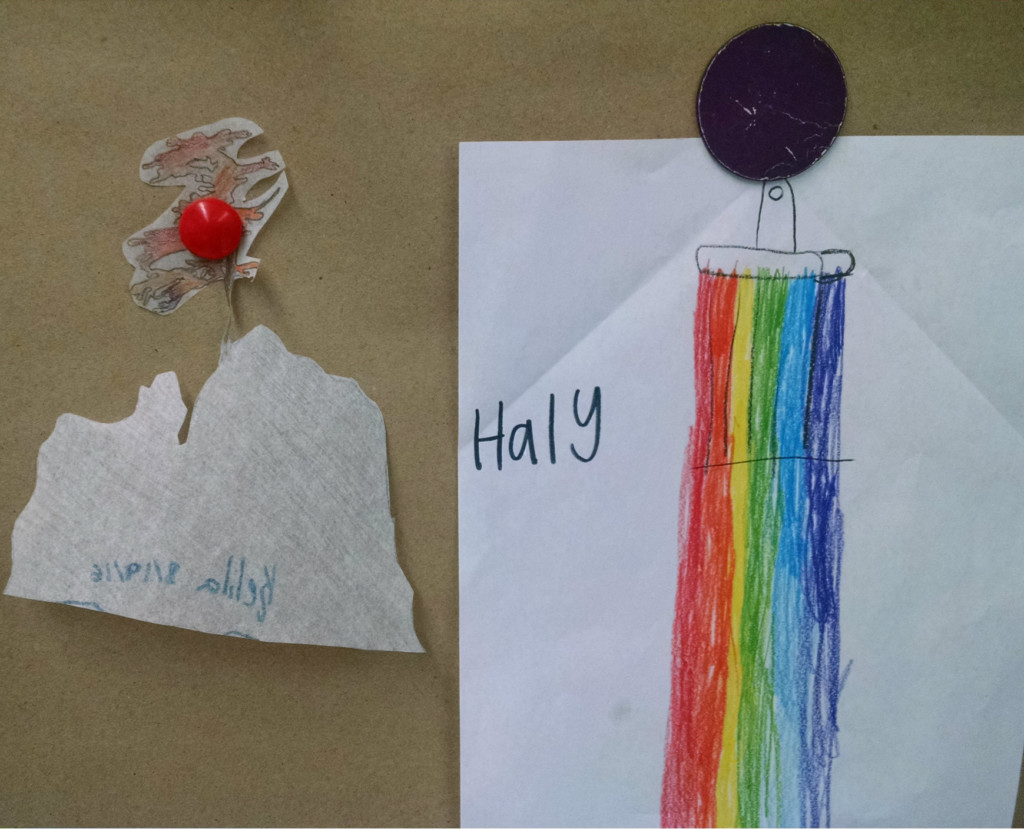
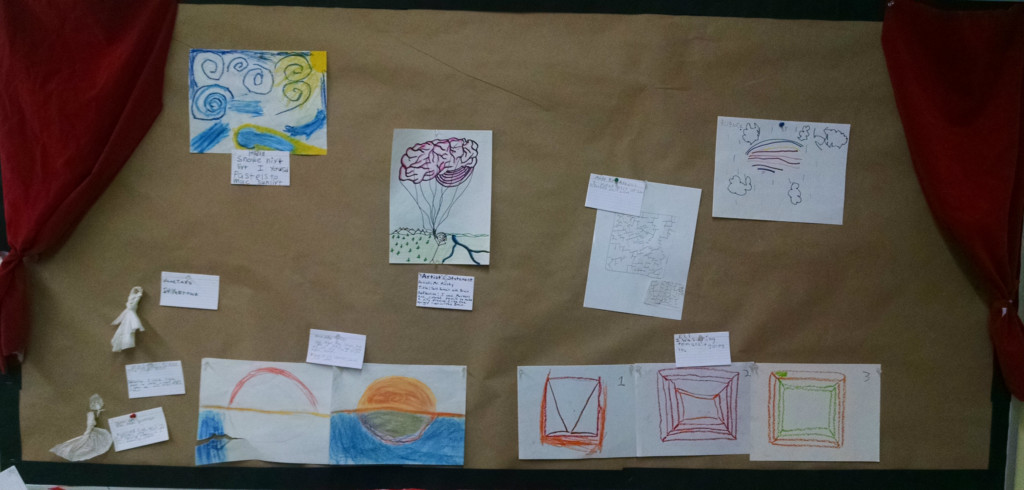
img_20160930_154243883The other display area is the “Featured Artists Boards”  which is by invite only.  Students are asked to display their work on the Featured Artists Board only if I think that they exemplified the Habit of Mind that we are focusing on for that week.  Here a few examples:
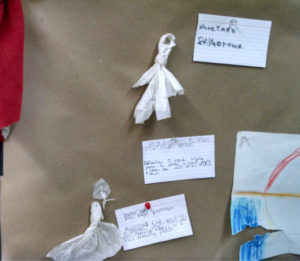
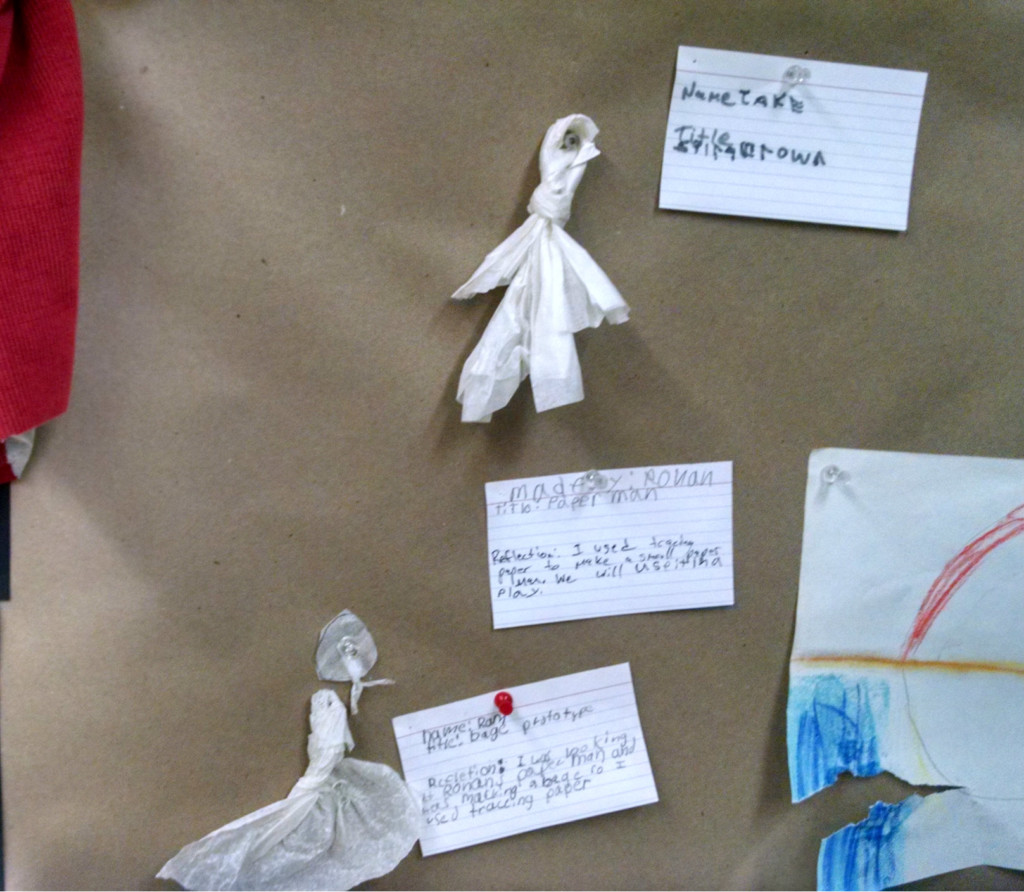
img_20160930_154220785_hdr  The artist who made the figure above was learning about making life size paper puppets in Jewish Studies. While tape was not yet a material we were using in class, he experimented with many different types of paper until he stumbled upon the pad of tracing paper in the inspiration station.  He found it was pliable enough to be shaped but resistant enough to hold the shape.  Without using any tape, he formed the figure above, beaming as he showed it to me.  I reminded him how limitations spark creativity, and that if he had just used tape he would have never made the discovery.  The next class, another student was impressed with his work and tried to make his own figure.  This time, the students used tissue paper, but still developed craft to make it without using any tape.
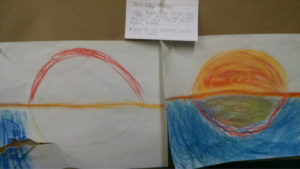
img_20160930_154215912 One student, exploring pastels, tried to use a wet tissue to blend colors.  When she accidentally ripped her paper she was not discouraged but tried again, using her hard won knowledge to create a successful composition.
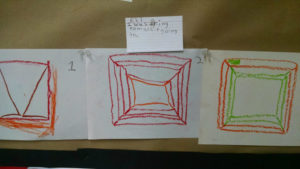
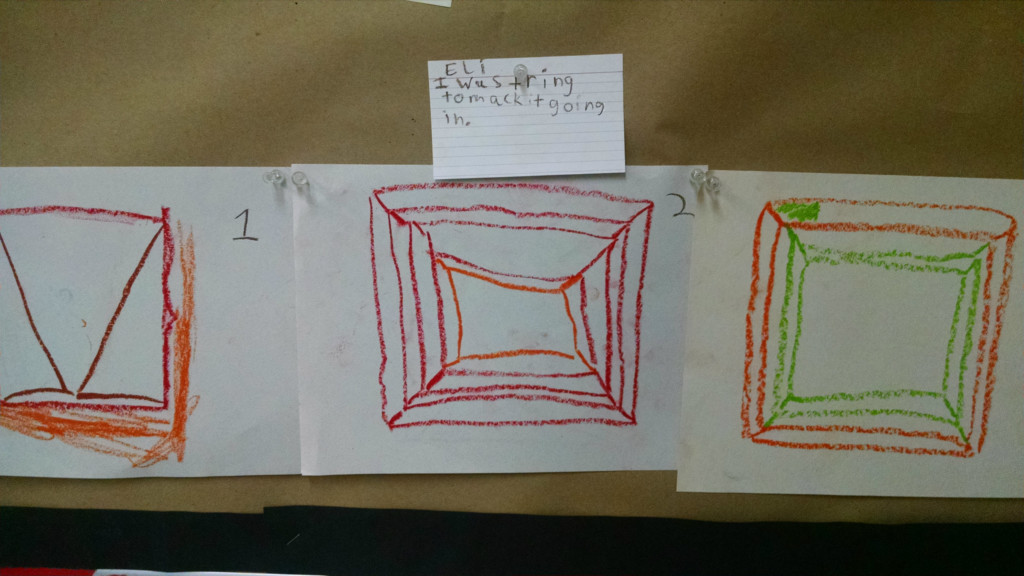
img_20160930_154233052 Another student, inspired by an example I had shown the class, was trying to portray 3-d depth using 2-d lines.  You can see a clear progression from the first draft (far left) to the third (far right) as the student persisted in exploring and experimenting in order to work towards mastering a difficult technique.  If I had merely taught him how to do it, the lesson would not be as lasting or meaningful.  Portraying all three drafts on the board is also showcasing the fact that artists must be brave, make mistakes, and then learn from them.
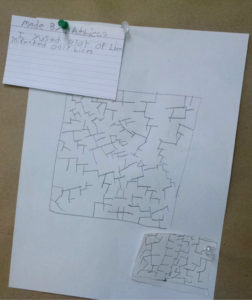
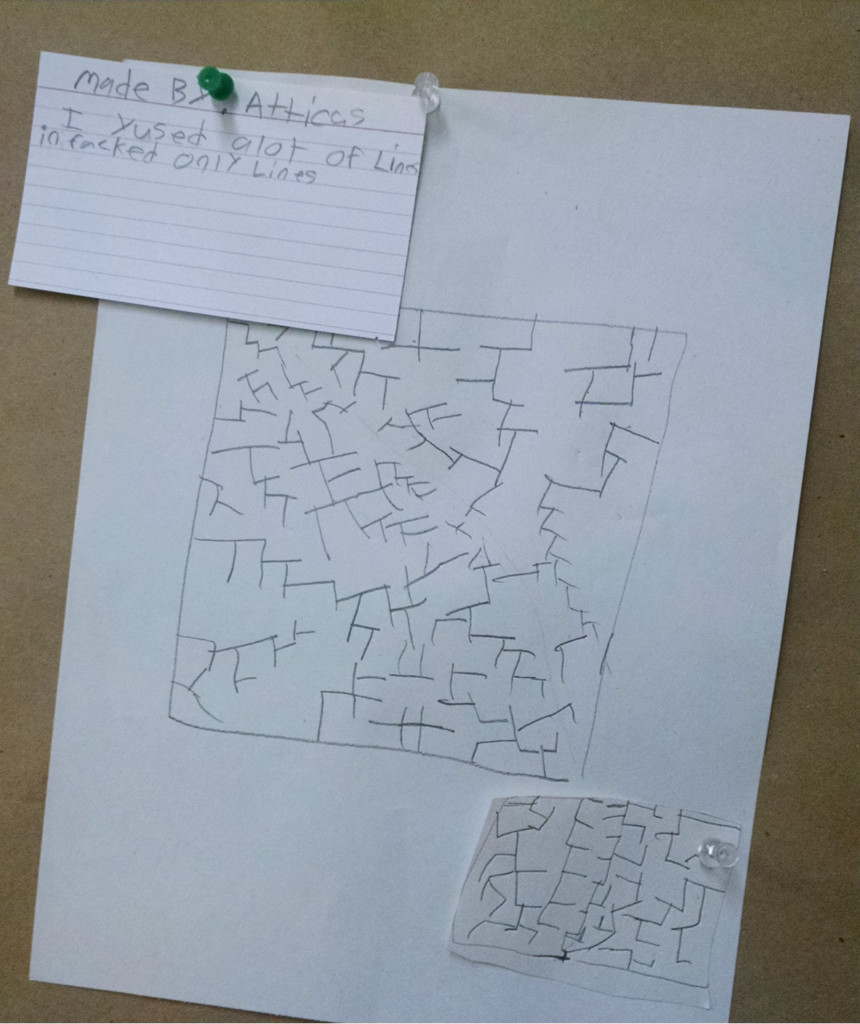
img_20160930_154236020   Lastly, there was a student who was only interested in solving a maze book in the inspiration station.  He asked if he could “just do mazes” and I told him, “yes, of course, but for every five mazes you solve you have to make on original one.”  He said he couldn’t and he didn’t know how, and then ten minutes later showed me the maze above.
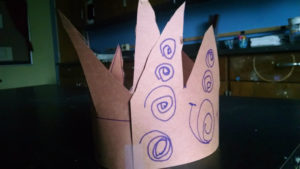
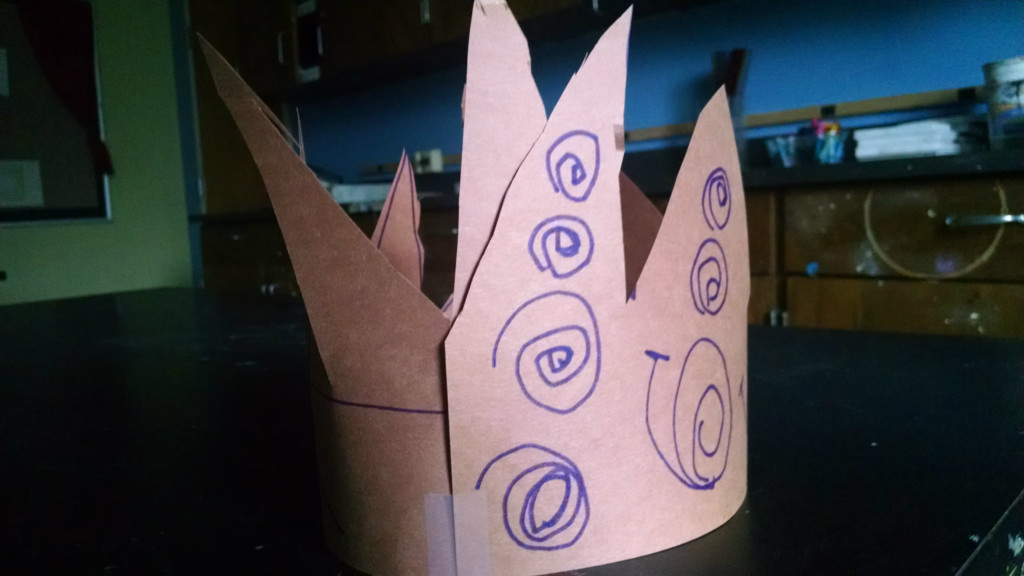
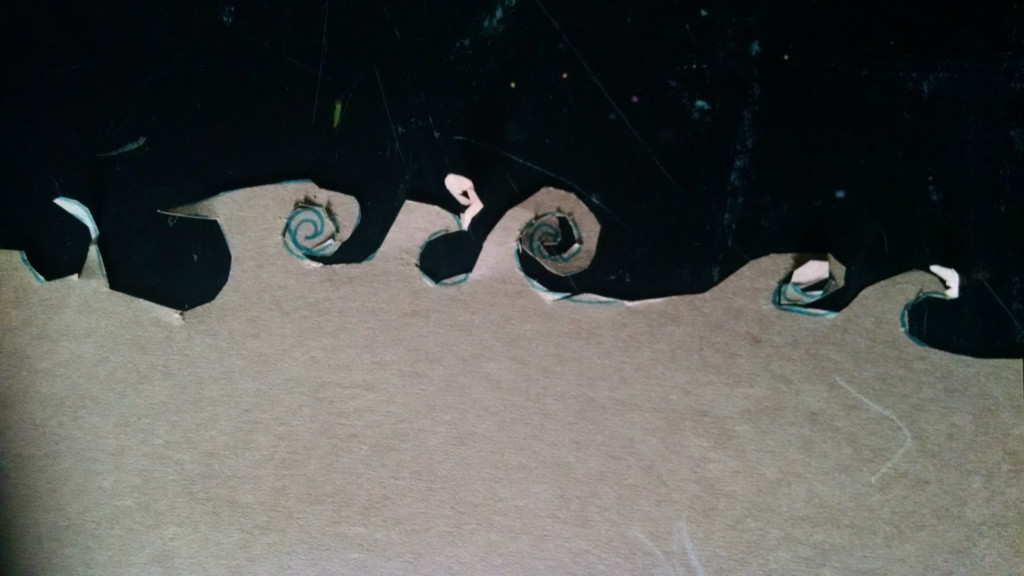
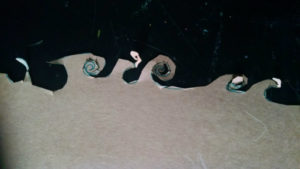
img_20160930_154511782For younger students, choice-based art looks slightly different, and Kindergarten and Pre-K students do more scaffolded projects that are usually based on books we read at the beginning of the class.  One project, based on What Do You Do With an Idea? by Kobi Yamada, was to make a crown.  Here again, although many kids used and followed my template for a crown (i.e. yellow paper, spikey crown), others challenged themselves in novel ways.  The student’s crown on the right was the result of two weeks of focused, determined work, and did much to advance the student’s growth in fine motor control, grit, and execution.img_20160930_154442717img_20160930_154253906
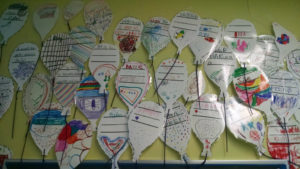
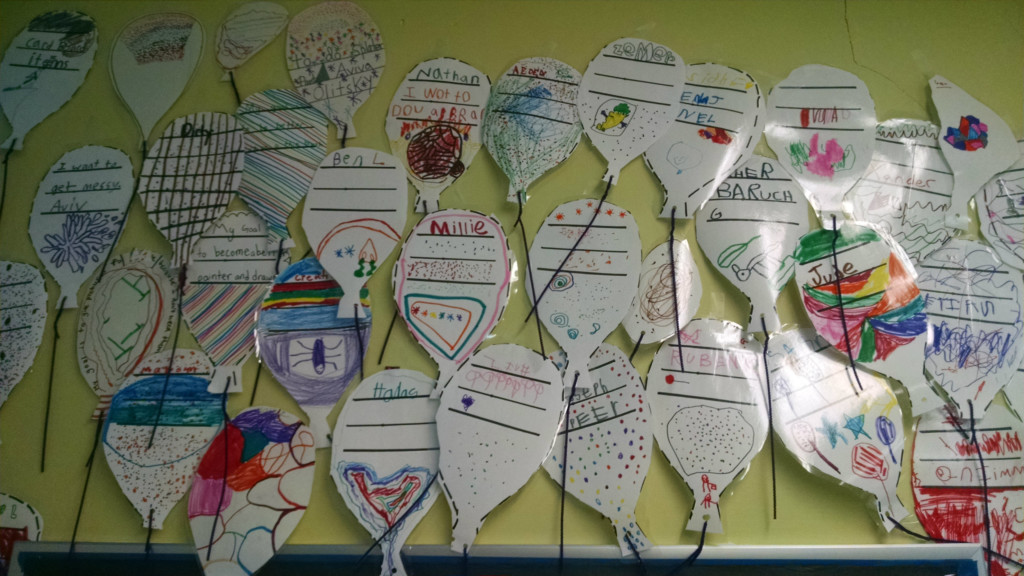
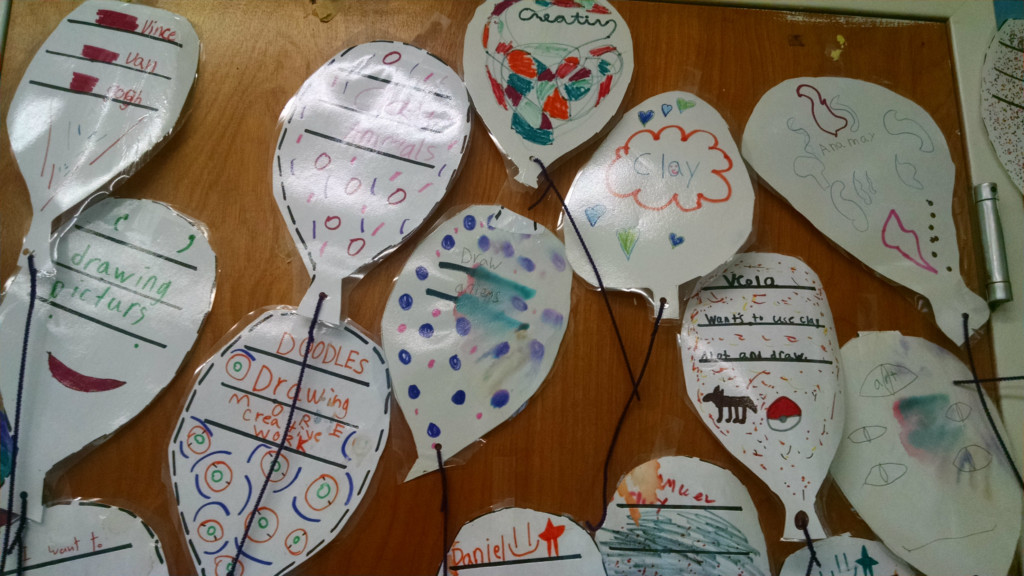
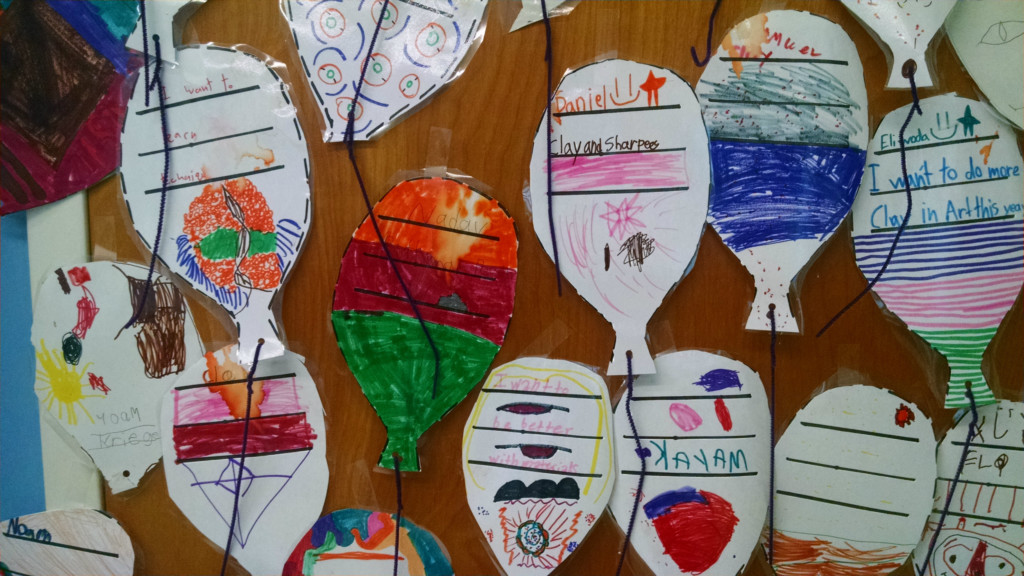
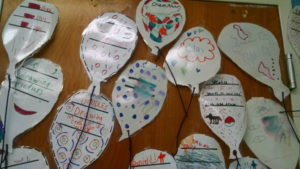
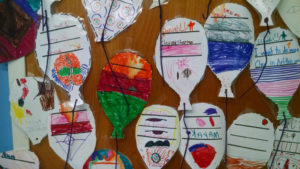
Students are asked to reflect daily on their work and how it exemplified the studio habit of mind we are focusing on. They ultimately are accountable to themselves both in the classroom and beyond.  To this end, the one project that was completely teacher led and everyone had to complete is shown below.  Each student was asked to decorate a balloon and write a goal they had for art this year.  As a project, I’m glad that students took it seriously and produced beautiful work; as a visual metaphor, I can think of nothing more appropriate than having the students own self-created goals keeping them aloft, inspiring them to push to greater and greater heights of artistry.
img_20160930_154304487 img_20160930_154308258

Stay tuned for an update about how students “Developed Craft” during September and October.  Thanks for reading!

Mr. Mirsky.
Creating a Peaceful Community in Pre-K

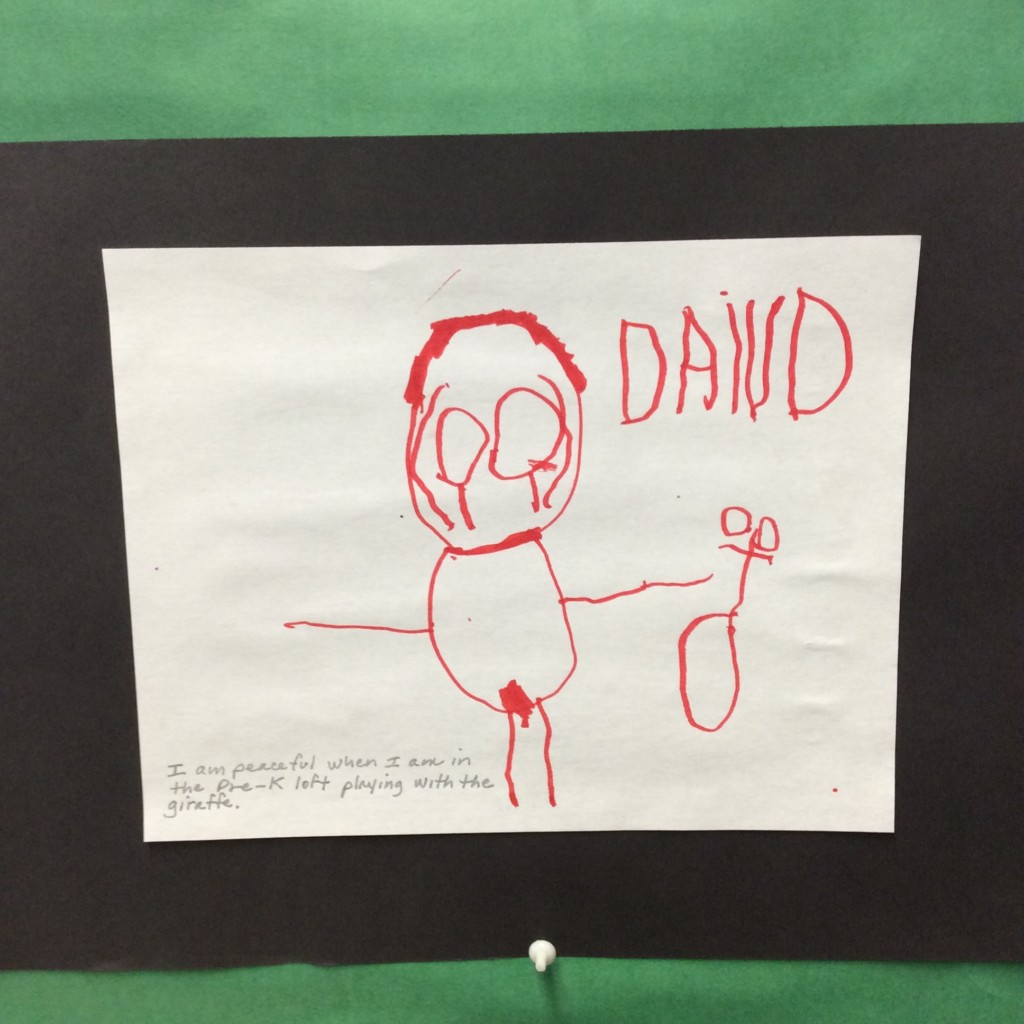
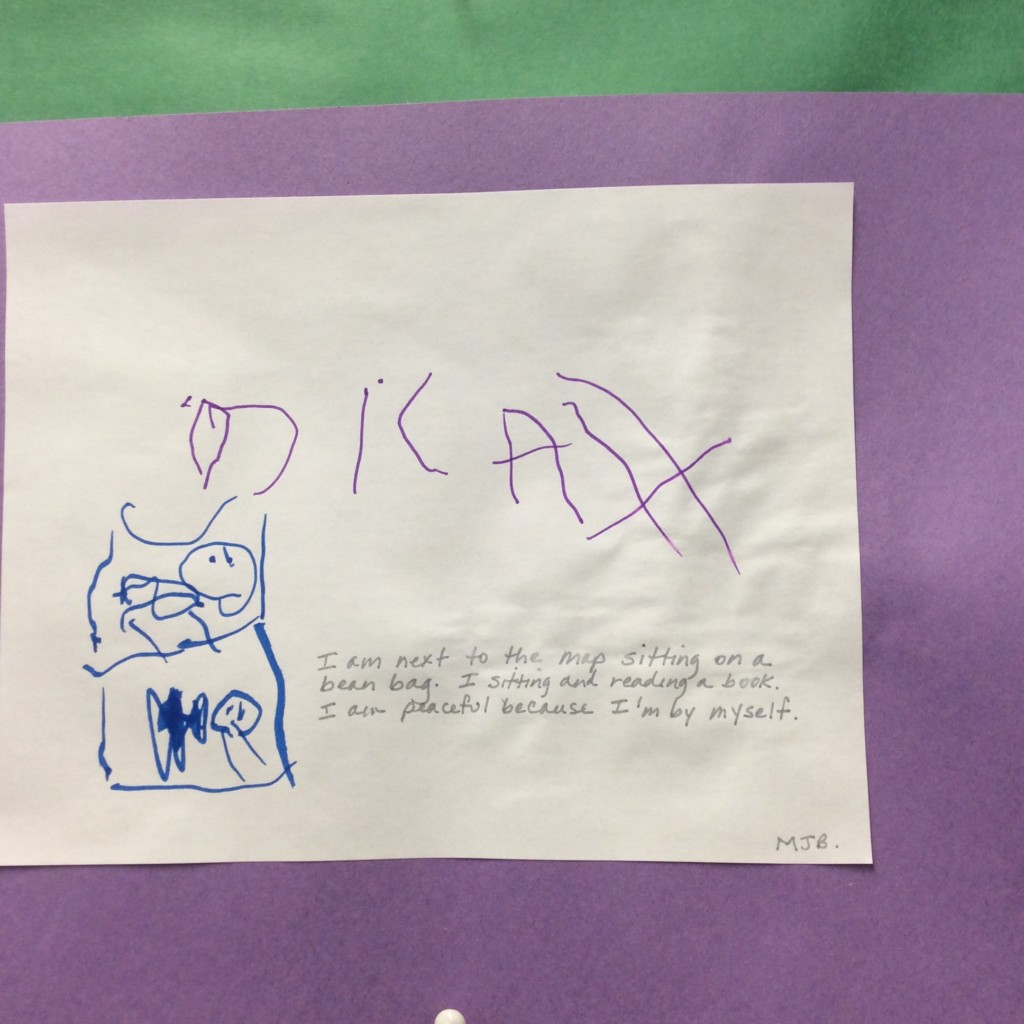
This past month the Pre-K class has learned how to become a peaceful kehillah (community).  In our Feelings Journals we have shared what makes us happy and where our peaceful places are.  On Open School Night, our parents left us pictures of their peaceful places.

img_0230                     img_0231


img_0217

By covering our eyes while saying Shema Yisrael, we learned that we can “talk” to Hashem (G-d). We also discussed how special we are since we all have a “spark of Hashem” in us. Betzalem Elokim is being created in Hashem’s image. In order to give each other respect (kavod), we created class rules:

“use kind words”  Ziva

“share”  Eli

“don’t take anything (from friends)”  Micah J

“don’t push anybody out of the way”  Levi

“don’t pop people’s bubbles”  Xander

“show kavod (respect) by not throwing wood chips or sand”  Quinn

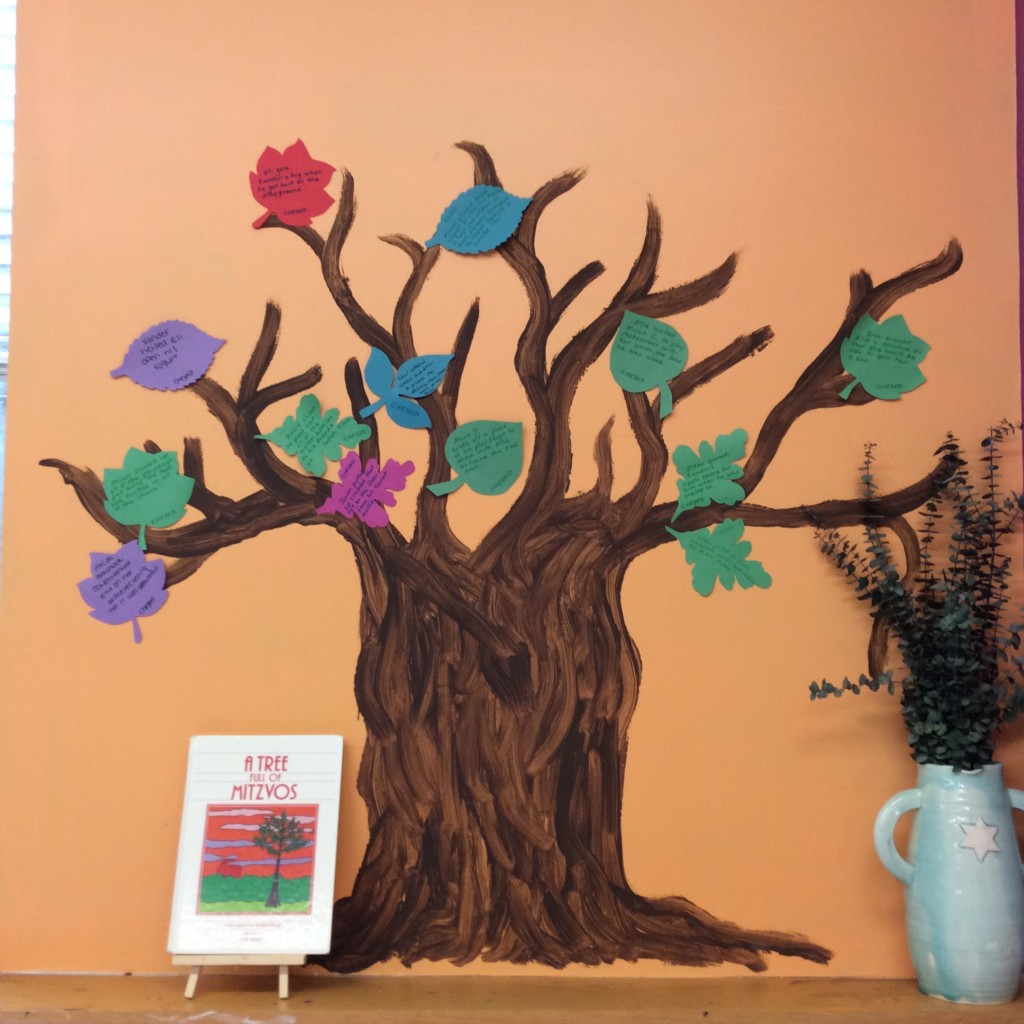
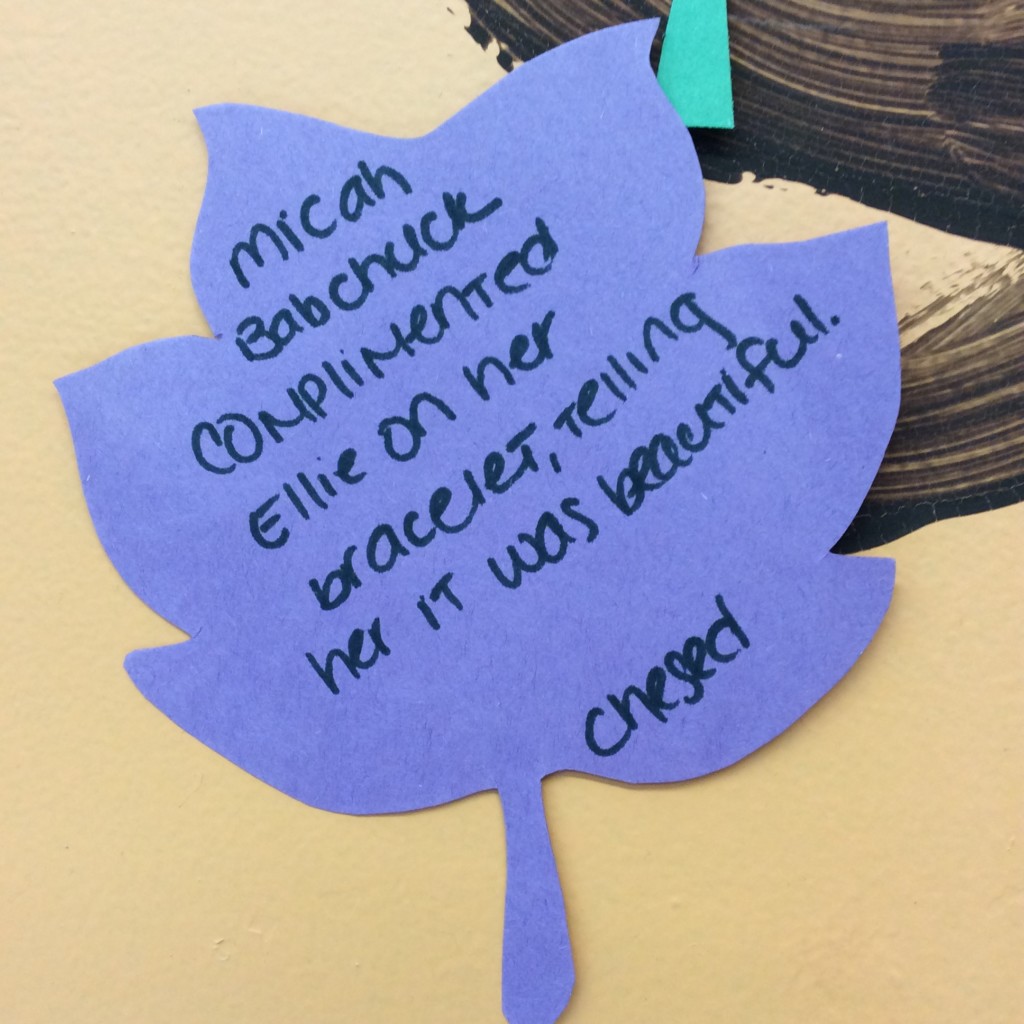
Our Kavod & Chesed Tree – Tree of Kindness and Respect – is filled with beautiful mitzvot (good deeds).

file_000

img_0188                                       img_0193

Ellie initiated the need for tzedakah (charity) boxes when she brought in coins before our Shabbat celebration.  We painted and embellished 4 cardboard boxes for this purpose.  We then spoke of how we could help people in need.

img_0212

Welcome to Design Lab

Shalom,

I am Rotem and I am so excited to teach Design Lab to JCDSRI students from PreK to 3rd grade (and learn with them!). We just ended our fourth week in Design Lab and I would like to share with you some highlights of our time together.

We began by asking: What do we do in Design Lab? How can we think like designers?

The students had great ideas: we build things, we create, we take something and make it into something different. Everyone loves to create and to explore the materials in the room, to build with Lego, K’nex, Lincoln logs, cardboard and more.

file_000
Students’ name tags – you have to start with a paper roll…….

In Design Lab, we are learning about the process of Design Thinking. Design Thinking  is used to solve problems and create change in our world. The first step in this process is to look for problems. While not an easy task, the students were still able to share some great problems they are interested in solving:

  • Keeping our hands to ourselves
  • How to keep our stuff inside our cubbies
  • Food spilling in lunch box / water leaking in backpack
  • During quiet time it is hard to stay quiet
  • Caring for the guinea pigs in 3rd grade
  • Losing things
  • The way people judge your work
  • Playing ‘Monkey at the Bat’ during recess
  • Being distracted while working in class

We also started practicing paying attention to details. In Hebrew the expression for being empathetic is Lasim Lev — “putting your heart,” meaning we make sure to look with our soul and not only with our eyes. We played different games in which the students had to pay close attention to small details.

For example, I asked students to change one thing (the way you hold your hands, tuck your shirt in, untie your shoelaces, etc.) and can your partner notice the change?

Another was a visual memory game – who is missing from the class? What color is their shirt?

A long journey is ahead of us and it will be an interesting one.

Lehitraot (see you again)

Rotem