fbpx

Creative Thinking in Fifth

As we prepare to embark on our winter vacations, I wanted to share some recent highlights in 5th grade:

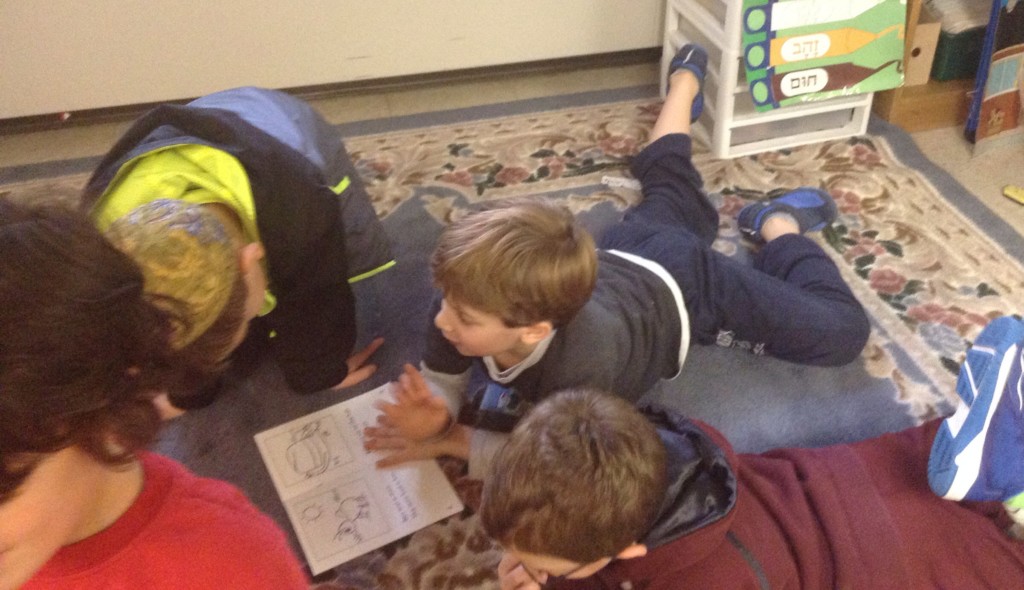
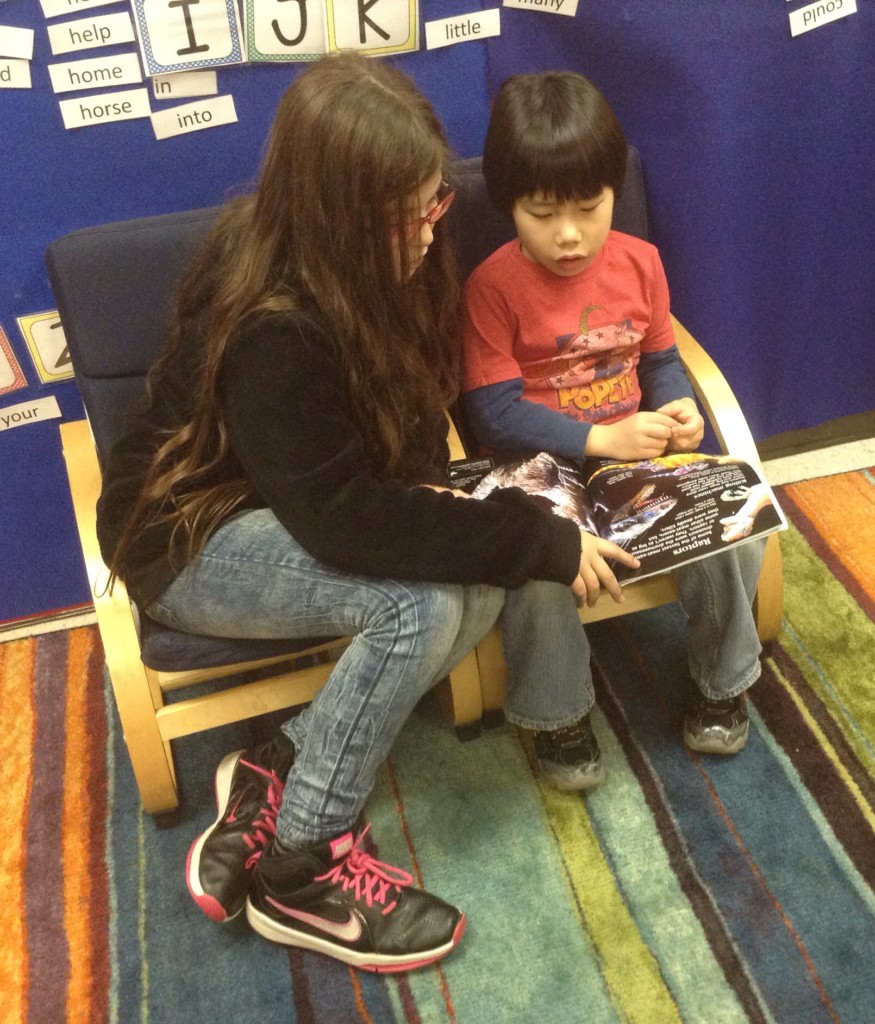
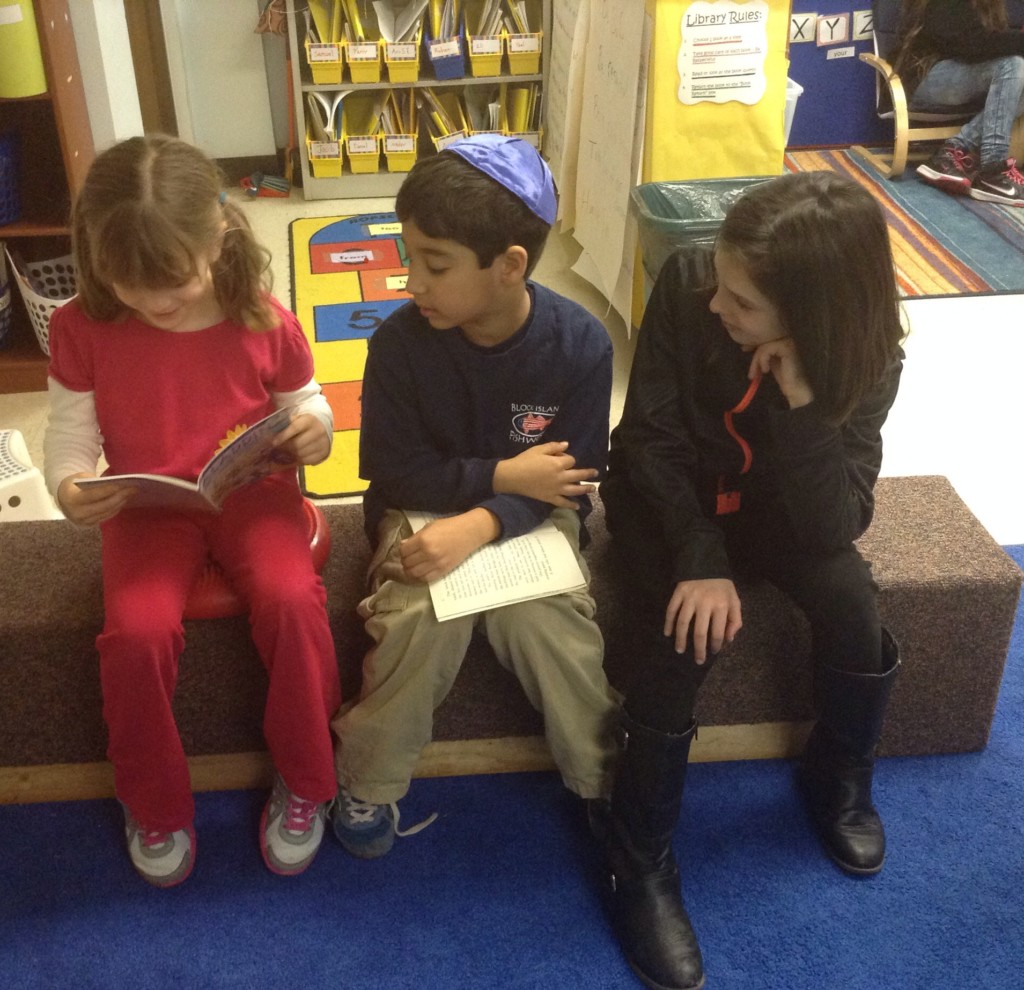
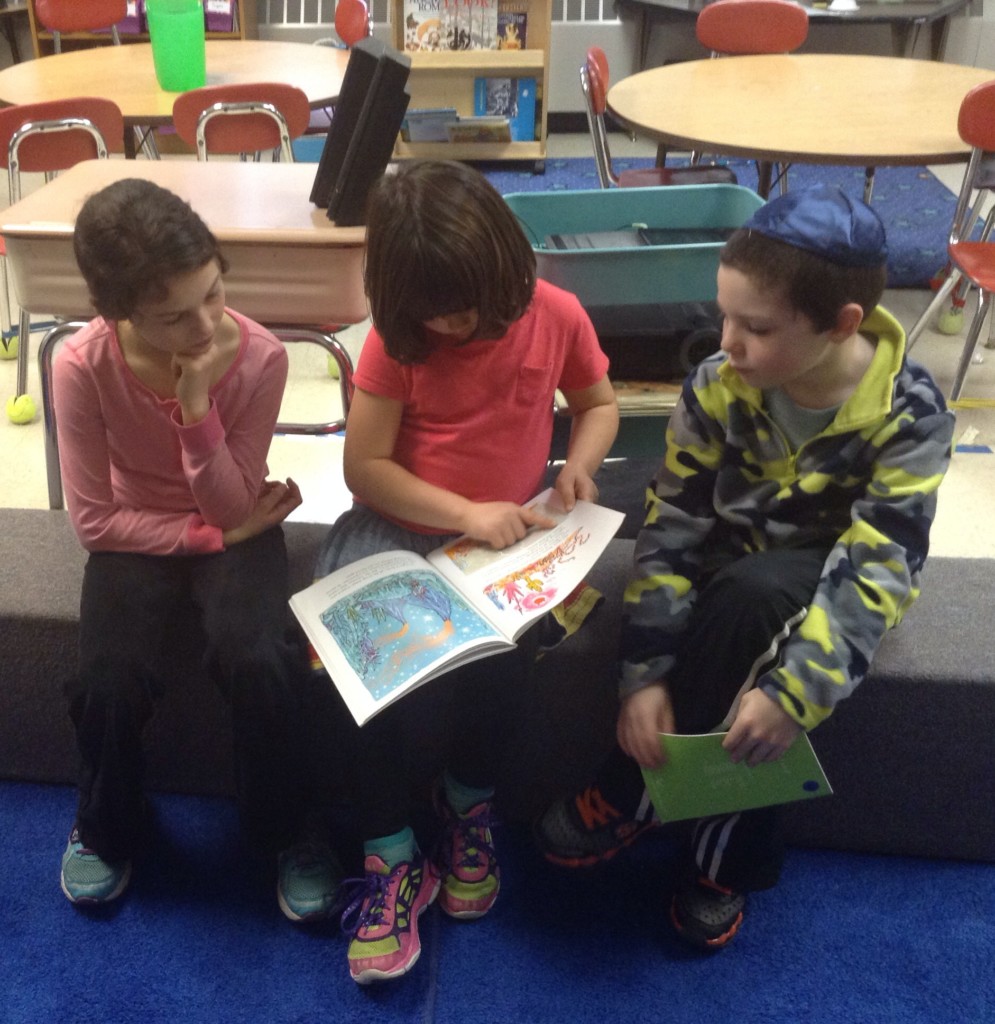
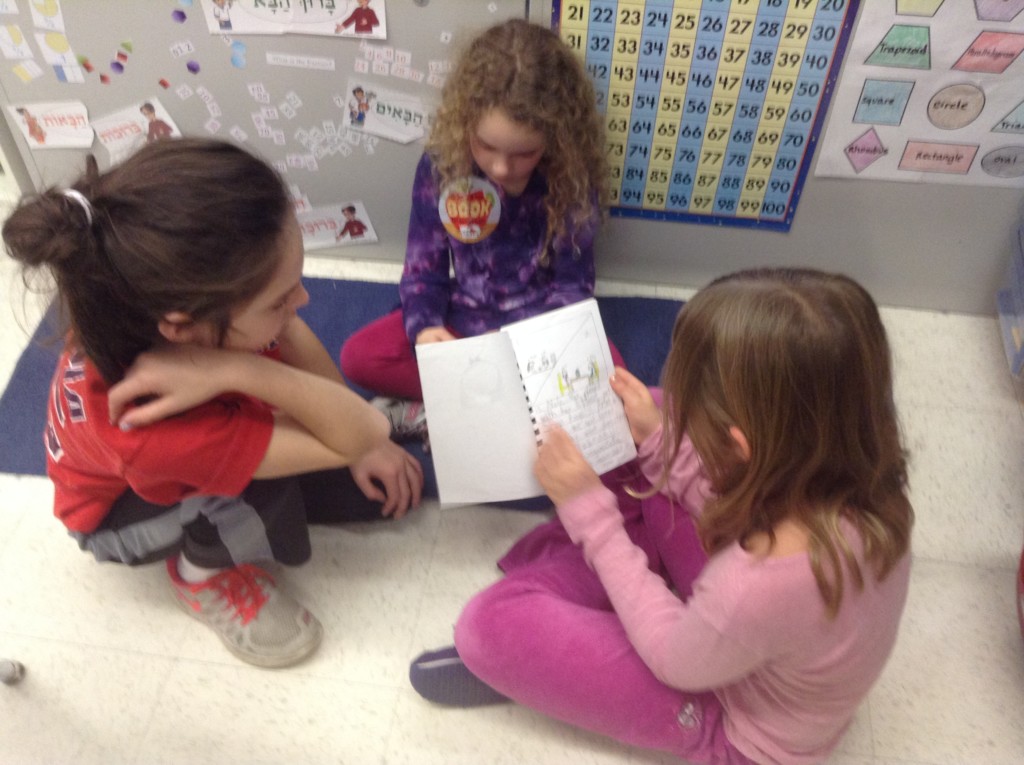
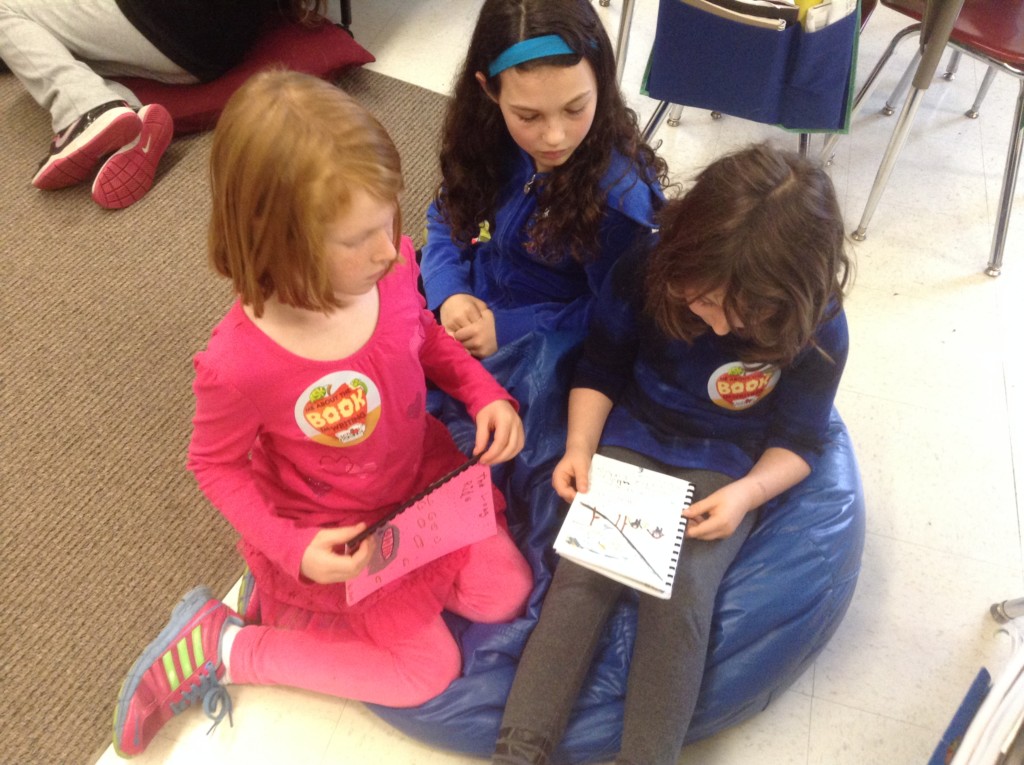
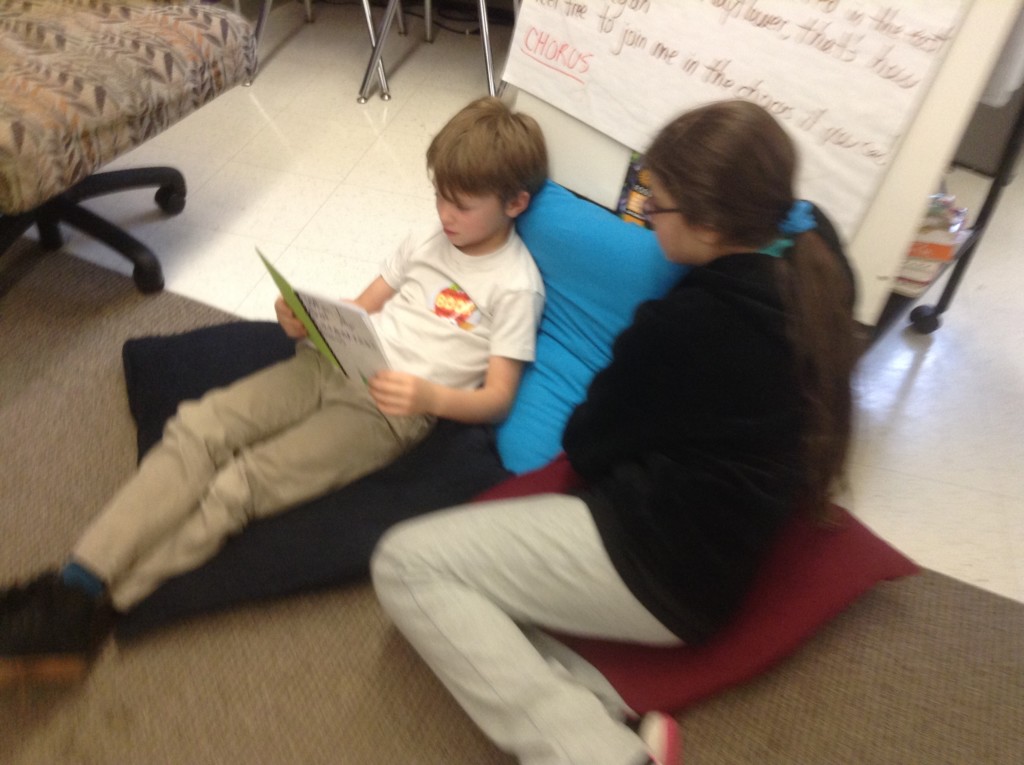
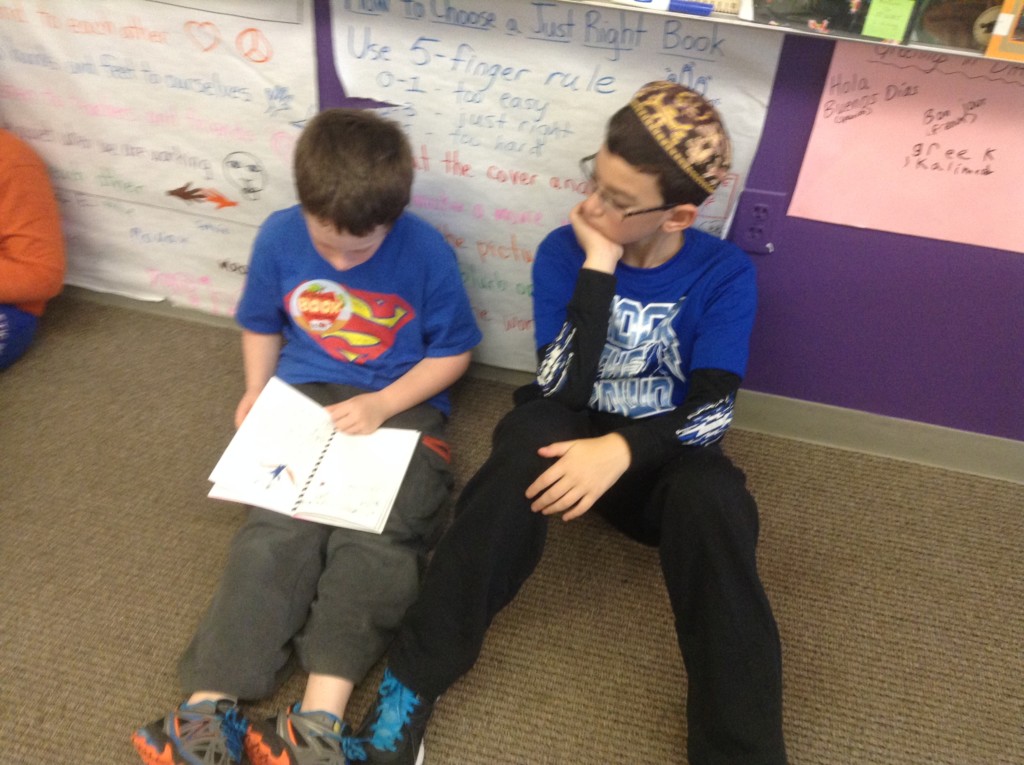
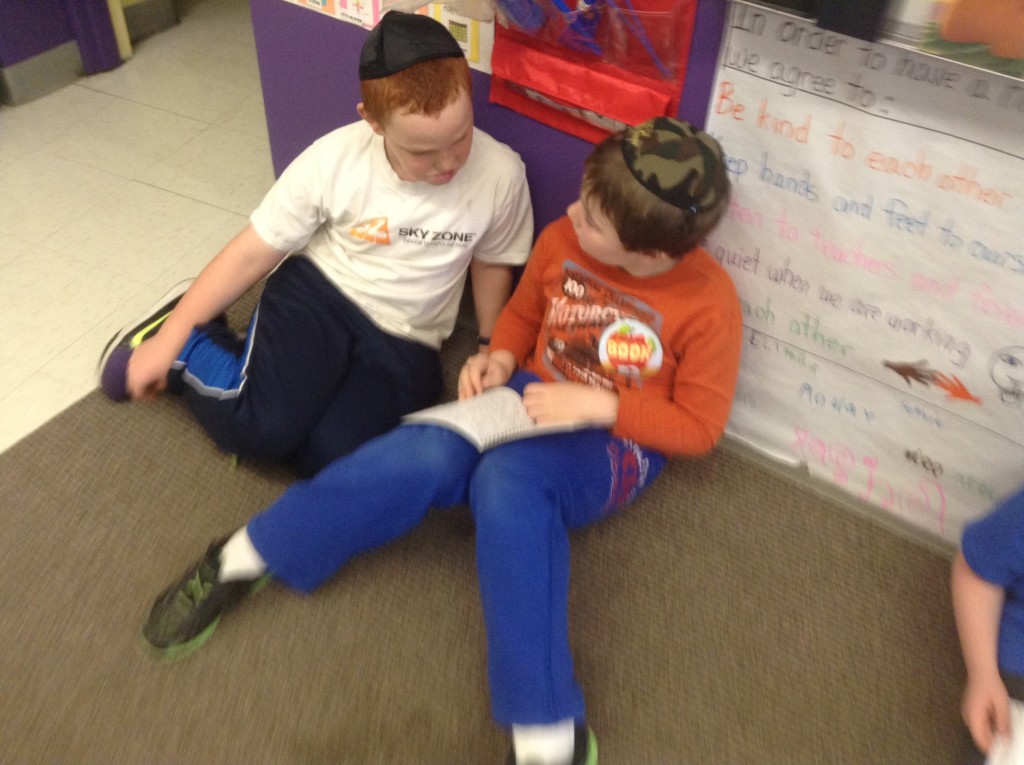
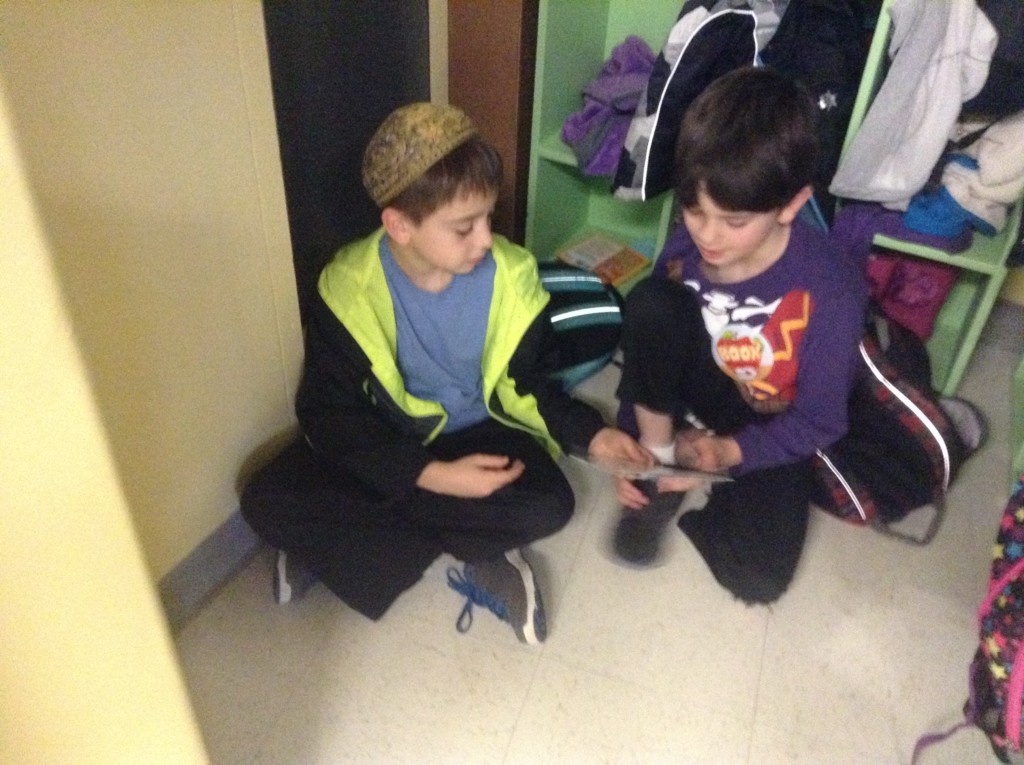
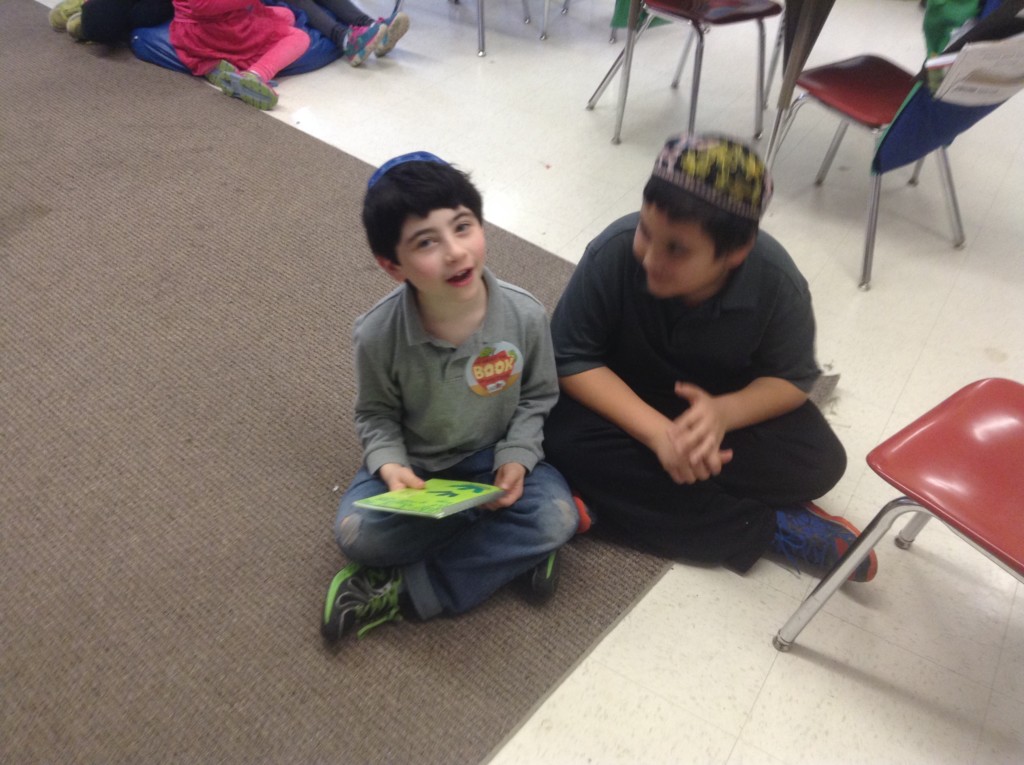
Last week we met with our first grade buddies.  They were such incredible role models and helped their buddies practice for the Kabbalat Shabbat service.  Afterwards they read with their first grade buddies.
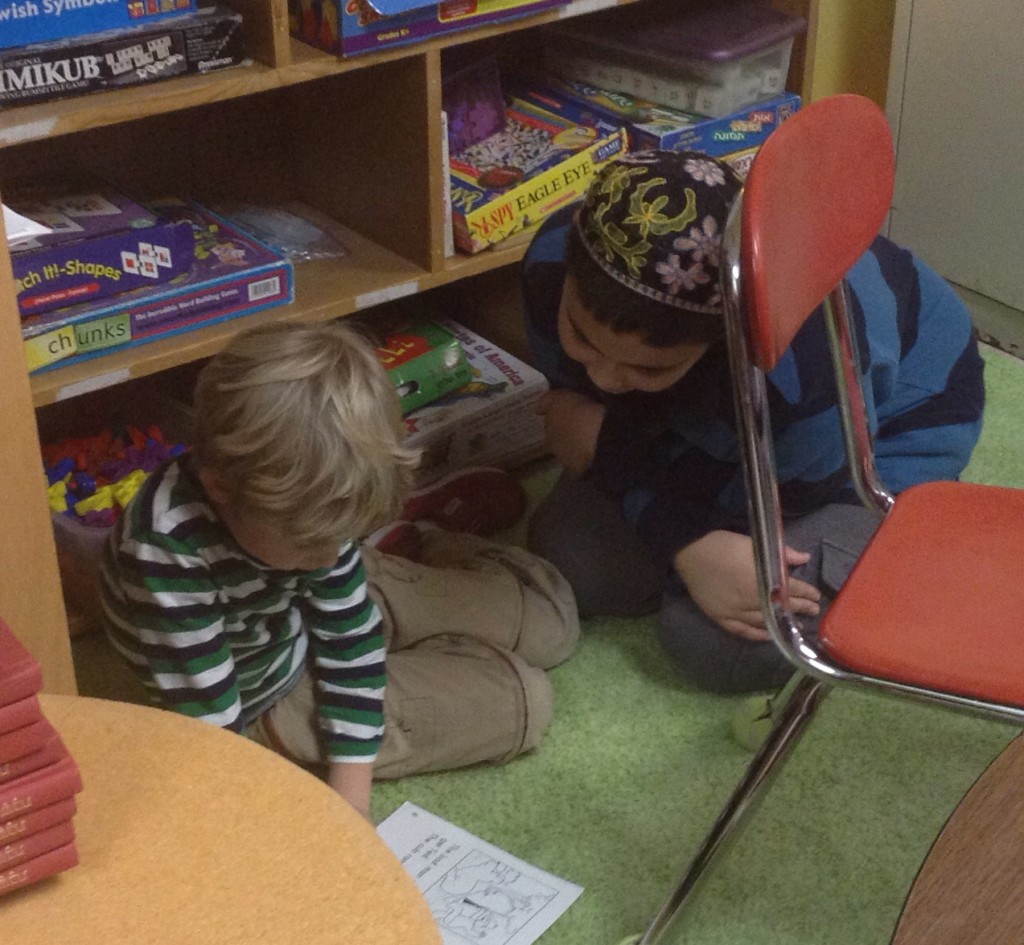
photo 4 (3) photo 2 (4) photo 1 (5) photo 4 (2) photo 3 (2) photo 3 (3) photo 5 (2)


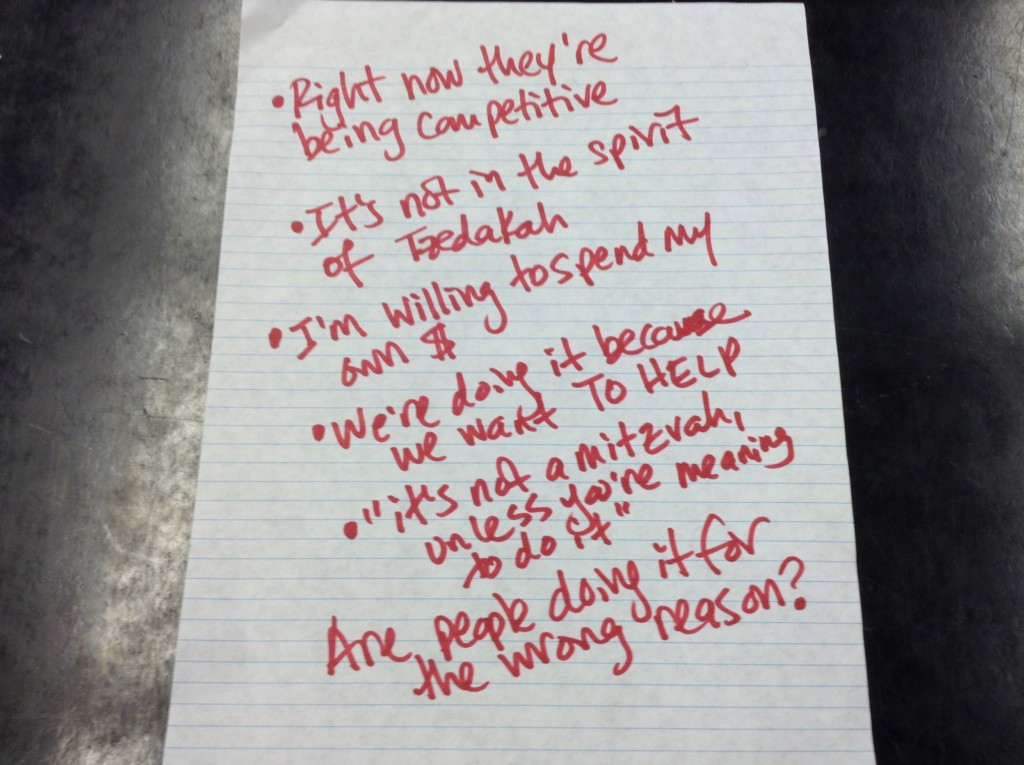
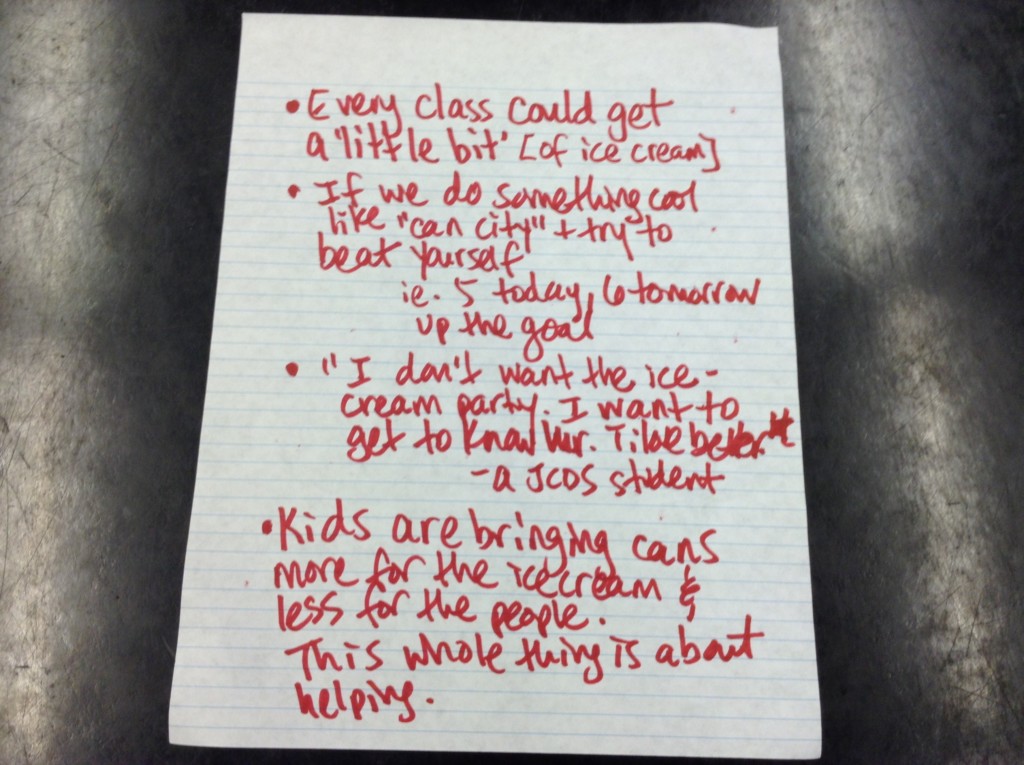
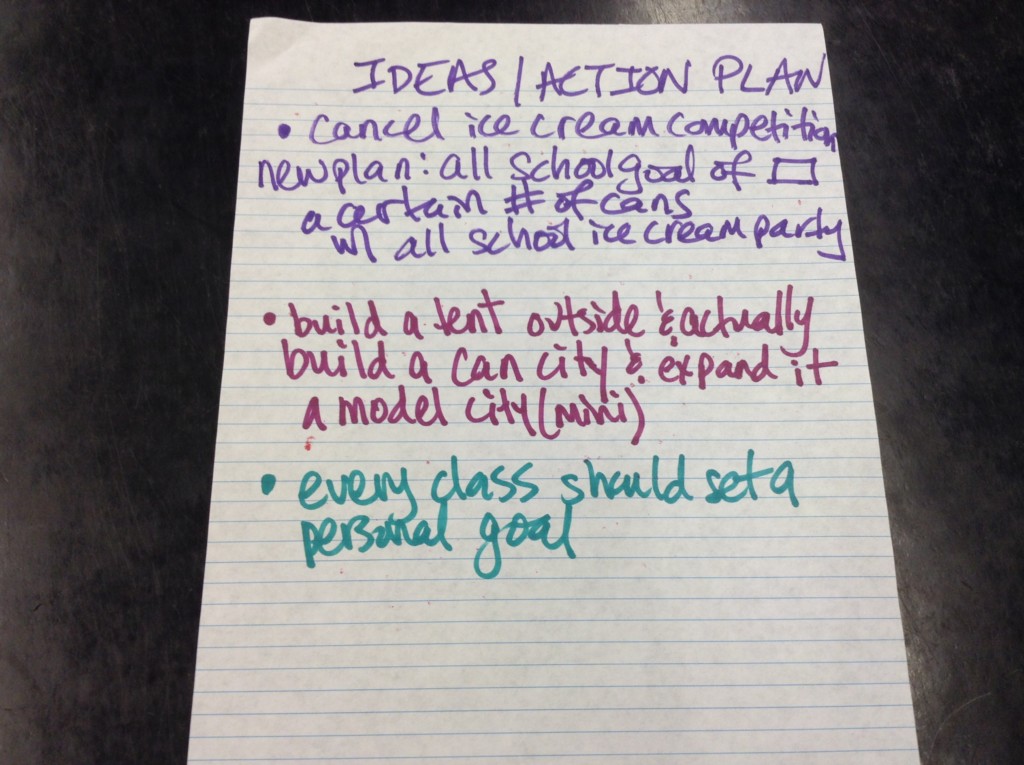
When Mr. Tilove announced an ice cream party for the class that brought in the greatest number of cans to donate to the kosher food pantry, fifth graders took pause.  It was thrilling to witness the depth of their thinking and the kindness of their hearts as they made one beautiful comment after the next.  “I don’t think this is how God intended us to give,” remarked Abby.  Tomer suggested by encouraging other classes to bring in cans, we could be role models by demonstrating we’re not going to be competitive when it comes to Tzedakah.    Here are some notes from a class conversation:

photo 3 (4) photo 2 (5) photo 4 (4) photo 1 (6)

They thought deeply about the right way to give and what would make sense given the culture of kindness we have at JCDSRI.  After our notes were shared with Mr. Tilove, he led a discussion with grades 1-5 and bravely admitted that his plan wan’t well thought out.  What if he had used deign thinking?   As a school community, the decision was made to have a school-wide ice cream party if we reach a collective goal of 1,000 cans.  Even still, Jordan shared that there might be some who only give because of the incentive.  That said, I suspect all the fifth graders will enjoy their ice cream party this afternoon.  They did bring in over 140 cans!


photo 1 (3)      

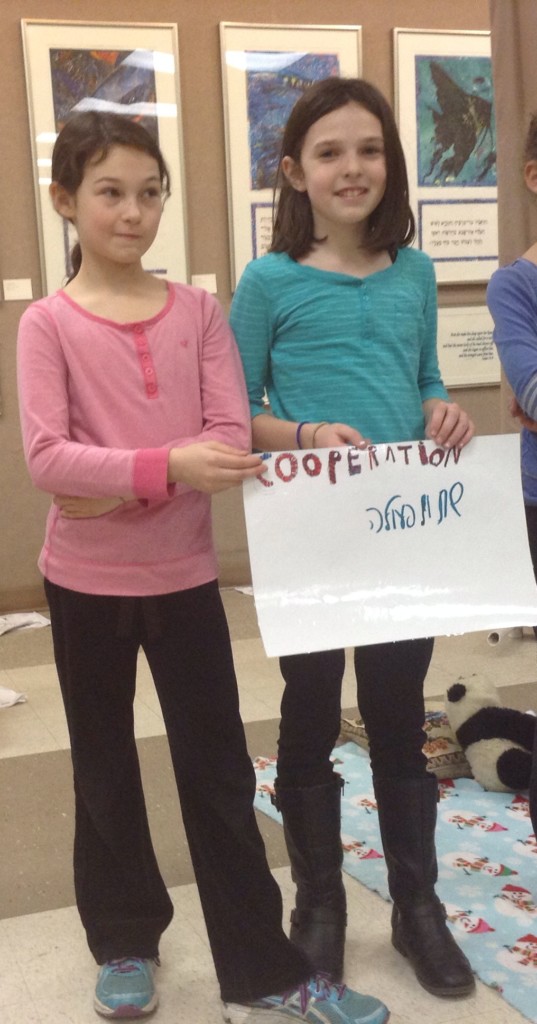
Fifth Graders continue to be publicly recognized by their peers for demonstrating respect, kindness, responsibility, and cooperation at all-school assemblies

This week we spent some time working on our Teva project, which entails putting an old rain barrel in use in our garden while drawing attention to its environmental impact in terms of water conservation.  The thinking is to paint it with a design and have the rain barrel itself be part of a sculpture.  In 2015 we will visit and learn from local sculptors and artists who work with reused materials.  Fifth grader presented their deigns to each other.
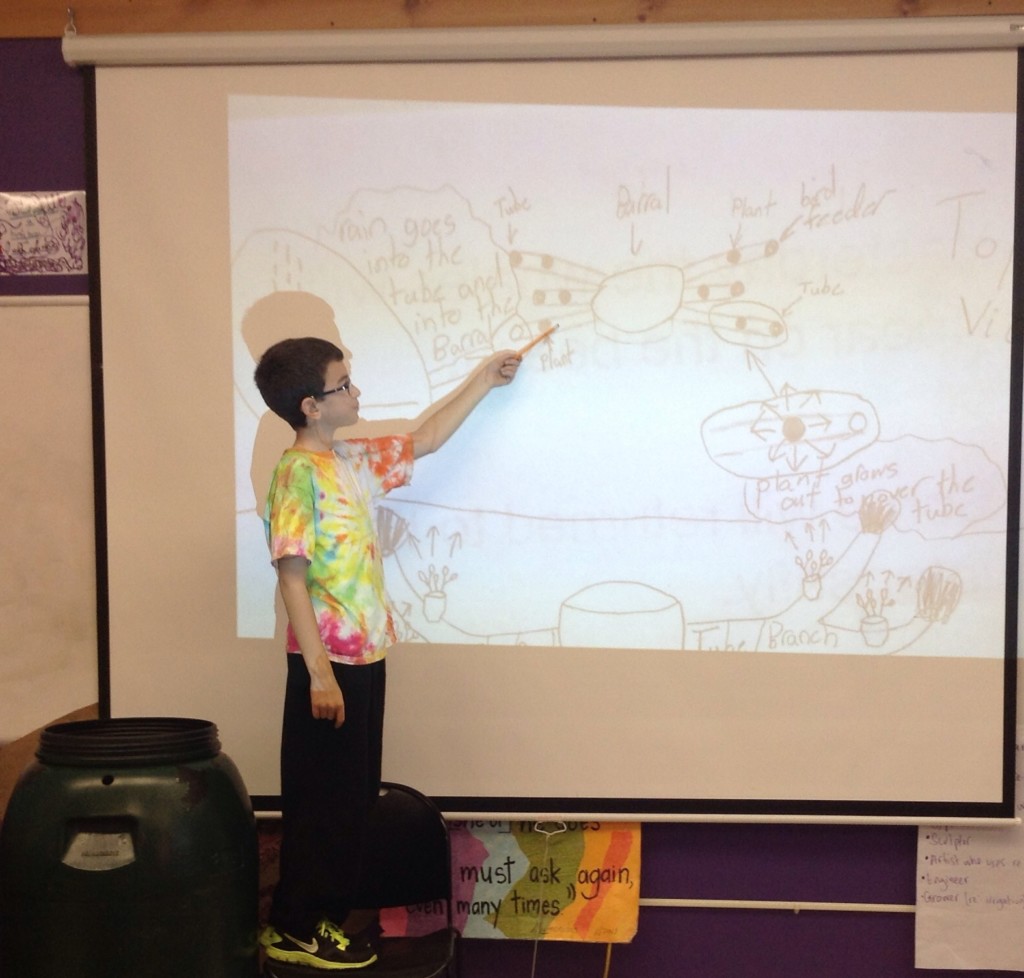
photo 1 (7)


Yesterday a surprise guest taught the class part of a Yorkshire song.  While this would not have been sung during the time period we’ve been studying in Colonial America, the connection, though loose, stems from the fact that the colonists came from England.  Here’s a snippet of the fifth graders singing a very unusual kind of song for them.

http://youtu.be/0lYy6LgjqLs

If the YouTube link doesn’t work for you, try this one:

https://drive.google.com/file/d/0Bz2-CrUPrGPLVGxYTlJrN2w1cWFkY1k0WjFoc0Ntby1ZRUMw/view?usp=sharing


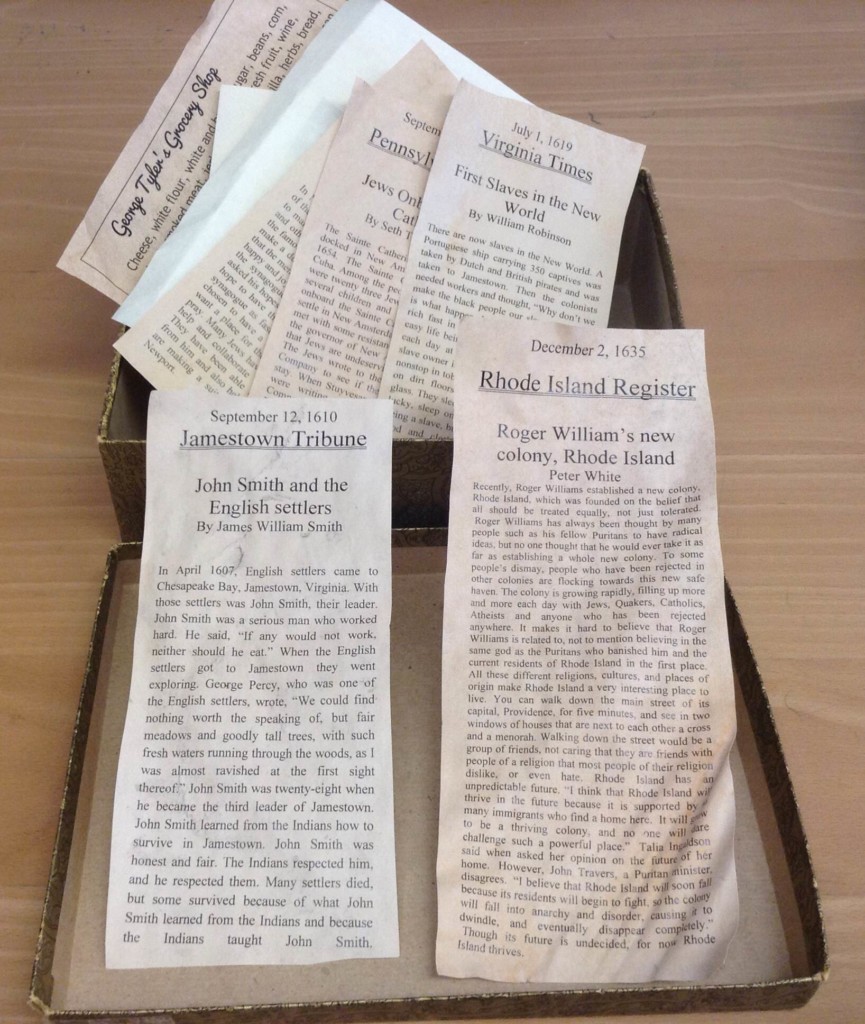
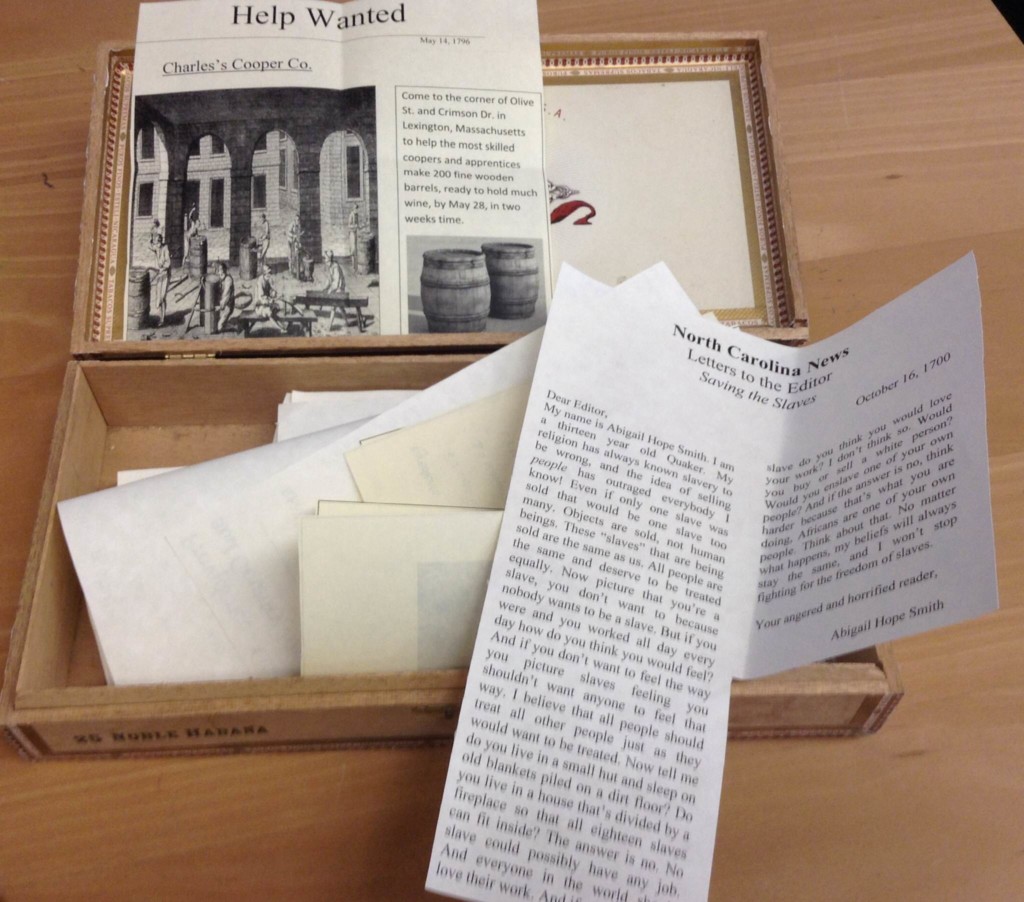
Today students handed in their Colonial America Newspaper Clippings Project.  What might a person be able to learn about this time period from a collection of newspaper clippings?  That was the premise for students, as they worked to create a compilation that reflected what they’ve learned about this time period in connection to the big ideas of religious freedom and creating community.  Collaboration was a key part of this project! The finished collections look rather authentic.  I can’t wait to read them all!
IMG_2236 (2) IMG_2235 (2)


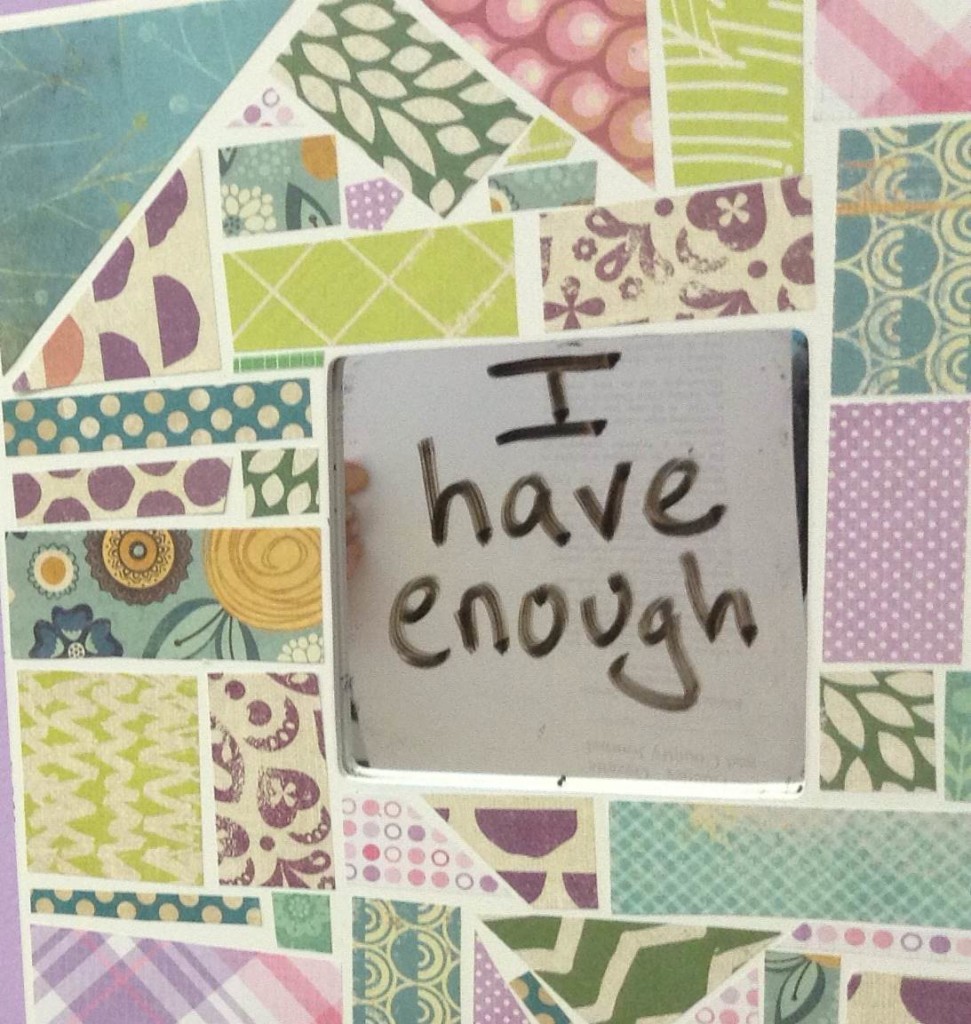
I hope everyone’s been enjoying Hannukah and bringing the light into their lives.  It has become tradition in America to give and receive material gifts this time of year.  Fifth graders created skits during morning meeting this week to show ways one might receive a gift s/he isn’t excited about with kindness.  The message in the mirror this week is vital, and quite apropos this time of year.  Happy Hannukah & Happy New Year to all!
IMG_2237 (2)

STEAM at JCDSRI!

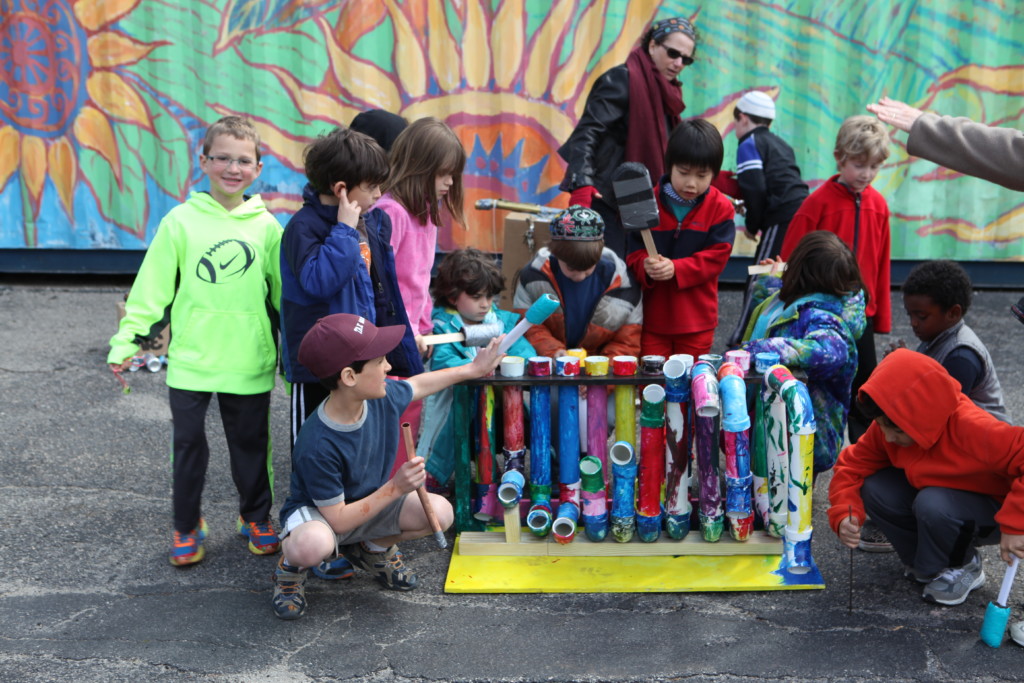
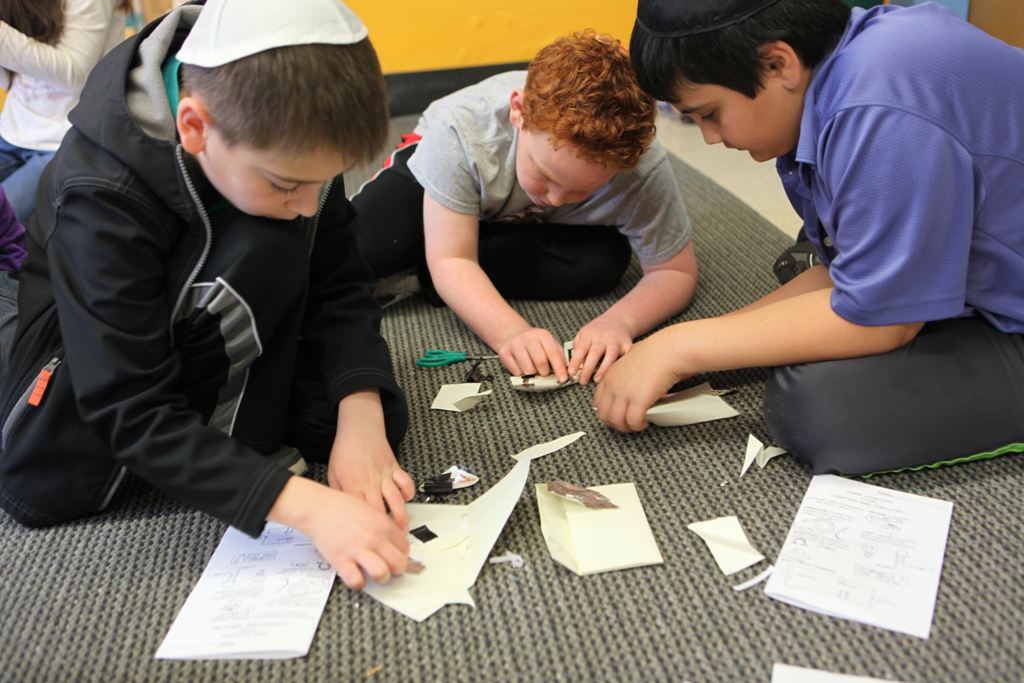
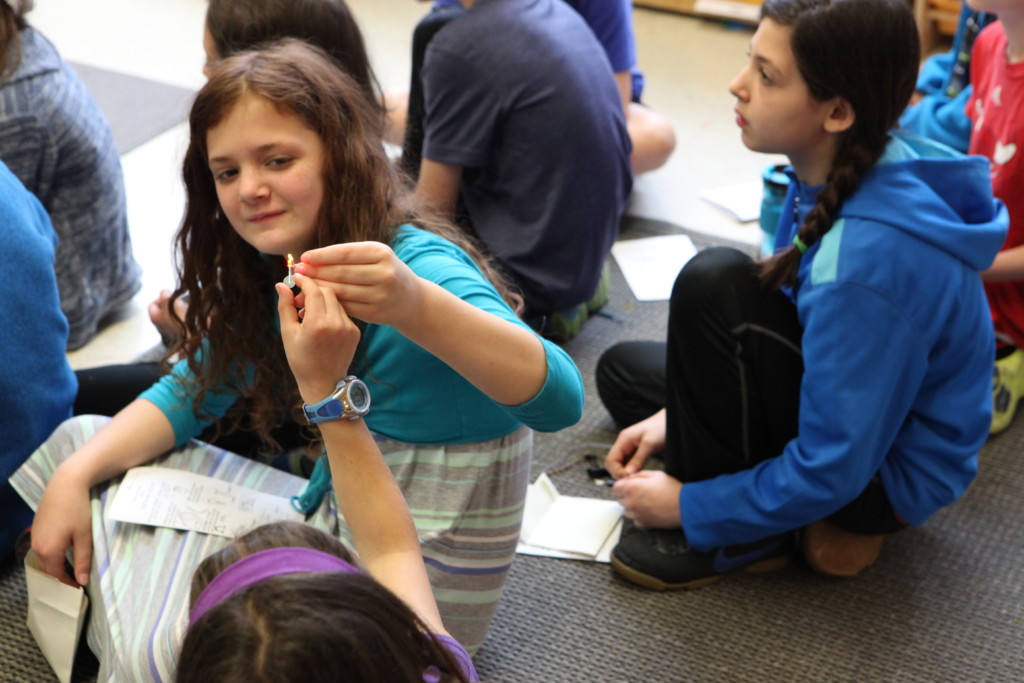
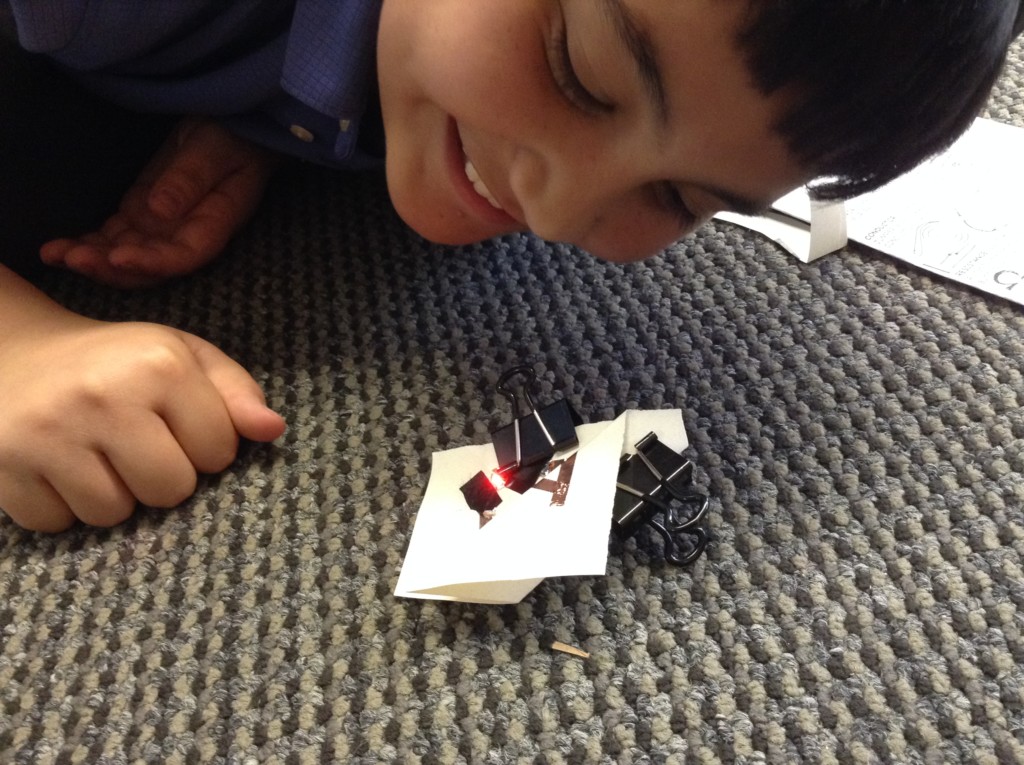
JCDSRI faculty, together with our Brown/RISD partners from KinderSTEAM, organized a memorable STEAM week for the whole school. April 20th-24th was an enriching week of workshops, demonstrations and field trips aimed at giving students exciting, and perspective-broadening learning experiences.

3 boys IMG_0245 IMG_0213

It works!
It works!


Eliora’s Take on 2 Weeks

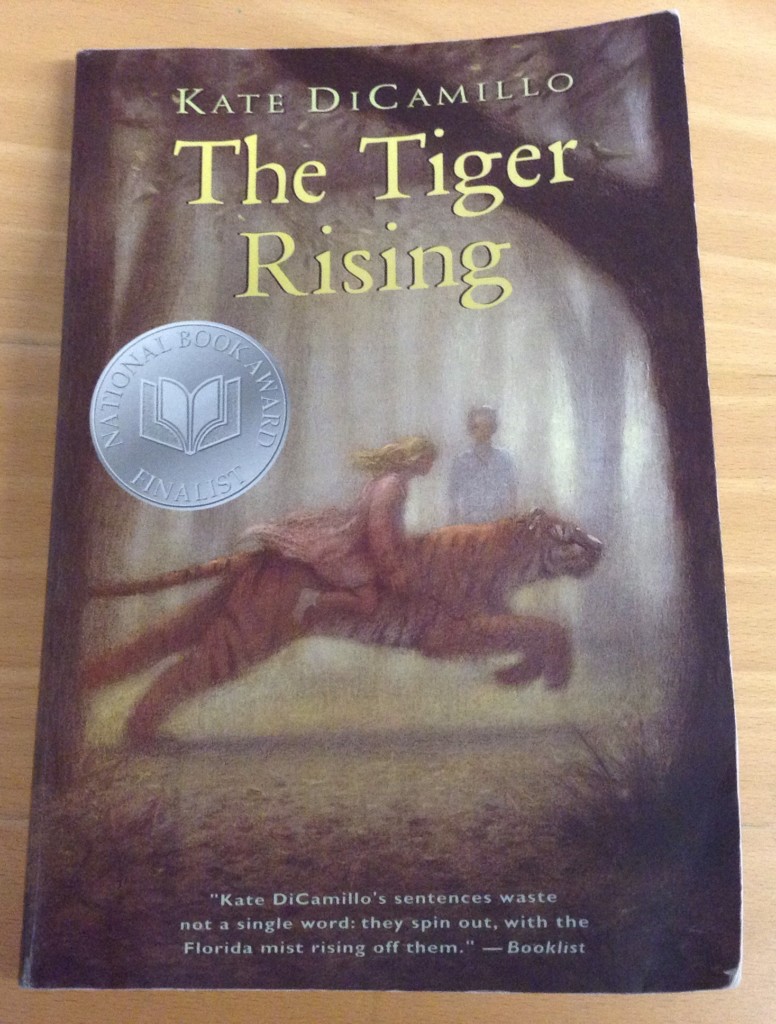
This week has been a fantabulous week, and is getting even better. For the past couple of weeks our class has been preparing for the JCDS annual Kabbalat Shabbat that will be happening tonight. Most of us have even memorized the songs we are singing. On Wednesday we finished the beautiful, heartwarming, and sad story, The Tiger Rising by Kate Dicamillo. As we read this book my heart overflowed with so many different emotions. Love, sadness, gratitude, happiness, excitement, wonder, and most of all creativity.

photo 1 (2)

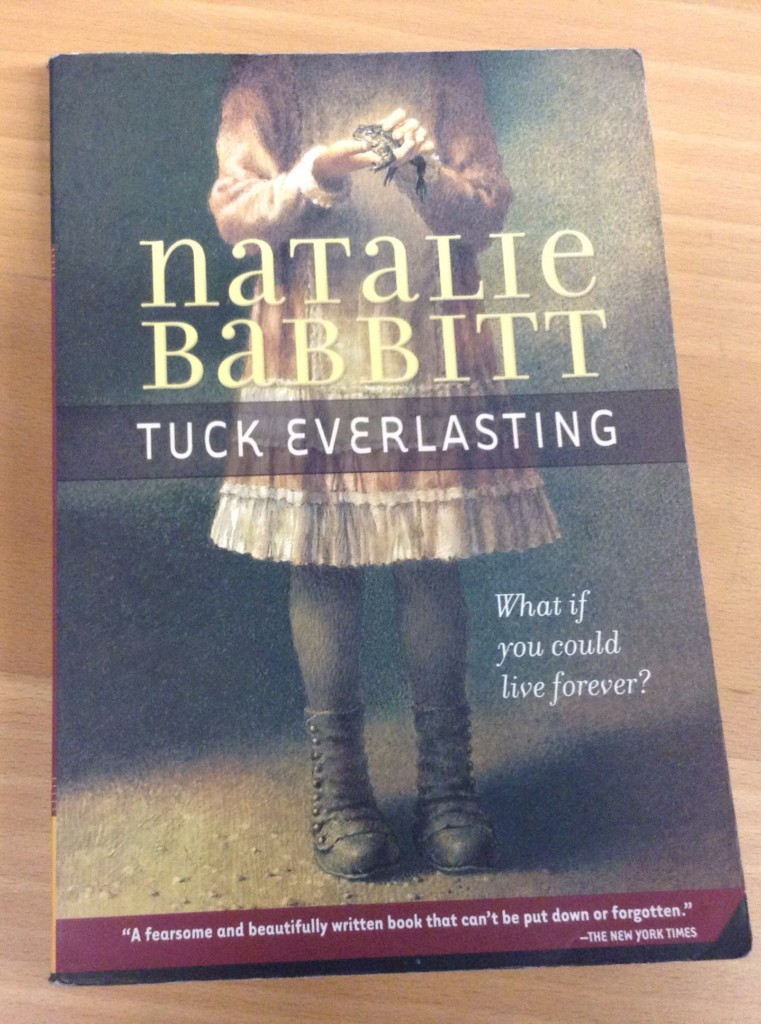
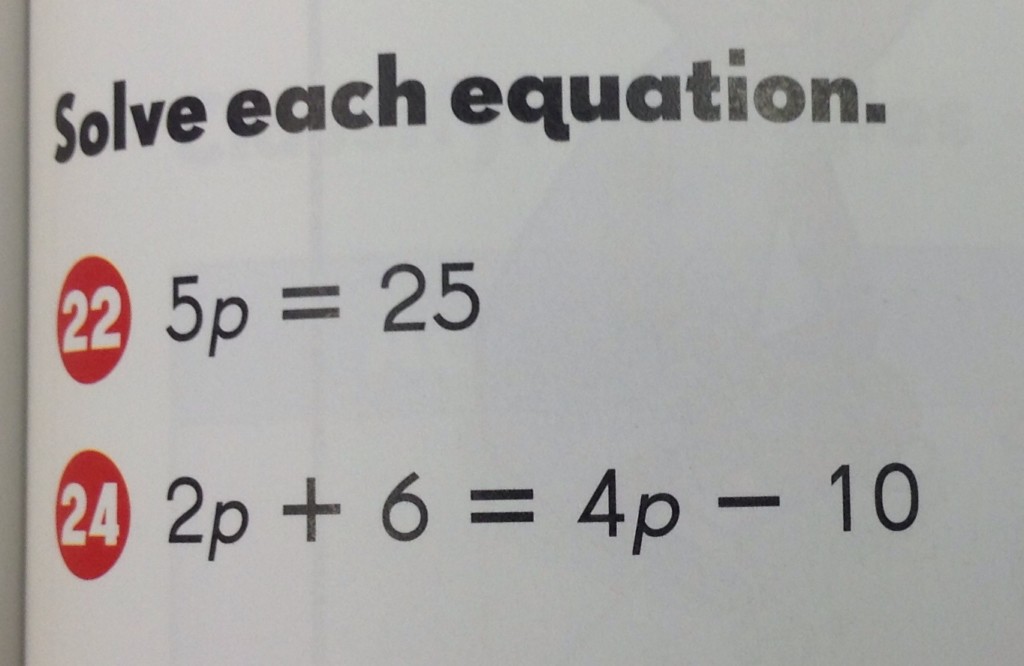
We have now started our new book Tuck Everlasting by Natalie Babbitt. Our class has also recently started algebra!!! To be honest I was completely freaked out and thought that algebra would be super hard. It turns out that it is a lot easier than I expected. It’s actually rather fun!

photo 2 (2)

photo 3 (2)


We have all been working crazy hard on our Colonial American Newspaper Clipping Project for the past few weeks. It is due today, Friday December 19. We all can’t wait to see how we do. Anyways both groups will probably do very well. This week was amazing!


Note: Eliora began writing this last week (about last week) and finished writing it this week (about this week).

Why send your child to a Jewish Day School?

First, let’s ask an even more basic question…

Why School?

In a recent article on the excellent education blog, MindShift, author, educational guru, and futurist David Price wrote about how education is changing, and needs to change in the coming years. The whole article is well worth the read but for now, I’d like to consider this bombshell of a statement he presents:

“The gaping hole in the middle of the public debate on schooling is that we can’t even agree on what schools are actually for…This failure to define a clear purpose has fatally held back progress in understanding how we learn best.”

To make matters even worse, many thinkers such as John Taylor Gatto, author of Dumbing Us Down: The Hidden Curriculum of Compulsory Schooling and Seth Godin, author of Stop Stealing Dreams (What Is School For?) believe the true purpose of school is to create obedient workers and complacent citizens for an industrial society!

As parents, I doubt “obedience and complacency” are our highest aspirations for our own children, especially as our country changes from an industrial economy to an economy based on service, innovation, and creativity.

So today, not only is there confusion about what and how we should be teaching, but we as a society don’t understand WHY we should be teaching at all! This astounding lack of purpose has led our education system to lurch in one direction, only to recoil and lurch in another. With no one to take on the deeply challenging question of “Why,” our schools have become a rudderless ship relying on centuries old ideals (the 3Rs for example), and enforced by the least creative or innovative assessment, the standardized test.
These problems exist because politicians make the policies, and their decisions are often driven by fear and competition. Are we fearful of China’s economic growth and feel we need to compete with it? Are we trying to beat Luxembourg’s per capita GDP? Do we need to beat South Korea in math? Do we need to maintain an obedient, hard working underclass? Will we create great thinkers and innovators, or use our businesses to import the finest minds from overseas? The answers to each of these questions result in tinkering of educational policies in order to affect society and the future of our country.

The status-quo drastically increases the risk of making policy decisions that are not in the best interest of children, such as cutting gym, recess, and the arts to focus more on the skills that show success on standardized tests. This puts pressure on teachers and children, damaging students’ creativity, self-esteem, autonomy and self-efficacy.

So it’s our job then, not the government’s, to ask “Why school?”

In my experience, when I have asked parents why they send their kids to school, it’s pretty simple. They almost unanimously say, “We want our children to get the skills and content to live happy, meaningful lives.” (If I’m wrong about that you can let me know in the comments below)

Even when I have asked cynics, the answer ends up the same. Imagine the conversation:
Why do you send your kids to school?
To learn reading, writing, and arithmetic.
Why?
So they can go to Harvard.
Why?
So they can go to the best law school?
Why?
So they can get a great job?
Why?
So they can provide a great life for their families and have every opportunity.
Why?
So they can live happy and meaningful lives!

The answer usually ends up the same, because under all of the ‘What’ and ‘How,’ we parents share a common ‘Why’ for our children and it is beyond Harvard, beyond wealth and beyond keeping the United States the largest economy in the world. In fact beyond any specific outcome we want our children to live happy, meaningful lives.

(I will be talking about how our academic program supports these goals in a later post. Please subscribe below if you are interested in reading more about the profound impact of progressive, constructivist education.)

So why a Jewish School?

If we take the same “why-based” approach to Judaism that we just took to education, we will find something miraculous. Ask yourself, “Why should we teach our children to be Jewish?”

Beyond tradition, beyond guilt or pressure, beyond heaven and hell, and even beyond faith and tradition, we find out deepest desires for our children: To live happy and meaningful lives.

By being part of a community, celebrating life’s joys and tragedies together, and connecting to our past and our future we find joy, direction, and meaning. Our lives are enriched by our ancient tradition and values. We become kinder, more empathetic people by regularly reflecting on our lives through Jewish practice, holidays, and prayer. We don’t live in isolation–we place our lives as part of the greatest project the ever existed, Jewish peoplehood.

Living a Jewish life makes our lives so much richer in the here and now, we naturally want our children to experience that as well.

This is the profound relevance of a Jewish Day School education. Our day schools don’t just provide excellent educations– they provide purpose, community, and meaning. No matter how good the local public or private school, they simply can not match a Jewish Day School’s ability to give students content and skills to live happy, meaningful lives. This is not to say other schools can’t offer any of these skills — they can, through a progressive education focusing on real world problem solving, project based learning, and focusing on creativity, character, and collaboration. But even the best secular school is missing half of the equation.

Next week: What is ‘Progressive Education’ and how does it create a joyous childhood while ensuring academic excellence? Click “Follow” below!

Field Trip to Roger Williams Botanical Center

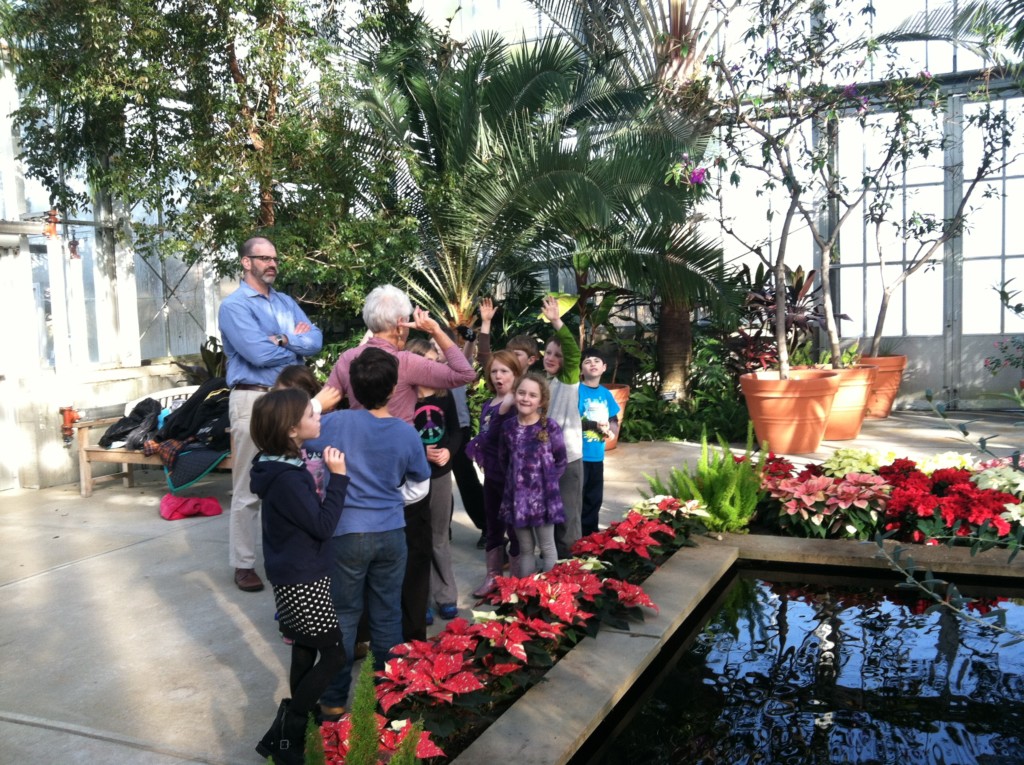
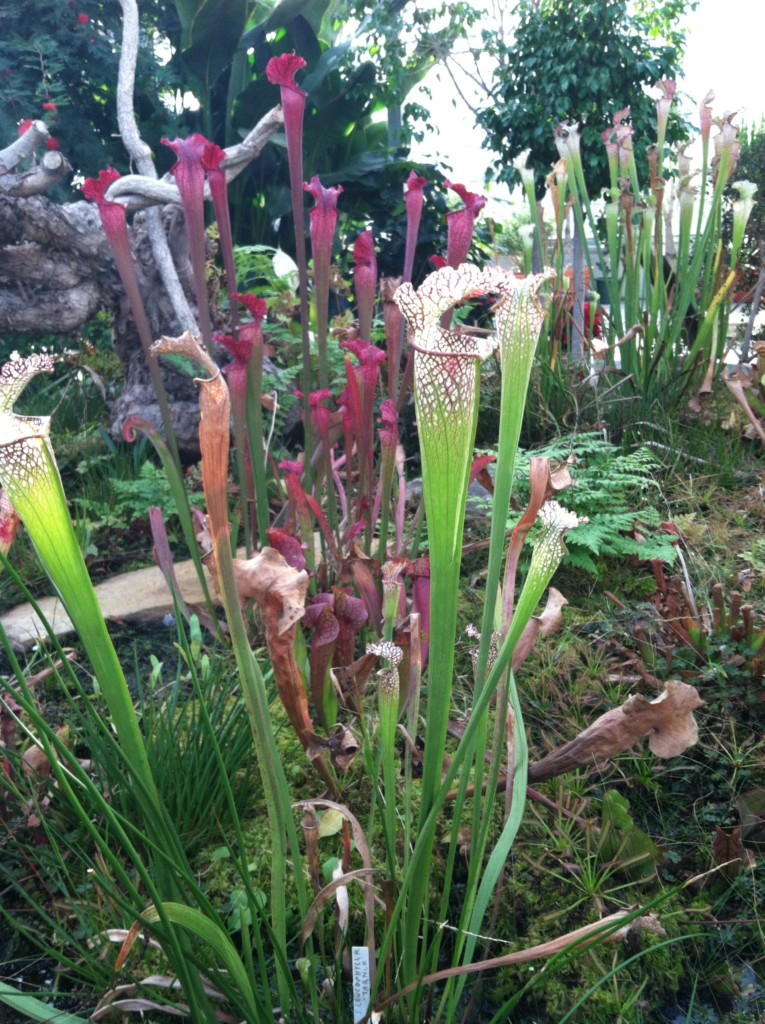
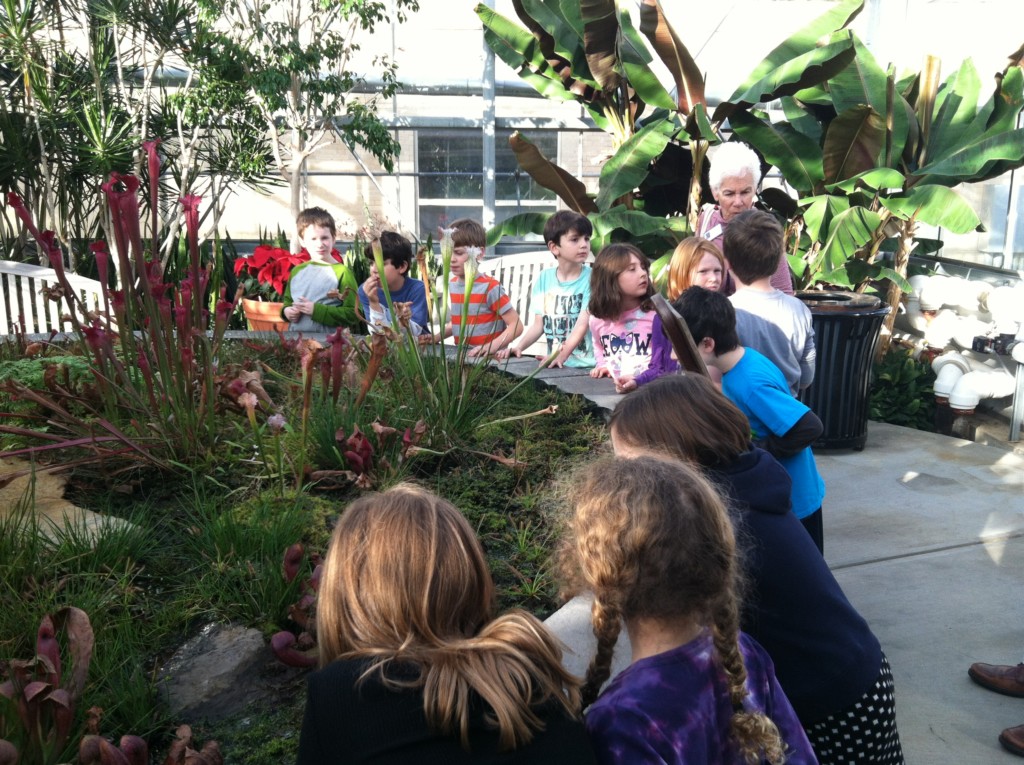
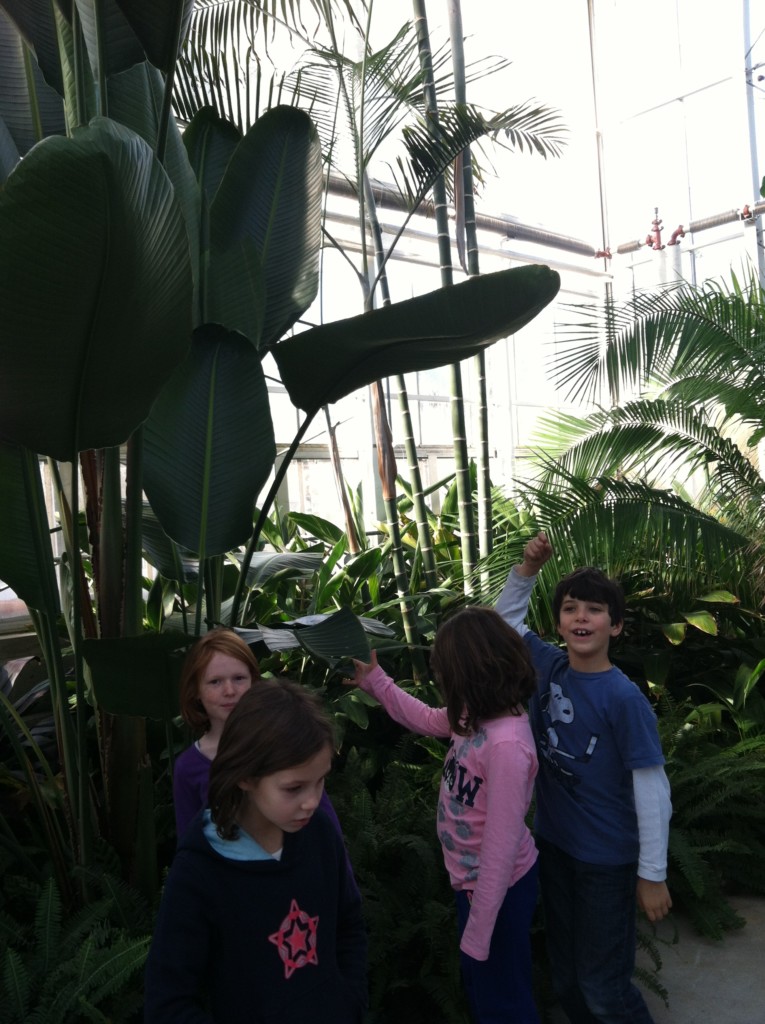
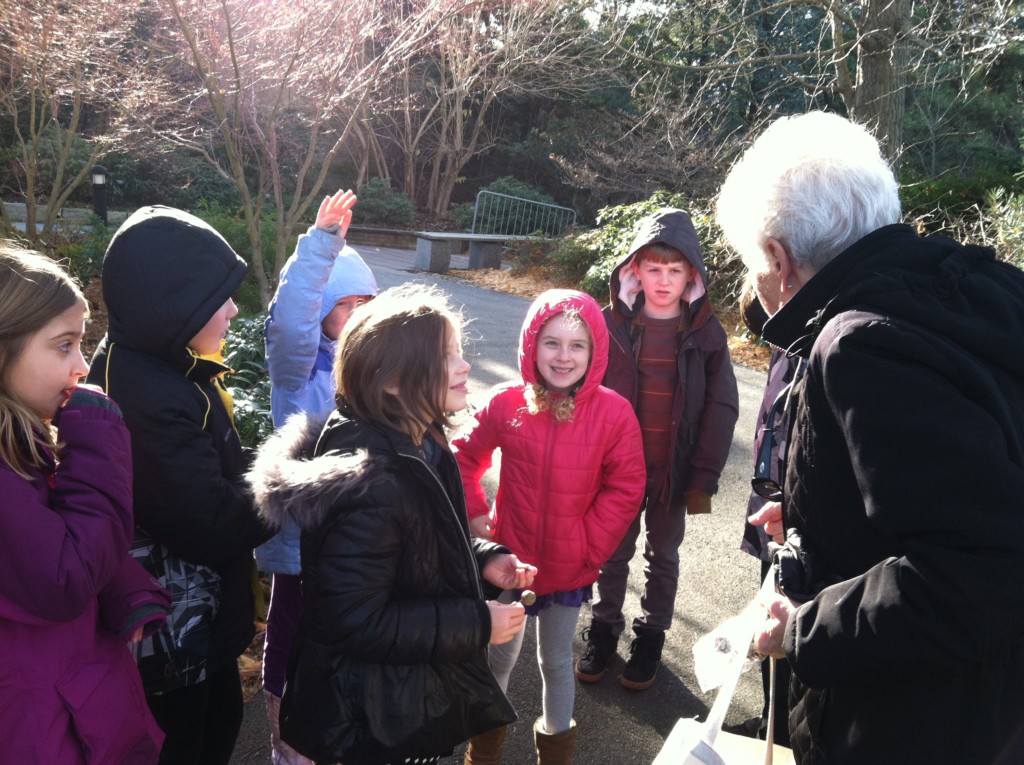
We had a fabulous field trip last week to the Roger Williams Botanical Center!  We had the chance to look at plants from the desert, palm, carniverous, and poinsettia families.  Students were especially excited about the pitcher plants and the venus flytraps.  We learned about a carniverous plant we had never heard of called the sundew.  Soon we will have a new pet plant.  Should we go with the venus flytrap or the pitcher plant?  Also, a special thanks to Dave Rosler for coming along on our trip!

2014-12-04 13.22.17 2014-12-04 14.03.10 2014-12-04 13.47.34 2014-12-04 13.43.32 2014-12-04 13.26.23 2014-12-04 13.15.59

Tomer’s Post about Penn

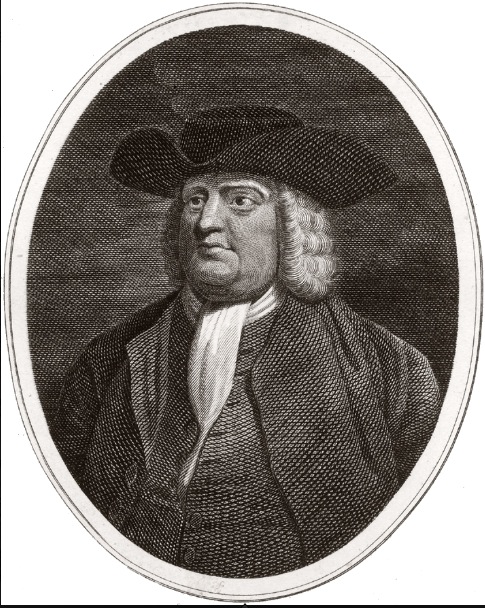
This week has been full of learning. In social studies we have been focusing on the history of the Middle Colonies.  On Wednesday we read a document, an old document, a primary source that William Penn, the founder of Pennsylvania, wrote in 1682. Unfortunately we did not get the real document, only copies, but it was still cool to see what he wrote.  He wrote about how King Charles the Second gave him a piece of land which William Penn decided to call Pennsylvania, meaning ‘Penn’s Woods’.  William wrote:  “I the said William Penn, have declared, granted, and conformed…these liberties, franchises, and properties, to be held enjoyed, and kept by the freemen, planters, and inhabitants of the said province of Pennsylvania forever.”  He meant that this place would be kept free and enjoyed forever.  This was a big thing to say for that time.

To me it was interesting to see how William Penn and Roger Williams were the same.  They were both founders of a state and both had big ideas about freedom.  They also both had ‘William’ in their names.  I think that this is one of the most interesting things that the fifth grade has learned so far in social studies.

William Penn
William Penn

Fifth Graders Visit Touro Synagogue

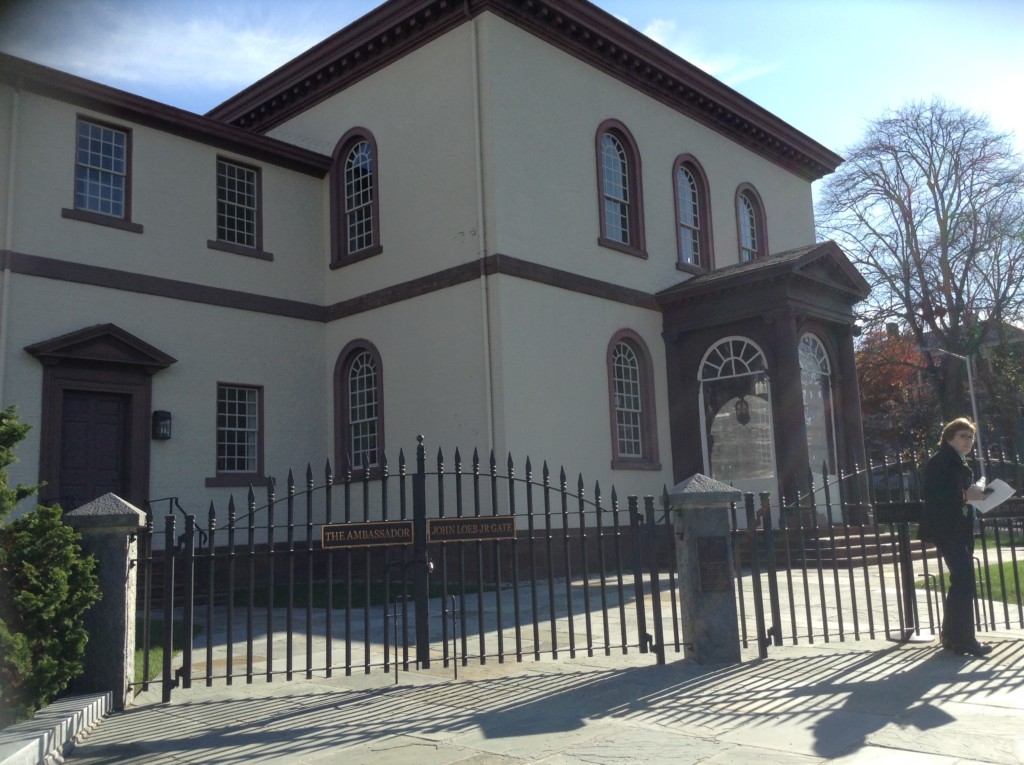
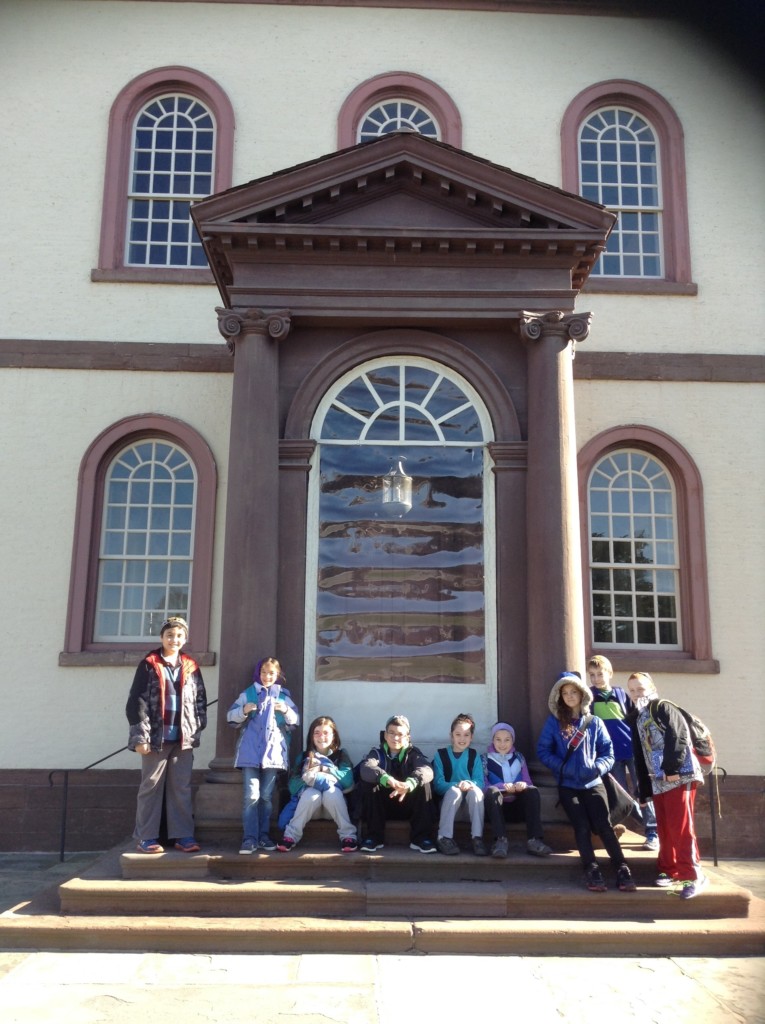
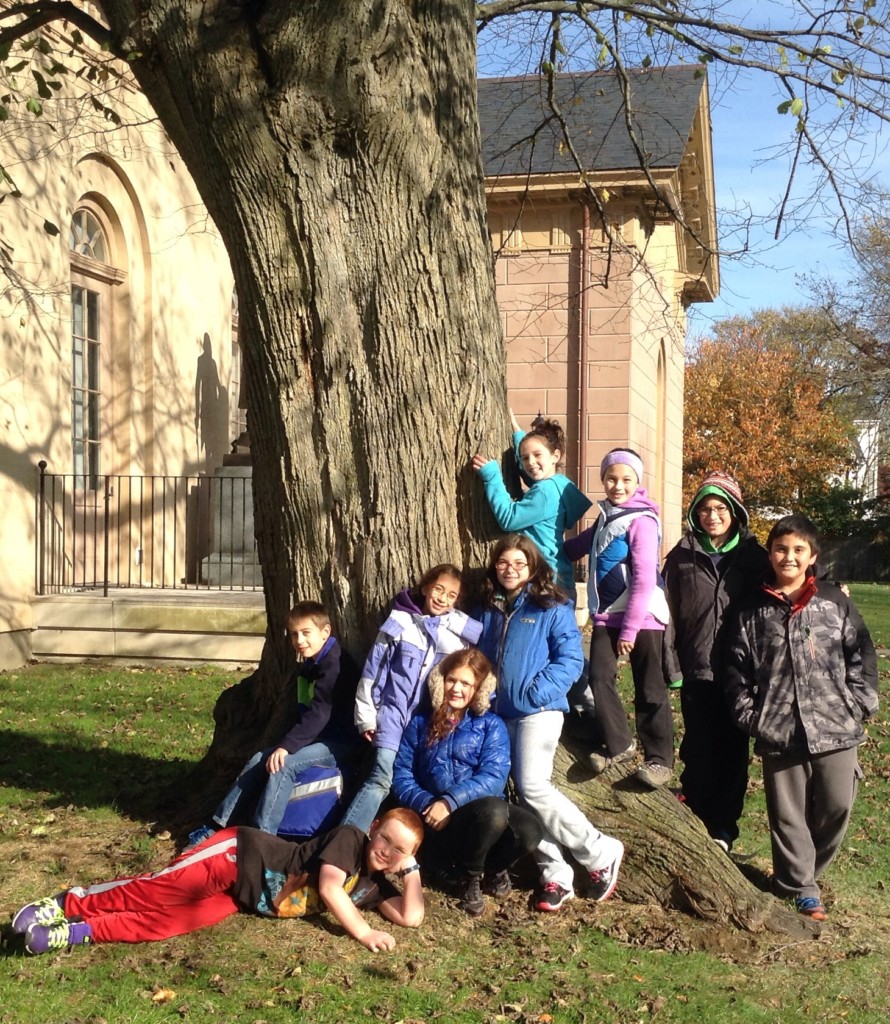
Out of the classroom learning expeditions should enhance and deepen the learning that is taking place in the classroom.  Last month, in connection with our studies of Colonial America, fifth graders visited Touro Synagogue. Because the students have been learning about this time period this semester, this expedition served as a platform for them to synthesize and deepen the ideas they’ve been thinking about and wrestling with.

At first glance, it is clear this synagogue sticks out
At first glance, it is clear this synagogue sticks out.  How so?  Why?


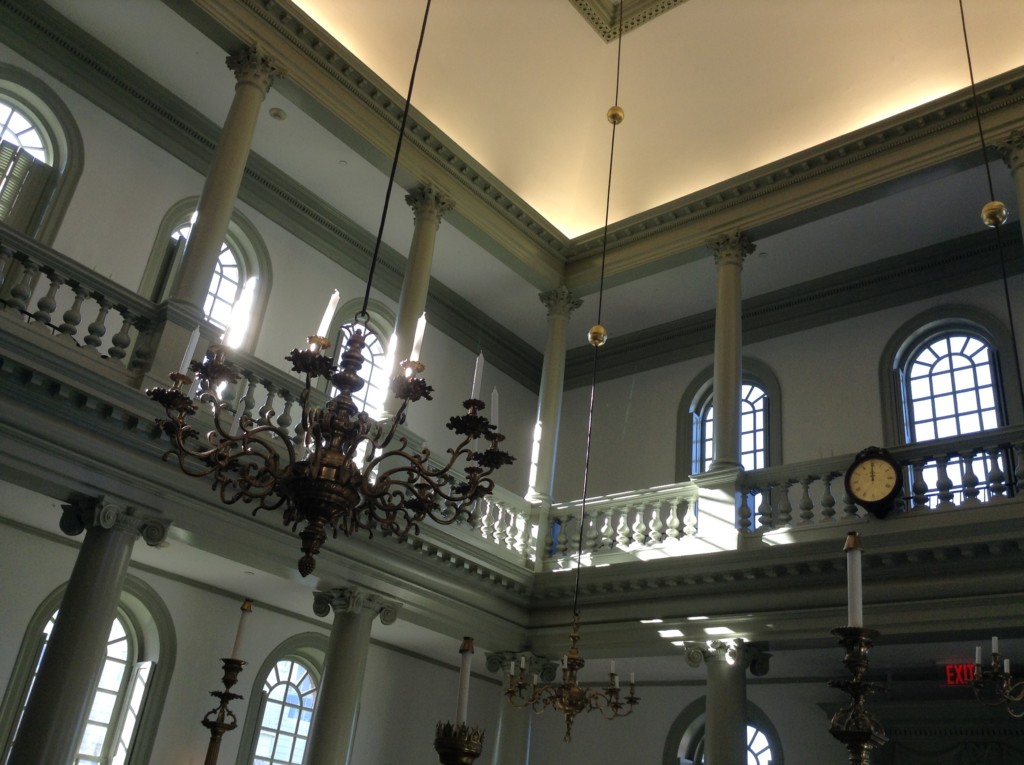
Feeling truly free in Rhode Island, Jews proudly built their synagogue facing east, toward Jerusalem, at an angle with the street its on
Feeling truly free in Rhode Island, Jews proudly built their synagogue facing east, toward Jerusalem, at an angle with the street it’s on, different from any ordinary building.


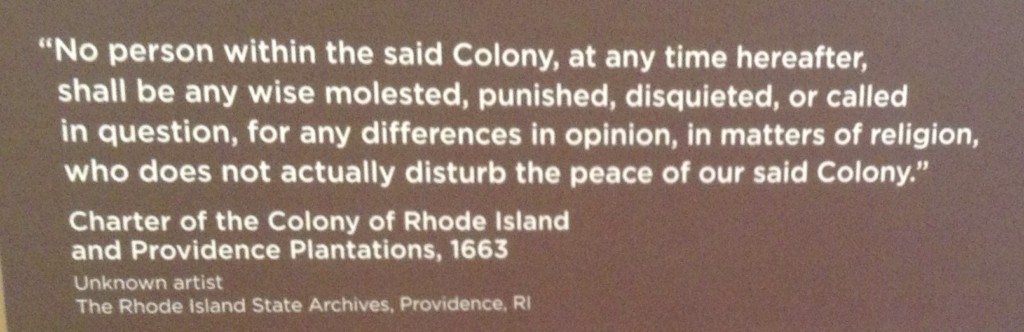
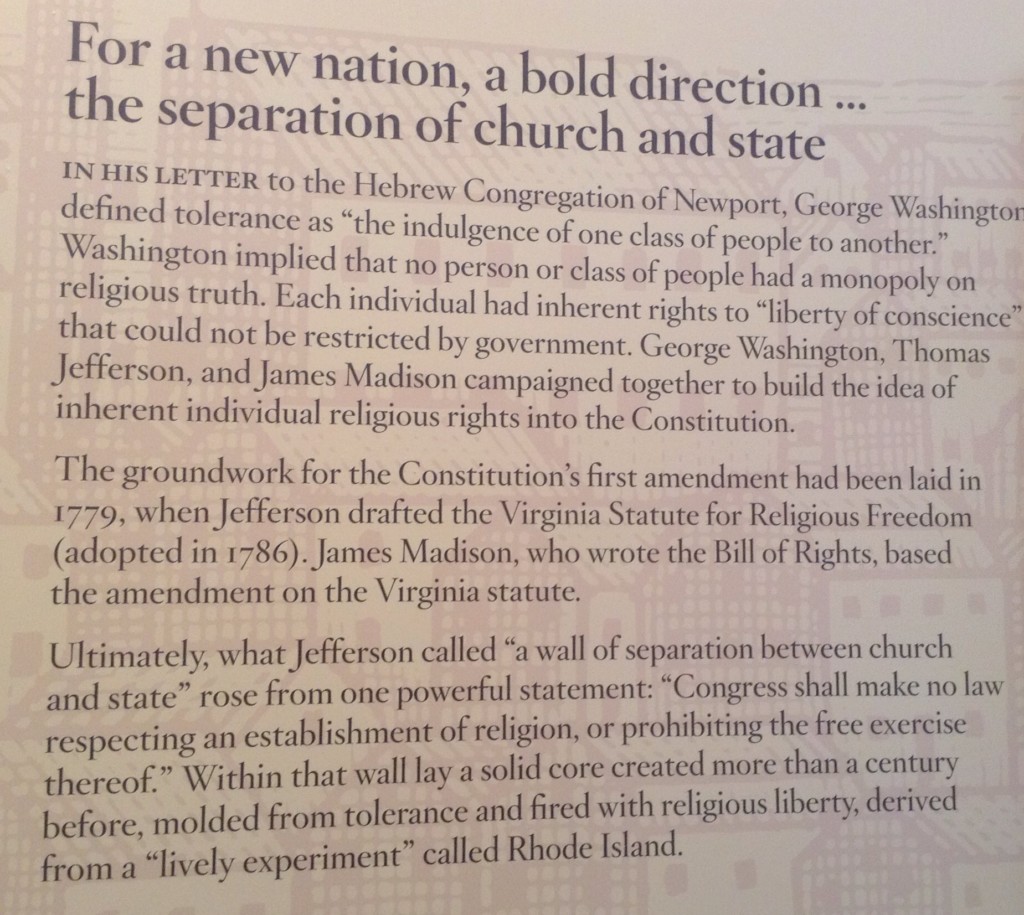
Fifth graders were familiar with the principles on which Roger Williams founded Rhode Island: freedom for all and separation of church and state
Fifth graders were familiar with the principles on which Roger Williams founded Rhode Island: freedom for all and separation of church and state.


Students take pride in the fact that Rhode Island was the first colony to welcome everybody, while realizing the Narragansett Indians were displaced after the colonists arrived
Students take pride in the fact that Rhode Island was the first colony to welcome everybody, while realizing the Narragansett Indians were displaced after the colonists arrived.


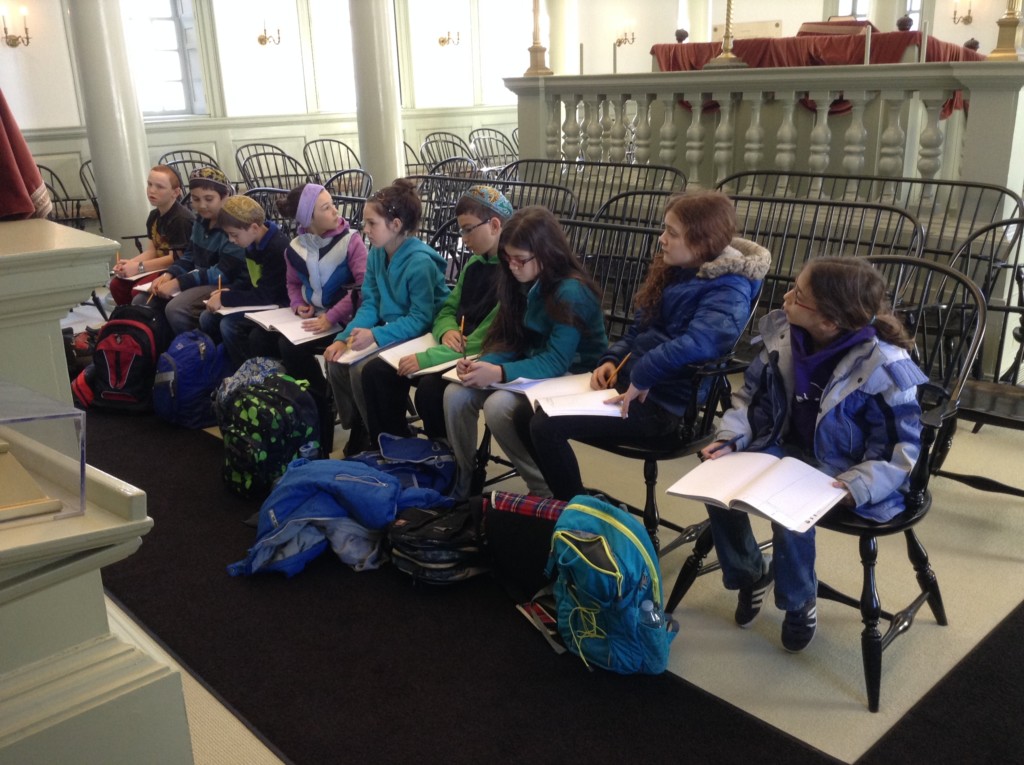
Students took notes about what they found interesting and what they wanted to know more about.  They were amazed at all the connections they could make from Isobel in the novel they'd read to the journey of other Jews escaping from the Inquisition
Students took notes about what they found interesting and what they wanted to know more about. They were amazed at all the connections they could make from Isobel in the novel they’d read to the journey of other Jews escaping from the Inquisition who made it to Rhode Island.


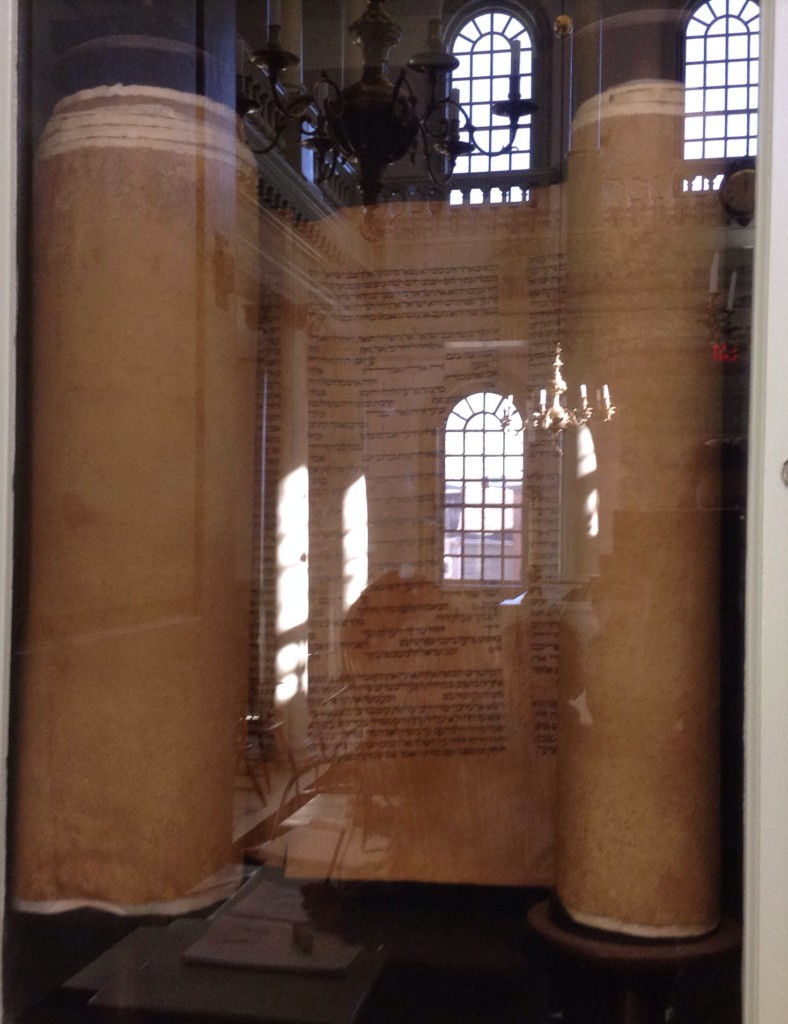
We were awed by the original Torah they used, made from deerskin
We were awed by the original Torah they used, made from deerskin.


We learned about the architecture, the founding members of this historic synagogue, and the pride of Newport over the ideal of religious freedom.  Sadly, Newport played a major role in the slave trade, an ugly reality of our country's history.
We learned about the architecture, the founding members of this historic synagogue, and the pride of Newport over the ideal of religious freedom. Sadly, Newport played a major role in the slave trade, an ugly reality of our country’s history.


Fifth graders were proud of how impressed the tour guide was with all their background information.
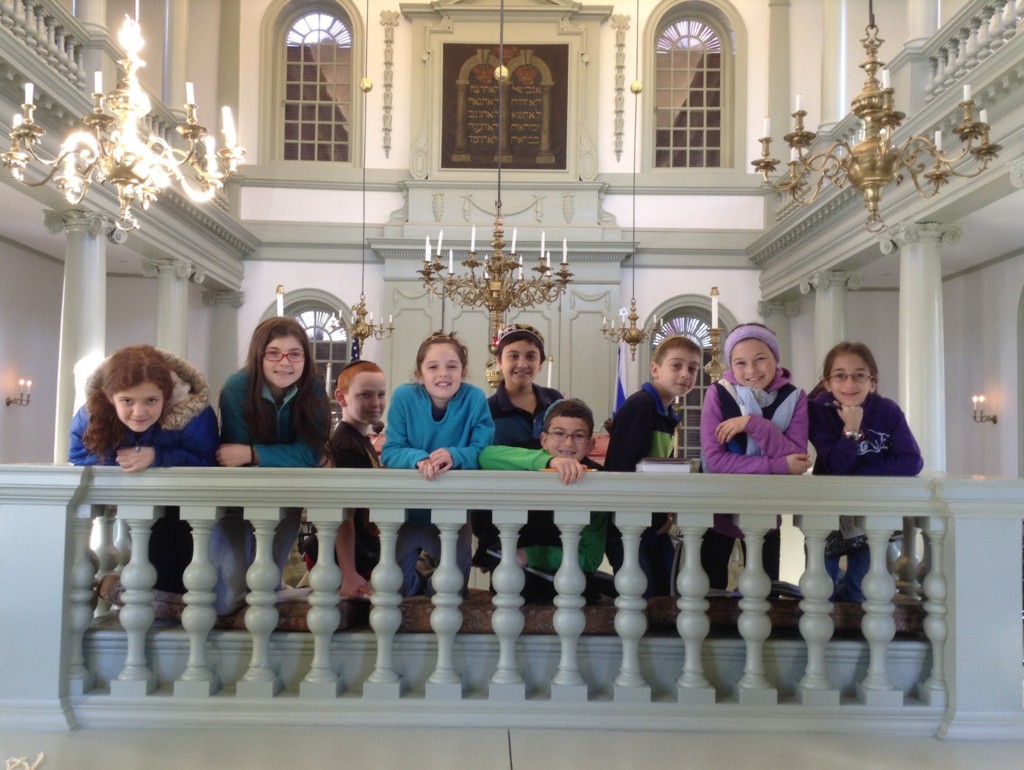
Fifth graders marveled over the perfect symmetry in the architecture.  They were also proud of how impressed the tour guide was with all their background information on this time period.


George Washington once visited this synagogue and wrote a letter to the community promising they would always be free and safe.

photo 5 (4)


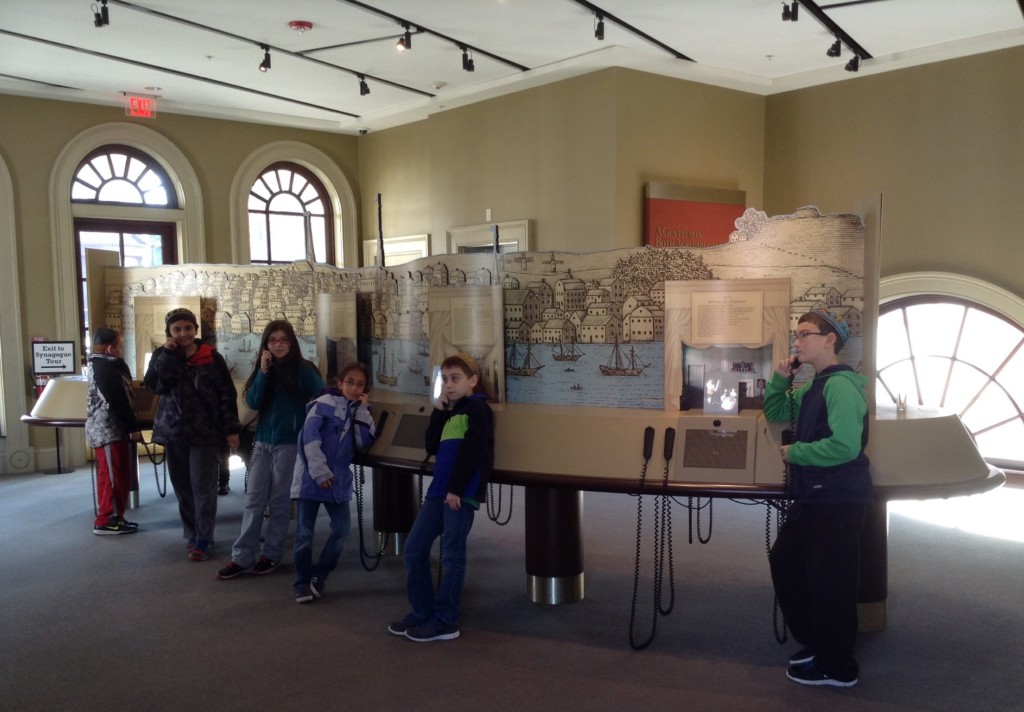
Afterwards, students learned more about this community at the interactive visitor's center,
Afterwards, students learned more about this community at the interactive visitor’s center.


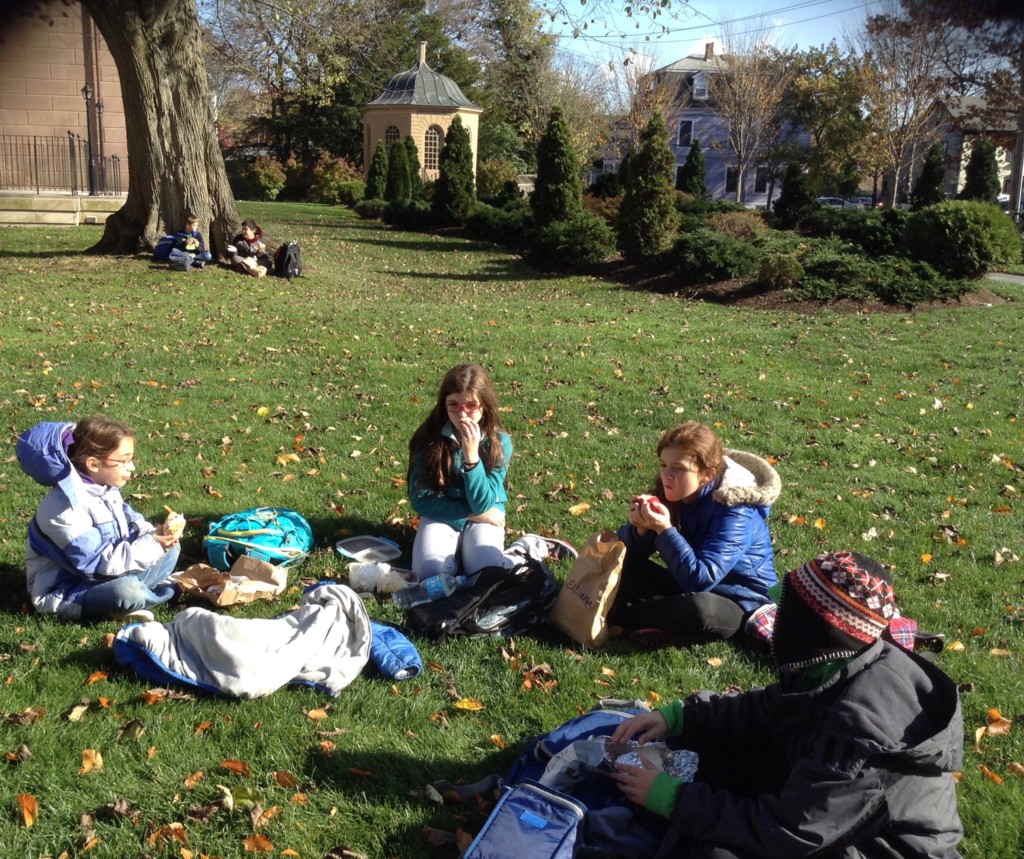
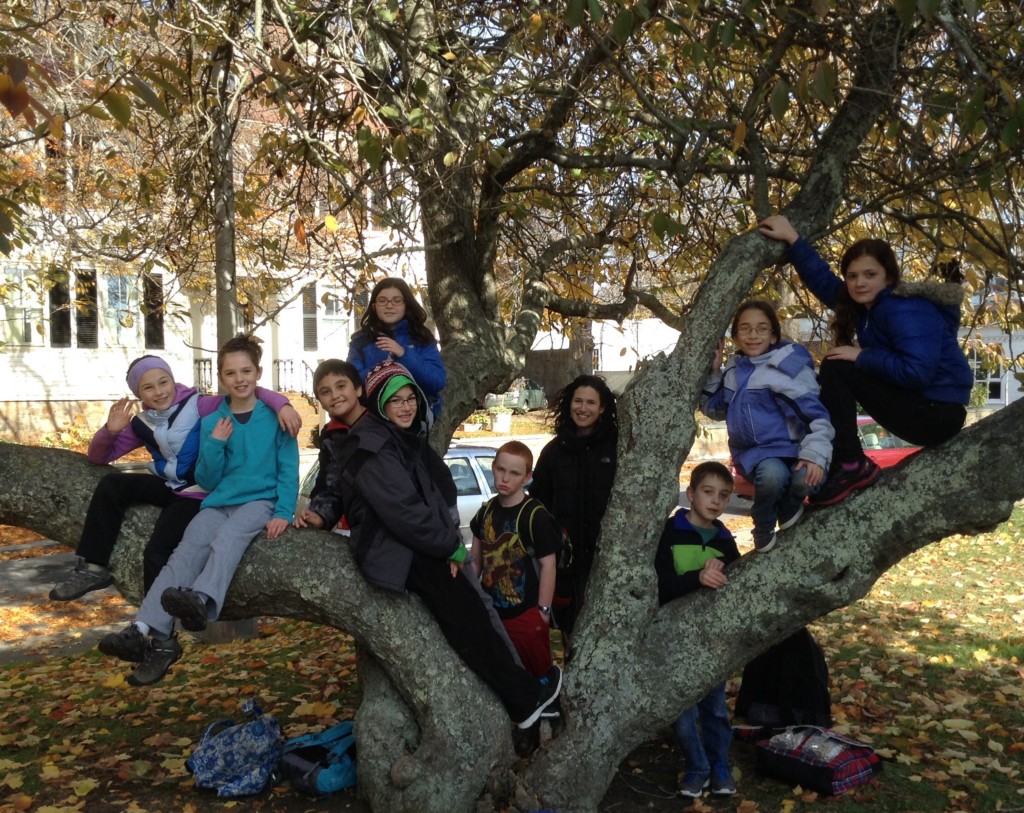
On our walk back from Touro to the bus, we spotted this gorgeous public lawn and knew it would be the perfect place to enjoy our lunches on the crisp fall day.  The Redwood Library and Athenaeum is a private subscription library.  Founded in 1747, it is the oldest community library still occupying its original building in the United States.
On our walk back from Touro to the bus, we spotted this gorgeous public lawn and knew it would be the perfect place to enjoy our lunches on the crisp fall day. The Redwood Library and Athenaeum is a private subscription library. Founded in 1747, it is the oldest community library still occupying its original building in the United States.


This was one of those moments when we all appreciated the freedom we have to enjoy a spontaneous moment.


And since we were missing the official "lunch and recess time" back at school,  it only made sense for some play time to follow the meal!
And since we were missing the official “lunch and recess time” back at school, it only made sense for some play time to follow the meal!  What a beautiful setting to have recess!
 

It was a day of great learning, bonding, and enjoyment.


Bear Snores On!

This past week, we read Bear Snores On, which is a book about animals throwing a party in a bear’s cave while he is attempting to hibernate. The children created their own bear caves out of paper bags.

cave

We practiced identifying our new amazing words in songs and stories, and frequently incorporated these words into our daily conversations!

  • winter
  • woods
  • storm
  • cave
  • sleep
  • blustery

We learned a new song about a bear:

(To the tune of Hush Little Baby)

Hush, little brown bear in the woods,

You’d sleep through the winter if you could.

And if the winter continues to storm,

Stay in your cave all safe and warm.

And if it’s still blustery and cold,

You’ll always have your mama’s hand to hold.

Hush, little brown bear in the woods,

You’d sleep through the winter if you could.

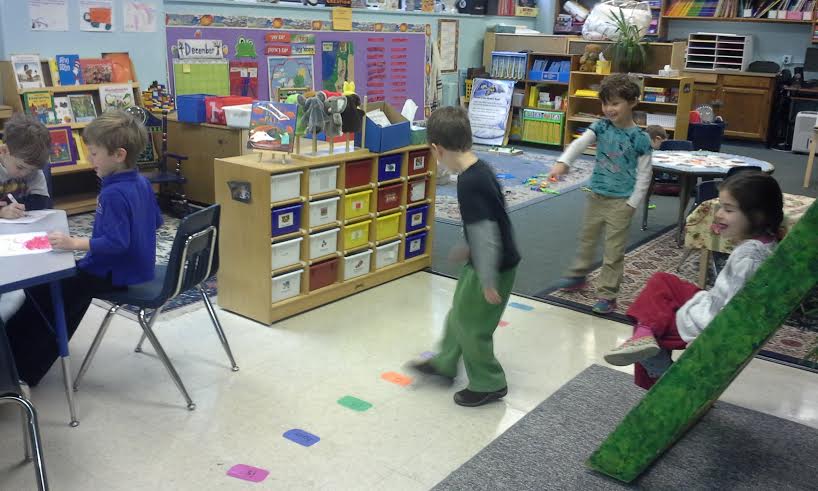
Our word walk is getting longer, and the children have been enthusiastically utilizing it! We’ve jumped from word to word to create sentences, practiced long jumps to see which words we land on, and even used it to refer to the spelling of some words for our journal writing. These are the sight words in our word walk:

  • I
  • am
  • the
  • little
  • a
  • have
  • is
  • we
  • my
  • like

word walk journaling

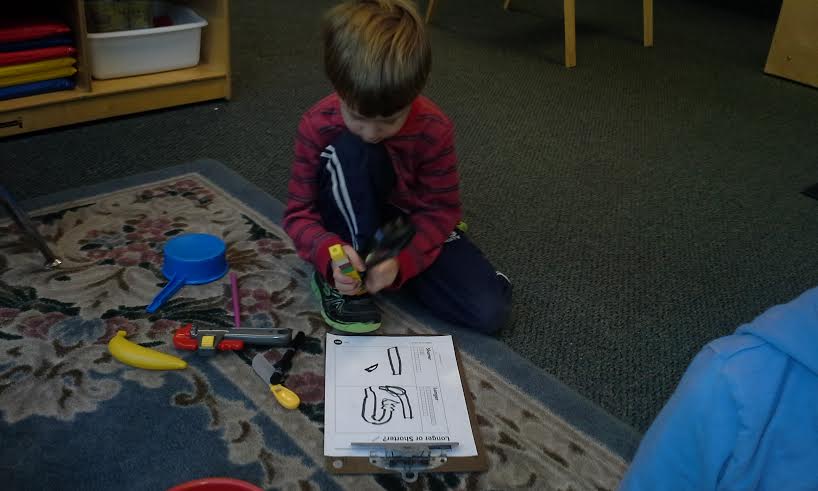
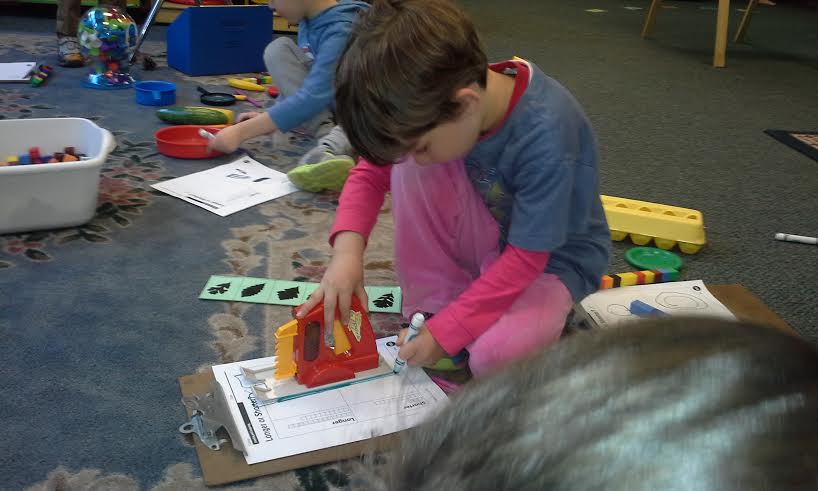
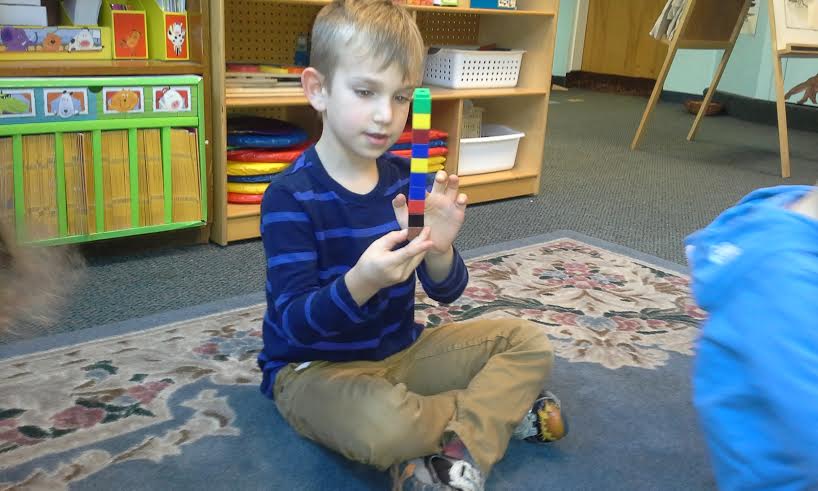
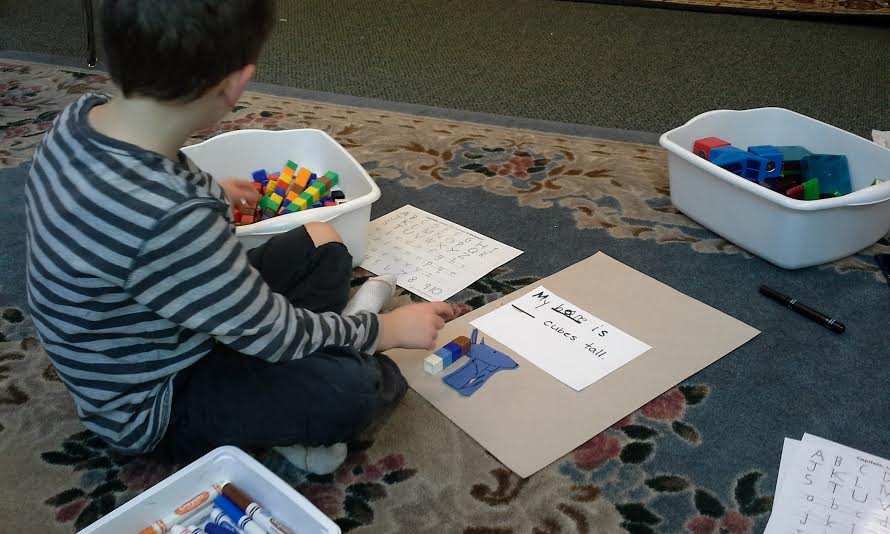
We’ve been learning about measurement in math. Using towers of ten Unifix cubes, we found various objects in our classroom and categorized the items into two groups: those items that were taller than a tower of ten cubes and the items that were shorter than a tower of ten cubes.

measuring measuring 2

measuring 3 measuring 4

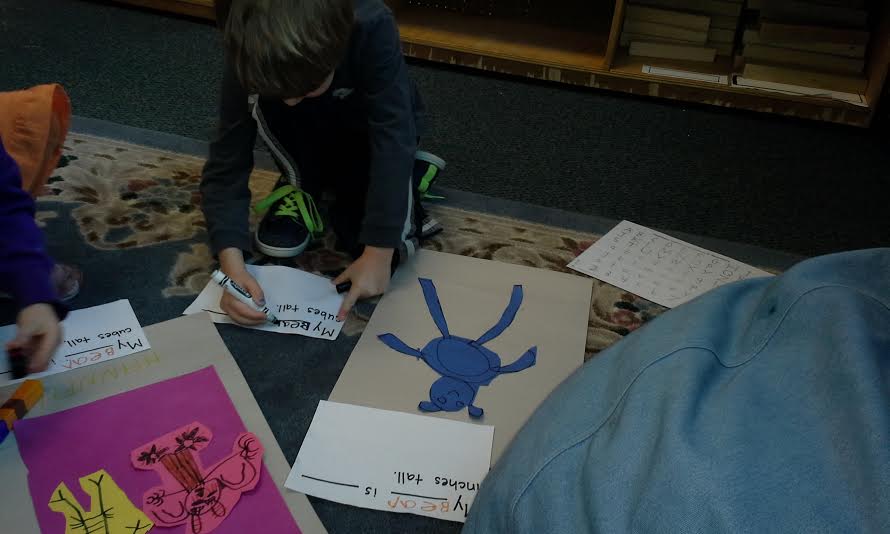
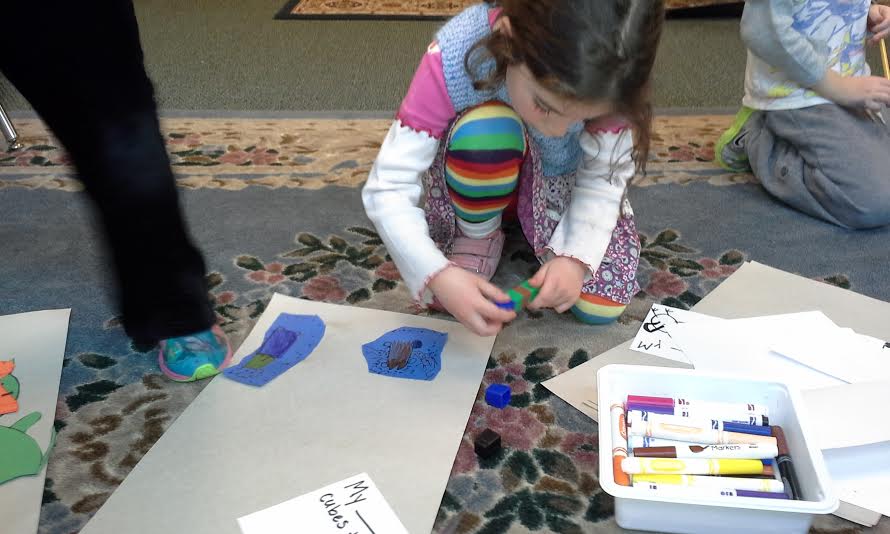
The children also created animal characters from Bear Snores On, including the bear, hare, raven, mole, and mouse. Afterwards, they measured the animals and determined that the bear was the tallest animal (16 cubes) and the mouse was the shortest (2 cubes).

cubes cubes 1 cubes 2 cubes 3

In Hebrew, we learned about the letters dalet and gimmel. We read Hadag Kaspion, and learned that the word delet (door) begins with a dalet. Each child created their own delet and illustrated the location behind it, including a bedroom, toy room, ark, etc. The children also made a degel (flag) from the shape of the letter dalet.

For the letter gimmel, we discovered that when you put two gimmels together, you can make a gamal (camal). We read about Eliezer and the Gezer (carrot) and spread g’veena (cheese) on crackers. We wrote the letter gimmel with gezer (a carrot) on the g’veena (cheese).

When we were talking about Parashat Noah, we talked about the importance of keeping a promise. The children decided that “When you don’t keep your promises, it will be hard to trust you again.”

A majority of Parashat Noah was told in Hebrew! The children followed along and identified many words such as arie (lion), kof (monkey), keshet (rainbow), yam (sea) and many more!

This week we had our first Brown/RISD STEAM (Science, Technology, Engineering, Arts and Math) session! Using pieces of cardboard and string, the children were instructed to weave the string around the cardboard in order to reach a given number by counting by groups of two, three, etc. The children discovered that they could reach the number six by weaving the string around and counting by twos; however, they were unable to reach the number five when only counting by twos. We are excited to welcome our guests back to our classroom this week to continue the lesson!

weaving 2 weaving

From Rotem’s Lashon Class

We are busy reading, talking, playing and learning in Hebrew.

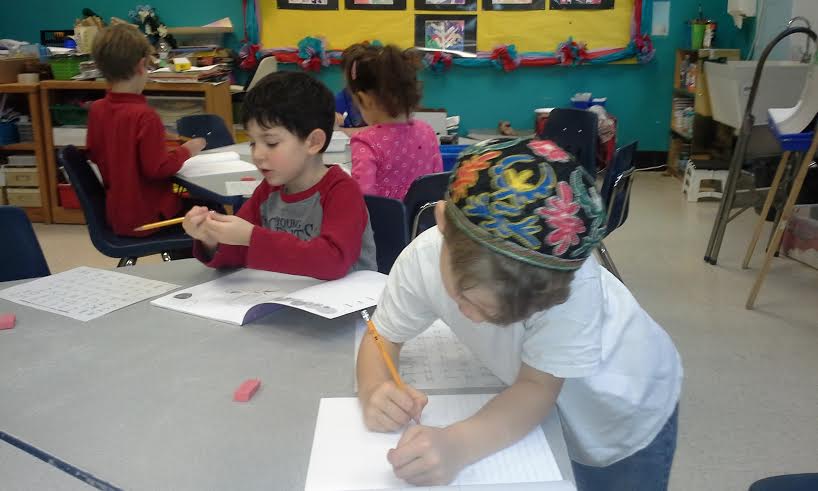
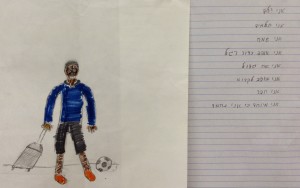
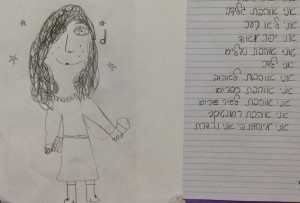
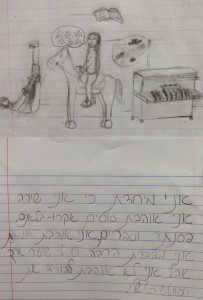
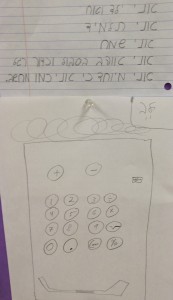
Art and Lashon project: There are two goals for the project. linguistically (ways to describe oneself) and artistically (ways to draw oneself based on an Israeli artist Hanoch Pivan. In Lashon we are learning poems written by the Israeli author Yehuda Atlas. You can hear one of the poems in the link הילד הזה הוא אני . The students wrote about ‘אני’ (me) and draw themselves.

    IMG_1024IMG_1022IMG_1021IMG_1023

The group EinShem: We finished our reading from the story Boy’s Prayer. We have started our new workbook חברים בעברית Chaverim B’Ivrit. The group of verbs we are studying are in binyan pi’el (מדבר – talk, מספר – tell, משחק – play)

The group Hafalafelim: We continued with the topic “direct object” in Hebrew and learned how the personal singular pronouns can function as the object of the verb. We need a lot of practice. We also learned the infinitive form of verbs in binyan pa’al (כותב – לכתוב) and practice the use of them in sentences.

Native Hebrew speakers: We continued our work on the structure of the Hebrew sentences. In the book ‘מילה טובה’ the students practiced comprehensive reading.

Lehitraot

Rotem


Weekly Update

First Stop: Video News

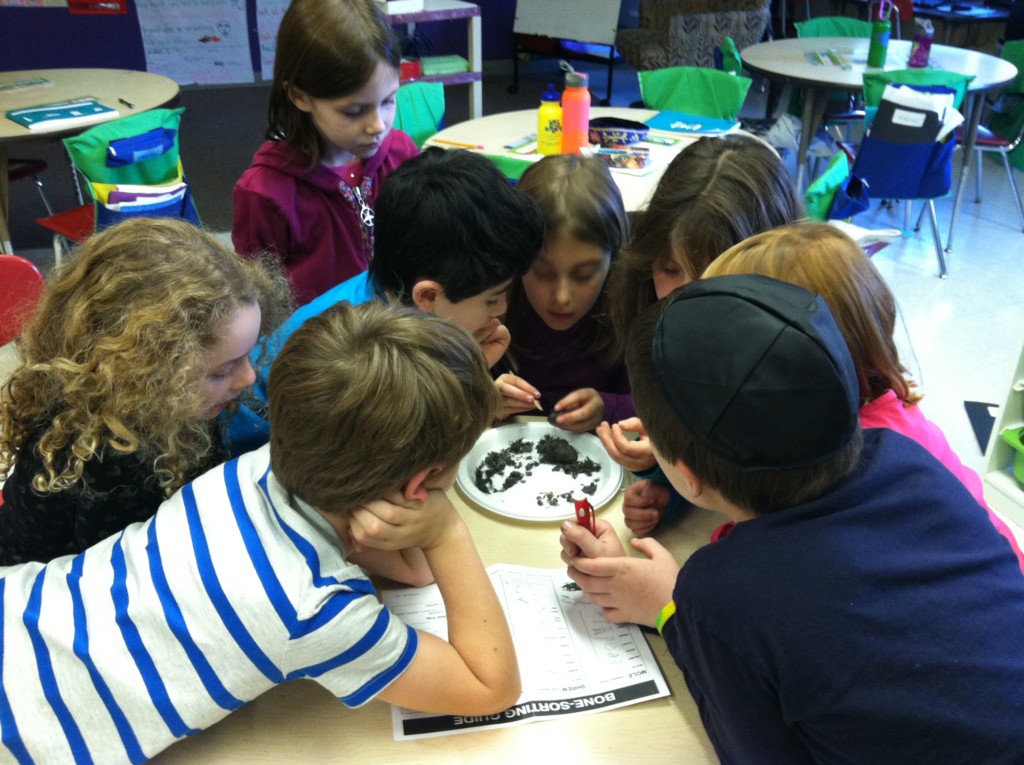
We had a wonderful week in second grade.  One student brought in an owl pellet for us to dissect together as a class.  We learned that owls eat moles, mice, shrews and small birds.  We discovered skulls, skin, teeth, and other interesting bones inside of the owl pellet.

 2014-11-19 12.56.39

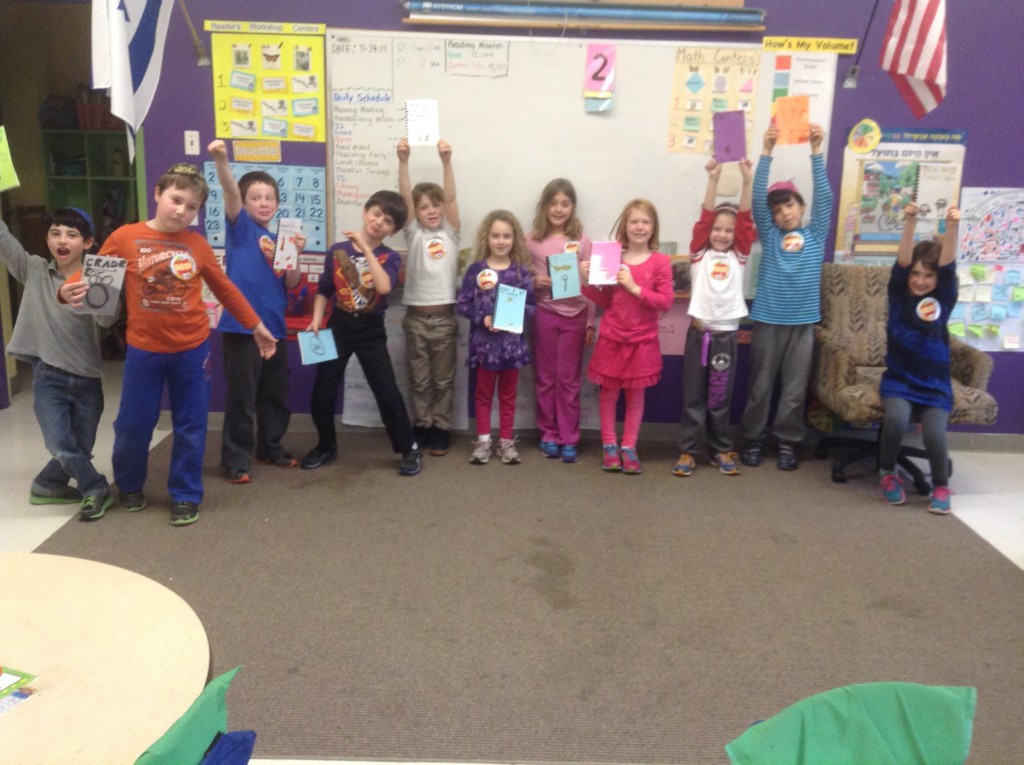
We also celebrated a wonderful milestone of completing our first published books.  Students celebrated by reading their books to their buddies and having a publishing party!

2014-11-25 11.07.23 2014-11-25 11.07.30 2014-11-25 11.07.32 2014-11-25 11.07.33 2014-11-25 11.07.34 2014-11-25 11.07.38 2014-11-25 11.07.40

We also learned and talked a lot about Thanksgiving.  We read books about the story of Thanksgiving, we talked about what we are thankful for, and we learned that gratitude is an attitude!  I hope they show their gratitude to their awesome families, because they sure feel it.

I hope you all have a terrific Thanksgiving, filled with family, friends, and delicious food!