A Love of Reading at JCDSRI
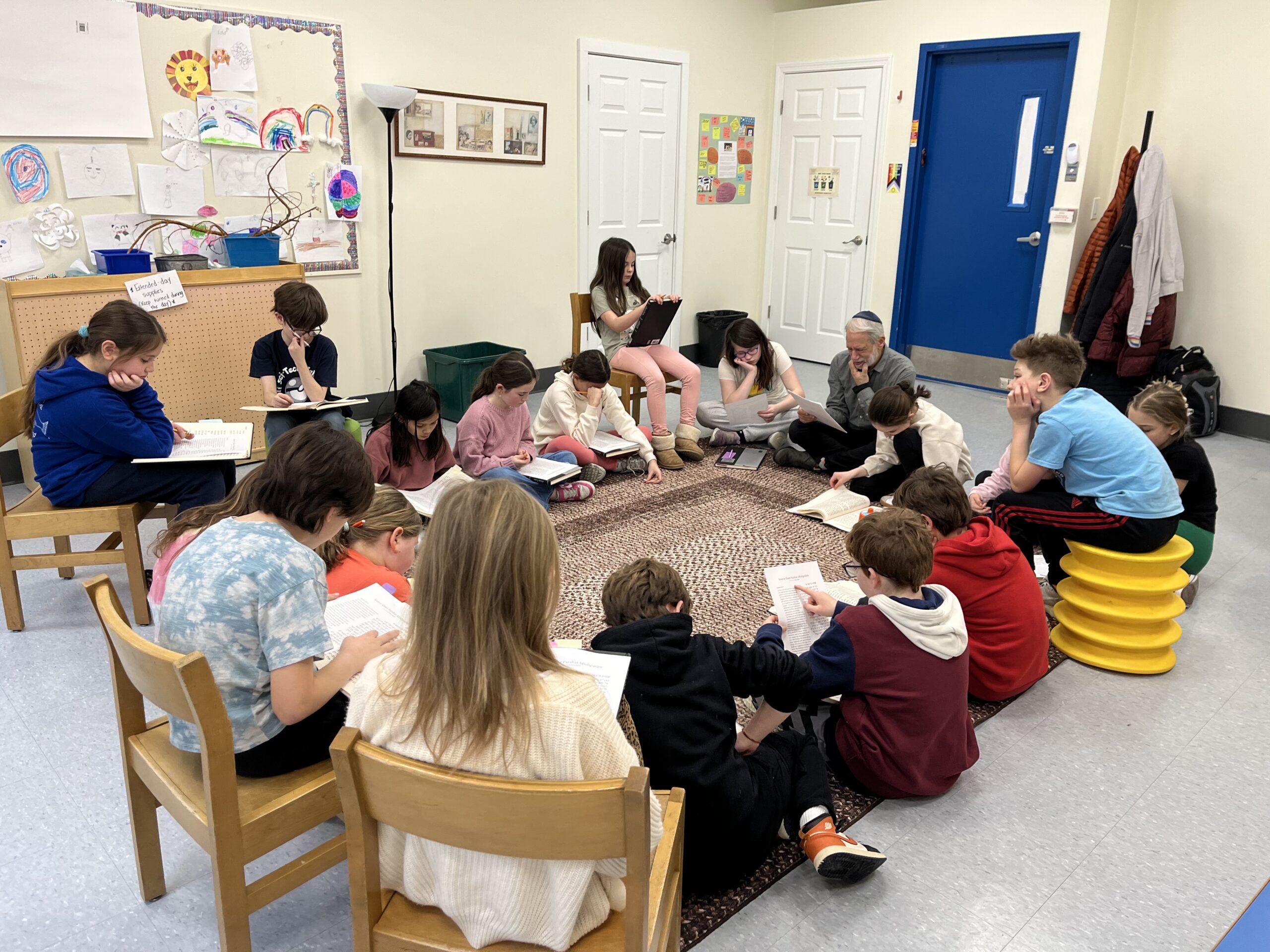
At JCDSRI, reading is so much more than a subject. It is a doorway into curiosity, identity, connection, and joy. From our youngest learners in Nitzanim through fifth grade, we work to nurture not only strong readers, but children who truly love reading and see themselves as readers.
Our approach to literacy is grounded in meeting each child where they are. Through our commitment to UDL, we recognize that there is no single path to becoming a reader. Children develop at different rates, and the brain processes reading in complex and individualized ways. Some students take off early, while others need more time and support to build those foundational skills. Both are completely developmentally appropriate. What matters most is that each child is supported, challenged, and encouraged along their own journey.
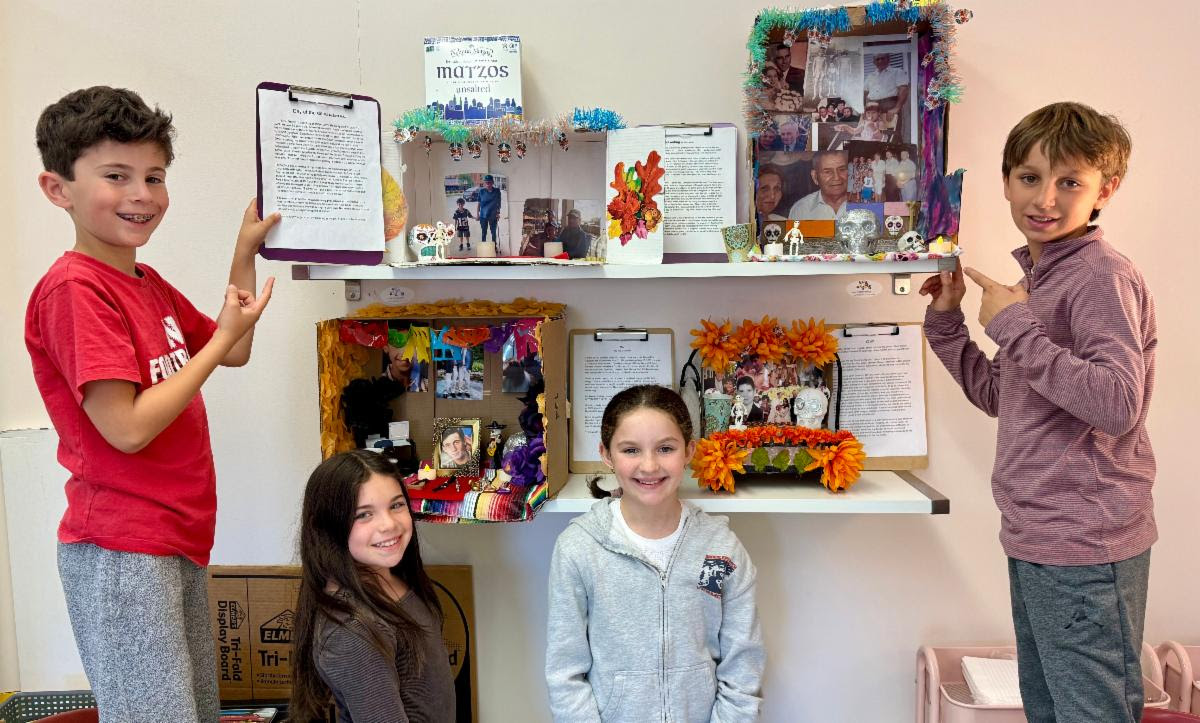
You will see this come to life in our classrooms every day. In our early childhood spaces, inspired by a Reggio approach, literacy begins with storytelling, language play, and a deep engagement with the world around us. As students grow, we build on those foundations through structured, research-based practices like Fountas and Pinnell, while continuing to prioritize voice, choice, and creativity. Reading is never isolated. It is woven into science, social studies, Yahadut (Jewish Studies), and the arts, allowing students to experience literacy as something alive and meaningful.
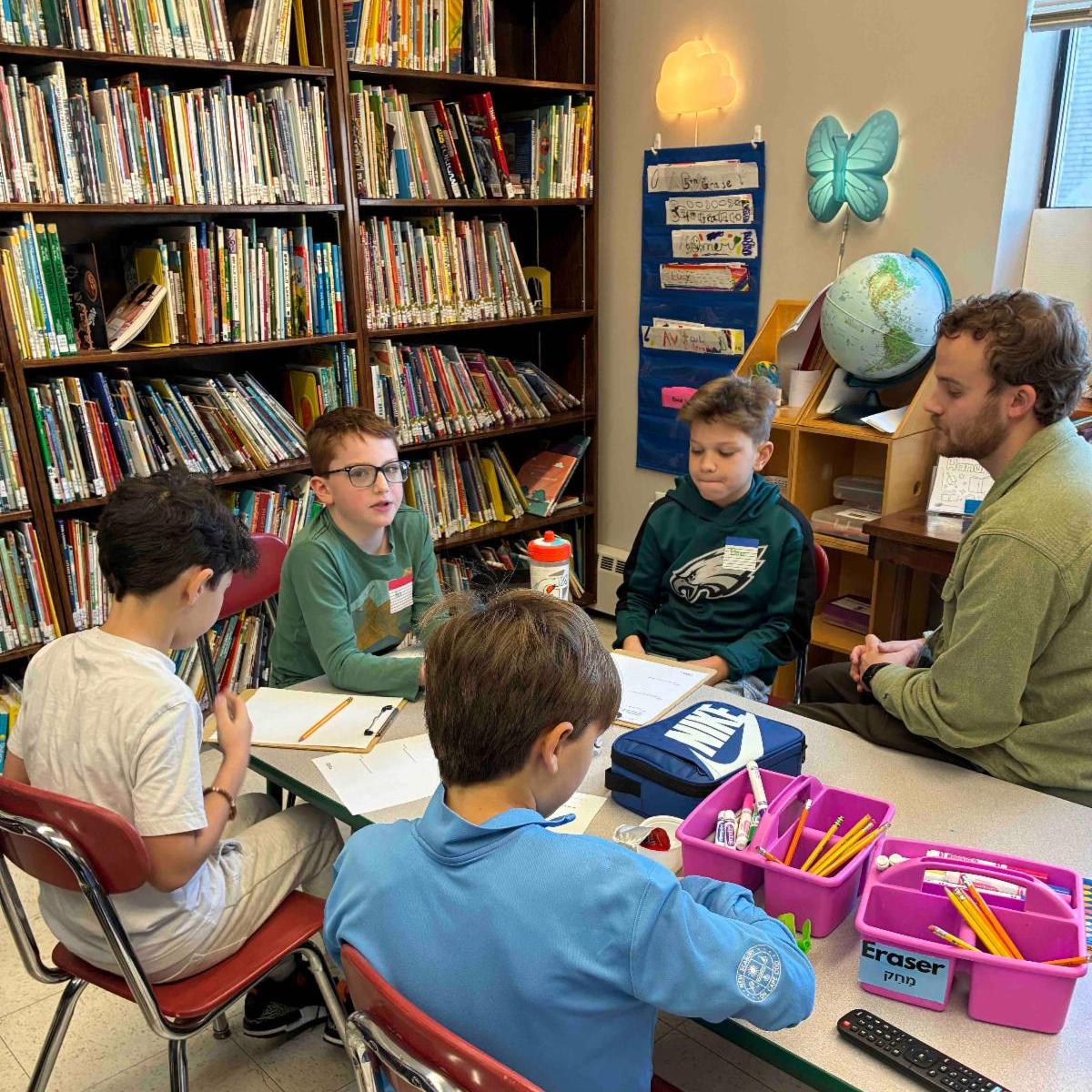
A powerful example of this came in our fifth grade this year when students read Because of Mr. Terupt by Rob Buyea. The book was intentionally selected to support both science and social-emotional learning, offering meaningful opportunities for students to engage with complex themes and social stories that resonated with them. The level of engagement was incredible. Students connected deeply with the characters and the plot, sparking thoughtful discussions, reflection, and connection. Having the opportunity to welcome Rob Buyea to speak with our students about his writing process made the experience even more impactful. Hearing directly from the author about how he developed the story inspired our students not only as readers, but as writers.
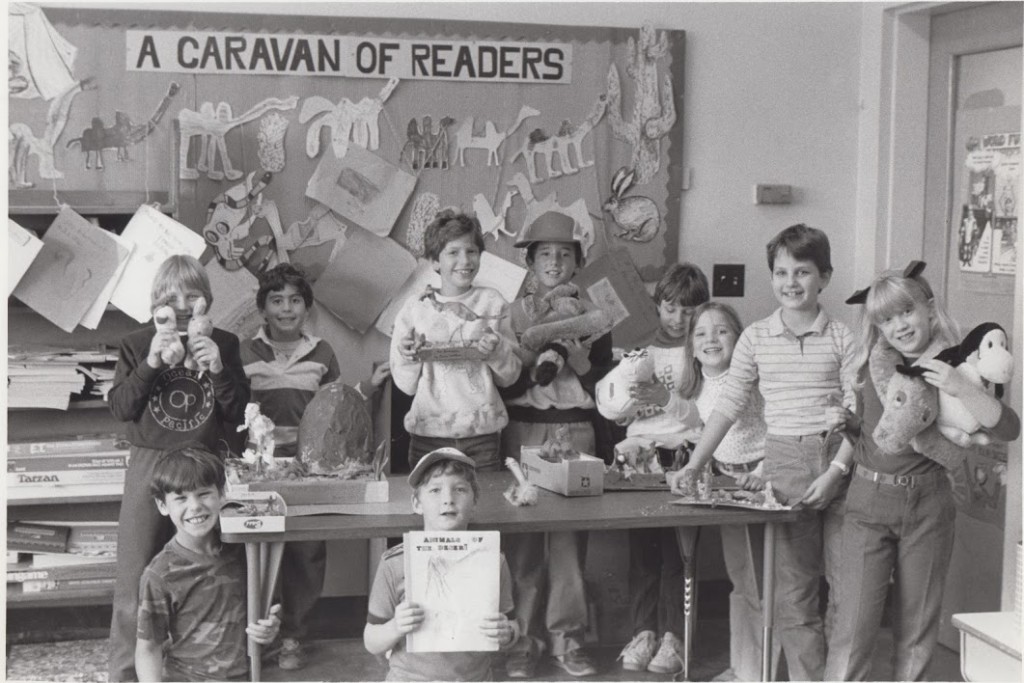
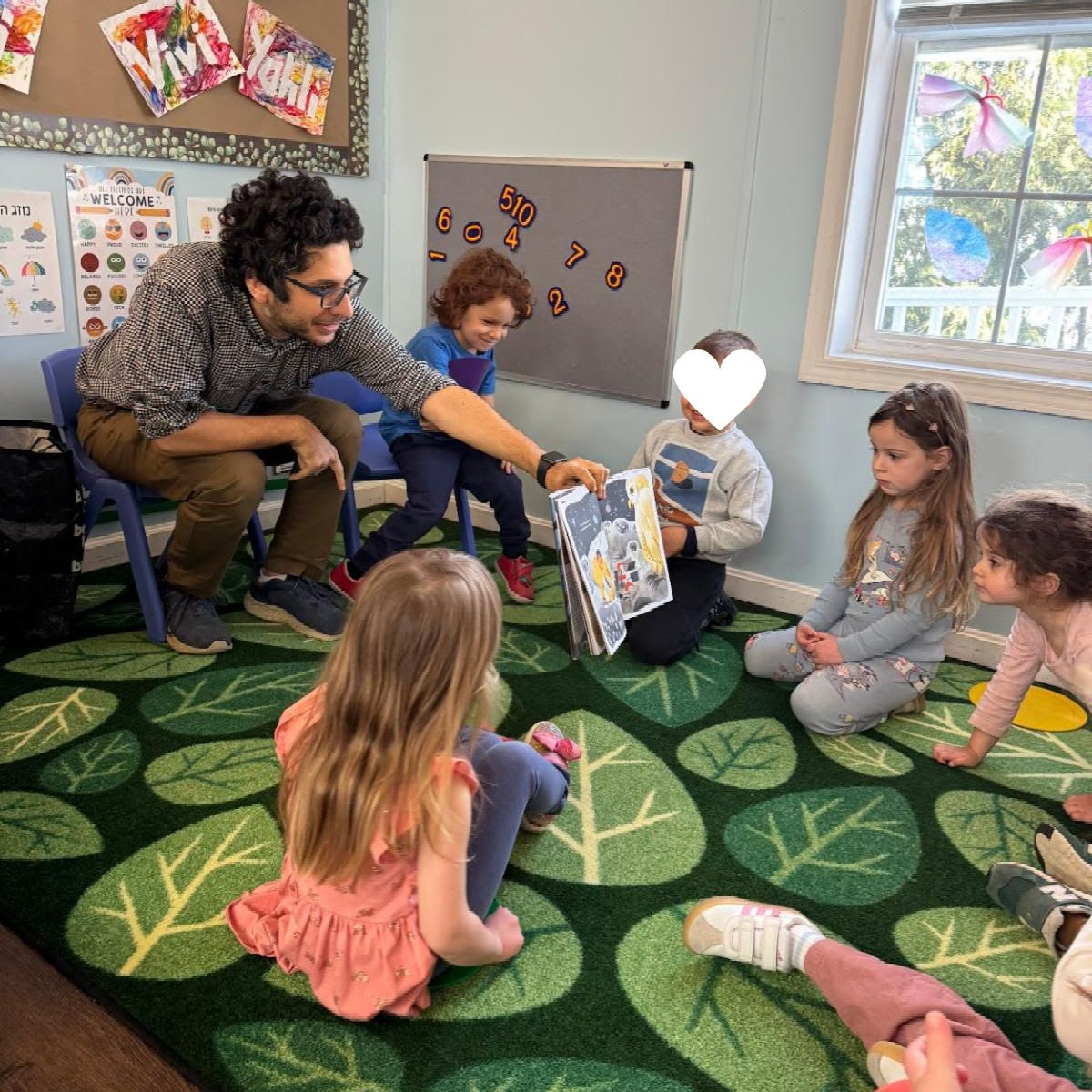
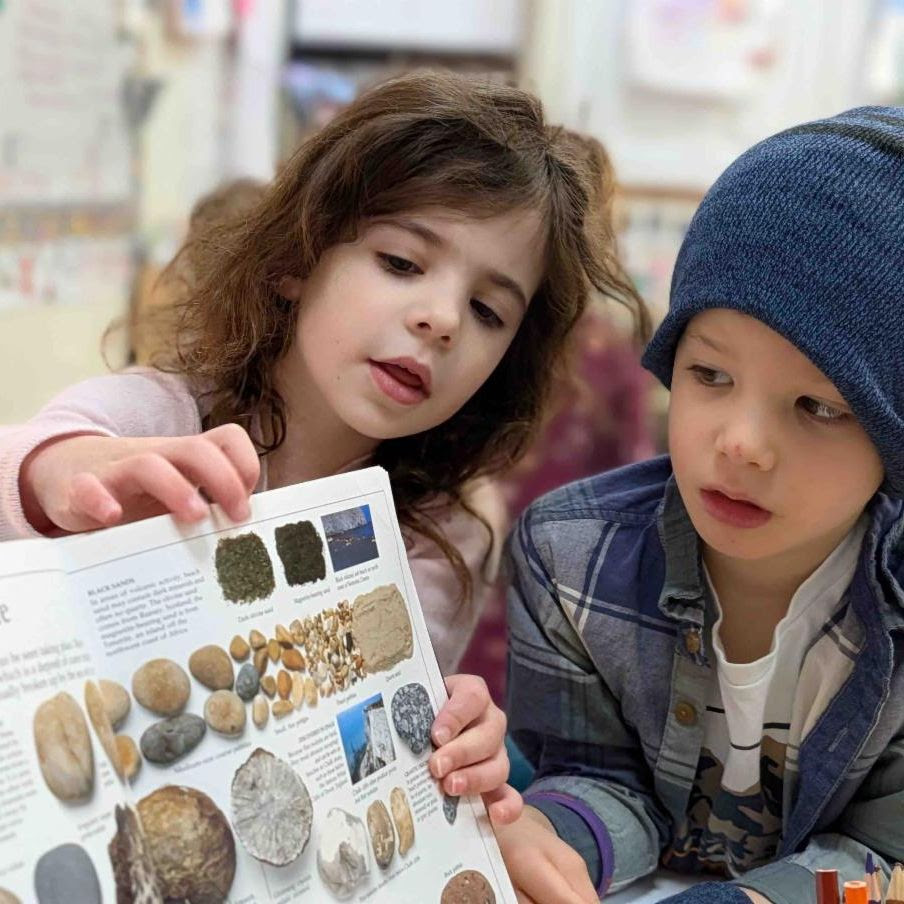
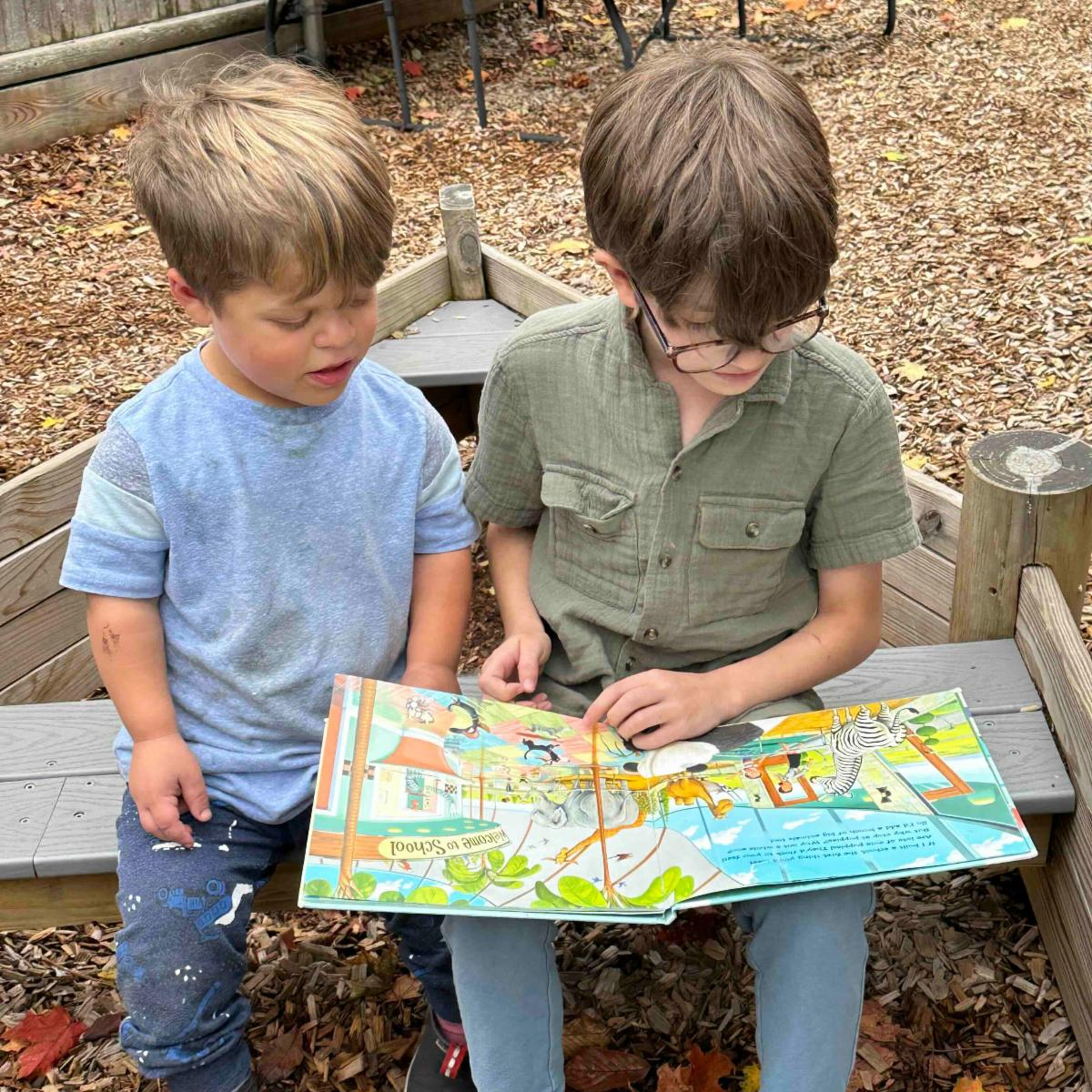
We also intentionally create opportunities for students to learn from one another through practices like reading buddies. Older and younger students come together to share books, listen, and model reading behaviors. These partnerships build confidence, fluency, and joy for both groups. Younger students see what reading can look like, while older students develop leadership skills, empathy, and pride in supporting their peers. It is a beautiful reflection of our community and our values in action.
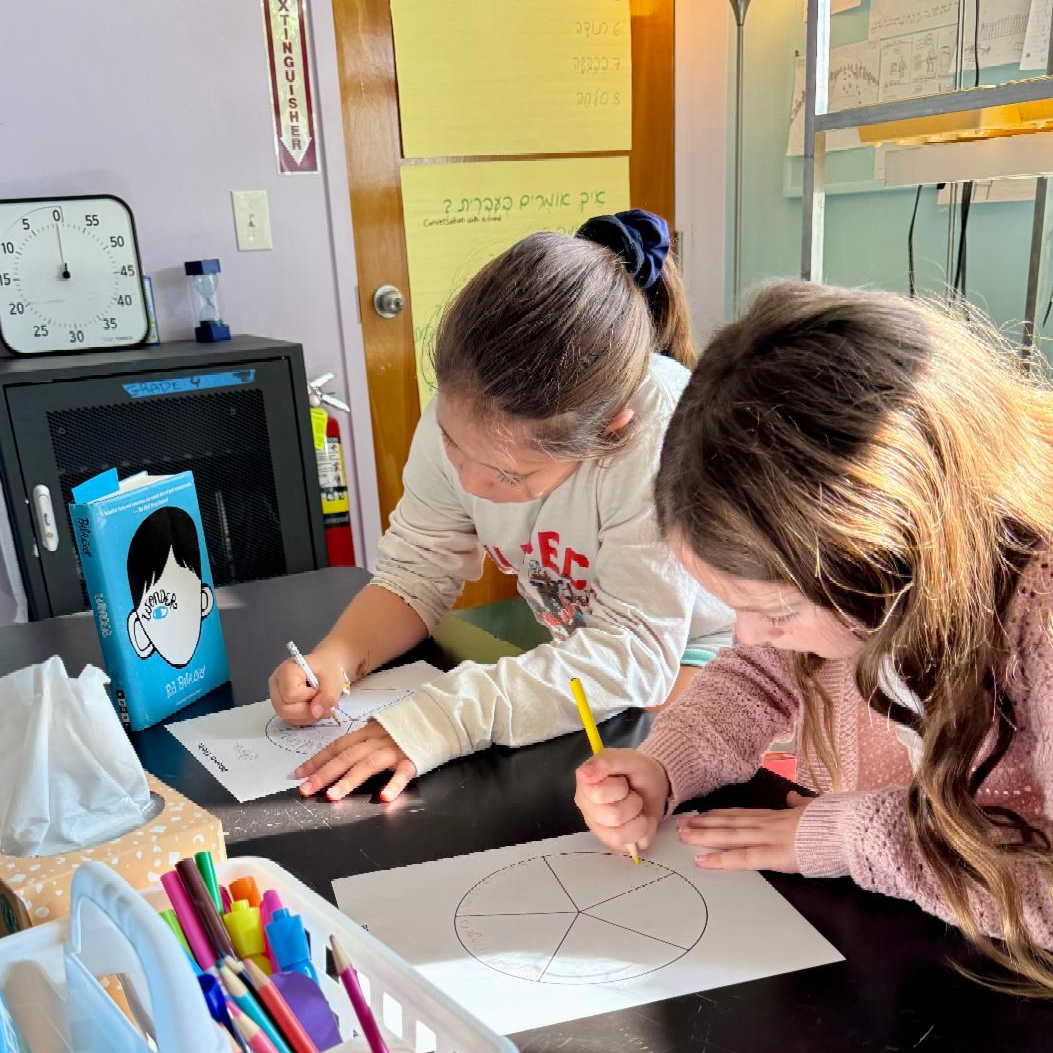
Our work in writing is deeply connected to our reading program as well. Through the 6 + 1 Traits framework, students learn to express their ideas with clarity, voice, and purpose. They see the relationship between reading and writing, understanding that strong readers become strong writers, and that both are ways of making sense of the world.
Just as important as how we teach reading is how we celebrate it. Classrooms are filled with books that reflect diverse voices and experiences, including Hebrew texts and stories that connect students to language, culture, and tradition. Students engage with books in both English and Hebrew, building not only literacy skills but also a deeper sense of identity and belonging. Throughout the year, reading is connected to our Jewish holidays, with stories and texts that bring learning to life. Whether exploring themes of courage and identity through Purim stories, reflecting on freedom and storytelling during Passover, or engaging with texts around kindness and community during the High Holidays, literacy becomes a meaningful way to connect to our values. Teachers model a love of reading, share stories aloud, and create spaces where students are excited to talk about books and recommend them to one another. Reading Week, guest readers, and school-wide celebrations reinforce that reading is joyful, communal, and deeply valued.
As a progress-based school, we think carefully about how we assess reading. We use a combination of observation, conferencing, and benchmarking tools to understand each child’s growth over time. This allows us to tailor instruction and ensure that students are making meaningful progress while also maintaining a high level of academic rigor. Our goal is not only proficiency, but also confidence, independence, and a lifelong love of learning. In addition, we understand and assess progress through a narrative-based approach that captures the full picture of a student’s learning experience. These narratives are informed by ongoing teacher documentation, targeted measurement tools, and structure date points that are woven together to reflect both skill development and learning behaviors. This integration allows us to thoughtfully monitor progress, identify areas of strength and need, and ensure that supports are responsive, individualized, and aligned with each student’s evolving goals.
When you walk through our halls, you will see children immersed in books, engaged in conversation, and excited about what they are learning. You will see teachers guiding, encouraging, and celebrating each step along the way. And most importantly, you will see students who are not just learning to read, but who are discovering the joy and power that reading brings to their lives.
Mrs.Davis
JCDSRI Principal
Writing Across the Curriculum
At JCDSRI, writing is not simply an academic skill. It is a vibrant, living part of our school culture and a tool students use to explore ideas, connect with one another, reflect on their learning, and express who they are. From the joyful scribbles of our Nitzanim learners to the thoughtful essays crafted by our fifth graders, writing grows with our children as they grow into confident, capable, and compassionate thinkers.
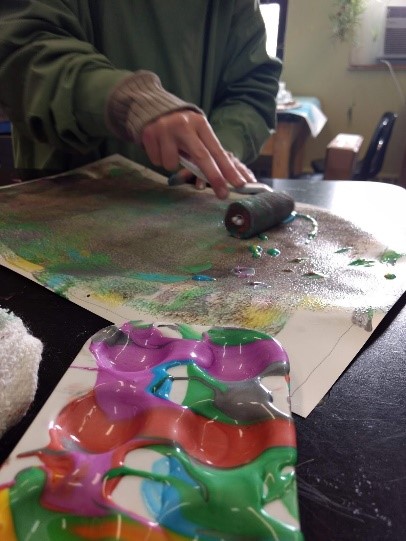
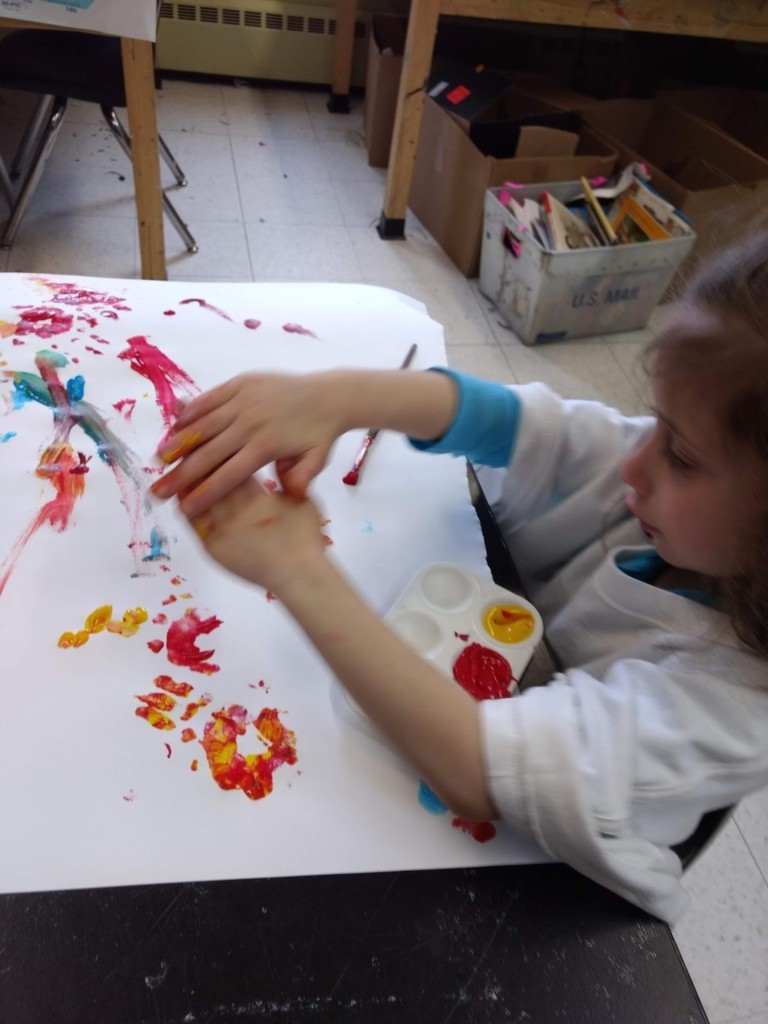
In our Early Childhood program, writing begins with the natural curiosity of young children. Long before they form letters, our Nitzanim and Ilanot students are discovering that marks on a page can tell a story. They draw, scribble, paint, label, and dictate their words to teachers. They listen to stories in both English and Hebrew, retell narratives through pictures, and practice early handwriting skills through developmentally appropriate activities that strengthen fine motor control. These early experiences are joyful, playful, and deeply connected to the classroom’s emergent curriculum. Jewish holidays, Hebrew songs, Torah stories, and classroom investigations naturally weave into this early writing, helping children see that their ideas matter and that writing is a powerful tool for sharing them.
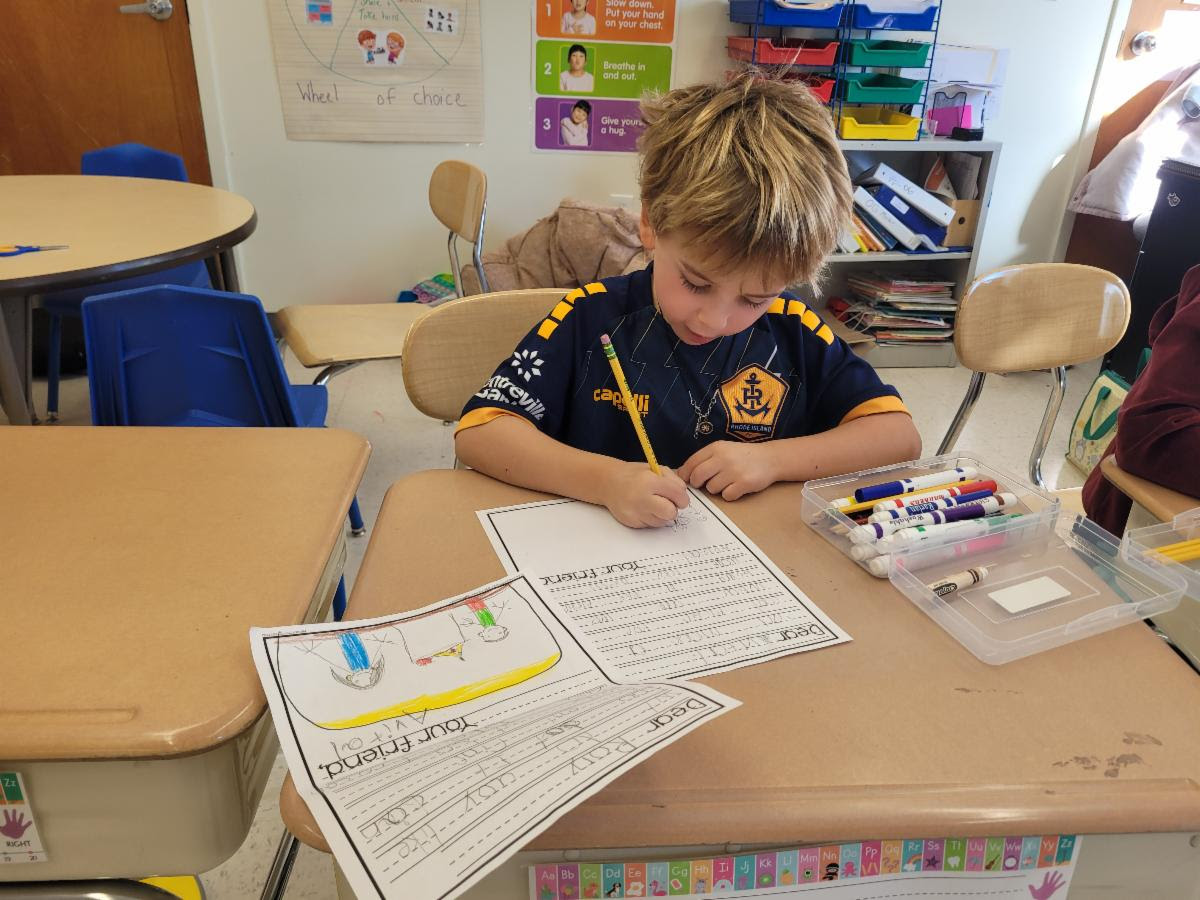
As students move into kindergarten and the early elementary grades, writing becomes more intentional while remaining grounded in creativity and choice. Students begin to see themselves as authors. They write their own stories, create simple books, label diagrams in science notebooks, reflect on explorations, and respond to Yahadut learning. Foundational skills in phonics, spelling, and handwriting develop alongside authentic purposes for writing. A child may document the weather after a nature walk in Nature in the Neighborhood, compose a short Hebrew sentence about a holiday celebration, or write a note to a classmate or a friendly letter to a student in another school. Writing becomes a natural way for students to think, learn, and communicate. In our early childhood classrooms, this work is inspired by Reggio-influenced educational practices that value children’s ideas, inquiry, and creativity, encouraging students to express their thinking through drawing, storytelling, and emergent writing.
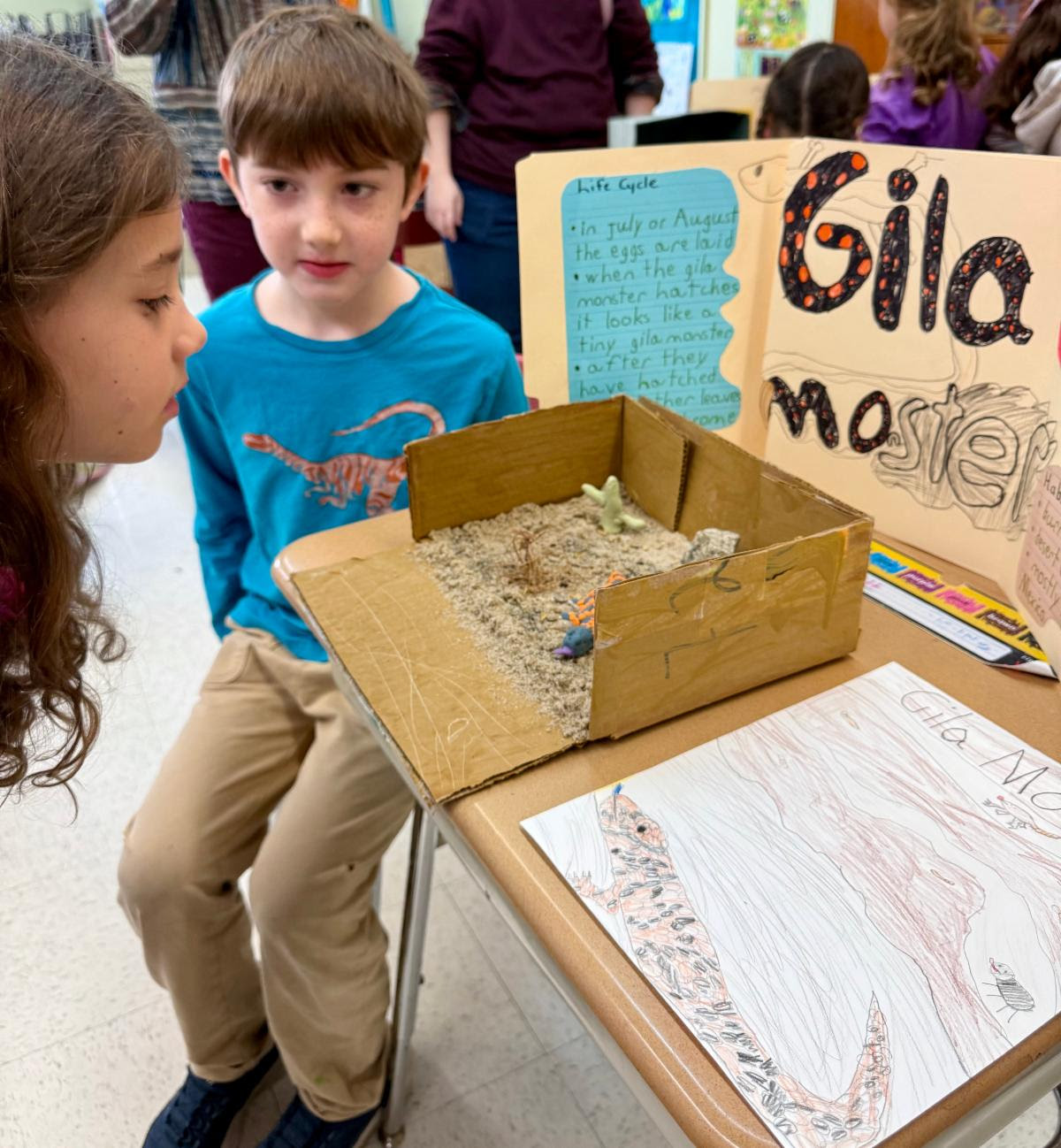
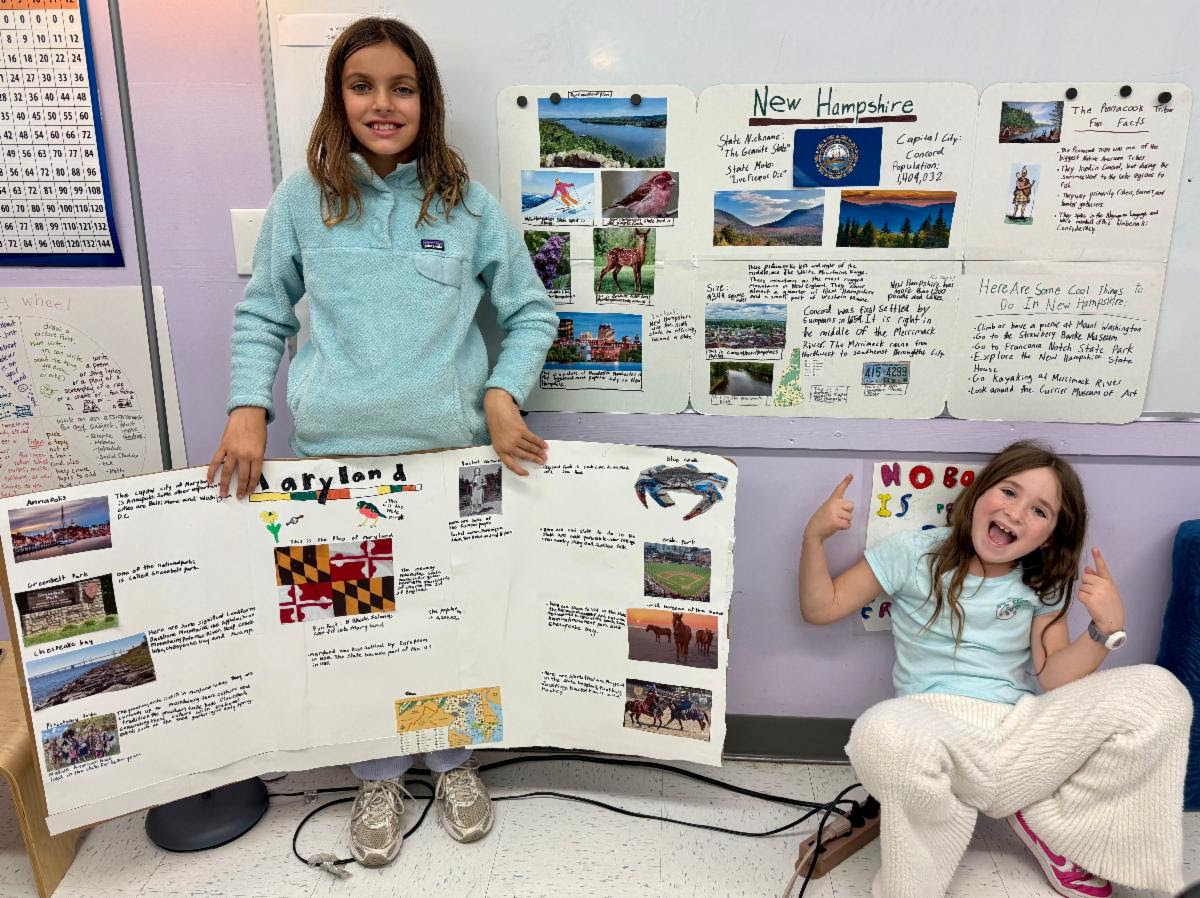
By third through fifth grade, students are ready to take on more sophisticated writing work. They learn to develop strong ideas, organize paragraphs, revise thoughtfully, and consider the perspective of a reader. Their work includes personal narratives, poetry, persuasive pieces, and research-based reports connected closely to social studies and science units. The 6+1 Traits of Writing provide a shared, student-friendly language for this growth, helping children focus on clear ideas, organization, voice, word choice, sentence fluency, conventions, and presentation so that skill development remains tied to authentic communication rather than isolated exercises. Writing in Hebrew also expands, giving students the experience of expressing themselves in two languages and strengthening their connection to Jewish identity. Whether reflecting on a Torah story, composing a scientific explanation, or drafting a multi-paragraph essay on a social justice issue, students learn that writing is a powerful way to explore ideas deeply and thoughtfully.
Writing at JCDSRI is intentionally woven through every discipline. In science, students write observations, hypotheses, and explanations. In social studies, they write reflections that connect their learning to family, community, and Jewish values. In math, they document problem-solving strategies and describe their thinking. In art and music, they write about their creative choices and experiences. Writing in Yahadut and Hebrew allows students to bring meaning, tradition, and identity into their lives. Because our curriculum is emergent, integrated, and of course aligned with RI and National Standards, writing becomes a bridge across subjects rather than a stand-alone activity.
Our approach to writing also reflects our school’s commitment to Universal Design for Learning. Students are given multiple ways to enter a writing task, whether through drawing, dictation, collaborative writing, typing, or traditional handwriting. Choices in topic, format, and tools honor the diversity of our learners and empower every student to find a meaningful pathway into writing. This work is also grounded in our core values. Chesed, kavod, achrayut, kehillah, and tzedek appear naturally in students’ writing as they explore kindness in their stories, reflect on responsibility during social studies projects, consider justice in persuasive writing, or share words of appreciation with classmates.
Ultimately, writing at JCDSRI is joyful, purposeful, and deeply human. It helps students make sense of their world, articulate their ideas, celebrate their identities, and contribute to our community. Whether a child is proudly showing an early drawing that tells a story, or presenting a polished fifth grade graduation speech, each writer is growing, discovering, and finding their voice. Writing is one of the many ways our students learn to think, create, and reflect, and one of the many ways they leave their mark on the world.
Mrs.Davis
JCDSRI Principal
Learning With Intention: How Positive Discipline Shapes Our Classrooms at JCDSRI
At JCDSRI, we believe that mathematics is not just about finding the right answer. It is about developing deep understanding, confidence, and joy in the process of problem solving. Our approach to teaching math reflects our broader educational philosophy:
Every child learns differently.
Curiosity and persistence are essential to growth.
Learning should be both rigorous and meaningful.
One of the cornerstones of our math curriculum is Singapore Math, a program designed to build a strong foundation in number sense, conceptual understanding, and flexible thinking. Rather than emphasizing rote memorization, Singapore Math encourages students to understand why mathematical ideas work. This allows them to apply their understanding to new and complex problems.
From our youngest learners through fifth grade, our math program follows a clear and intentional progression. In our three and four year old classrooms, children engage in math through play by sorting, patterning, counting, and exploring spatial relationships. These early experiences spark curiosity and help children see themselves as capable mathematicians. As students move through Kindergarten and the lower grades, they begin to explore addition and subtraction conceptually, using manipulatives and drawings to represent their thinking. By third through fifth grade, students engage with more abstract ideas such as fractions, decimals, and multi-step problem-solving while continuing to use visual models and reasoning strategies that connect back to their early learning.
Throughout this journey, our teachers design lessons using the framework of Universal Design for Learning (UDL). By providing multiple ways for students to access, engage with, and express their mathematical thinking, we ensure that every child can participate meaningfully. Some students might represent ideas with blocks or number lines, others through drawings, and others through oral explanations or writing. This flexibility supports competence, confidence, and the joy of learning for all students.
In our classrooms, you will see students collaborating to solve real-world problems, explaining their reasoning to peers, and celebrating that “aha” moment when a new idea clicks. You will also hear teachers asking, “How do you know?” This question pushes students to articulate their thought process, reflect on their strategies, and learn from mistakes. This approach mirrors our belief at JCDSRI that learning is about process, persistence, and community, not just product.
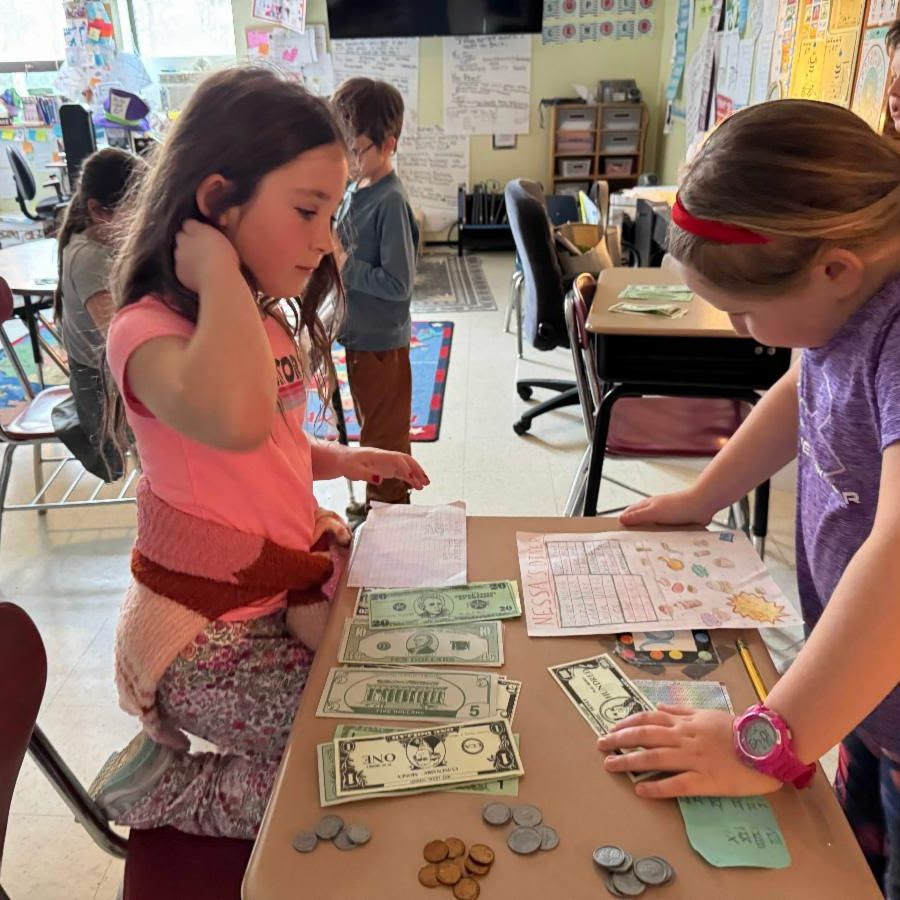
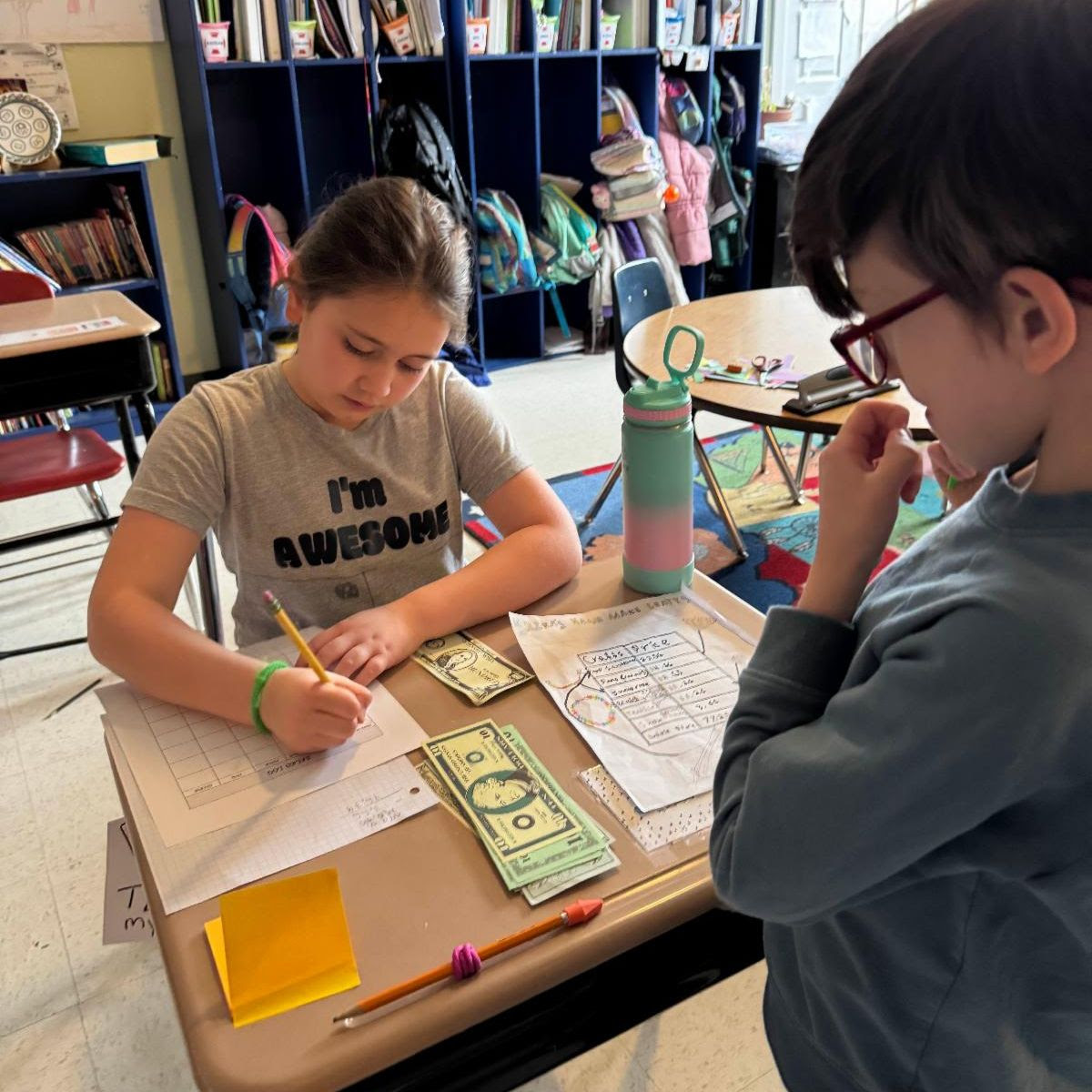
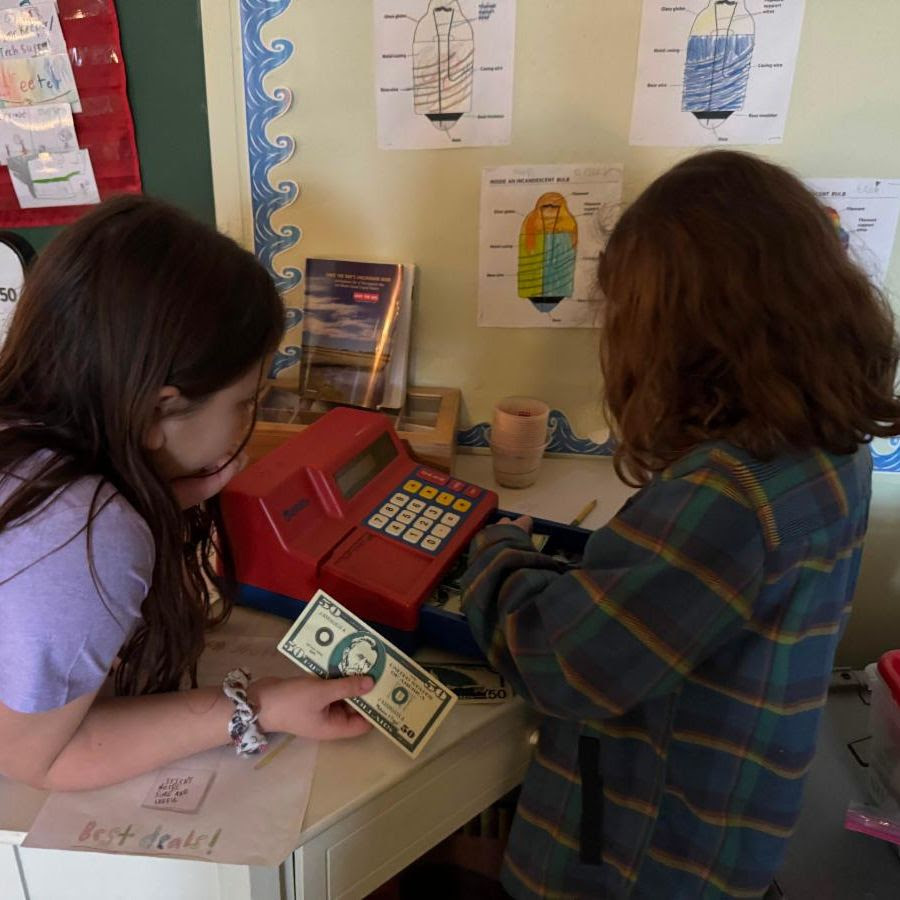
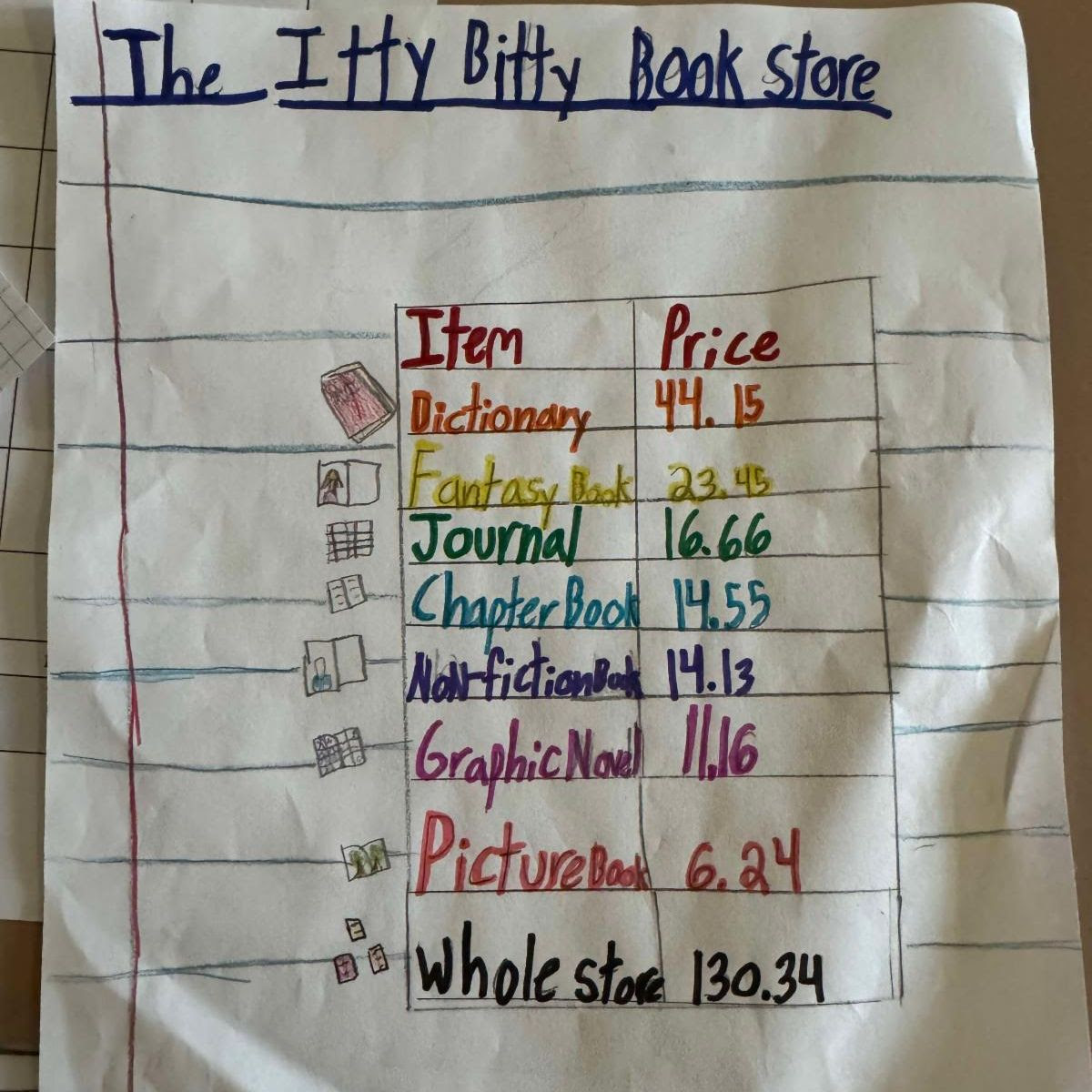
For example, last year in third grade, students became entrepreneurs and mathematicians as they designed menus for their own classroom stores, creating price lists and menus for their products. Through this project, they applied their understanding of money, addition, subtraction, and problem-solving in meaningful ways while using Singapore Math strategies such as visual models, reasoning, and flexible thinking. Using the UDL framework, teachers designed multiple pathways for success. Students had choice and voice in how they demonstrated their understanding: some created colorful printed menus, others designed digital versions, while a few recorded short “commercials” to promote their shops. Each student engaged with math concepts through hands-on exploration, collaboration, and reflection.
We are proud of the way our math program reflects our school values of intellectual curiosity, perseverance, and joyful learning. As we nurture mathematicians from preschool through fifth grade, we are not only teaching numbers. We are helping children develop habits of mind that will serve them for a lifetime.
Mrs.Davis
JCDSRI Principal
Mathematics as a Journey, Not Just an Answer
At JCDSRI, we believe that mathematics is not just about finding the right answer. It is about developing deep understanding, confidence, and joy in the process of problem solving. Our approach to teaching math reflects our broader educational philosophy:
Every child learns differently.
Curiosity and persistence are essential to growth.
Learning should be both rigorous and meaningful.
One of the cornerstones of our math curriculum is Singapore Math, a program designed to build a strong foundation in number sense, conceptual understanding, and flexible thinking. Rather than emphasizing rote memorization, Singapore Math encourages students to understand why mathematical ideas work. This allows them to apply their understanding to new and complex problems.
From our youngest learners through fifth grade, our math program follows a clear and intentional progression. In our three and four year old classrooms, children engage in math through play by sorting, patterning, counting, and exploring spatial relationships. These early experiences spark curiosity and help children see themselves as capable mathematicians. As students move through Kindergarten and the lower grades, they begin to explore addition and subtraction conceptually, using manipulatives and drawings to represent their thinking. By third through fifth grade, students engage with more abstract ideas such as fractions, decimals, and multi-step problem-solving while continuing to use visual models and reasoning strategies that connect back to their early learning.
Throughout this journey, our teachers design lessons using the framework of Universal Design for Learning (UDL). By providing multiple ways for students to access, engage with, and express their mathematical thinking, we ensure that every child can participate meaningfully. Some students might represent ideas with blocks or number lines, others through drawings, and others through oral explanations or writing. This flexibility supports competence, confidence, and the joy of learning for all students.
In our classrooms, you will see students collaborating to solve real-world problems, explaining their reasoning to peers, and celebrating that “aha” moment when a new idea clicks. You will also hear teachers asking, “How do you know?” This question pushes students to articulate their thought process, reflect on their strategies, and learn from mistakes. This approach mirrors our belief at JCDSRI that learning is about process, persistence, and community, not just product.
For example, last year in third grade, students became entrepreneurs and mathematicians as they designed menus for their own classroom stores, creating price lists and menus for their products. Through this project, they applied their understanding of money, addition, subtraction, and problem-solving in meaningful ways while using Singapore Math strategies such as visual models, reasoning, and flexible thinking. Using the UDL framework, teachers designed multiple pathways for success. Students had choice and voice in how they demonstrated their understanding: some created colorful printed menus, others designed digital versions, while a few recorded short “commercials” to promote their shops. Each student engaged with math concepts through hands-on exploration, collaboration, and reflection.
We are proud of the way our math program reflects our school values of intellectual curiosity, perseverance, and joyful learning. As we nurture mathematicians from preschool through fifth grade, we are not only teaching numbers. We are helping children develop habits of mind that will serve them for a lifetime.
Mrs.Davis
JCDSRI Principal